
Orlando Figes
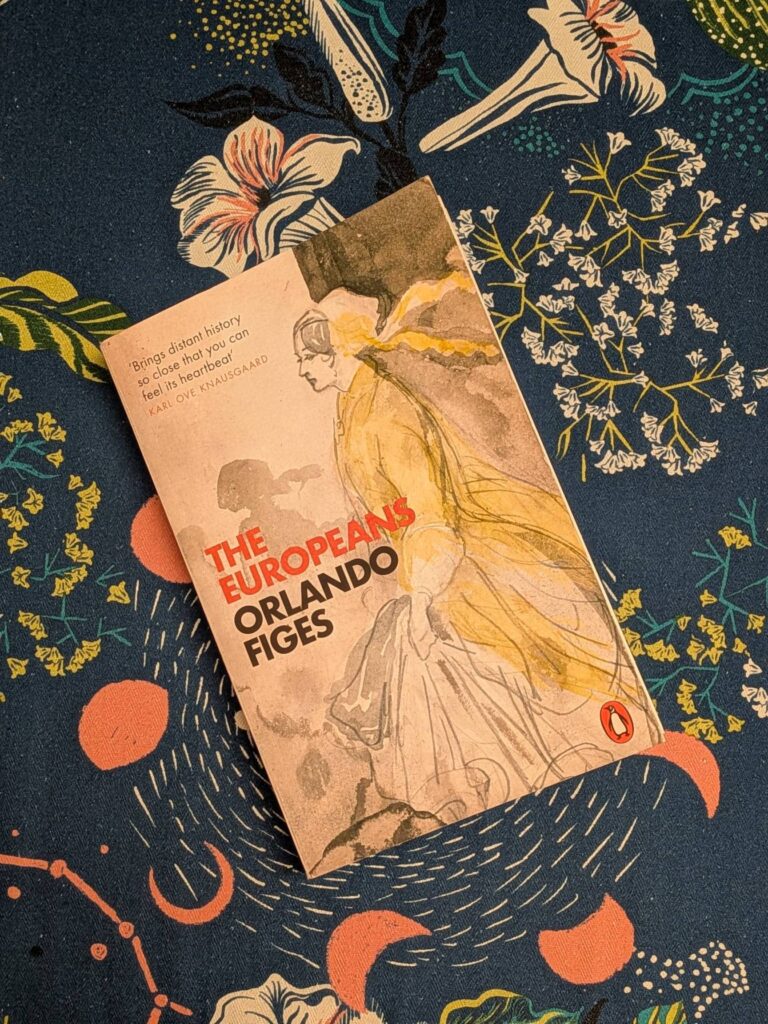
In The Europeans, a cultural snapshot of nineteenth-century Europe serves as the backdrop for the intertwined lives of three differently remarkable people – Pauline Viardot, her husband Louis, and the Russian writer Ivan Turgenev. The result is the origin story of what is called ‘European culture’. During their lifetime and immediately after, the continent, for long fractured by language, politics, and geography, slowly began to imagine itself as a shared cultural space with a taste graph that extended across music, literature, art, travel, and performance.
Pauline, a celebrated opera singer of Spanish origin, and Louis, a French intellectual, critic, and cultural broker, moved with ease across Europe’s capitals. Turgenev was enamoured by Pauline right from his youth, and it progressed to him staying with them in some arrangement or the other, and going by rumour having an affair with her and fathering one of her children! Pauline was all polyamory in any case.
The other personalities in the story, mostly appearing in flashes, are the cultural elite of the time – Frédéric Chopin, George Sand, Dickens, Wagner, Rossini, Flaubert, Tolstoy, Tchaikovsky and so on. Artists who were constantly traveling through the continent, crossing borders and political lines.
We probably see them as individual geniuses now but the book shows how they all grew thanks to nodes like the Viardots and Turgenev – sustained by their salons, letters, touring circuits, and networks of publishers, and patrons.
The Europeans begins with the journey of the first steam engine, and one of its central themes is indeed mobility- not just physical travel by rail and steamship, but the circulation of ideas, tastes, and reputations. Figes shows how improvements in transport, print culture, and communication allowed artists to develop pan-European audiences.
Opera singers performed the same roles from Paris to St Petersburg, novels were translated and serialised across borders, musical styles blended national traditions into hybrid forms, art could be made in one place and sold in another.
Europe thus became culturally interconnected beyond its political borders. Its cultural map was redrawn by this, and cities began changing their character. Tourism, thanks to railways, changed the way people travelled – destinations and routes, broadening minds and giving a sense of ‘being European’.
An important role was played by translation, in the form of both literal and metaphorical middlemen – translators, impresarios, critics, and publishers – who made cultural exchange possible. They helped build the infrastructure – money and social capital – for the culture and the artists who created it to thrive, with dollops of marketing help.
Art of all sorts became big business. Technology too contributed – railways, photography, better printing, telegraph, mass produced pianos, even electric lights contributed (reading books after dark), and so did laws (around copyright legislation).
The Europeans also explores the tension between cosmopolitanism and nationalism, and it is amazing how there are parallels to the contemporary era. History most definitely rhymes.
Many of the characters favoured a European identity though they contributed to their nations’ cultures. Russian writers like Turgenev sought validation in Paris; French composers drew inspiration from folk traditions; German music was framed as universal rather than national. The dual nature was a defining feature of the period, and culture was used by politicians as a unifier, aided by advances in mass communication.
The narrative of The Europeans moves fluidly between ‘biographies’ of Pauline and Turgenev, and broader cultural analysis. The structure is quite meta, mirroring the characters – interconnected, mobile, and resistant to rigid boundaries. The book is significant because it frames the continent’s history in terms of a cultural alignment instead of the standard political or economic ones.
This is an interesting read if you’re up to it – it’s not easy to sit through anecdotes that might be uninteresting, and the constant revolving of characters and places. But it does give a very good panoramic view of what seems like an exciting era.
Notes from The Europeans
1. “How many changes have you witnessed …? The railways, steamships, telegraphs, gaslights, electric telegrams and lighting … and now there are cars that move on their own, speaking telegraphs and aeroplanes … You made your debut when Rossini and Bellini were at the height of their glory; you saw, after the brilliant reign of Meyerbeer, how – and from what fogs – the art of Richard Wagner rose … and now the rise of Richard Strauss’s art, the precursor of the world’s end.”
2. The equivalent of paid reviews now were claques -a group of people hired to applaud a performer or boo their rivals., by the impresario (promoter)
3. The first laws of copyright appeared in 1840 in the Kingdom of Piedmont-Sardinia. Until then, anyone could translate and sell works of authors in other countries without their permission.
4. It was only in the 1830s that silence became the norm in theatres. The layouts played a part – almost built like churches, demanding respect.
5. The French called the poor students, artists and would-be writers in the Latin Quarter in Paris Bohemians.
6. Murray’s Handbooks for Travellers were travel guide books published in London by John Murray beginning in 1836, covering tourist destinations in Europe. Folks started planning itineraries to be in the right places at the right time for pleasure and arts. People started complaining about tourists ‘doing Europe’ immediately after!
7. Even Europeans then considered the British to be ‘stuffy, cold and conceited’.
Leave a Reply