Category: Future & Tech

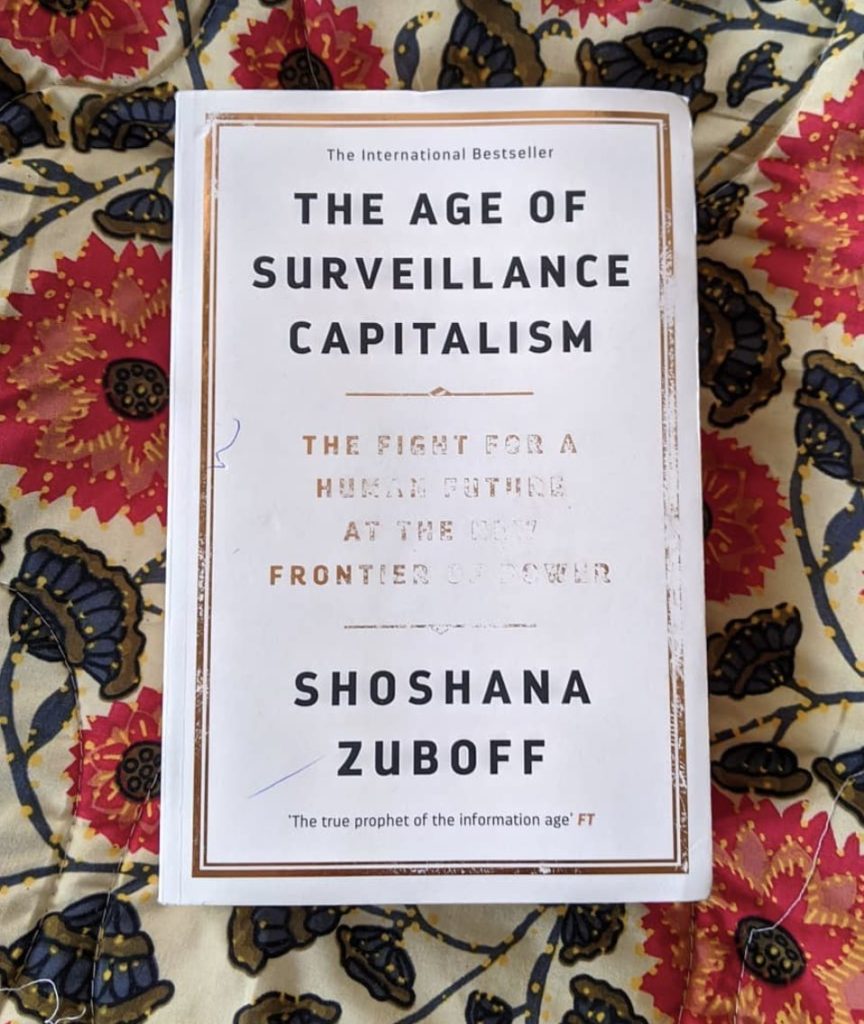
  • The Age of Surveillance Capitalism: The Fight for a Human Future at the New Frontier of Power

    Shoshana Zuboff

    Around the same time last year, I remember tweeting a quote attributed to Jamie Bartlett – “The end result will be ad targeting so effective that you may well question the notion of free will altogether“. Connecting digital advertising to free will seems absurd, but it wasn’t a facetious remark. It reflected the reality of our times. This is the reality that Shoshana Zuboff explores and confronts in The Age of Surveillance Capitalism, frequently echoing the thought that keeps cropping up in my mind – how did we get here?

    She begins with a deeply personal story about her home, and brings up an “aware home” project in 2000, which among other things, assumed that the rights to the knowledge would lie in the hands of the human living in it. She then juxtaposes it against the current privacy policy and usage agreements of Google’s Nest, which all but completely gives the ownership to the search giant. This is just one example.

    Industrial capitalism thrived by exploiting nature, and surveillance capitalism is thriving by using human nature as a resource. That means that even though, due to rapid industrialisation and mass production, we got to a “second modernity” that provided millions access to experiences which were until then the preserve of a smaller elite, we are now being led back into a “neofeudalism”, a consolidation of elite wealth and power. How did this happen?

    Google plays the primary antagonist in this narrative, and though Brin and Page were initially reluctant, the 2000 bust set Google on a path that used the “behavioural surplus” generated by users. At a basic level, it is probably difficult to imagine that when one carries out a search on Google, the machine is searching for patterns in the expressed intent, and making rapid incursions into one’s life. And yet, that’s exactly how it works. It then leads to prediction products, economies of action and future behaviour markets, fuelled by an ever expanding scope of information extraction. Those ridiculous permissions apps require make sense now? And how does a corporation create and grow a future behaviour market? Simple, behaviour modification, whether you realise it or not.

    Over a period of time, Google has institutionalised its invasions into private human domains, helped in the beginning by the national security imperative following the 9/11 attacks. Chrome, GMail, Android, Photos, YouTube and so on have created a dependency that now borders on feeling left out of the societal narrative if one is not using these. The behind-the-scenes look at Pokémon Go is chilling – in terms of how users were giving away data of their own volition, how partners were brought on board to expand the scope of surveillance, and how human behaviour was controlled at global scale.

    Facebook makes its presence felt in the latter half of the book, thanks to its exploitation of social connections. By creating a prototype of a hive mind through the weaponisation of peer group reinforcement, it increasingly shapes minds and behaviour, especially that of young adults. The author uses Goffman’s framing in The Presentation of Self in Everyday Life and shows how the “backstage”, where individuals are truly themselves, is now shrinking thanks to the omnipresence of social incursions. Where does this lead to? One example is when the state starts using this power – China’s social credit system now has a direct impact on an individual’s life, driving economies of action in the real world. More broadly, totalitarianism, driven by powerful corporations.

    The consequences are that there is increasingly no refuge, no sanctuary, from the relentless efforts of corporations that are intent on controlling every facet of an individual’s existence. At a broader level, it threatens the fabric of society and democracy itself. Capitalism’s latest avatar has clearly gone rogue, refusing to abide by the reciprocal nature of every kind of interaction we have experienced thus far. Regulation isn’t really keeping up, except for some efforts by the EU. But there are those who refuse to give up – activists, and artists who use technology to keep out surveillance. However, this is a fight we have to contribute to, because what’s at stake is what makes us human – free will, or at least the notion of it. This is not an easy read, but it is a must-read.

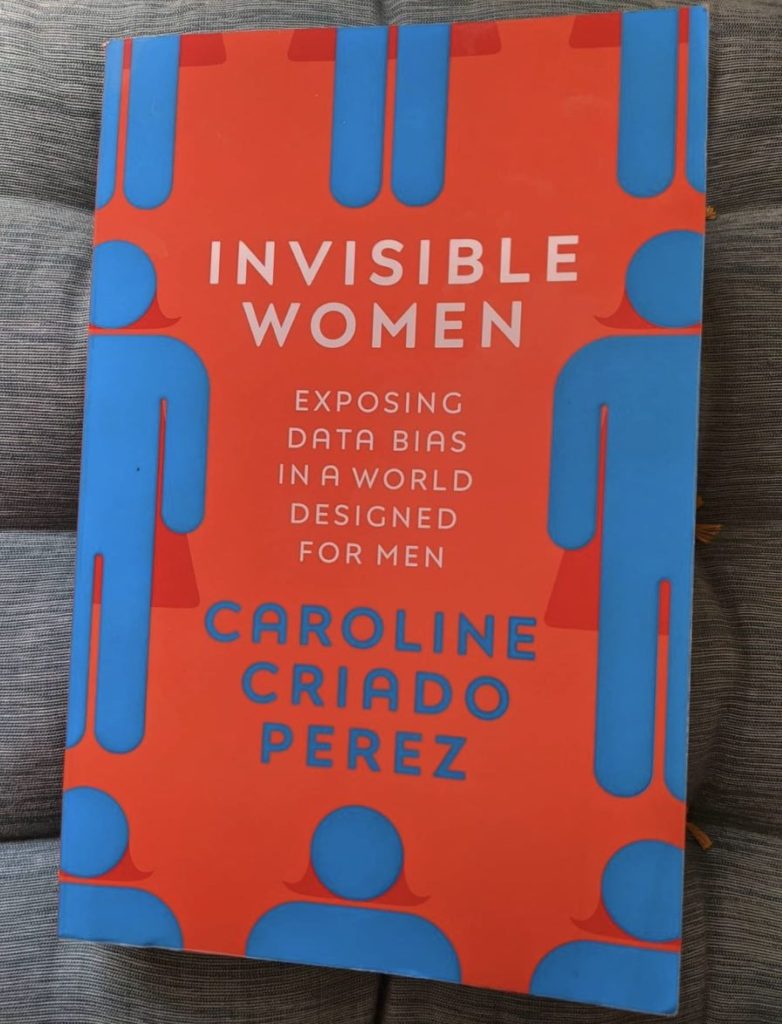
  • Invisible Women: Exposing Data Bias in a World Designed for Men

    Caroline Criado Perez

    Enlightening! While a part of the title reads “exposing data bias in a world designed for men”, I think it extends well beyond that. It provides perspectives that I had not even considered, even though in the last few years, I have tried to be more conscious of the challenges that women face at the workplace, in public spaces, their everyday lives, and how the world works differently for them in the many, many things that men take for granted. This, therefore, is a book that I think men and women should read, for different reasons.

    For women, it will probably serve as an insightful articulation of many things that they have thought about, talked about, or attempted to change, and give them information about how women around the world have taken them up as challenges and sometimes succeeded in setting things right. I will stop at that, and not be presumptuous in assumptions.
    For men. Where do I even start? I think we will see the world differently after reading this book. The challenge for us would be to be conscious of the inherent bias in our thinking, our behaviour, and the way we design objects and systems. As the blurb says, imagine a world where the phone you use is too large for your hand, where the safety of the vehicle you travel in has not really been designed with you in mind, and the medicine you have been prescribed is just wrong for you because you weren’t adequately represented in trials! In essence, “the lives of men have been taken to represent those of humans overall.”

    The author uses data and case studies from multiple domains to highlight how women haven’t been fairly represented, and in many cases to also show how correcting this could lead to a better result not just for women, but for humanity overall. Public transport, urinals (ever wondered why there’s always a queue for women while men seem to find things much easier), workplace practices, product design, medicine, disaster relief, the pain is everywhere. And they are at various levels of seriousness. Some made me say “oh, I didn’t think of it that way”, many made me grimace, and most are just appalling.
    It has given me many perspectives, and a resolve to work harder at contributing to fix this. One really doesn’t have to be a genius to understand the impact better representation can make, at an individual and species level. With all that being said, in the end, I also have to admit, quite sheepishly, and to underline the point, that while many of my favourite authors are female, I might have completely missed this book if my wife hadn’t made it part of our list! See? 🙂

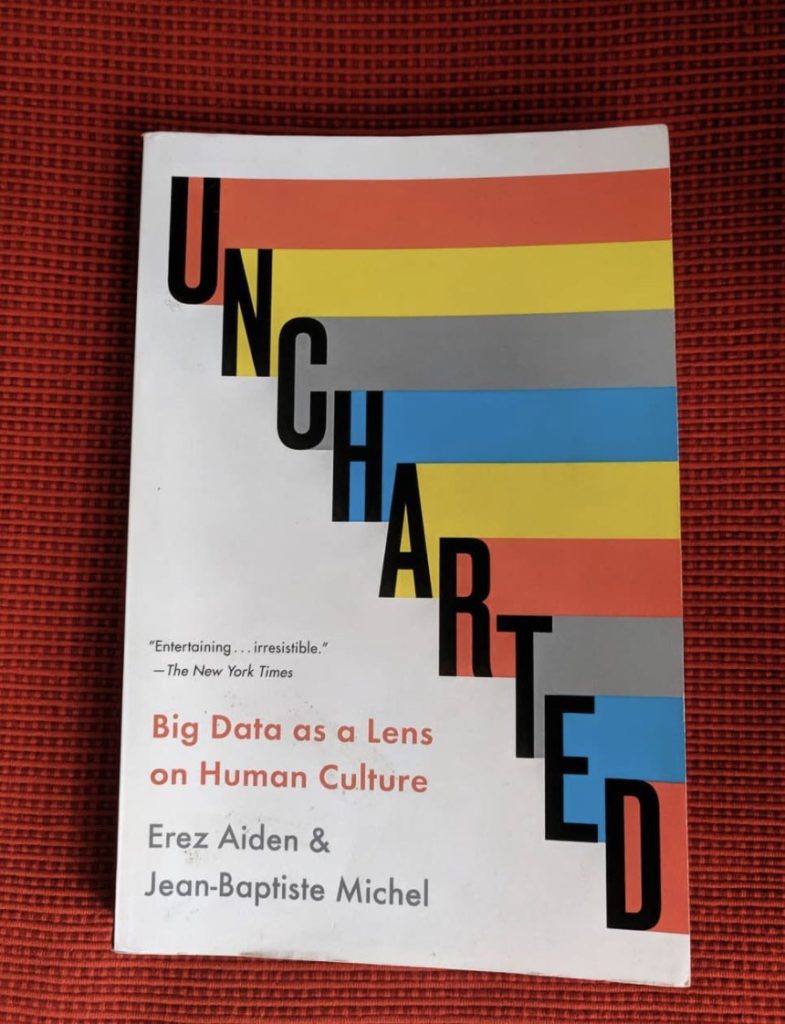
  • Uncharted: Big Data as a Lens on Human Culture

    Erez Aiden, Jean-Baptiste Michel

    The book was published in 2013, relatively the early days of what has come to be a fairly common buzzword. Therefore, it is probably unfair to expect this book to have the understanding or perspectives that the field has accumulated in the last few years.

    Having said that, I still think my expectation from the book was higher. It stemmed mostly from the title, and I thought there was tremendous scope there. We now consume, produce and share tons of data on a daily basis. What could it say about us at a societal level? Wouldn’t that be a great way to study how our culture has evolved as a species and perhaps differently in various parts of the world? How do ideas spread, how many of them are universal, and do some have more velocity than others? But hold on. While this book does try to give some answers, it is solely based on the authors’ experiments with datasets using Google Books Ngram Viewer.

    This is a formidable tool – 30 million books digitized by Google. But it is limited too. These are only books published, and a subset of them. Books are only a small representation of culture, and by virtue of publishing being gated (in the past) would carry inherent biases. To be fair, the authors are aware of this and bring it up towards the end. It also raises the concerns that have now grown louder – who owns the data, who has access, what is it being used for?

    So, if you go by the title, you might be a little disappointed, but it is an interesting story well told and made accessible. It does provide many, many interesting trends and findings across disparate things like technology, popularity, grammar. You would like it especially if you’re interested in language – words, their usage, grammar etc.

  • Whiplash: How to Survive Our Faster Future

    Jeff Howe and Joi Ito

    Multiple waves of technological advancements, chief among them the internet and manifestations of Moore’s law, have rendered the world a complex place. Asymmetry, complexity and uncertainty are the defining ethos of this era, and not necessarily by choice. How can one navigate these times, that’s the theme of the book.

    Joi Ito and Jeff Howe have divided their approach into nine themes. Less prescription, more direction and food for thought. Many of them share an undercurrent of thought, or are even directly linked to each other. Emergent behaviour over institutional authority (Arab Spring and crowdsourcing are disparate examples of this), on-demand pull over push (e.g. Netflix over TV, and even large scale manufacturing) and the importance of weak ties, compasses over maps (direction more than a specific plan – this is my favourite, though I’d have liked more pages devoted to this), focus on risk over safety (the nimble nature of Shenzhen and its rapid development from knock offs to cutting edge tech), disobedience over compliance (the creation of Nylon at DuPont is a good example), practice over theory (there is an interesting sub-topic on privilege in this chapter), diversity over ability (“Ability matters, but in the aggregate, it offers diminishing returns” – Scott Page), resilience over strength (another favourite, and has parallels with Taleb’s anti-fragile), and finally, systems over objects (and understanding the larger implications of one’s work).

    The narrative zooms from physics to philosophy and biology to bitcoin in a matter of few seconds. Sometimes one feels that this is a book about the MIT Media Lab, or maybe it’s because it embraces all these principles in varying degrees.

    But whatever be the cause and effect relationship, it does serve as a good example of the principles in action.
    What the book stresses is the kind of adaptive thinking that will be required of the species and the individuals therein to continue thriving in a world that’s undergoing a profound structural change.

  • Everybody Lies

    Seth Stephens-Davidowitz

    I’m a huge fan of Asimov’s Foundation series. Hari Seldon, the seminal character in the series, develops psychohistory, an algorithmic science that helps him predict the future of large populations, (not individuals) though in terms of probability. As I read this book, I began to wonder if data would actually help us get to that level at some point.

    The premise of the book is that though everybody lies – to their friends, spouse, colleagues and most definitely to themselves, many of their actions – what they search for, what they click on etc – reveal their true nature. With the sheer amount if data that is being generated, data scientists are able to gather insights on our thinking, and potentially use that for the welfare of humanity.

    The book uses a bunch of examples early to show how data can help distinguish between what people say and what they actually do. Trivia: India gets called out early enough for being #1 in people who search for “may husband wants me to breastfeed him”! A large section of the first half is full of p*rn data. Reveals much!

    I not only got some validations about human behaviour, but also realised that some of my perspectives were not really true. For instance, I had thought that the web was now largely getting segregated into filter bubbles. Data shows otherwise! It also shows the clear possibility that many of our core beliefs and attitudes could be explained by the random year of our birth and what was going on the key years of our upbringing. One observation I could not really agree with was “it does not matter which school you go to.” While one study does show that, I can see it play differently around me, and perhaps there are psychological effects that does not come out in a study. Or it could be affected by “the curse of dimensionality” that the author brings up – if you test enough variables, one, by random chance, will be statistically significant.

    The last portion of the book offers a counter balance to the case made for data thus far in the book. The overemphasis on what is measurable, the limits of data, and the ethics of data usage – by private companies or the government.

    But the potential of data to cause a social sciences revolution remains well argued. However, just having data is not really enough, one needs to be curious (what data needs to be looked at) and creative (what’s the best way to frame the data or sets of data, build hypotheses) to make the best use of it. Some of what the author has done in the book is precisely that. Can data be misused? Yes, it can, but that’s the risk with every new science. That doesn’t take away from the exciting possibilities it has to offer.