Category: Future

  • The evolution of work and the workplace

    I spent Rajinikanth’s birthday  at Jaipur, all thanks to one of my favourite bloggers – Kavi, who, in his official avatar, invited me to his organisation’s annual HR conference. The theme of the conference was Evolve Connect Enhance, and I can honestly say that many of my perspectives were enhanced during discussions about the real  implications and challenges for organisations, brought about by radical changes in the business environment.

    For now, I’ll let the talk do the talking!  (transcript below the ppt) Do comment with your thoughts!


    Final Talk Points by manuscrypts


    until next time, work it out

  • Emotion as a Service

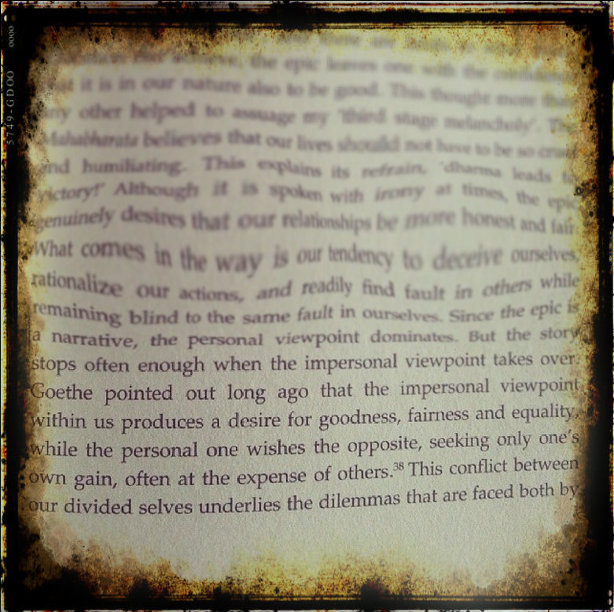
    More than a year back, I had written about institutional realignment and had briefly mentioned the institutions of marriage and parenting. ‘The currency of relationships‘ made me think of this, and family – immediate and extended – as a societal construct/contract/ institution, and probably even as a tradition. Where we are born, and whom we are born to, are apparently out of control, but we do have an illusion of control courtesy the choices we make as we go along. Thanks to these choices, our lifestyle and our perspectives may follow a trajectory that is totally different from the circumstances and people we grew up with/in. This is not just about the people from our childhood/youth, but is a continuous process through life. Each of us find our own ways to deal with the constant flow of people through our lives. These are again choices, and like most choices involves some amount of sacrifice and bring with them their own set of consequences.

    Clipboard02

    I loved that Goethe paraphrase, because I think it sums up our relationships very well. At the risk of sounding cynical, (or receiving a ‘speak for yourself’ comment) I’d say that we’re increasingly becoming selfish as a species. I have always had the notion that most relationships are contextual, and it would be difficult to scale our emotions/feelings for others for an indefinite time frame. Yes, I do acknowledge there are exceptions, but that’s what they are – exceptions. Do a quick test and find out how many people across your life you’re still in touch with – bouts of nostalgia not included?

    It is with all this as the backdrop that I read Scott Adams’ “The Future of Marriage“. It articulates very well a thought that had crossed my mind earlier. (Of course, he obviously explores it way better than I could have) He deconstructs the institution of marriage and argues that marriage made sense “when the world was inefficient. You married a person nearby who could provide most of your important needs while hoping your lesser needs could also somehow be met.” Now, he says, the internet has allowed us to have a barter economy of relationships. In other words, a virtual spouse comprised of a dozen separate relationships. He tempers everything by saying that in the future, marriage may be one of the many options available. By sheer coincidence, and in a different context, I came across this quote attributed to Steve Macone “A tradition is a habit whose logic has faded“.

    I thought about this in the context of the expectations I had mentioned in the ‘currency of relationships’ post. If the institution of marriage can have a barter economy, why not other relationships? After all, isn’t every relationship a barter at its core? It’s just that we are rarely comfortable with voicing our expectations in the case of an emotional ‘transaction’, quantitatively or qualitatively. (generalising) Parents expect their children to look after them when they are old, in return for bringing you up; relatives expect you to return the favours they once did for you, and so on.

    So who knows, maybe our pace of life and our need to be (seen as) fair in all our relationships will conspire to form a barter ecosystem that offers emotion as a service. It is possible that an alternate path to prosperity might take us in a different direction, but in the era of the quantified self and the augmented human, when we slowly transition our selves into the cloud, maybe ‘Emotion as a Service’ (like)  is not an impossibility. What do you think?

    until next time, a qualified self

  • The Social Product

    A few days ago, I read this post that cited studies on consumer sentiment (US, UK) about brands being present on social media. There are plenty of interesting perspectives and nuanced insights but one key takeaway is that consumers feel there is a glut of companies on social media, though it seems the younger age group feel that presence on social media adds to trust. Around the same time, I also came across the theory of peak advertising which begins with the decreasing effectiveness of online advertising and moves through various stages to suggest alternatives to the current business models that sustain the internet.  Collectively, it would seem as though the (generic) advantage of just being present on social is plateauing, or probably even going down. There are obviously brands that are using these platforms effectively, but increasingly, social is being used as media and this is easily replicated by other brands. At a larger level, the advertising barrage on social is also reducing effectiveness. That led me to think – before the utopia of social business, what opportunities does social have beyond the traditional marketing, advertising media based approach, enterprise collaboration, and social CRM?

    In the second Myntra post, I’d written about how I felt that ‘product’ was best placed to deliver sustainable business advantage. Though it was related to the website/features in that context, I’m now considering if this is applicable across the board – to physical products as well. Also, the more I see social evolving on customer care, marketing, advertising and sales, the more I think these are becoming hygiene. I have omitted marketing because I think there is scope to build a unique brand and thus some business advantage in the long run. However, I also think that this marketing will have to significantly integrated with ‘product’.

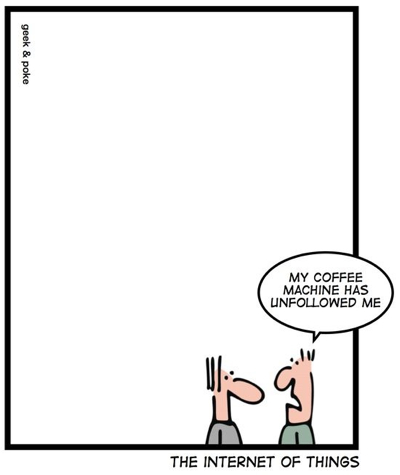
    In this context, I found this Forrester post titled “There is no Internet of Things” extremely interesting. Though we’re in the early stages of this phenomenon, I think it’s a good time for her to have raised the point of fragmentation and apps/brands working in silos. There are some excellent examples and scenarios in that post that make it a must-read. The conceptual answer to this is in the title of this HBR post – “The Age of Social Products“, and it makes a great point on ‘shared purpose’. “In an age of social products, competitive advantage comes not from product features but from network effects.” (though at this stage, I do think it’s both and not an either/or) Nike, as mentioned in the post, (and as usual) continues to be on the cutting edge. The common theme in their case is that the product + community (user+developer) offering only uses popular social platforms to augment, and is not dependent on them.

    The current approach to social (media) is either to use $ or influence. I’m not sure there’s enough importance given to the network and the effect that’s created over a period of time. As this superb post states on the subject of disruption and diffusion states, “It’s not the nodes, it’s the network” In that light, I feel social products might be able to do more justice to the promise of ‘social’ than its current avatars, especially social media. I did think the same way about social platforms earlier, but we live in hope!

    IoT

    (via)

    until next time, objectifying social 🙂

    P.S. I was reminded of a term coined much earlier – social objects. In that context, it was anything that could be a conversation starter, and the focus was more on its ability to connect people around a subject of common interest. Social products have the ability to take that connection and give it a platform where even people who are not in the same time and place can be part of the conversation. This is beyond its ‘utility’ not just as a product but also as a device that talks to other devices and makes itself more useful. I’m actually thinking of that ‘bottle of memories’ I mentioned in an earlier post, probably in a smarter avatar – like this or this – but also ‘tagged’ (say, using an augmented reality app) with the people who are part of the stories associated with it. Now, at some point, when I see the bottle, and get particularly nostalgic, I could use the same app to see what those people are up to, and quickly ping them to start a conversation about the good old times. In the collaborative and sharing economy, think of the possibilities! (If you’re interested in this sort of thing, you should like this post) When I think about it, what we probably need to accelerate this is a browser (what it does for the web) equivalent.

  • Manufacturer, Market, Media

    Sometime last year at Myntra, we were having a planning meeting and everyone was asked for their take on the future of (fashion) e-commerce in a 5 year time frame. I confessed that I had no idea, and asked the group whether they had heard of 3D printing. Since this was before the hype machine went into overdrive, none had. My perspective was that if I could print branded merchandise on my own, what would be the role of an intermediary? (interestingly, I read something on a similar note more recently)   I have no idea how mainstream this phenomenon will become, but 3D printers are already being sold online by Staples and Amazon. eBay also has an app that allows users to buy custom goods from three of the top 3D printing companies. (via)

    There are multiple themes which we can explore from here – the augmented human, the collaborative economy and social commerce – to name a couple. But since these are fairly obvious and have at least been kickstarted on the blog, I thought of connecting this to my post from last week – the future of owned media – in which I explored the possibility of a media marketplace which is tapped by businesses to create, curate and possibly even market content that is relevant to them. The journalism that brands want subsidising the journalism that society needs. I hypothesised whether Bezos’ purchase of WaPo was a vague start to this, given Amazon’s presence in multiple domains.

    It’s interesting that Bezos had invested in MakerBot, probably the original poster boy of 3D printer manufacturing, (via) but thinks the digitisation of physical goods is a while away. It becomes even more interesting when WaPo publishes a story on the business case for 3D printing in the context of e-com players’ need to minimise delivery time. The long tail would explode even more! The article also mentions how “Amazon’s giant fulfillment centers could be another place where just-in-time manufacturing and delivery come together.

    What role does media play in this? IMO, we’re increasingly moving towards interest based communities and our consumption of media is influenced by this. With Kindle, WaPo and several other components in the mix, Amazon could indeed be well placed to aggregate the long tail of not just creators and consumers of physical goods, but information (media) as well.

    until next time, the Amazon of news

  • The Future of Owned Media?

    Tech Crunch had a rather funny take on why Bezos bought the Washington Post, but the more thought provoking piece was on the Post itself. (via @nixxin) Its premise was that the predictive analytics perfected by Amazon could be used to provide Post subscribers with personalized news feeds based on where they live and what they have read before. People browsing The Post’s Web site or tablet app could be served ads tailored to their past purchases, and then could buy products with a single click. Ironically, the last paragraph actually ends up validating the TC post. 🙂

    It reminded of an earlier post of mine, in which I had wondered about the future of media in a social era, and though I did not use the words, asked whether a ‘marketplace’ kind of model for news creators and curators was possible. To be honest, I was still skeptical whether a business model could be worked out on this line of thought. But the entire WaPo purchase by Bezos, the subsequent discussions on the web, and this fantastic article at Forbes that brings out the radical shifts in management required for a firm to thrive in ‘the creative economy’, set me out on a new direction.

    Media and advertising, like I mentioned in the earlier post, have had an intertwined life. What if media cannot now exist as a business on its own – the primary reason being that the value it provides -news -is being disrupted by technological innovations including self publishing tools? Does it mean that  its role now has to be seen within the context of a larger business? We’re already well into the paid-earned-owned media cycle, and while paid is arguably on a decline, earned is now increasingly being controlled by the platforms. (FB’s Edgerank, for example) Does it not make sense for a firm to make relevant news part of its product offering, or part of a sales process? Of course, the dynamics would work different from a merchandise marketplace, but if news is a commodity, can’t its vendors be on a marketplace? Media corporations might not be able to sustain a business model with high overhead costs, but journalists could build a reputation and thrive, and the marketplace would decide their price!

    The WaPo purchase is probably just another kind of vertical integration. Much like an e-com company India would build its own logistics or payment gateway and then even white label it, the far-sighted Bezos might have just taken the first step in evolving owned media in a scale and direction no one has ever thought of before. Journalism has mostly been subsidised by commerce – I’d say this is just another evolutionary necessity.

    until next time, to each his own media..