Category: Future

  • The era of wearables

    In the post on the Internet of Things last month, I’d mentioned two narratives on social products that I considered were working in tandem to shape the future of marketing, consumption, and living itself. Both using sensors – one on things (IoT), and the other on humans (Wearables, though I stubbornly use Techsessories!)  This post is on the latter.

    Why I think it matters: Though nowhere remotely close to Chris Dancy levels, I have been interested in this for a while. As I mentioned in my Personal API post, I see it as an evolution of my lifelogging pursuit – from logging in experiences to sensors automatically picking up data – and something that is highly relevant to my area of work – brands. In the big picture, I also see this domain as a key player in the evolution of our species – from our persistent movement towards immortality (physical) as well as, what I hope will be, a more gradual steps towards mindfulness. (mental, emotional)

    What is it? Smartwatches are just the beginning, and at a broad level, wearables can already be categorised into

    (Some statistics, a primer, and a good classification to broaden your perspectives)

    Where is all this going? For the scope of this post, let’s briefly look at the impact/deliverables from three points of view

    Consumer: There are quite a number of views (read concerns) that wearables are probably the first step towards turning us into cyborgs. (what I refer to as the augmented human here) There is another line of thought that wonders if all of this is taking us closer to ‘sofalarity‘. I can argue the Hug Shirt both ways! I wonder if, as we race towards singularity, there is an unconscious adaptation that our species is going through to survive, or continue to thrive. Personally, I like to think that technology is giving me the means to first quantify, and then use that data (converted to information and then to insights) to consistently work towards being a better human. ( a qualified self, so to speak)  I have already taken the first step with Goqii. While there is no dearth of trackers, I found their ecosystem approach interesting. I also envision creation of personal APIs becoming easier in the next few years, allowing us to store, analyse and transmit data and information to others.

    Ecosystem: At one level, there is going to be some effort in making wearables really mainstream. There is definitely going to be resistance. The answer, as always, is in using wearables as a means to address human needs. On another level, while devices are expanding in scope, quality and sheer numbers, as Chris Dancy mentions in the interview (linked earlier) interoperability is still a concern. (just as in the case of IoT) It’s not just wearables talking to each other, but talking to a larger universe of the IoT.

    Brands: This domain has seen its share of brands – standalone ones as well as majors like Apple, Google and Samsung who want in on the action. There are fashion brands too, and I can imagine a near future when technology will be a hygiene factor in many kinds of apparel. While this happens on the device side, the data generated finds application across spheres – think, for example, how this can be applied in the health domain, (from medication to insurance) employment, sports and so on. Thus, there are many roles for brands – a standalone device and ecosystem with minimum connectivity, or devices and/or ecosystems that work in a complementary manner with another set and provide a product/service. As privacy concerns escalate, I believe the role of the consumer will be the key one to watch. This is the opportunity for brands to connect its business purpose to the consumer’s narrative. Brands should work towards gaining the trust of consumers early on and create seamless platforms for connecting devices, data, and users, working towards a common shared purpose.
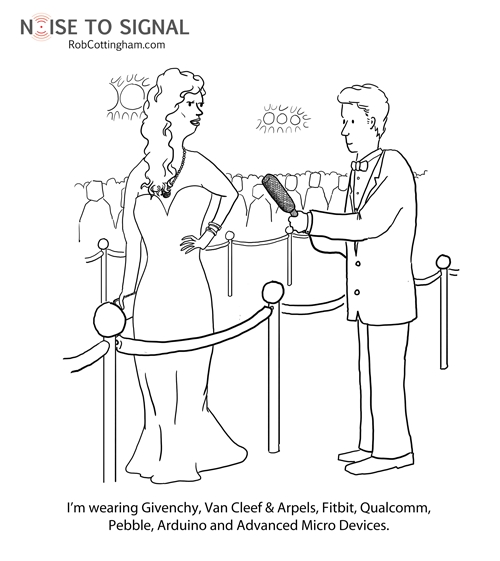
    Wearables

    (via)

    From not believing that the world needed more than five computers (1943), we have reached more than 1.8 billion smartphones (source) that arguably do more than what a ‘computer’ can. So, a wearable (or a set of them) soon superseding a mobile is very much in the realms of possibility. As functions evolve, form factors will change – that’s inevitable, and on shorter cycles. The last decade in particular  has seen a massive technological evolution, but I think this is just the beginning – we’re at the cusp of a sea change in the way we live and work – about to push beyond the known boundaries of the body and mind. In the context of this evolution, Carl Jung’s profound statement would be a good one to remember – “Who looks outside, dreams. Who looks inside, awakens.

    until next time, wearabouts!

    P.S.  If the subject interest you, do follow my Techsessories and Health boards

    P.P.S. Need a #lulz worthy wearable strategy – Check this out!
  • An Internet of Things narrative

    Towards the end of last year, I’d written a post on the ‘social product‘. Its premise was that given social’s conversion to media, the opportunity for fulfilling social’s initial promise would fall on ‘product’ – using data, network effects, and relationships to connect consumers along a shared purpose. In the last few weeks, I have seen rapid acceleration happening on this front. I can see at least two narratives working in tandem, and I’m sure that at some point they will begin to augment each other really well. In this excellent post on technologies that are shaping the future of design, sensors occupy the top slot, and they are at the basis of both the narratives – one on humans, and one on things. The official classification, roughly, translates into Wearables and Internet Of Things respectively for the scope of discussions here.

    This post is about the second. So, what is the Internet of things? The wiki definition is simple, but effective –  “The Internet of Things (IoT) refers to uniquely identifiable objects and their virtual representations in an Internet-like structure.” The best primer I have come across would be this infographic, which has everything from a quick technology explanation, applications and challenges to market size, statistics, and interesting use cases. For a really solid perspective, look no further than this deck titled ‘The Internet of Everything‘.

    How does it affect us? For now, it is about convenience. If you’re familiar with Android launchers, imagine an IoT version – it’s almost there, using iBeacon! There’s more – Piper, which works as an IFTTT for your home, the smart fridge that can order groceries from the online store, the smart TV that can learn preferences and help us discover content, the washing machine that can help order detergent, the egg tray that will let you know about the number of eggs it holds and their ‘state’, the automated coffee machine, Philips’ connected retail lighting system, Pixie Scientific’s Smart Diapers, the GE a/c that learns your preferences, the smart bulb that doubles up as a bluetooth speaker, (!) and so on. Some of the products are really useful and solve a need, while some others are more fads and probably not adding the value that reflects the potential of IoT. But that’s just the learning curve in progress, as the market starts separating needs and wants.

    All of this also means that consumption patterns will begin to change, as more purchases become automated, and more importantly data-driven. In my post on the driving forces of 2014, I had brought up technology as the biggest disruption that marketing has seen. This is most definitely one of the manifestations.

    Clipboard02

    What can brands do? For starters, get interested. Think about the tangible benefits that can be offered to consumers. What are the kind of data patterns that devices (or products) can surface to help the consumer make better consumption decisions? What kind of contexts can be relevant? Instead of force feeding advertising on traditional channels and fracking social platforms, can communication to consumers be made seamless using data, contexts and easy processes? While ‘device’ brands might have an initial advantage, ‘product’ brands need not be left behind at all. As the washing machine post (linked earlier) suggests, a Unilever or P&G might subsidise a machine, because it’s pre-sold with 500 washes worth of their detergent. It could even be real time, with SDK, API systems telling a partner brand to push a contextually relevant communication to a consumer. As things start storing and communicating data, privacy will be a major factor that decides whom consumers will share what with. Unlike media, trust cannot be ‘fracked’, it needs to be earned over a time frame.

    Where does it go from here? A common language/protocol/registry is a good start, as is a white label platform – both are trying to connect an assortment of devices and gadgets. While there is value in data at an individual level (more on that in the next narrative) one of the critical factors in the success of this phenomenon is the devices talking to each other – humans acting as middle men to pass on data may not be a smart way ahead!  Digital Tonto has an excellent nuanced perspective that differentiates IoT from the web of things. (WoT sounds cooler!) The difference is in connection and interoperability.

    collage

    Equally important is this phenomenon’s ability to solve human needs. (Internet of Caring Things)

    Collaborative consumption is fast becoming a consumer reality. As always, brands (generalising) are bound to be a few years behind, but the hope is that the web of things will force them to start collaborative creation and distribution and more importantly, focus on consumer needs.

    until next time, #WoTever

    P.S. In a corruption of Scott Adams’  idea, I think #WoT is paving the way for robot domination. 😉

    P.P.S. If the subject interests you, check out my Internet of Things Pinterest board.

  • A mind beyond auto pilot

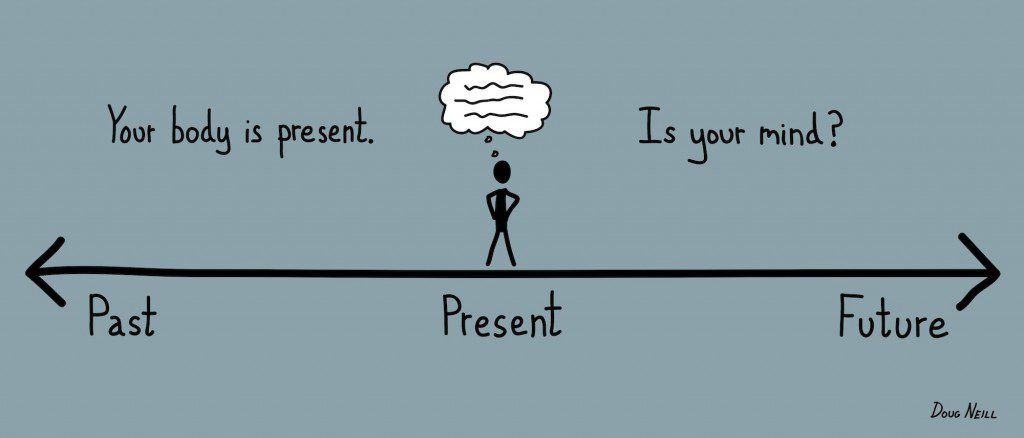
    The world we create for ourselves, as I wrote a fortnight back, is a filtered version of all the stimuli we encounter. As we grow older, our stream of consciousness gets more populated because of our experiences and we automatically try to find patterns. That’s the brain’s basic learning process which helps us to navigate stimuli. The world though, does become complex, the navigation more difficult, and that’s probably how we slip into auto pilot.

    We think we’re conscious of the things we do, and we are, at a superficial level, but are we really mindful? The simple experiment to do, and I think I’ve written this earlier, is to re-imagine the last hour of your life. How many actions you can remember is probably an indicator of mindfulness. There’s no question that the auto pilot is useful, but I doubt we’re in actual control of the takeover, and that’s where the problem is. Our decisions and our actions become mechanical, and even when they’re not, they’re dictated by filters designed by the auto pilot.

    mindfulness2

    (via)

    But I think there is hope. One of the best 2014 trend reports I’ve seen – by Zambezi – has ‘Mindful Society’ as its first trend. While that is more a take on digital devices and our time spent on them, the JWT trend forecast has ‘Mindful Living’ as their final trend, and talks about a growing interest to experience everything in a more present, conscious way. I also think that we might have unwittingly figured out a way to start out on this. One of the hottest trends this year is the quantified self – self knowledge through numbers – it encourages people to monitor all aspects of their physical, emotional, cognitive, social, domestic and working lives. (via)

    At this point, it is more focused on the physiological aspects, and there will most likely be a deluge of devices, services and allied products that would be an end in itself. However, it is also possible that we will truly understand our body, as numbers show the impact of our behaviour and consumption, and as a result, we’ll become more mindful in our actions. And maybe, just maybe, once we’re done with that, we’ll begin trying to do the same for our mind, and the decisions it makes. It’s difficult to imagine how that will work out, I agree, but hey, even five years back, did you think something you wear on your wrist could give you analytics on your sleep patterns?

    until next time, a qualified self 🙂

  • The overhaul of currency

    Back in 2012, in my first post on institutional realignment, I’d written this – “…my biggest hope is that the current currency of our lives – money – will have a better successor, one that will be better connected with our unique identities, and weave in contexts better.” In the two years since, this movement has not only begun, but is also figuring out its own dynamics. I had expected, or wanted, a disruption of money, but it will most likely be a transition. At this stage, I see at least three broad areas to frame this movement -the democratisation of finance, alternate currencies and marketplaces for value exchange.

    Democratisation of finance: This is probably where it began, because the internet has a reputation for removing intermediaries who do not add value in this case, financial institutions. From projects in Kickstarter, Indiegogo, and GoFundMe to social investments like RangDe and Milaap, there are now many ways to mobilise funds for me and you from people like me and you, according to personal passions, interests and belief systems. I’ll add more to this in the ‘marketplace’ section.

    Alternate currencies: Arguably, money as an institution has built a network involving processes, dependencies and establishments keeping in mind the dynamics of an earlier era. A civilisation connected by the www may find these tedious and irrelevant, and thus it’s only natural that it builds its own institutions. Bitcoin (a good introductory guide) is the one that made this phenomenon (relatively) mainstream, to the point that it even has ATMs. Bitcoin may or may not survive, it is probably the Napster in its domain, it has changed the game irretrievably. While on the subject, do read this fantastic tongue-in-cheek take on how it’d be if the roles were reversed – a cash based mechanism replacing digital currency. Meanwhile, there are other currencies similar to Bitcoin, and then there are completely different thoughts – for example, Pay With a Tweet. Which leads us to the various payment mechanisms that are being built.

    Marketplaces & Value Exchange: While the other two are the dynamics, this is where the mechanics play a part as well. In the ‘democratisation’ section, I had referred to several platforms that aid both discovery and action. There are many more stories in this line – from AgreeIt, an app that allows crowdfunding from friends on Facebook to crowdsourcing for emotional advice, ideas and so on to selling one’s reservation at a restaurant/spot in a line through Shout to  a ‘new media company’ Ideapod that wants to “amplify the ideas that shape our world, create genuine and enduring dialogue around ideas and spread ideas that matter through new and traditional media channels.” to ordering food from neighbours, (Eatro in London and Imli – a startup I mentor at the Microsoft Accelerator- closer to home) there are various models of value exchange that are shaping themselves. In fact, the entire ‘social commerce via collaborative consumption‘ route is based on these marketplaces. (a few good perspectives and stats on its drivers here)

    But, irrespective of the currency, every transaction requires (another) key element – trust. The social web is also building its own mechanics for this – from relatively generic clout mechanisms (Klout, Kred and the likes) to more context specific ones like LinkedIn or GitHub or even Wiki and review mechanisms. (from Amazon to TripAdvisor to Foursquare to GoodReads to Zomato) We earn trust through our knowledge and actions in these mechanisms. We earn social currency. That brings me to the final portion – how does all of this impact brands and what would be their role?

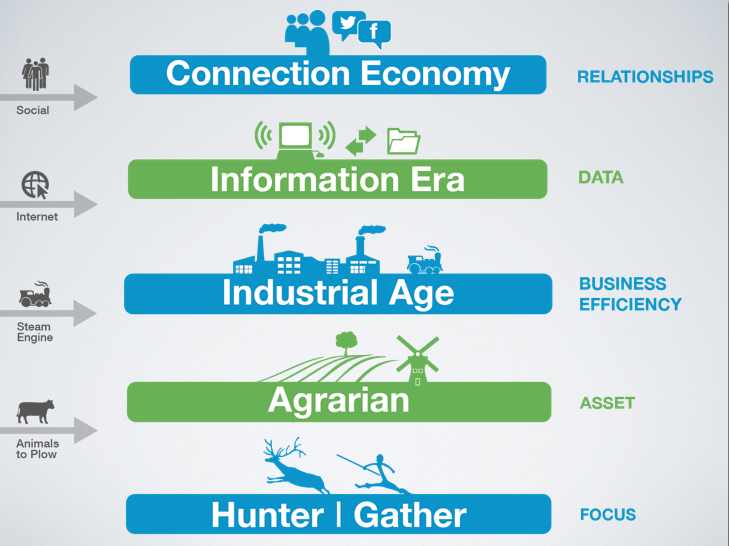
    Brands & the trust economy: Across the ages, corporations have been built on competitive advantages pertinent to the economies they operated in. I found a fantastic illustration in this context here

    Economies and competitive advantages

    I think relationships are indeed going to be the major competitive advantage in the future, and if so, the currency that would play a bigger role than money would be trust. As in many other developments prior to this, there are opportunities here for brands to weave themselves into the consumer’s narratives and go beyond transactional relationships, and to earn social currency. Many of them are already on it, finding ways to earn consumer trust and helping him/her develop and change perspectives about various currencies and relationships between them. Since we’re talking of finance, let’s use an example in that domain. Fidor bank helps its consumers discover crowd sourcing options, staying true a bank’s generic commitment of excellent wealth management. Yes, it’s still money, but it understands that it can be deployed beyond traditional options. In the process, it also helps the consumer to belong to a community.

    Brands actually have an option to join in wherever there is consumer spending. Nike+, as usual, did something back in 2012 – they allowed runners to trade in (running) mileage for Nike goods (I had shared the video in the institutional realignment post too) While this ties in beautifully with Nike’s business purpose, maybe some brands would have to lean a little more towards the consumer side and get into relatively unrelated narratives, and a relationship, before connecting it back to the business purpose. For example, airBaltic’s loyalty program Baltic Miles rewards frequent fliers who jog enough to burn off the same number of calories as miles they’ve flown. One of the aspects of agile marketing would be to enable identification of opportunities early. For example, imagine Coke getting into the act in Beijing’s first reverse vending machines that pay subway credits in exchange for returned containers.

    In what might seem like a ‘changing of goalposts’, just as brands are beginning to vaguely realise that their currencies of engagement with consumers need to change, the consumer’s relationship with the common currency of transaction – money – is also changing. The two are very related, and brands need to tackle both to have meaning and relevance in a consumer’s life, because if (as Godin says) “money is a story“, we’re probably nearing a plot twist.

    until next time, the end of money’s monopoly

    P.S. For another detailed look at the subject, you’d want to read Gauravonomics’ post on ‘The Future of Money‘.

  • The path to immortality

    I’d written earlier on how brands could use an individual’s data (the personal API) to fit themselves into his/her narrative and had used Nike as an example.  But this data could also be used by fitness and health companies to discover ‘fault lines’, gradually delay wear and tear, and one day, totally prevent a machine shutdown. This video – A Day in the life of Tim Ferriss (watch for a minute from 3:25) – gave me an idea of how we might be moving faster in that direction because of  data collection.

    Back in 2011, in ‘God in the details‘, I’d opined that over a period of time, when our data capture capabilities were evolved enough, and we had a lot of data on people on a lot of their behaviour, consumption etc, we would potentially be able to answer the most profound questions about our existence, purpose etc, and unlock further dimensions. I was extremely happy to read the same thought in this (long, but) amazing read called ‘Navigating Stuckness‘. “I could sit safely at my desk and write computer programs to gather vast amounts of Internet data, which I thought could finally answer timeless questions like “what is love?” and “what is faith?” with precision and clarity.

    On one hand, data could help us in our path to immortality, and on the other, it could provide us the answers to fundamental existential questions. I wonder what would happen first, because, as I wrote in PhilosoRapture, I also wonder if those questions would remain relevant once we became immortal.

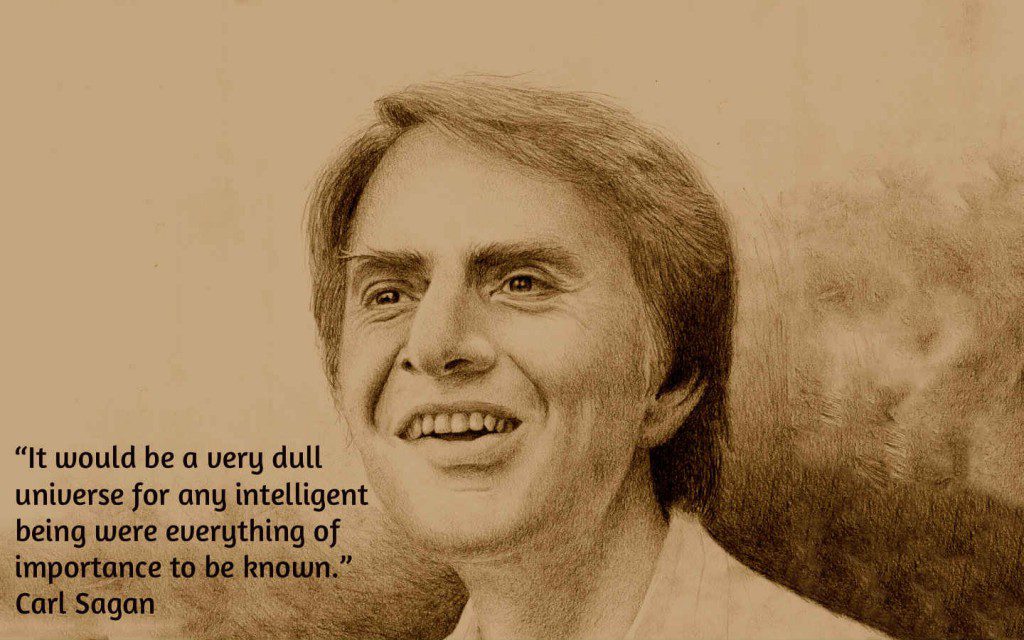
    Meanwhile, the other track to immortality that is rapidly developing is that of the augmented human, where human parts (including the brain) will be replaced by mechanical replicas. We’re only a part of evolution, as this wonderful, humbling video would show, and it is probably only our ego that makes us believe (if we do) that we’re the endpoint. Maybe, there will be a species later, of whom we’d be probably be creators, for whom our questions will seem irrelevant and who will have their own sets of answers to seek.

    cs

    (quote via, image via)

    So it would seem that whichever way we approach immortality, by the time we get there, chances are, it may not be that significant.

    The year we conquer morality, by the way, is 2040, as per Ray Kurzweil. I’ll be 62 then, or maybe not, or maybe it won’t matter, or maybe…  🙂

    until next time, live long and proper 🙂