• A change of course

    There was an intriguing article on HBR last month, titled “Can Companies Both Do Well and Do Good?” It was based on a research that looked at the correlation  between the financial performance of firms and their social & environmental performance. At the corners of a grid made of both kinds of performances on X and Y axes respectively, are Idealists (great on socio-environmental, but low on financial performance) Trendsetters, Exploiters and Laggards, in the clockwise direction. As should be expected, there are companies all over the chart, and the correlation is near zero! There were outliers, of course, but not really a pattern.

    It made me think whether it was possible for the corporations we see around to do good and well. I am not talking of CSR or ad hoc sustainability projects that would temporarily bring them to a Trendsetter level, but a radical shift that would stand the test of time. We are seeing a paradigm change in the way business is done, but this era is only the beginning of that transformation. In general, the entities we see around are hard wired to maximise profit and not really to spare a thought on the social/environmental or I daresay human fallout of their activities. These are large corporations with individual personnel, processes, shareholders who are used to a certain perspective. These are systems with a single point agenda. Is it really possible to shift them without a huge investment of all kinds of resources – time, energy, money – with no guarantee that this would really benefit the firm in the long run?

    So does this mean that in the medium-long term, these corporations are destined to fail as our understanding of achieving a balance between profit and being ‘good’ matures, and only those which have started/start now with a DNA that is meant to achieve this balance will do well? Or is it that as the individual and societal mindset gradually change, and as social business evolves, corporations will also be able to use that time to slowly transform themselves? I do wonder. What do you think?

    until next time, become the change you want to see
  • Of fame and purpose

    I completely missed Bigg Boss 6. Except for knowing that the arrested-for-sedition cartoonist and Sapna Bhavnani were participants, my exposure to it was limited to lunch conversations at office, where two of my friends seemed to be avid followers. 🙂 I thought my ignorance was only fair, since they are usually clueless when I mention the names of micro-celebrities on Twitter.

    Increasingly, I am realising that popular culture is going through massive fragmentation. The above was an example. I think this generation is connected with more people than any before it. It has always been so, with better means of communication, but this time, it has been an explosion. We’re still coping with the overload, or filter-failure, as Clay Shirky calls it. Despite social networks, or probably because of them and their algorithms, we miss out on many things.

    I was thinking of all this in the context of fame. Fame, to me, has some connection with my favourite subject these days – purpose. Fame can serve as a means, or end, or a by product of purpose. The thing is, with the fragmentation I mentioned earlier, fame probably has to be redefined, also because its shelf life has been drastically reduced. Once upon a time, a name/photo appearing in a newspaper was an achievement. (let’s ignore the notoriety piece 🙂 ) Later, before channels mushroomed, it was television. But now….

    One of the things that might happen because of all this is the gradual de-linking of fame and purpose, if it does exist. I’m still trying to figure out how that will shift our perspectives on purpose.

    until next time, being famous ain’t what it used to be…

  • Terrazzo

    There’ve been so many name and location changes in the last year that I can’t be sure which Italy has been replaced by Terrazzo – Italia or Little Italy. I think it’s the former. In any case, this is on 100 feet Road just before the 12th Main junction when you’re coming from the Koramangala direction. (on your right – so take a right before 12th main, loop around to 12th Main and then turn left on 100 feet Road) There’s valet parking for the bigger machines and just enough space for the smaller ones. The map can be found at Zomato, and the menu as well. There’s another restaurant Esplanade housed in the same building, and is related to the one in Koramangala.

    One thing they should probably change is piling the garbage right in front of the restaurant! Why would anyone want to see this when they walk into the restaurant? And the stink stays with you for quite a while. :\

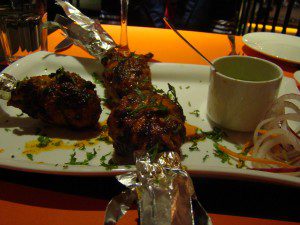
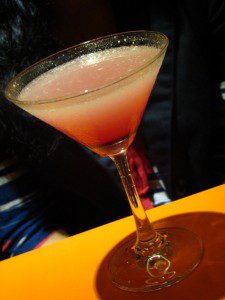
    There are three seating options – 2 downstairs (one closed, one semi open with a glass ceiling) and 1 upstairs. We sat upstairs and had a nice view of the road. The menu is a mix of (wait for it) Italian and Indian, so we decided to do the same with our order too! From the bar menu, we asked for a Tequila Steeler and a Classic Sangria, and for starters, a Lal Surkh Tangdi Kabab. We could have done with lesser chopped fruits in the Sangria but the Steeler was not a bad drink. The Kabab didn’t have much of the mince it was supposed to have, and the chilli paste was not really present in all the 3 pieces we got, but it was not a bad dish really.

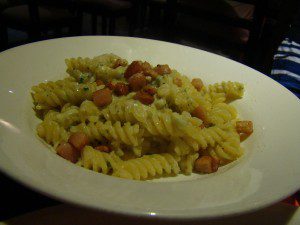
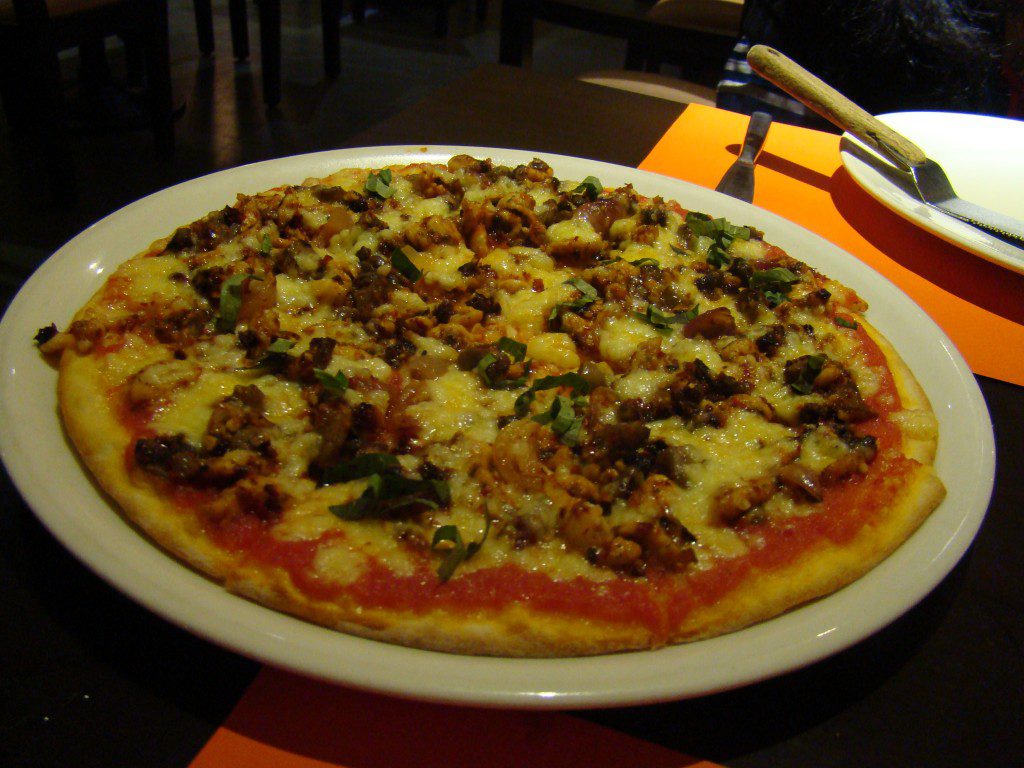
    For the main course, we decided to try the Sicilian al Pollo with a thin crust (that you have to ask for) and a Carbonara with Fusilli. The pizza turned out to be quite good with lots of cheese, mushrooms and chicken and a slight tang and spiciness thanks to the sauce. We’d have liked the pasta sauce to be a little less dry but there was no questioning the fresh cream, cheese and bacon presence.


    We were quite stuffed but the person who took the order insisted on a complimentary dessert when he learned that we had booked through Poshvine. (and that the booking for some reason had not gone through!) That happened to be a caramel custard with some amazing custard and a caramel sauce that could have been a bit less bitter.

    All of the above came to just under Rs.1850 (that’s after a Citi discount and taxes and service charge) The service was really really good and that’s not just because he bribed me with the dessert. 🙂 The food is reasonably good too and the ambiance is quite nice. All things considered, you could probably drop in if you’re around those parts.

    Terrazzo, No:1135, 100 feet Road, HAL 2nd Stage, Indiranagar Ph: 25289126/97482

  • Crambuddy

    CramBuddy uses content, quizzing and social networking to help students in their learning process. In conversation with founder Chirag Patel

    [scribd id=123281362 key=key-btc9awadhsis2e69t0n mode=scroll]

  • Search me..

    I was quoted in a recent Social Samosa post – on Facebook Graph Search. Do check it out on their website, it has useful thoughts from various others as well.

    Given that it is a fairly large move, (third pillar, Facebook calls it) I thought I’ll add to my quote there. As a final goal, both Google and Facebook are trying to organise and display information to users, because contextually relevant information is still a means to revenue, especially in the era of information overload. Google crawls the web, and Facebook uses social connections as a means to gaining this information. Google is also trying to add social as a context, and Facebook has Bing’s support. It’s not a war now, but it’s definitely armament.

    Facebook has tons of data to get this right, and this is dynamic data, thanks to the information we supply, and this is going to get better as Pages (and people) start optimising for Graph Search. Also, once the Open Graph is integrated and actions outside FB also start becoming data, it will become a larger treasure trove of information. Though there’s no advertising product in sight, I will wager that it is an advertising foray in the guise of a consumer tool. As I wrote in the article, Facebook now has the user’s intent broadly divided into 4 categories (people, places, photos and interests), along with his/her ‘influencers’. All of this will allow for some massive segmentation, and thus better targeted ads. And this is not necessarily evil, it can be damn useful because discoverability will be increased.

    In terms of implication for brands, (like I said in the quote) brands with organic signals (eg. for a retail outlet, check in at a physical location) will have a starting advantage. Once the Open Graph kicks in, social actions on websites will become a huge advantage. Content marketing takes on added significance since every action on FB increases the chances of a brand being discovered. Oh yes, Like is a back with a vengeance! On a tangential note, recruiters could use Graph Search as a hiring tool.

    It’s a long shot, but what would happen if Graph Search was thrown open to Pages. Think about it – as a page admin, I already have the ability to target my post to a certain level (about 7 parameters) but that’s really basic demographics. What if I were able to target (organically) (as Myntra) an Angry Birds t-shirt post at people in India who Like Angry Birds. (or even standard apparel brands)

    Meanwhile, there are two immediate concerns. One – privacy. Users will, over a period of time, calibrate the information they supply to Facebook with the advantages of doing so, but it will be a difficult process. The second, I will highlight through a comment made by Romit on Twitter

    But this is just version 1. I’m sure Facebook will have/build more signals inside the hood to filter data. Social just became even more interesting. For that. Facebook gets a thank you.

    until next time, Like I said…