• The era of wearables

    In the post on the Internet of Things last month, I’d mentioned two narratives on social products that I considered were working in tandem to shape the future of marketing, consumption, and living itself. Both using sensors – one on things (IoT), and the other on humans (Wearables, though I stubbornly use Techsessories!)  This post is on the latter.

    Why I think it matters: Though nowhere remotely close to Chris Dancy levels, I have been interested in this for a while. As I mentioned in my Personal API post, I see it as an evolution of my lifelogging pursuit – from logging in experiences to sensors automatically picking up data – and something that is highly relevant to my area of work – brands. In the big picture, I also see this domain as a key player in the evolution of our species – from our persistent movement towards immortality (physical) as well as, what I hope will be, a more gradual steps towards mindfulness. (mental, emotional)

    What is it? Smartwatches are just the beginning, and at a broad level, wearables can already be categorised into

    (Some statistics, a primer, and a good classification to broaden your perspectives)

    Where is all this going? For the scope of this post, let’s briefly look at the impact/deliverables from three points of view

    Consumer: There are quite a number of views (read concerns) that wearables are probably the first step towards turning us into cyborgs. (what I refer to as the augmented human here) There is another line of thought that wonders if all of this is taking us closer to ‘sofalarity‘. I can argue the Hug Shirt both ways! I wonder if, as we race towards singularity, there is an unconscious adaptation that our species is going through to survive, or continue to thrive. Personally, I like to think that technology is giving me the means to first quantify, and then use that data (converted to information and then to insights) to consistently work towards being a better human. ( a qualified self, so to speak)  I have already taken the first step with Goqii. While there is no dearth of trackers, I found their ecosystem approach interesting. I also envision creation of personal APIs becoming easier in the next few years, allowing us to store, analyse and transmit data and information to others.

    Ecosystem: At one level, there is going to be some effort in making wearables really mainstream. There is definitely going to be resistance. The answer, as always, is in using wearables as a means to address human needs. On another level, while devices are expanding in scope, quality and sheer numbers, as Chris Dancy mentions in the interview (linked earlier) interoperability is still a concern. (just as in the case of IoT) It’s not just wearables talking to each other, but talking to a larger universe of the IoT.

    Brands: This domain has seen its share of brands – standalone ones as well as majors like Apple, Google and Samsung who want in on the action. There are fashion brands too, and I can imagine a near future when technology will be a hygiene factor in many kinds of apparel. While this happens on the device side, the data generated finds application across spheres – think, for example, how this can be applied in the health domain, (from medication to insurance) employment, sports and so on. Thus, there are many roles for brands – a standalone device and ecosystem with minimum connectivity, or devices and/or ecosystems that work in a complementary manner with another set and provide a product/service. As privacy concerns escalate, I believe the role of the consumer will be the key one to watch. This is the opportunity for brands to connect its business purpose to the consumer’s narrative. Brands should work towards gaining the trust of consumers early on and create seamless platforms for connecting devices, data, and users, working towards a common shared purpose.
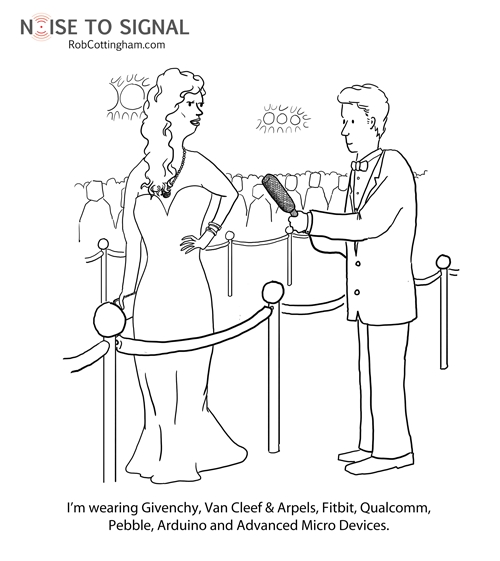
    Wearables

    (via)

    From not believing that the world needed more than five computers (1943), we have reached more than 1.8 billion smartphones (source) that arguably do more than what a ‘computer’ can. So, a wearable (or a set of them) soon superseding a mobile is very much in the realms of possibility. As functions evolve, form factors will change – that’s inevitable, and on shorter cycles. The last decade in particular  has seen a massive technological evolution, but I think this is just the beginning – we’re at the cusp of a sea change in the way we live and work – about to push beyond the known boundaries of the body and mind. In the context of this evolution, Carl Jung’s profound statement would be a good one to remember – “Who looks outside, dreams. Who looks inside, awakens.

    until next time, wearabouts!

    P.S.  If the subject interest you, do follow my Techsessories and Health boards

    P.P.S. Need a #lulz worthy wearable strategy – Check this out!
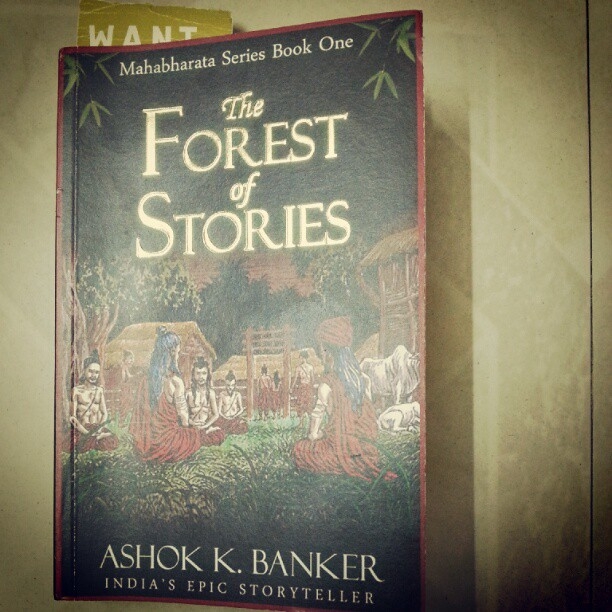
  • The Forest of Stories

    Ashok Banker

    Book 1 of Ashok Banker’s Mahabharata, MBA if you will. It is an exact rendition of the saga written by Krishna Dweipayana Vyasa. The narrative begins in Naimisha-sharanya, where Ugrasrava, son of Lomarsana and better known as Sauti, arrives to convey the news of Vyasa’s transcendence to the next life, and to narrate the grandest tale ever created.

    The tale begins long before the descendants of Kuru faced each other on the battlefield at Kurukshetra. Kurukshetra, famous long before as Samantapanchaka where Parasurama created five lakes of blood from the decimation of kshatriyas, and famous long after as the venue for the sarpa satra conducted by Janamajaya, descendant of the Pandavas.

    Sauti explains how Jaya, the original tale swelled from 8800 slokas to 24000, named Bharata and then over several narrations, to Mahabharata, made of one hundred thousand slokas. A narration that Sauti himself was the recipient of, from Vaisampayana, as well as Vyasa himself, at the satra.

    The narrative is anything but linear, like a tree with a multitude of branches, and does stick to Vyasa’s original work. It flits from story to story, occasionally coming back to what can be loosely described as central narrative, in this case, a sort of index built by questions being asked to Sauti during his narration. Thanks to this, from creation of the world and the origin of different species to the reason for the Mahabharata war and the stories of many antecedents of the Pandavas and Kauravas, there are stories and stories. This book ends with the introduction to Bharata – the emperor, son of Dushyanta and Shakuntala, after whom the country is named.

    As someone deeply interested in mythology, this is a very interesting read, despite the elaborate prose, but what you will get from it completely depends on your level of interest in the epic.

    Clipboard01

  • Home, virtually

    The idea of home has made its presence felt many times on this blog – personal perspectives, as well as its evolution based on the institutional realignment line of thought. In fact, this is one of those topics  which I continue to have many thought wrestling matches on. While home begins as a physical place, as one steps out of it and moves out into the larger world, one realises that it becomes as much a place that is created in the mind.

    Clipboard01

    To quote Pico Iyer, “For more and more of us, home has really less to do with a piece of soil than, you could say, with a piece of soul.” The ‘piece of soul’ changes with circumstances and choices – from childhood, landmarks, experiences and so on to a different set of people and places, and a different sense of purpose, for instance. All of this continue to change over time, until probably, at a certain point, you realise the set of places, people and props you’d want around in your final years. But let’s not get morbid ahead of time! 🙂

    To quote Pico again, “Home is not just the place where you happen to be born. It’s the place where you become yourself.” And sometimes it can be both. It also explains why I did not recognise a future home when I saw one – 11 years back, on a screen not very different from this one. That’s what this post is about – to acknowledge the day it all began – 11 years ago. It is also a hat tip to Rediff, where I began my blogging journey (when I spoke at BlogAdda recently, most people didn’t know Rediff used to have blogs) and a nod of thanks to my 25 year old self who had no idea what he was getting into and wrote some horrible verse to start it all off.

    A place that, in a click, helps me travel back in time and shows me people, perspectives and pages, some of whom/which I have outgrown, but have influenced what I am today. Experiences that have shaped the course of my life. A journal of the past which continues to help me shape my narrative – thoughts, to words, to actions, and beyond. A place where I continue to become myself.

    thoughts

    A piece of my soul that is my consciousness and on many occasions, even my conscience. A homepage that I consider home. 🙂

    until next time, thanks for reading!

  • Hoppipola

    first published in Bangalore Mirror

    My first Hoppipola visit was an experience I’m not likely to forget soon. They wouldn’t take reservations so we had to try our luck on a Saturday night. This is on the top floor of the Mainland China building immediately after the Domlur flyover when coming from Koramangala. (map) A bunch of kids were waiting in the ground floor lobby expectantly eyeing the lift every time its doors opened, for such was the crowd that only when guests left were new ones let in. We finally managed a place in the lift, and smugly assumed there would be a table waiting upstairs for us. The doors opened to a college fest, (or school – debatable) with alcohol, and standing space for just about four people. The only way to get a table was to have Spidey like speed and reflexes. Since we were barely on the right side of forty and had no special effects for support, we felt like people in the namesake Sigur Ros song and beat a hasty retreat before the sharp increase in the average age on the floor provoked an uncle/aunty comment. The second visit, on a Friday afternoon, was more peaceful and we could appreciate the quirky ambiance as well. Garden seating with potted plants and creepers for company on the outside and large tables and bar seating inside, exam pad menus with offbeat descriptions, board games, books and a happy wall whose doors and windows can be opened for surprise gifts, all add to the youthful vibe. Judging by the crowd, Hoppipola has definitely been successful in its endeavour to make people of all kinds happy!

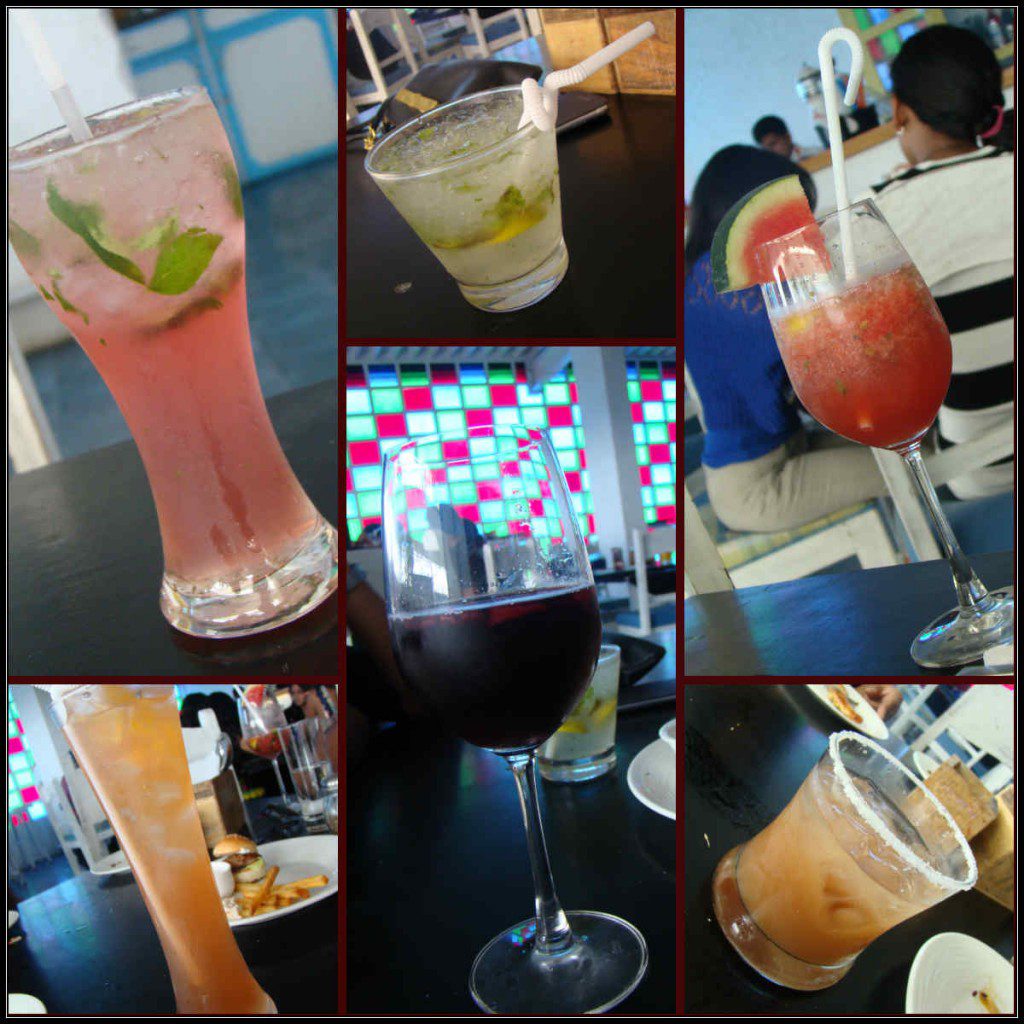
    We took quite some advantage of the ridiculously cheap alcohol prices. The Apples and Curry Leaves mojito was refreshing with the curry leaves adding that extra bite. If you’d like things to be a little less sweet, go for the Kafir-Lime and Lychees version. Even spicier tastes? Go for the Guava Balsamic Mary, served in a salt-rimmed glass and strong in flavours and alcohol! The red wine based Sonora Sangria is not bad either, with the wine quantity making up for the relatively lower overall volume.

    collage1

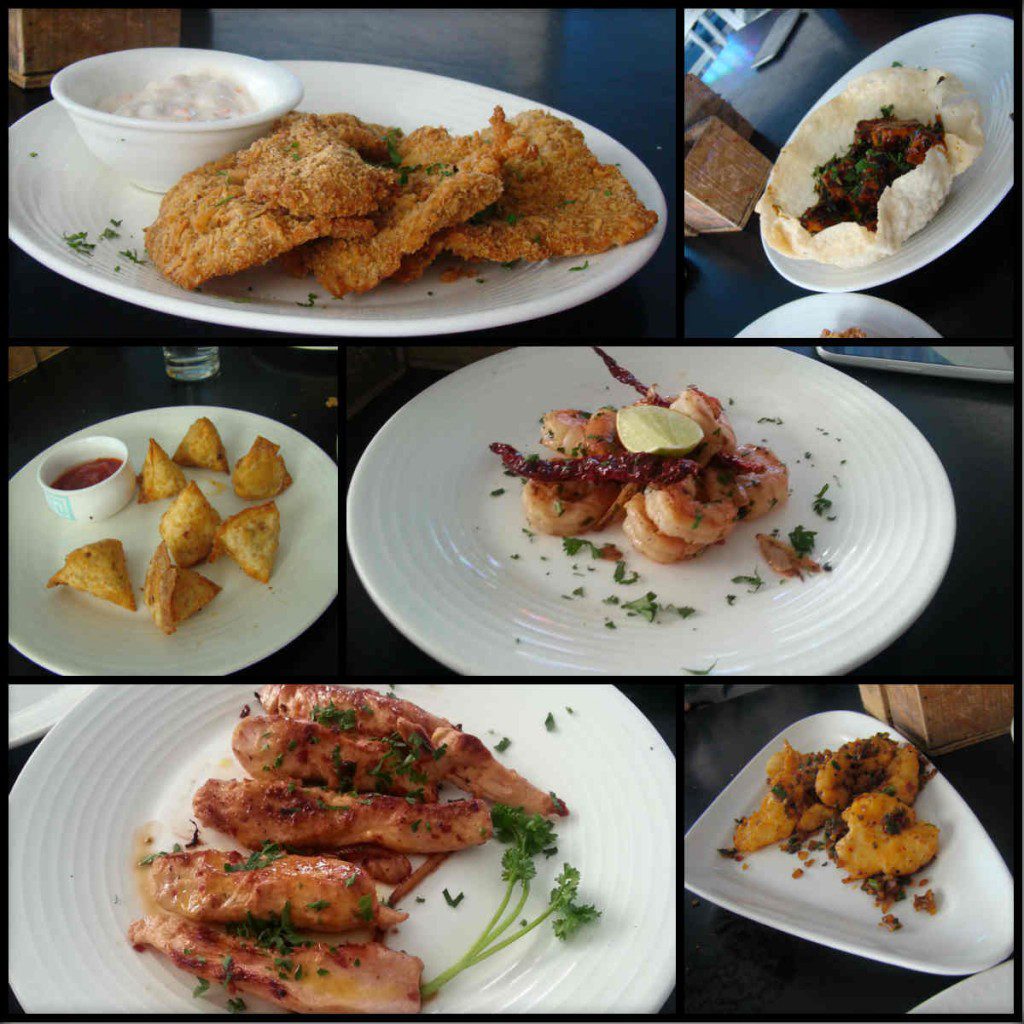
    The Pimped Shrimp was our solid start, and in addition to the promised garlic and burnt chilli flavours, it also had a lime presence that added an excellent tanginess. The mildly spicy Sansho fish came a close second with vinegar and chilli flavours. We also liked The Mexican samosas – they chose to call it empanada – crispy exterior with a creamy corn and jalapeno filling. The Teriyaki Paneer, with a unique presentation style and gingery flavour, and the Chickiti’tah – grilled chicken with a whiff of tangerine and ginger – were not bad either. The Rasta Chicken came recommended, and though it was crisp-fried and tasty, it didn’t really live up the expectations.

    collage2

    On a relative note, there are fewer options in the mains section, and it didn’t help that a few items were unavailable. We chose Captain Haddock to begin with – a carbonara pizza with ‘chicken bacon’ and though a tad bland, we still liked it. The tomato heavy Margarita was a thin crust pizza and even discounting our collective meat bias, this was not something we cared for. We tried two versions of “The Drinking Man’s food” – ‘Champagne Cream’ with a creamy cheese sauce and champagne with chicken and ‘Pesto Rum’ with shrimp. Both were excellent, though we could detect no trace of the alcohol mentioned’, and it took several rounds of debate before the Pesto Rum was given top honours. The last to arrive was the Coin Lamburgers – three mini burgers with mildly spicy and tasty patties.

     collage3

    There is no way to sugar-coat this. There are no desserts! I am rarely one to rant about the youth of today, but is this what it has come down to? How can we be called a civilisation without a sweet tooth? What about those researches that correlate chocolate and happiness? Sigh. A minus point for that, though I was told that desserts would be added soon!

    For about Rs.1350, you could share a couple of cocktails, two non veg starters, and a couple of non veg main course dishes. (Inclusive of taxes and service charge) The service is reasonably prompt, though they do tend to get hassled sometimes. If you can brave the challenges of gaining entry, you’ll find that the ambiance and the buzz do give Hoppipola the lively bonhomie it aspires to have. It also hits the sweet spot in terms of pricing, but c’mon, some desserts to sweeten the deal?

    Hoppipola, 4032, (Mainland China Building – terrace) HAL, 2nd Stage, Indiranagar, Bangalore Ph: 080 25217070

    P.S. This happens to be restaurant review #200 on this blog. Burp! 😀

  • Mentoring Startups @ Microsoft Ventures’ Accelerator Program

    When I come to think of it, my sales/brand jobs have all been on startup mode, though the organisations themselves were quite established – Dishnet DSL in 2002, WorldSpace in 2003, MidDay Bangalore in 2006, Bangalore Mirror in 2007. Myntra was still a startup when I joined in 2011. I really can’t remember when I first became interested in startups – perhaps Bangalore’s culture of entrepreneurship affected me soon as a landed here – in 2003. But it really started manifesting itself only during my stint at The Times Group. Muziboo was probably among the first I actually interacted with (in 2008) and I still remember sending feedback to Deap for Burrp’s mobile site in 2009.

    It was in 2010, when I started writing the startup column for Bangalore Mirror that I understood why I probably had such a fondness for startups – in them I see individuals who have in some way connected to their purpose in life. That gives them a passion and energy that is amazingly infectious. After the column’s run ended in 2013 (at 97 Bangalore based startups!) I had no official reason to associate with them any longer, though the connections I’d made early on – Zomato, for example – gave me an occasional opportunity to indulge my interest.

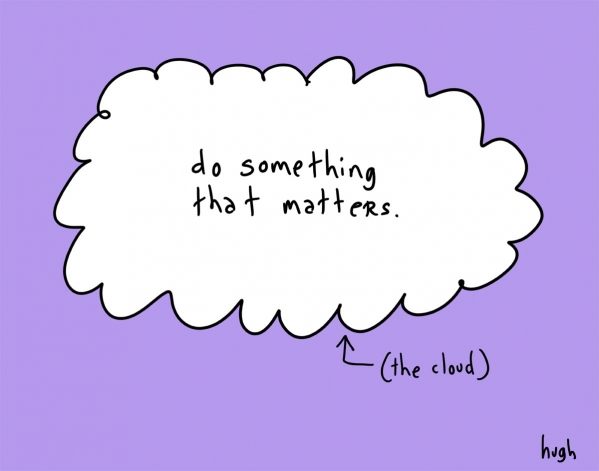
    do-something-that-matters-2

    (via)

    All of this would explain my immense happiness when I was invited to be one of the mentors at the Accelerator Program of Microsoft Ventures last year. The Accelerator is part of a global establishment and helps entrepreneurs launch/scale their startup through a 4 month intense program that begins in January and July every year. At the accelerator, the entrepreneurs get access to quite a few things – a pool of mentors with expertise across various domains, (design, brand, technology, to name a few) office space to work from, and a ton of connections to help them gain funding and scaling opportunities. (FAQ) The other crucial factor they get, and I’ve seen it not getting the attention it deserves, is the Accelerator team itself. I have seen their diligence and their interactions, and they add an enormous amount of value in shaping ideas into executable plans.

    I’ve now been part of the last two batches, mentoring a couple of startups in each batch – TommyJams and Tookitaki in the previous batch, and Imly and Voonik in the current. Respectively operating in the domains of entertainment, advertising, food and fashion, these four by themselves are enough to give you an idea of the diverse kind of startups that make up each batch. Though I’ve worked closely with these, I’ve also had multiple conversations with other startups and have been impressed by the sheer quality of ideas behind many of them, their willingness to learn and reinvent if necessary, and the tenacity with which they execute their plans.

    My role may be that of a mentor, but I’ve learned quite a bit too. My learning has been in many forms – watching the startups in action, understanding at least a part of the intricacies of the domain they operate in, their approach to the challenges they solve, and most importantly, conversations with other mentors. Many of the mentors belong to the investor community and bring with them fantastic perspectives on a wide variety of things.

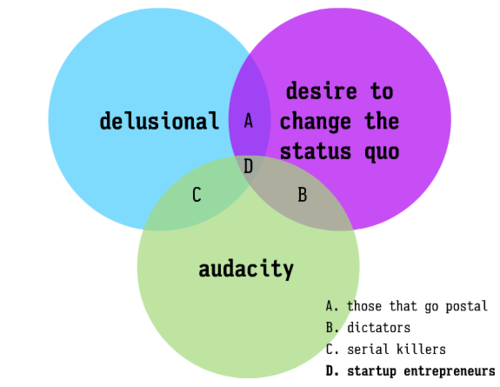
    It has been an exciting experience for me thus far, and I’ve been planning to write about it for a while now. The immediate trigger came last week  in the form of an invite for the Demo Day of the current batch. I also learned that the Accelerator had started taking applications for the next batch. In my own selfish interest, I’d like to play a role in the life of some entrepreneur out there. If you think you are ‘D’ in the figure below, apply away!

    tumblr_lo1pofU25f1qjg2hr

    (via. Check the superb original deck here. Thanks @m3sweatt for p0inting out )

    Disclosure: In case you’re wondering, mentors don’t get paid, not even to write this! 🙂