Category: Society & Culture

  • PhilosoRapture

    In one of the slides in the presentation I shared last week, I had touched upon institutional realignment, and ‘health’ as one of the drivers. But the origins of this thought go back at least 4 years to The Man..the machine, and  Life…streamers, and the subject of immortality and the path to it – the augmented human – have since then made several appearances here – ‘The Immortal’s Reality‘, ‘Back to Eternity‘,  ‘Your Next Avatar‘, and Remember the Feeling to name a few. As I read these posts recently, I realised (again) that the possibility of the current version of the human being just another step in evolution is a humbling one.

    On one hand, I remembered the story of Yudhishtira and the Yaksha, and the answer to a part of Question 9. The Yaksha asks, ‘What is the greatest wonder?‘ and Yudhishtira answers “Day after day countless people die. Yet the living wish to/think they will live forever. O Lord, what can be a greater wonder?” On the other hand, I also read that Google (which shares its first two letters with God) has invested in a company that will work on combating aging and disease. Google is not the first company to attempt this, and scientists are already figuring out how to reverse ageing, but it does have the Ray Kurzweil advantage. (also read) This is promising to be a fight to the death! 🙂

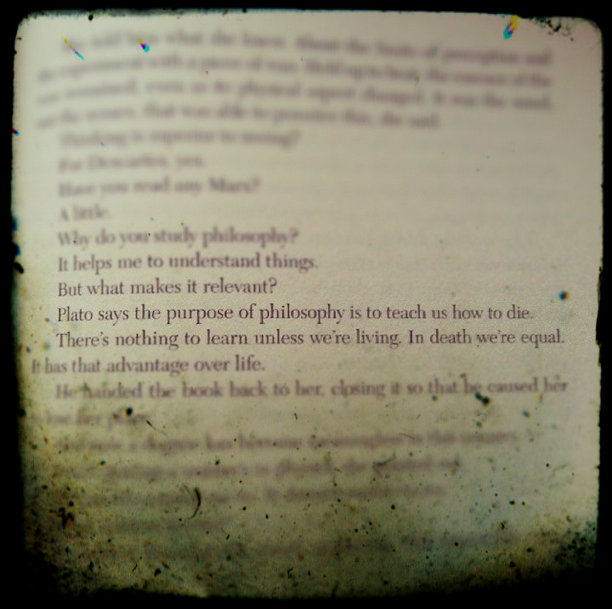
    On the same day that the Google article was published, my favourite thinker on the subject – Scott Adams – posted an article on our ‘choice’ of immortality- one was the Google way of doing away with aging, the second was we would be able to transfer our mind to robots, and the last was transferring our minds into virtual worlds. I am inclined towards the augmented human route – body parts getting replaced one by one, until we become a ‘Ship of Theseus‘ and a perfect example of the paradox. But one way or the other, it seems as though we’re destined to be immortal. The funny thing is that despite that, the question would remain – ‘what is life and why do we exist?’ I wonder if an eternity would be enough to answer it. Or probably, our state of consciousness would be such that we wouldn’t feel this urge for an answer. After all, according to my 500th photo on Instagram,
    Clipboard02

    The end of death is probably the end of philosophical questions as well. Whether that is a good thing is an open question. Or not. After all, Carl Sagan did say “I think if we ever reach the point where we think we thoroughly understand who we are and where we came from, we will have failed.” 🙂

    until next time, cogito ergo hmm

    P.S. Not a big fan of donuts, but a fantastic take on the subject of life and its context – http://imgur.com/K6EKeRW
  • Emotion as a Service

    More than a year back, I had written about institutional realignment and had briefly mentioned the institutions of marriage and parenting. ‘The currency of relationships‘ made me think of this, and family – immediate and extended – as a societal construct/contract/ institution, and probably even as a tradition. Where we are born, and whom we are born to, are apparently out of control, but we do have an illusion of control courtesy the choices we make as we go along. Thanks to these choices, our lifestyle and our perspectives may follow a trajectory that is totally different from the circumstances and people we grew up with/in. This is not just about the people from our childhood/youth, but is a continuous process through life. Each of us find our own ways to deal with the constant flow of people through our lives. These are again choices, and like most choices involves some amount of sacrifice and bring with them their own set of consequences.

    Clipboard02

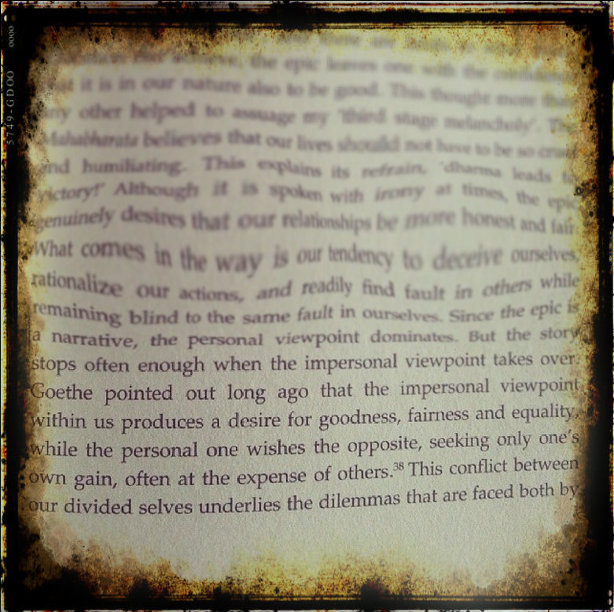
    I loved that Goethe paraphrase, because I think it sums up our relationships very well. At the risk of sounding cynical, (or receiving a ‘speak for yourself’ comment) I’d say that we’re increasingly becoming selfish as a species. I have always had the notion that most relationships are contextual, and it would be difficult to scale our emotions/feelings for others for an indefinite time frame. Yes, I do acknowledge there are exceptions, but that’s what they are – exceptions. Do a quick test and find out how many people across your life you’re still in touch with – bouts of nostalgia not included?

    It is with all this as the backdrop that I read Scott Adams’ “The Future of Marriage“. It articulates very well a thought that had crossed my mind earlier. (Of course, he obviously explores it way better than I could have) He deconstructs the institution of marriage and argues that marriage made sense “when the world was inefficient. You married a person nearby who could provide most of your important needs while hoping your lesser needs could also somehow be met.” Now, he says, the internet has allowed us to have a barter economy of relationships. In other words, a virtual spouse comprised of a dozen separate relationships. He tempers everything by saying that in the future, marriage may be one of the many options available. By sheer coincidence, and in a different context, I came across this quote attributed to Steve Macone “A tradition is a habit whose logic has faded“.

    I thought about this in the context of the expectations I had mentioned in the ‘currency of relationships’ post. If the institution of marriage can have a barter economy, why not other relationships? After all, isn’t every relationship a barter at its core? It’s just that we are rarely comfortable with voicing our expectations in the case of an emotional ‘transaction’, quantitatively or qualitatively. (generalising) Parents expect their children to look after them when they are old, in return for bringing you up; relatives expect you to return the favours they once did for you, and so on.

    So who knows, maybe our pace of life and our need to be (seen as) fair in all our relationships will conspire to form a barter ecosystem that offers emotion as a service. It is possible that an alternate path to prosperity might take us in a different direction, but in the era of the quantified self and the augmented human, when we slowly transition our selves into the cloud, maybe ‘Emotion as a Service’ (like)  is not an impossibility. What do you think?

    until next time, a qualified self

  • The currency of relationships

    Clipboard02

    Some people know me way too well! 🙂

    A few days ago, I received a message that gave a jolt to my perception of how I deal with other people and what they make of it. I had written this post sometime back on taking friends for granted, and while that was in the specific context of friendship, this is an approach I extend to all relationships, be it transactional or emotional. I like to think that I’m fair in my approach and try to give back more than I get. But apparently, at least according to one person, I am not, and am “Mr.Use and Throw”. It hurt because I have always acknowledged the help that I’d received, to that person and others. I have not had an opportunity to repay it in kind, but whenever I have felt that my presence would bring happiness, I have made it a point to be there. I did reply with my perspective on the accusation, but it led me to think of the subject and how our actions are perceived by others.

    In this case, for instance, there were possibly expectations from me that I had not known of – not of a monetary kind, I think, but some other kind of help or acknowledgement. (Generalising) We live in an increasingly transactional world, where we are able to quantify all sorts of things and are also able to throw money at issues/problems/situations to resolve them. In scenarios where that is not applicable, we use our judgment to repay a gesture of kindness/affection/love. Over a period of time, I have dealt with the latter by acknowledgment and thanks in word and deed, and by paying it forward. But there is no standard currency in relationships, and my lesson from this experience is to not to take for granted that my approach is the one that works for people at the receiving end. I should spend some time first in understanding expectations, and then meeting them. When the price and currency are not agreed upon at the outset, you will need to keep paying until both parties have agreed that there are no dues.

    20131117_163614

    until next time, emotional monthly installments

    P.S. and a happy Thanksgiving 😉

  • A different kind of prosperity

    A couple of months back, there was a very heated debate (mild term) based on an article that was titled “Why Generation Y Yuppies Are Unhappy” and (also) dealt with something that has occupied my thoughts for a while now – the sense of entitlement. It had a very simplistic formula on happiness : Happiness = Reality – Expectations, and the author’s take was that a sense of entitlement/being special heightened expectations and when that collided with reality, Gen Y’s happiness suffered. Another key factor in this was they are also regularly ‘taunted’ by people who are doing better – simply because the latter share their successes much more.

    I must say that my observations on the sense of entitlement have led me to believe that it’s not totally an age thing. I do agree that societal and lifestyle changes have led to parents becoming more indulgent, but I think the larger culprit is mass publishing platforms –  the ability to broadcast one’s thoughts to large number of people. It is enhanced when the publisher realises he/she has an audience. It does seem higher in younger groups but that’s only because they have been exposed to these platforms much earlier in their life than an earlier generation and therefore do not have the alternate perspectives and experiences of the latter. But the entitlement discussion is for another day.

    An interesting point made in the article was that Gen Y wanted fulfilling careers. What does not come out though is what defines ‘fulfilling’. Is it the emotional satisfaction of working towards a shared purpose, or is it the perks that come with a high-flying career? I suspect that fulfilling at this point swings more towards the material success that the latter provides. Umair Haque has an interesting take called ‘Growthism‘, a devolved form of capitalism, whose dogma is to achieve growth at all costs and according to the author prevents us from developing a sophisticated conception of what prosperity is. It does seem fluffy but that’s probably because we have been conditioned by various institutions for a long while now.

    But I sense a change is on its way. For instance, thanks to this post, I came to know of The Prosperity Index, which goes beyond the GDP and economic success based models of measuring prosperity of nations. While this is indeed a positive step, I think true change will happen when constituents like the Gen Y mentioned earlier begin to look at currencies beyond money for a sense of fulfillment, and happiness. In this must-read article titled “Who Will Prosper in the New World“, the author mentions “People who don’t need money” – people who have the incomes of the lower middle class and the cultural habits of the wealthy or upper middle class.

    I think we’re at the beginning of a new cycle – a generation will start ignoring the paradigms of success and fulfillment set by its predecessors and their institutions, and use the fabulous technologies that are evolving to craft its new narrative of happiness. I also think that my generation might be the casualty of two large concepts at war with each other, but maybe that’s what it takes for a civilisation to be entitled to its prosperity….

    moral

    until next time, changelings

    P.S. On a related note, do read ‘On Lifestyle Rigidity

  • The narratives that we drive

    It probably started with the ‘narrative’ post, but a few things I read later made me wonder about our choices of narratives and where this could be leading to. Some narratives happen to us depending on our circumstances – time, geography etc, and some we choose of our own volition, or so it seems. Continuing from the earlier post, I think it’d be safe to say that with a more connected world, our ability to choose narratives has been heightened. Abundance of creation, and consumption. I think this was the related fantastic little piece of content that triggered this entire line of thought. It has some thoughts on material consumption, and though delivered differently, it has some profound insights as well.

    Partly thanks to that abundance, the noise around us has also increased, and has found better ways of being amplified. To quote Clay Shirky,

    It is our misfortune, as a historical generation, to live through the largest expansion in expressive capability in human history, a misfortune because abundance breaks more things than scarcity.

    In fact, one could argue that compulsive consumption (material, and otherwise) is one of the reasons for our ‘emptying out‘. (do read) As I was writing this, I had a sense of deja vu, and some searching pointed me to this, written 3 years back, in which I tried to figure out whether there was a middle path between a self that was driven by others’ perceptions and one that was driven by a moral compass dictated by few external stimuli. In that post, I had quoted from Paul Graham’s ‘addiction’ post,“we will increasingly be defined by what we say no to” I think that still holds true.

    In this era of abundance, what narratives should we choose to be part of? How can one be objective, is one even right by being objective? An excellent post whose advice I hope to implement more is this. I really couldn’t disagree with any of the 30 things mentioned, it just seemed intuitively right. But I think this would serve as an excellent first lesson..

    (via)

    until next time, an open and shut existence