Category: Society & Culture

  • Artificial Humanity

    In Natural Law, I had touched upon the idea that we will have to make choices as a species in the context of the role of artificial intelligence in our lives, and how/if compassion towards each other would play a part in these decisions. As I watch thoughts and events unfolding around me, I am beginning to think that it will most likely not be one crucial decision later in time, but a lot of smaller choices, made at individual and regional levels now, that will shape our society in terms of acceptability, morality etc. And so, just as I wrote in a post around five years ago, that we might not be able to recognise the final step we make in our integration with AI, there might be an increasing inevitability about our choices as we move forward in time.

    What sparked this line of thought? On one hand, I read a New Yorker post titled “Better All the Time” which begins with how a focus on performance came to athletics and has now moved on to many other spheres of our life. On the other hand, I read this very scary post in The Telegraph “The Dark Side of Silicon Valley” and a bus that’s named Hotel 22 because it serves as an unofficial home for the homeless. It shows one of the first manifestations of an extreme scenario (the nation’s highest percentage of homeless and highest average household income are in the same area!) that could soon become common. The connection I made between these two posts is that increasingly, there will be one set of humans who have the will and the means to be economically viable and another much larger set that doesn’t have one, or both. This disparity is going to become even more stark as we move forward in time. I think, before we reach the golden age of abundance, (if we do) there will be a near and medium term of scarcity for the majority.

    (more…)

  • Natural Law

    After a couple of years of Samsung, I bought a Moto X (2nd gen) phone, the Droid Turbo and Nexus 6 also being considerations. In the first few days of use, the automation that Moto’s Assist, Actions and Voice allows has impressed upon me the potential of such technologies and the dependency we could have on them.  As Karen Landis states in the Pew Internet Project’s Killer Apps in the Gigabit Age, “Implants and wearables will replace tools we carry or purchase…It will also redefine what a ‘thought’ is, as we won’t ‘think’ unassisted.

    It reminded me of an article I’d read in Vanity Fair titled ‘The Human Factor“, and a particular observation in it – To put it briefly, automation has made it more and more unlikely that ordinary airline pilots will ever have to face a raw crisis in flight—but also more and more unlikely that they will be able to cope with such a crisis if one arises. This thought is elaborated in ‘Automation Makes Us Dumb‘, drawing the difference between two design philosophies – “technology – centred automation” and “human- centred automation”. The former is dominant now and if one were to extrapolate this , a scary thought emerges.

    I think the best articulation of that scary thought is by George Dyson in Darwin Among the Machines – “In the game of life and evolution there are three players at the table: human beings, nature, and machines. I am firmly on the side of nature. But nature, I suspect, is on the side of the machines.” I had seen this in Bill Joy’s amazing 2000 Wired article “Why the Future doesn’t need us“, which itself discusses the idea that Our most powerful 21st-century technologies – robotics, genetic engineering, and nanotech – are threatening to make humans an endangered species. (more…)

  • A republic of convenience

    Masala Republic is a Malayalam movie I watched recently. First, my sympathies with those who attempted the heroic task of watching it in a theatre, but to be fair, it did give me some food for thought. No, not about my choice of movies, but things slightly more important in the scheme of things. It talked, for instance, of issues that needed a voice – the changing socio-political and economic dynamics of Kerala caused by a huge influx of people, mostly low wage workers from Bengal and the North East.

    The movie begins with the disruption brought about in the life of these folks by a ban imposed on Gutka, which apparently is part of their staple diet! This reminded me of the (real) scenario I witnessed when the liquor ban was announced in Kerala. Almost overnight, I saw an ecosystem disbanded – small shops around bars, auto-rickshaws that ferried drunk guys home, to name a few components.

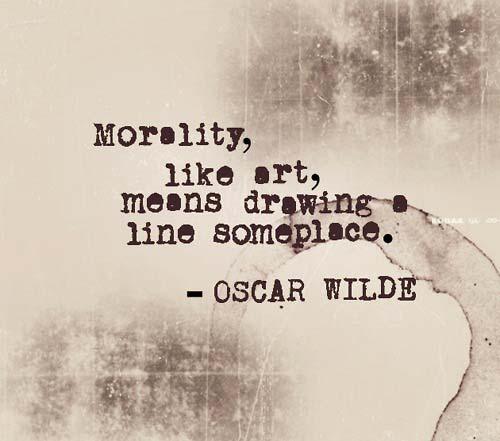
    Notwithstanding the political play that brought about this ban, I was forced to ask – isn’t alcohol consumption an individual’s choice? One might cite domestic violence, decrease in productivity, drunken driving etc, but unlike say, smoking, it does not automatically cause damage to the larger society. Isn’t a blanket ban a bit like banning automobiles because of road accidents? If the justification is that individual choice must bow before collective progress, then can we really condemn Sanjay Gandhi for the infamous sterilisation programme? After all, population control would, at least arguably, have meant progress. What we are debating therefore, (I think) is the means. And means is exactly what an alcohol ban is. Does society really have the moral right to take such a decision? Who decides society’s collective moral compass and what can resist such selective applications of morality?
    Clipboard01

    (via)

    Who decides where the line is?

    P.S. Would be glad if you could point out whether I am missing some relevant piece of information or logic here.

  • The people we are….with

    After I shared the “We, the storytellers” post on Twitter, Surekha sparked off this interesting discussion on how we could persuade others to be less judgmental and more compassionate. I really didn’t have a fix-it-all answer and felt that it was more important that we simply practice this ourselves. That, however, did not stop me from thinking about it.

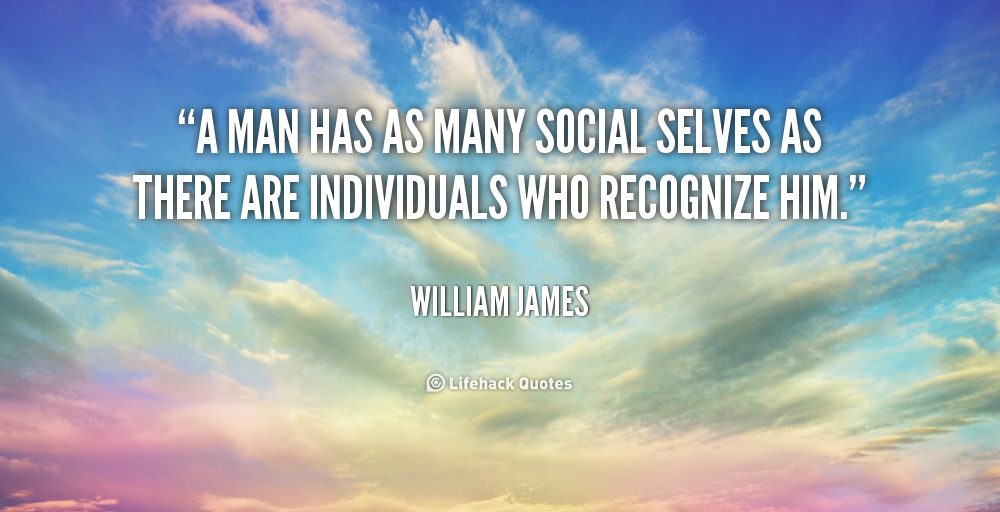
    The next day, my reading list had this post, which touched upon things that get people to change their behaviour. I remembered this William James quote used in the post from something I had seen a while back at Brain Pickings.

    Clipboard01

    (more…)

  • The Art of Live In

    I borrowed the title from a post I wrote nine years ago on live in relationships. We have come quite a way since then, but I am also seeing an evolution in this narrative. I call it the same narrative because fundamentally it challenges the institution of marriage as we know it. The way I see it, marriage was an evolutionary necessity – as a relatively structured process of procreation, and thereby organising society. The words below are from a work of fiction based on the life of the Buddha, it would seem that neither is it far from truth nor have things changed much.

    Sid

    So why is this institution primed for ‘disruption’ now?

    Technology is one factor. The family unit made sense when younger members of the species had to be protected. As AI advances, maybe a family unit will not be necessary for safety or security. Technology also might play a hand in the physiological aspects, more on that in a bit. As I mentioned in an earlier post (Emotion As A Service) marriage is as much a transactional relationship as an emotional one. To paraphrase Scott Adams,  (fromthe internet has allowed us to have a barter economy of relationships….a virtual spouse comprised of a dozen separate relationships

    The second factor – advances in medicine and increasing lifespans. Imagine living up to 150. The ‘life partner’ that you chose when you were a carefree 20 year old may not be the one you’d want to have fireside conversations with in your middle age – 95. Interests, outlook, worldview, personality etc change with time. Maybe you’d be living in different cities at different stages. 

    Another factor I’d consider is depleting resources – these may be natural, (on a larger scale) and economic (on an individual scale) (any thing else you can think of?) These might force the species to rethink the institution, even though it seems hardwired into the brain by now. 

    I can already see several paths diverging from this point. Robots as companions for the aged is a fast developing area, it could be used for young ones in future. In a physiological context,  though we might not be there yet, s3x with robots is a distinct possibility by 2025. There’s bound to be a learning curve, but hey! 

    i130925bb

    (via)

    In a relationship context, The Atlantic had a long article on polyamory, including perspectives on how society sees them, and the challenges involved. I was actually more surprised when Bangalore Times carried an article on the subject on its front page recently. The point here is that it is getting mainstream attention, arguably the first step in societal acceptance of units that are radically different from the traditional family. Even children with DNA from three parents might soon overcome legal hurdles and become an accepted practice.  

    With all these paths, and many more, the institution of marriage might become one of the many options available. Some communities might hold on to it – as a tradition. But as time progresses, both individuals and society will undergo not just transformations on the outside, but in mindset as well.  After all, isn’t evolution just a logical response to a creature’s living environment? If it is, once the evolutionary necessity has passed, even this tradition might just fade away.  

    (The views expressed above are just the author’s attempts at intellectuality, and do not represent his actuality. He hopes he doesn’t have to sleep outside!) 

    until next time, along came poly!