Category: Yesterday

  • Comics and moral signs

    Though many claim that most comic book – movie adaptations completely spoil the original work, I still find them fascinating, simply because of discovery. Many a time, I have realised that comics are an amazing representation of culture, whether it’s popular, alternate, counter or even imaginary (eg. different renditions of myths, accommodating the changing ethos), either overtly or through subtext. So they work like a time portal for me, giving me a vicarious experience of a different era. (just like some books, music, cooking, smells etc)

    I’d never have known about Watchmen if not for the movie. Since I don’t want to miss out on references and subtext, I always try to read up on the characters and original work before watching the movie. And that’s how I came across the concept of moral absolutism, while reading about Rorschach, an amazing character, made more so by a class performance by Jackie Earle Haley. Wikipedia defines moral absolutism as the ethical view that certain actions are absolutely right or wrong, regardless of other contexts such as their consequences or the intentions behind them.

    I’ve wondered many a time about the concept, without knowing about the existence of a term, so it’s good to find it and read up more. With morality in a constant state of flux, who would be objective enough to give an absolute perspective, and would it matter at all? I guess not. So maybe, in some later rendition of Rorschach, his moral absolutism might shift to consequentialism, (holds that the morality of an act depends on the consequences or the context of the act) and a future reader would get a sense of how the times have changed.

    Late night. Red Signal. No vehicle or human in sight. Stop or Proceed? 🙂

    until next time, moral abdication

  • Armchair travel plans

    If I discount Pico Iyer, the travelogues of Pankaj Mishra, and Mishi Saran’s Chasing the Monk’s Shadow, I hardly read travel books. But I picked up Rahul Jacob’s ‘Right of Passage’ on a whim (influenced by Pico Iyer’s comment on the jacket) and quite liked it, mostly because its really not just a travelogue. Shall publish a more detailed post on that later.

    I was hooked on early enough thanks to the last lines of the preface

    Still, there is this final paradox of travel: time and again, these memories come back unbidden with the clarity of something that happened yesterday, long after we have returned to the rhythm of our lives

    Later in the book, he compares flight travels with train journeys – that he can remember his first flight journey but the rest are a blur. In contrast, however, he remembers most of his train journeys. Though I’m not really the most frequent of fliers, I can relate to that.

    I wonder if its to do with memories of childhood, in which train journeys played a very important part (for me), and that affinity meant that later journeys would also be cataloged better by the brain. Or is it the entire set of experiences – from ‘uniform’ airports to passengers consciously avoiding each other even if it means staring resolutely at the seat in front compared to colorful railway stations that seem to be oozing character to seats facing each other and almost forcing conversations?

    I juxtaposed this with cities and their culture too. Recently, when I went to Cochin, and dropped in at its most ‘happening’ mall, I wondered how much of homogeneity was being created by malls. The same brands, almost the same store experiences, familiar multiplex chains that somehow give you an air of familiarity even in an unknown town (not Cochin for me, but otherwise). How much of a city’s original hangouts and culture will survive this  onslaught? In fact, I even told D that I could already see landmarks of my days in Cochin  (local shops famous for some particular item) disappearing and the new ones (like a Nilgiris store) being unfamiliar to me. Would most people prefer familiarity over serendipity? Or would a middle ground be found – carefully packaged serendipity?

    Going beyond the things to be seen in a place, every travel experience is also about the  discovery of the character of the place you visit. Will we end up creating a homogeneous world, in our constant quest for convenience, and change travel from the train journeys they should be (opinion) to controlled fancy flights?

    Fortunately for this generation, this is perhaps not a reality we’ll live to see, and even in the sunset years we will have our memories and photographs and be thankful that not all journeys need travel.

    until next time, planed travel

  • Destination Nowhere

    My reading habits are quite predictable, and as with most of my habits, they become more concrete over a period of time. I pessimistically call it building my own prison walls, and the statement works across contexts. 🙂

    But sometimes I rebel against this. In the case of reading, one of the things I do while shopping is to consciously choose a book that I wouldn’t normally read, or better still, I let D choose a few books. But a better disruption happens during Kerala trips. At D’s parents’ home, I pick up a random book which I normally wouldn’t go anywhere near, and finish it. This time it happened to be Randy Pausch‘s ‘The Last Lecture‘. To give you a quick perspective, the book is based on the last lecture given by Randy Pausch at Carnegie Mellon, and adding to the University’s aim of “what wisdom would you share with the world if it was your last chance?”, he also makes it a message to his young children, since he has been diagnosed with a terminal illness.

    In many ways, though personal, it’s the typical inspirational book, but several parts interested me. At one level, the author’s penchant for following childhood dreams struck a chord with me, for I have always entertained a notion that our childhood aspirations are instinctive and free of the baggage of later life. In that sense, it’s perhaps closest to what we’re really meant to do. Debatable, but it’s a belief nevertheless. 🙂 The professor also gives perspectives on following dreams, and the roadblocks one might encounter. He believes that ‘brick walls’ are there for a reason – to see if you really want something bad enough.

    Later in the trip, we visited Cochin’s contribution to the country’s ever growing mall list – Oberon Mall, to catch a movie at Cinemax – Mammootty’s ‘Best Actor’. The story of a man who while working as a Hindi teacher to fulfill his familial responsibilities, believes that he is destined to be an actor, despite his age and the mocking attitude of several around him. (slight spoiler) In a desperate last ditch attempt, he takes the unintentional advice of a film crew (how Vivek Oberoi landed a role in Company) and becomes part of a street gang to ‘learn’ his role the real way. As is his wont these days, Mammootty excels in a role and the script gives him enough ammunition. Ranjith, playing himself, advises Mammootty’s character, and tells him that if he has decided to become an actor, then actor he will be.

    I’m a sucker for cosmic message theories and two random works seemed to be giving me the same message. My problem though, is a step behind. I am yet to find what I really want from life – the one thing that will drive me, the thing I am born to do. Almost everything I do these days is an attempt to crack that question. I am also constantly seeking out Dutch uncles (another term learned from the book) to give me perspectives on brick walls and a kind of laziness I blame myself for.

    Funnily, I also received contradictory messages – a random link shared by someone – Osho’s talk on anger and not desiring (so) intensely and later (via Surekha, who now believes that irrespective of destiny, my destination is the Himalayas 😀 ) Chinmayananda’s talk on the journey being the goal.

    As always, this Kerala journey too gave me much food for thought. But Randy Pausch’s poignant line reminds me “Time is all you have. And you may find one day that you have less than you think”

    until next time, time tableau

  • Decision Faker

    Of all the books I’ve recently  read, one I liked immensely was Thrity Umrigar’s “First Darling of the Morning”. Some of it had to do with her wonderful articulation of the pop culture phenomena close to my generation, some of it had to do with her personal traits, which I could identify with (“The more silent and introspective I grew from the inside, the more smart-alecky and verbal I felt compelled to be“), and a lot of it had to do with her honest portrayal of human relationships – their gray areas, their changing nature with time, and many such nuances. Will put up a review here soon.

    One of the things that made me think was this

    And finally, I know that the world still belongs to the adults, and although, in their kindness and mercy they may pretend to share it with us, ultimately it is still their world. It is they who decide when we are old enough to stop playing with dolls, when we should give away toys that they’ve decided we’ve outgrown……”

    I tried to think back to the first decision I had ever gotten to make by myself, but I couldn’t think that far back.  I remembered the days in engineering college – love, politics, future plans, all of which were perhaps my decisions. I also remember getting back from GIM and feeling exactly the way the author describes her last days in college.

    I am nowhere close to being ready to be anything but a college student. The world suddenly feels too big a place for me to navigate.

    And then it dawned on me, that however much I’d like to think that decisions are my own, they perhaps aren’t. There’s always a set of people who play a role in the decisions, directly or indirectly, influencing the outcome. But the decisions are made, for better, or worse. In her acknowledgment, the author uses a phrase “Thank God we don’t get what we deserve in life”.

    When i see ‘kids’ these days, this one for example, or N, and the seeming ease with which they take decisions and handle themselves, I wonder if its a generation thing or a personality thing. Even at this age, there are days when, just before I sleep, I wish I could go back to those times, when by the time I got up, my parents/ grandmother would have fixed the mammoth problem that had seemed so future-threatening to me the night before. These days, I wonder if they ever felt all grown up and in control, or were they just pretending, like I do  many a time now.

    until next time, deservedly so.

  • Beaming

    1980s – Sunday mornings, Doordarshan.

    1990s – Weekday evenings, Star Plus

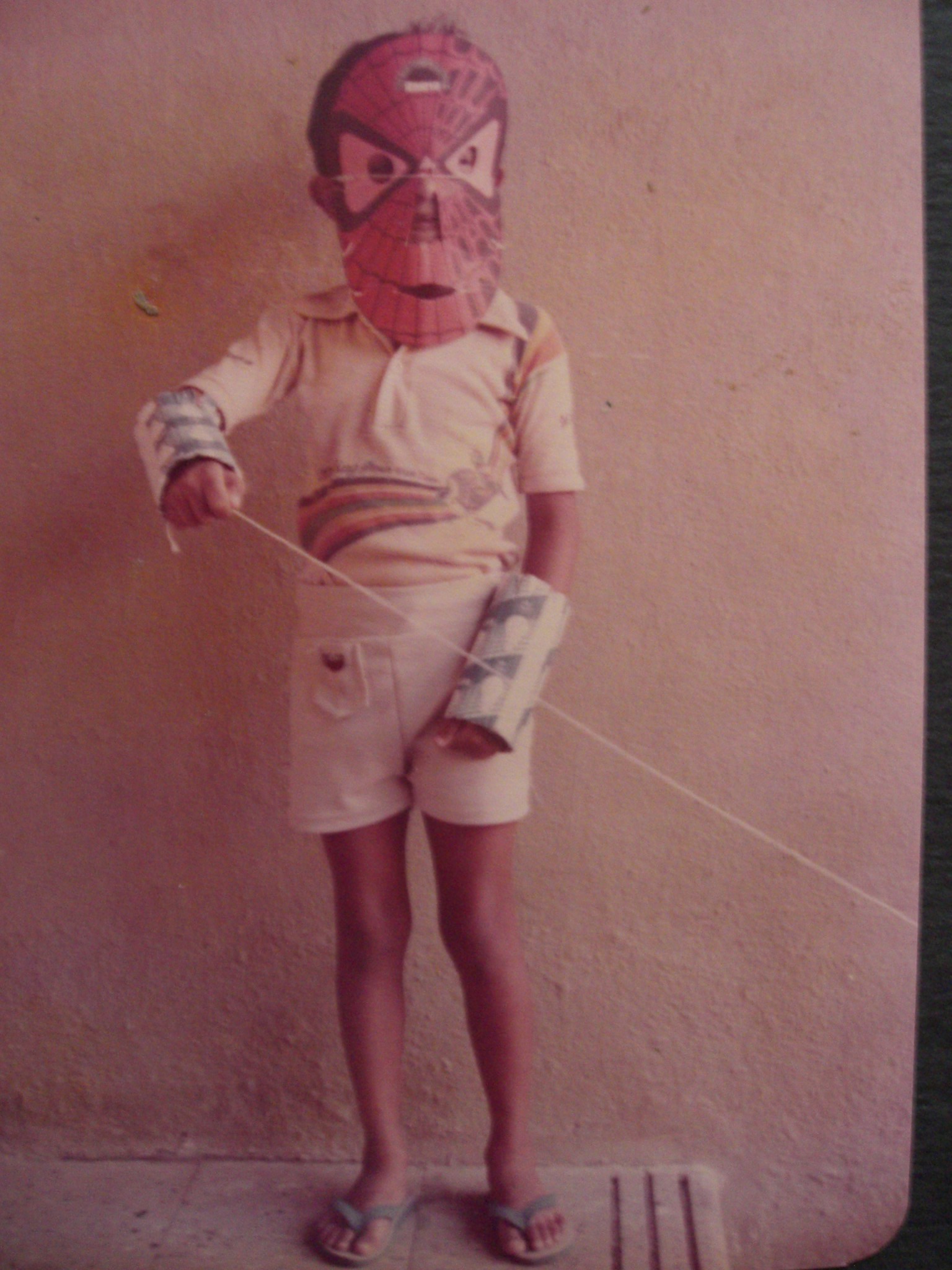
    “Space.. the final frontier.” An entire generation got its thrills from those lines, and fashioned homemade communicators and phasers that at least stunned their parents, mostly because some other objects would’ve been dismantled in the construction. 🙂

    On the day that I posted the Lego tales, I happened to see this – Creative misuse + Lego Star Wars = Lego Star Trek, and smiled at “as someone raised on both universes”.

    And a few weeks back, I caught Star Trek, the 2009 film, on HBO. I missed it in the theatre, partly because I didn’t want to spoil the images of an era gone by. Though Captain Jean Luc Picard and Lt. Commander Data did make good attempts at engaging viewers, Captain James T Kirk, Spock, Dr.’Bones’ McCoy, Scotty and the remaining crew would always be Star Trek. But curiosity meant that I couldn’t miss it on television.

    And it was an amazing experience. To see the old characters played by new faces, to wait for characters to appear, and to see the back stories fit like pieces in a puzzle, to see the cameo by Leonard Nimoy, to once again behold the USS Enterprise…. a “mind meld” of sorts and “emotional transference” was an effect too.. 🙂

    It was difficult to see Zachary Quinto as Spock, more so because I’m  used to him as the evil Sylar in Heroes. But I thought he  did a stellar job. Incidentally the original Sulu, also stars in Heroes as Kaito Nakamura, Hiro’s father. Eric Bana was disguised enough for me to not have Hulk visions. It was great to see a new version of Uhura without the Amrish Puri like hairstyle.

    It was impossible to see Chris Pine and not remember the inimitable William Shatner as the original James Tiberius Kirk. I still remember my initial difficulty in accepting Shatner as Denny Crane in Boston Legal, but my affection for the series was much increased by his Star Trek references, especially one season finale in which he told Alan Shore that he had once captained his own ship. 🙂

    When I see the word ‘epic’ used these days, I wonder how many of those experiences would stand the test of time. Star Trek belongs to an earlier era, when we had fewer epics and our options to step out of reality were limited.

    until next time, live long and prosper 🙂