Category: Yesterday

  • Beaming

    1980s – Sunday mornings, Doordarshan.

    1990s – Weekday evenings, Star Plus

    “Space.. the final frontier.” An entire generation got its thrills from those lines, and fashioned homemade communicators and phasers that at least stunned their parents, mostly because some other objects would’ve been dismantled in the construction. πŸ™‚

    On the day that I posted the Lego tales, I happened to see this – Creative misuse + Lego Star Wars = Lego Star Trek, and smiled at “as someone raised on both universes”.

    And a few weeks back, I caught Star Trek, the 2009 film, on HBO. I missed it in the theatre, partly because I didn’t want to spoil the images of an era gone by. Though Captain Jean Luc Picard and Lt. Commander Data did make good attempts at engaging viewers, Captain James T Kirk, Spock, Dr.’Bones’ McCoy, Scotty and the remaining crew would always be Star Trek. But curiosity meant that I couldn’t miss it on television.

    And it was an amazing experience. To see the old characters played by new faces, to wait for characters to appear, and to see the back stories fit like pieces in a puzzle, to see the cameo by Leonard Nimoy, to once again behold the USS Enterprise…. a “mind meld” of sorts and “emotional transference” was an effect too.. πŸ™‚

    It was difficult to see Zachary Quinto as Spock, more so because I’mΒ  used to him as the evil Sylar in Heroes. But I thought heΒ  did a stellar job. Incidentally the original Sulu, also stars in Heroes as Kaito Nakamura, Hiro’s father. Eric Bana was disguised enough for me to not have Hulk visions. It was great to see a new version of Uhura without the Amrish Puri like hairstyle.

    It was impossible to see Chris Pine and not remember the inimitable William Shatner as the original James Tiberius Kirk. I still remember my initial difficulty in accepting Shatner as Denny Crane in Boston Legal, but my affection for the series was much increased by his Star Trek references, especially one season finale in which he told Alan Shore that he had once captained his own ship. πŸ™‚

    When I see the word ‘epic’ used these days, I wonder how many of those experiences would stand the test of time. Star Trek belongs to an earlier era, when we had fewer epics and our options to step out of reality were limited.

    until next time, live long and prosper πŸ™‚

  • False Memories

    I read this interesting post titled ‘Time traveler‘, thanks to a Reader share. (Mo?) Its about memories not being the same for two people, even if they’re part of the same events in life. So, who’s to say which memory/recollection is real and which is not? “The past is just a reconstruction of our minds, then.”

    I came across a similar thought in ‘Lunatic in My Head’, where a twenty-something guy plays slides from two decades back. Though he’s present in the slides, he has no memories of them, and he felt that it was unfair that his parents should possess those memories, but he doesn’t, even though he was present in the slides. He is forced to rely on his parents’ recollections, but sometimes rebels by creating stories and arguing with them.

    Maybe these reconstructions of the mind are based on an identity we have created for ourselves at that particular point in time – in the present. So all events, people, concepts, understandings are seen through that prism? And as time moves on, the prisms change too, like some sort of kaleidoscope, where every memory gets rearranged in context, based on our changing perceptions, notions and views.

    And not all the photos and posts and tweets and videos can ever be free of a prism, some prism. Maybe we change our own memories too.

    until next time, prism break.

  • Collective bargain

    “The way they speak about dinosaurs now, a few years later, that’s how they will talk about the mill workers”, says a character in City of Gold, a Hindi film by Mahesh Manjrekar, adapted from a play by Jayant Pawar. Its based on the Great Bombay Textile Strike. A decent movie, with some great performances and with its share of stark realty, though parts of the second half had a Bollywood melodrama hangover. I guess the response at the multiplexes (many of which are ironically what the mills gave way to) wasn’t really great either. But it was a story that had to be told.

    The subject has interested me earlier too. To be precise, in 2005, my last official trip to Mumbai. The office was at Peninsula Center, and when I looked out through the windows, I could see a few chimneys. I wondered enough to come back and read up a bit. I was curious because amidst the RGV underworld flicks and the contemporary images I had of Mumbai, this seemed to be a part of history that had never figured in conversations. A legacy that seemed to be buried in the collective consciousness.

    A single movie might not really be enough to cover the individual lives that were affected, though it does try to portray a microcosm. But as the line in Frost/Nixon goes “You know the first and greatest sin of the deception of television is that it simplifies; it diminishes great, complex ideas, stretches of time; whole careers become reduced to a single snapshot.”

    Though it is said in a different setting, and context, the connect I sensed was legacy. How a person is perceived by a later generation. Artists have their paintings, actors/directors/crew have their movies, politicians, sportsmen/women have their auto/biography/memoirs, authors have their books, musicians have their music, they have a better chance at being remembered by a larger number of people, long after they’re gone, a better chance than us, the commons. AΒ  collective’s legacy would be the place and time they lived inΒ  – the larger picture, their collective actions, the people who became popular, the events that shaped the future. What happens if a collective chooses not to remember, or chooses to remember only parts? Who does it matter to then?

    until next time, decadent chronicles

  • Oh, numb!

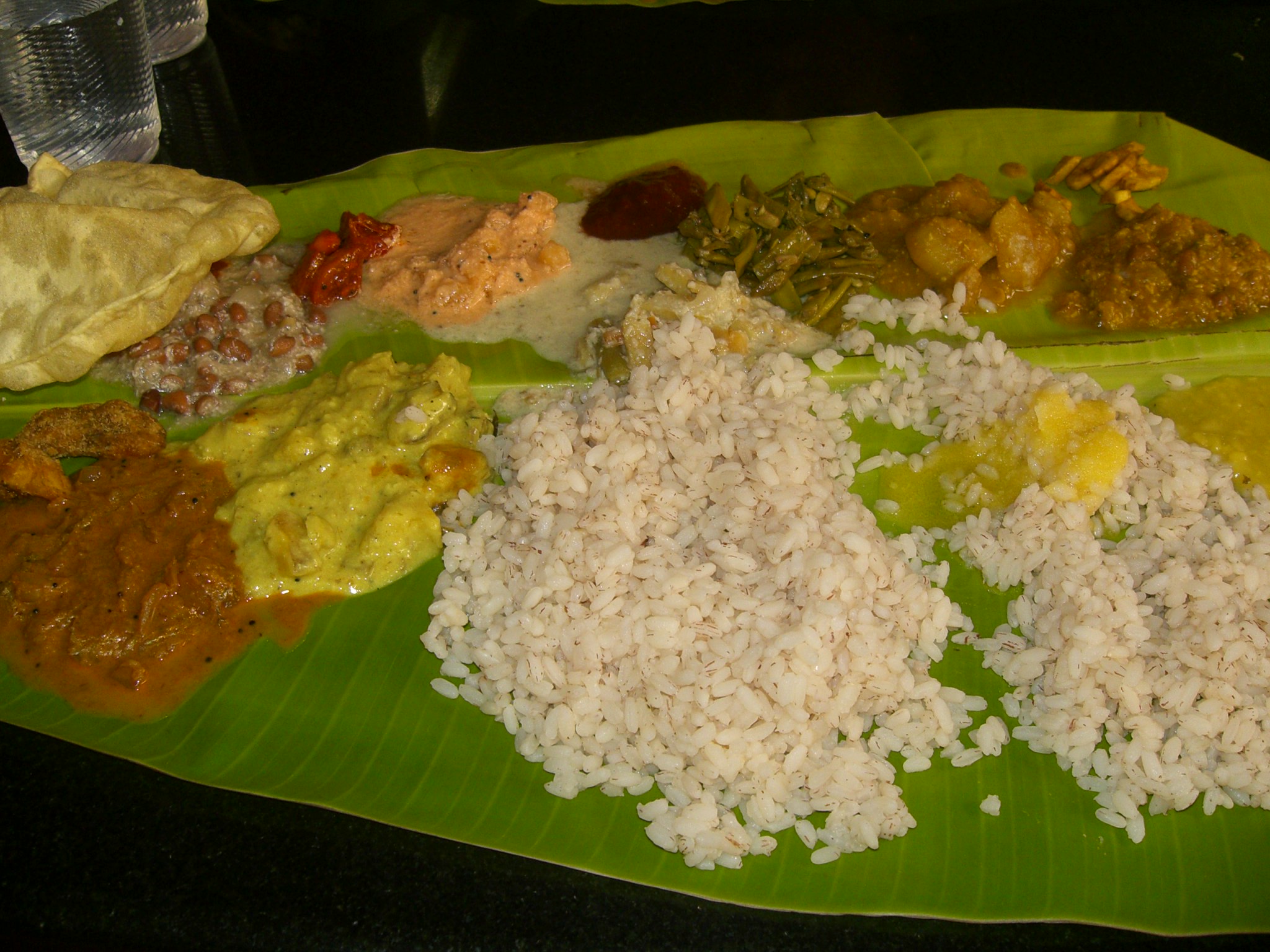
    While I was handling the high frequency burping that signifies the completion of the meal above, my phone rang. It was an ex-colleague, but more importantly, dear friend and a fellow mallu. I picked it up, expecting a loud ‘Happy Onam’ from the other end. She was working, and wanted a person’s number. I wished her a happy onam, and without missing a breath, got a “Oh, I forgot” response.

    That perhaps typifies this generation of living-outside-Kerala Malayalis. That’s a generalisation, of course, and a huge one at that, because thankfully, I know many of my fellow Keralites who religiously go home every Onam, come what may, and have a blast. But as every Onam passes, I can feel it slipping away.

    Ten days of holidays – a cousin reunion, the hustle and bustle of a sadya preparation, to a day taken off from college to visit a relative’s house for the sadya, to figuring out which new movies are being shown on the telly for Onam and scanning the papers for a restaurant that serves a good sadya, obviously it wasn’t just me who grew up.

    I suspect that it might not get any better, and as a statement in Malayala Manorama went,Β  I might even get used ‘eating a sadya in the mind’. This generation still has its (mostly office) pookkalams and the sadya. For those that come later, the sadya will perhaps just be a meal by itself.

    until then, happy onam πŸ™‚

    PS: The legend, the Ram Gopal Varma version, and the tag.

  • leg godt

    Sapphire (toys- retail chain) opened a store in Koramangala recently, and lies on my route to practically anywhere. That means that giant Lego display and I stare at each other almost everyday now.

    Lego and I go back more than a couple of decades. As always, no age jokes, okay? 1984, to be precise. Remember, I wrote about it in ‘The Foreign Object‘? Like I’d mentioned then, the loot from dad’s US stay was rationed out over a long period of time. Perhaps the only part that was exposed completely in the beginning were Lego sets.

    The first set had arrived by a special package even before my Dad or the suitcase reached Indian shores. This was a trailer set, literally, and included a motorcycle too. But the real treasure was the lengthy catalog that came along with it. I quickly set about marking the ones that I wanted and sent it back to Dad.

    Now, I suspect that my Dad, from whom I have inherited my skills, being the kind of shopper for whom a ‘milk and bread’ trip to the local grocery store is a mammoth effort, because of the number of choices that present itself, must’ve extrapolated my interest, seen a huge range of Lego sets, and decided that nothing served as gifts to my cousin set (both sides of the family) better, though the age bracket was anywhere from 2 months to a decade. That meant that when he returned, the suitcase had a disproportionate range of Lego sets, and I wangled, via sulks/sobs/means of affection, the right of first choice, and a cancellation of the original, carefully made, catalog choices .

    In later days, I began to wonder whether it was a choice I might’ve been happy without, because each set had something I really wanted, and despite my arsenal of negotiating tactics, I wasn’t allowed to open the boxes and ‘exchange’ pieces. After various levels of filtering, I finally kept a digger-tipper combo, a medieval catapult, and a medieval castle set. My medieval set soldiers only had swords, shields and spears, and I hated missing out on the one with bows and arrows, but it was all about box sizes and number of pieces.

    Though I was a stickler for not mixing up the pieces in storage, they were allowed to be social and mingle during playtime, and the four sets often gave rise to space crafts which were launched with catapults. (#2 kind of behaviour here) The magnum opus, thanks to a Star Trek/ Space Station Sigma overdose, was a space station, with motorbikes, driven by medieval soldiers, and defended with swords and shields. The tiny spears were also taken to school regularly as part of a superhero costume – they fitted between fingers nicely and could be pushed out using the palm for super-punches. Of course once the punch landed, the spear was pushed back and the palm hurt, so it was discontinued.

    Much later, the Lego sets were passed on to cousins who were more than a decade younger. The stories remained, pushed back, as a life was built. And these days, when I see the Lego display, I am tempted to go in and check out the sets, maybe they have those Star Wars sets here now. Wonder how much they cost now, never had to wonder about that, back in 1984.Β  The price of growing up.

    until next time, toys are us πŸ™‚

    PS: Lego owes its name’s origin to leg godt, Danish for play well