Category: Future

  • Processes, People & Culture

    It has been more than three years since I wrote about my Indigo fandom. Since then, they have been my preferred airline, mostly thanks to their on-time promise. A few weeks ago, Karthik wrote an excellent post “Why I love an errant Meru and hate the awesome Indigo!” that offered some unique perspectives based on a few of his recent experiences with the airline. He ends the post with When did the ‘plastic’ nature of Indigo’s customer-facing organization set in? May be around the same time their hostesses were asked to use wigs? It restored a sense of objectivity to my fandom.

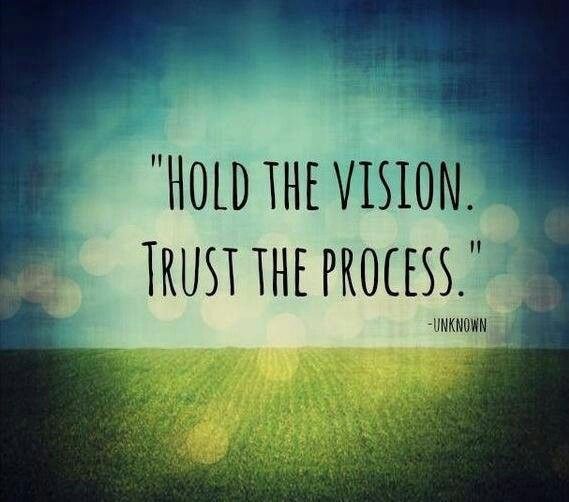
    Our way of doing things” is how one definition of culture goes and I remembered Gautam’s recent insightful post on the components that make up ‘culture’ in an organisation. If you look at these factors, you’d wonder whether a cultural change was at the root of Indigo’s new avatar. It made me think of something I wrote earlier – Culture Architecture – the thrust of which  was culture being a strategic business advantage. But how can that be made sustainable? I’ve been a big fan of processes. Indeed, one of my favourite posters is

    626854484bf91ac616669379d9a394fd

    (via)

    (more…)

  • The Art of Live In

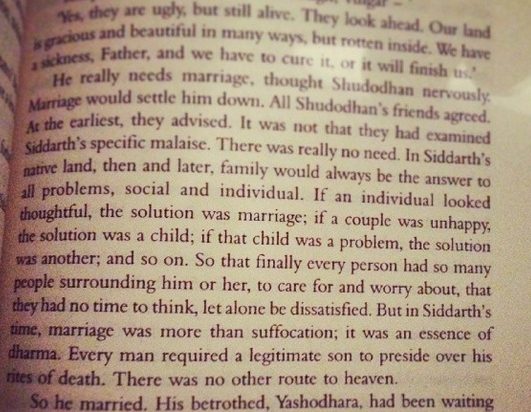
    I borrowed the title from a post I wrote nine years ago on live in relationships. We have come quite a way since then, but I am also seeing an evolution in this narrative. I call it the same narrative because fundamentally it challenges the institution of marriage as we know it. The way I see it, marriage was an evolutionary necessity – as a relatively structured process of procreation, and thereby organising society. The words below are from a work of fiction based on the life of the Buddha, it would seem that neither is it far from truth nor have things changed much.

    Sid

    So why is this institution primed for ‘disruption’ now?

    Technology is one factor. The family unit made sense when younger members of the species had to be protected. As AI advances, maybe a family unit will not be necessary for safety or security. Technology also might play a hand in the physiological aspects, more on that in a bit. As I mentioned in an earlier post (Emotion As A Service) marriage is as much a transactional relationship as an emotional one. To paraphrase Scott Adams,  (fromthe internet has allowed us to have a barter economy of relationships….a virtual spouse comprised of a dozen separate relationships

    The second factor – advances in medicine and increasing lifespans. Imagine living up to 150. The ‘life partner’ that you chose when you were a carefree 20 year old may not be the one you’d want to have fireside conversations with in your middle age – 95. Interests, outlook, worldview, personality etc change with time. Maybe you’d be living in different cities at different stages. 

    Another factor I’d consider is depleting resources – these may be natural, (on a larger scale) and economic (on an individual scale) (any thing else you can think of?) These might force the species to rethink the institution, even though it seems hardwired into the brain by now. 

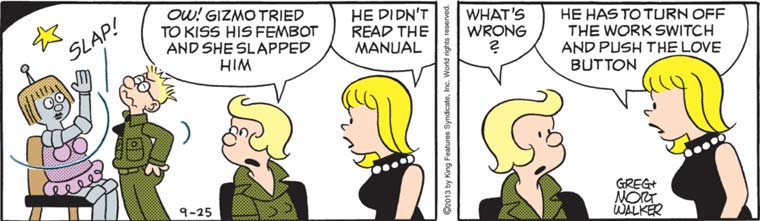
    I can already see several paths diverging from this point. Robots as companions for the aged is a fast developing area, it could be used for young ones in future. In a physiological context,  though we might not be there yet, s3x with robots is a distinct possibility by 2025. There’s bound to be a learning curve, but hey! 

    i130925bb

    (via)

    In a relationship context, The Atlantic had a long article on polyamory, including perspectives on how society sees them, and the challenges involved. I was actually more surprised when Bangalore Times carried an article on the subject on its front page recently. The point here is that it is getting mainstream attention, arguably the first step in societal acceptance of units that are radically different from the traditional family. Even children with DNA from three parents might soon overcome legal hurdles and become an accepted practice.  

    With all these paths, and many more, the institution of marriage might become one of the many options available. Some communities might hold on to it – as a tradition. But as time progresses, both individuals and society will undergo not just transformations on the outside, but in mindset as well.  After all, isn’t evolution just a logical response to a creature’s living environment? If it is, once the evolutionary necessity has passed, even this tradition might just fade away.  

    (The views expressed above are just the author’s attempts at intellectuality, and do not represent his actuality. He hopes he doesn’t have to sleep outside!) 

    until next time, along came poly! 

  • It’s about time

    Time

    There’s a question I’ve been asking myself for a while now – is time a man made construct or not? Days, seasons, years and cosmic events would happen even if we never tracked them, but our lives are defined by the time frame we live in – from a personal as well as socio-economic and technological standpoint. I recently got a perspective I thought I should share. I also found this overlapping with the devices we have used to track time. Hence these thoughts.

    Form: For a while, the mobile phone was the watch, but wearables (my attempt at a primer) is the new entrant. I already see a little crossroad in wearables – the smartwatch/accessories like Glass, and the activity tracker, both connected to the mobile device. The former, in addition to being a chronograph, is aiming to be a personal assistant of sorts by aping many functions that a mobile phone does – GPS, messages and notifications, and contextually relevant information. (I liked this post on Google Now and Android Wear) The activity tracker, on the other hand, focuses more on fitness and health. What connects them is the battle for the wrist. Between Android and Apple, I’m hoping they combine both the above streams quickly. I’m also hoping that both will get better at moving from data to actionable insights.

    Function: To bring the focus back to time, the form factor increasingly makes me think of time as an app. In this era, our control on time is negligible –  I can decide how I spend my day, (application of time) but I cannot really control my life span –  therefore we are bound to think of increasing its efficiency. I’d expect the device  to notify me on the best way to use my time – roughly speaking the bottom two levels (and a portion of the third) of my favourite framework – Maslow’s hierarchy of needs. But as we gain on immortality, we might have so much data on ourselves and the collective consciousness (related post) that it will offer more value in the top two levels – relevance and value to others (esteem) and self actualisation. The simple guiding thought is that isn’t time one of the only things that stops us from self actualisation, the other being economics?

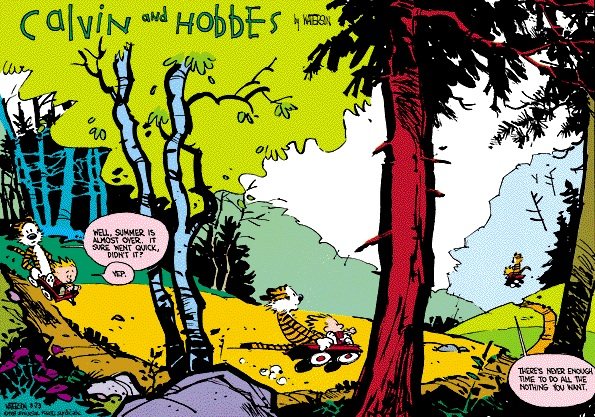
    Future: From a function perspective, I think the ambiguity on time (as a construct or not) exists because we can control it only partially. As we control it more and more our need to control it becomes lesser (increasing lifespans is one reason) it will automatically become a construct/’application’. (Very roughly, think of fire – before we learned to ‘create’ it, it might have been an enigma, but the moment we did, it was more an application.) Then, the decisions we make will probably be influenced less by time. Time will have to find a new way to be contextually relevant. Therefore, from a form factor perspective, I expect to see devices which provide us contextual applications of time wherever they are located eg. say bearables (implants, micro-devices attached to skin etc) that tell you it’s time for a heart checkup through an interface that’s probably an app on a portable device. It’s only a matter of time.

    Even further on, the philosophical question to ask is that if one had an infinite supply of time, would one still measure it?

    until next time, watch this space

  • Artificial Morality

    It wasn’t my intention, but the title did make me think of the morality we impose on ourselves, and that perhaps has some amount of implication on the subject of this post too. The post is about this – we seemed to have moved from debating artificial intelligence to the arguably more complex area of morality in robots!  When I first read about robots and ethical choices, (did they mean moral?) my reaction was this


    It’s probably a good time to discuss this, since a robot has recently become a Board member in a VC firm as well. Ah, well, in the Foundation series, R. Daneel Olivaw pretty much influenced the mental state of others and controlled the universe. That seems to be one direction where we are headed. The Verge article mentions funding for an in-depth survey to analyze what people think about when they make a moral choice. The researchers will then attempt to simulate that reasoning in a robot. They plan to start with studying moral development in infants.

    Thanks to this article, I learned that there were different kinds of morality – operational morality, functional morality, and full moral agency. This is all fascinating stuff and my mind was racing in multiple directions. For one, did morality develop because living in groups was more advantageous from a survival perspective and to live in groups, there had to be some rules that governed this coexistence? Did this ethics then evolve into an acceptable moral framework? These may or may not be in line with our individual instincts. Does that explain why each of us have a different moral code? If that is so, can we ever develop a uniform code for robots? To be noted that ethics are a tad more objective than morals, so they might be relatively more easier to ‘code’.

    I also began to think if the augmented human would serve as the bridge between humans and AI and as he develops, will find ways to transfer moral intelligence to AI. Or maybe it would just be logic. Alternately if, as per this awesome post on what increasing AI in our midst would mean, if we do start focusing on human endeavours beyond functional (and driven by money alone) maybe our moral quotient will also evolve and become a homogeneous concept.

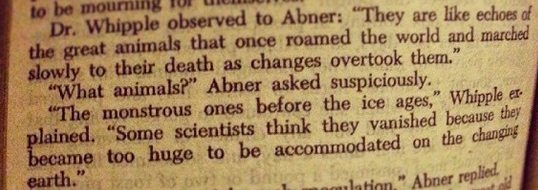
    In Michener’s Hawaii, one man of science and spirituality discusses dinosaurs with a man of spirituality. I shared this on Instagram, wondering if humanity will be talked about in this manner.

    Hawaii

    The changes could be the ones we’re causing nature to make and ‘huge’ could be our gluttonous consumption of resources. In the context of robotics and morality, I immediately thought of Asimov’s Zeroth Law “A robot may not harm humanity, or, by inaction, allow humanity to come to harm.” What would happen when one set of humans begin to do something that might harm humanity? What would a robot do?

    The answers, are evolving. It’s a good time to be human, and to be able to experience wonder.

    until next time, moral science

    P.S. On a  related note – Bicentennial Man – RIP Robin Williams :'(

  • Linking learning & labour

    I’m a huge Asimov fan, and am constantly amazed at how he was able to have a perspective of the future on multiple fronts. I was reminded of two of those recently thanks to their application (of sorts) in contemporary scenarios.

    First, Hari Seldon‘s (pretty much the foundation of Asimov’s Foundation series) psychohistory, which was able to make general predictions on the future behaviour of large populations using history, sociology and statistics. The easy contemporary connection is big data and predictive analytics.

    Second, a short story written by him called ‘Profession‘, (do read) in which every person’s profession is based on an analysis of his/her brain, and no choice is given to the person in this matter! In India, we seem to be already there even without the analysis!

    Collectively, these two made me think of employment, and on a related note, education. The thought was that with so much of data available on education and employment, we should be able to create ‘tests’ to compute the interest and aptitude of individuals at a very early age. What this would aim to do is to eliminate the herd education that currently exists. Instead, children would learn things that help them in a profession for which they have the intent and interest, using say, a combination of traditional classrooms and MOOCs. Also, this would no longer be one part of a life cycle, but a continuous process – helping the individual thrive in a dynamic environment.

    If you remember, LinkedIn was my representative for ‘L’ in the ‘change imperative‘ deck. That was because I felt that it had the data and the vision to be the catalyst for this kind of a change. I was very happy when it underscored this faith with the fantastic ‘future self‘ experiment, in which they identified the future professional self (5 year time frame) of LinkedIn user Kurt Wagner – another user Mussarat Bata – using various data points!

    LinkedIn hasn’t really built this as a public tool, but just imagine the possibilities! A platform that shows people the possibilities which take them closer to their ‘purpose’. (remember ‘The Evolution of Work and the Workplace‘?) I sincerely hope to see this in my lifetime. 🙂

    until next time, live and learn

    Clipboard01