Category: Favourites

  • Political Order and Political Decay

    Francis Fukuyama

    The first volume – The Origins of Political Order – went straight into my favourites, and so does this one. While the former was about the components of a stable state, and how political institutions developed differently in various parts of the world, this book begins at the dawn of the Industrial Revolution and shows how state, law and democracy developed to their current state, by (also) considering three additional dimensions of socioeconomic development – social mobilisation, idea legitimacy, and economic development. The industrial revolution and the economic growth that followed caused a movement to urban areas, where new social groups were formed based on fluid identities. This mobilisation serves as a foundation for changing political institutions with new ideas. The book also throws light on the various reasons for the decay of institutions, and offers directional thoughts on fixing them. 

    The author frames the development of the stable state by asking how a country can “get to Denmark”, which is the benchmark for an ideal state. While there is some specific focus on the US, also warranted by its early and unique path to democracy, the depth of analysis that has gone into many countries, across Asia, Latin America, Africa, Europe, is just astounding! History, economics, policy, geography, (with critique and usage of content from another favourite book – Guns, Germs & Steel), culture and many other facets, all going into understanding the state of politics in a particular country. There are many routes to modern government, including the necessities that war creates (“unfortunately”, Latin America never had its share, and Europe had plenty of it – both have class stratification, national identity, and geography to thank) and peaceful political reform. And once there, the principle of effective government is meritocracy, the principle of democracy is popular participation, effective states operate through law, but law can be an obstacle to appropriate levels of administrative discretion – how is balance achieved? The material is phenomenally complicated, and bringing it to this level of accessibility is something the author should be credited for. 

    The first part of the book focuses on parts of the world that experienced liberal democracies first – Europe and the US. It also analyses why Germany has an uncorrupt administration while Italy and Greece are plagued by corruption. In the former, how is state strength related to organised crime? How does cynicism and social distrust get culturally embedded? How were Britain and the US able to reform themselves from patronage-led public sectors? And why was Britain able to get there faster than the US? An active middle class accelerated Britain while US got a unified business community and middle class professionals only in the late nineteenth century. At a broad level, we learn early that the sequencing of events matters greatly. Countries where democracy preceded state-building (US) have had higher problems in achieving high-quality governance than those who inherited modern states (Germany, through some excellent civil service reform and an educational system) from absolutists. And that democratic societies without a strong national identity have trouble unifying the population with a common narrative. 

    The second part deals with parts of the world that had been colonised – Latin America, Asia, Africa, and the Middle East. When the imperial powers left, many of these nations were neither fully Westernised nor able to retain their traditional political organisation. However, there are success stories like Costa Rica, which according to many frameworks should have become a banana republic. There are also disasters, like Argentina, which, blessed with climate and resources, should have become a model country. The reasons are complex, and Sub-Saharan Africa vs East Asia is a great example of different development paths. In both areas, as well as Latin America and the Middle East, states that had strong institutions were able to reestablish them, while those that didn’t struggled. Interesting to note that African ethnic groups are largely a modern phenomenon, created or at least consolidated in postcolonial times! The specifics of the Japanese system and how their military-led nationalism has evolved until the present day is also fascinating. The problem that East Asia now faces is making the state accountable. The nuanced difference between rule by law (state using law for its ends) and rule of law (law binding on the state) is superbly explained. In the Middle East, the threat is that popular mobilisations risks being hijacked by religion. 

    Part 3 focuses on democratic accountability and goes back in time to the period after the French and American revolutions to see how democracy spread. The timing in various countries vary depending on the changing relative positions of social classes – middle class, working class, elites, and peasants. The rise and growth of middle class was a great catalyst to democracy. While doing this, it raises a question extremely important for the current times – with increasing globalisation and technological advances, the middle class is getting hollowed out. What happens to democracy then? 

    The final section of the book is on political decay, and there is a heavy focus on the US, which has now gotten tied up in the very checks and balances it had set up to protect democracy. In the author’s words, “there is too much law and too much “democracy” relative to the American state capacity”. It has now become a vetocracy, with economically powerful special interest groups and the judicial arm having hijacked the system and preventing reforms. No modern book can avoid China, and this is further proof. The author sees the Chinese model as the biggest nondemocratic challenge to the idea of liberalised democracies. How will the Chinese middle class behaves in the next few decades? Even as it grows, will it be content to live under a “benevolent” one-party dictatorship? 

    I think I will re-read both volumes, they are such treasure troves of information. If you like books that explain the system of the world, this is a set you most definitely should pick up. 

  • Logicomix

    Apostolos Doxiadis, Christos H. Papadimitriou, Alecos Papadatos (Illustrator), Annie Di Donna (Colorist)

    I have to confess I gamed this a little. This is my 300th review on goodreads, so I wanted it to be a special. So I chose a unique book – a graphic novel whose title also includes “an epic search for truth”. And thankfully, it was a fantastic experience. 

    While the story is based on the life of Bertrand Russell, it is presented through the different perspectives of its makers too. In a sense, we get to see the debates they had and how they progressed on the storytelling. Self-referential is a multi-meta when we’re talking of logic, and paradoxes! Russell is a mathematician but mathematics is also his language to engage with philosophy and thus “the truth”. Indeed, it is difficult to draw clear lines between the two deep subjects, and it only gets deeper when you add logic into the mix. The journey is as spiritual as it is scientific. And many believe it is solvable. To quote Hilbert, “In Mathematics, there is no Ignorabimus (Latin for “we shall not know”). As Russell continues to work on his Herculean task of establishing a logical foundation for all mathematics, he crosses paths with some of the foremost thinkers of the era, and probably of all time. Kurt Gödel, Ludwig Wittgenstein, Alfred North Whitehead, Henri Poincaré and so on. (the creators note that some instances have been created for narrative purposes)

    The story is rendered in flashback mode, as Russell is asked to lend his voice to those who oppose US involvement in WW2. I found it a perfect setting as he practically narrates his life thus far, and in the end, his response to the protesters pretty much summed up what he learned from his life and his quest. Though the novel is primarily about Russell’s pursuit, it also gives the reader a view of his life in the real world – his lonely childhood, his many marriages, his friendships, his relationship with his student Wittgenstein, his passion to bring a sense of order, the connection between madness and logic, and his stance on the two world wars. All of this makes it a deeply layered book with some wonderful thoughts. “The tragic loneliness of every human being. The finiteness and profound futility of life”

    But I think the reason why I loved this book was also because it resonated a lot with my perspectives, my affection for logic, and the lessons I have learned when I have tried to bend reality to fit it. (“Sure, Frege, Russell, Whitehead were excellent map-makers, but maybe eventually they confused their reality with maps” “All the facts of science are not enough to understand the world’s meaning“) This also leads to a lot of over analysis. (As Russel writes, “Like me, he was constantly analysing everything, a habit deadening to the emotions“). And something about the genesis of it all – “Maybe what brings them to logic is a fear of ambiguity and emotion“. But of many moments, I think my favourite is when Wittgenstein survives a near-death experience and understands that”The meaning of world does not reside in the world“.

    Even if you’re not into graphic novels (I am not), this one is a must read.

    P.S. If you have read similar books, do share.

    Logicomix : An Epic Search for Truth
  • Coromandel

    Charles Allen

    For once, I’d judge the book by its cover, because the multiple themes, the detailing and the overall quaint, charming imagery are a good representation of what the book will deliver. While the title of the book is an indication of its focus, it actually does more in terms of coverage, and provides a fantastic narrative of South India – historical, social, societal, cultural and political facets. 

    Over a period of time, history becomes stories, then legend, and finally myths. This is the journey that Charles Allen undertakes, and while he smartly calls it a “personal history” to avoid religious minefields, it is a comprehensive and erudite discussion. 

    He begins at the end of the subcontinent – Cape Comorin (Kanyakumari) and traces the tectonic shifts that created the Indian Plate, which we know as the Deccan, and its rock walls on one side – the Western Ghats, with Palakkad providing the only gap until the railways were built in the nineteenth century. The rest of the first chapter provides a good summary of the hunter-gatherer populations that resided in this part of the world in the Mesolithic era. 

    There’s then a detour – to the North and the Harappans. It also contains a clear, scientifically backed commentary of the Aryans, the location of the Saraswati and the connection to the Zoroastrians, the historical account of the Vedas, and the epics – Mahabharata and Ramayana. 

    We then return to “Agastya’s country”, early Tamil literature and the sage himself, who is credited with bringing Sanskrit to the South. The chapter clarifies and rebuts the paradox of him (also) being the person who brought Tamil to the South! This chapter is also interesting because it touches upon the origins of Vishnu and Shiva in mythology. The next few chapters were quite an eye opener for me, because it showed how both Jainism and Buddhism were dominant in the south, including Kerala. To the extent, where even Sabarimala, Ayyappa’s abode, has its origins in Buddhist shrine. Dharmashasta’s devotees chanting Swamiye Saranam Ayyappa seen side by side with Buddham saranam gacchami. Fascinating! It also captures the reasons behind the migration of Jains to the South, whose ranks include the first great emperor of India – Chandragupta Maurya. Speaking of empires, the Chola, Chera and Pandya dynasties were the result of a three way split between brothers who didn’t want to share power. 

    A following chapter throws light on one of the most under-acknowledged dynasties in India, who ruled for almost five centuries – the Satavahanas. Muziris finds a mention too, as the primary trading port for Romans. In other international voyages, we find Bodhidharma, the South Indian monk who exported Mahayana Buddhism to China – which became Chan and finally in Japan, Zen. But contrary to pop culture, Shaolin kung fu wasn’t something he introduced to China. 

    “Juggernaut” covers the origins of Vishnu (including the avatars) and Shiva in greater detail, and is made even more interesting by the suggestion that the lord of Puri was (again) originally a Buddhist shrine. Apparently ‘palli’ was the original term for ‘vihara’ and in Kerala, it became the common term for any non-Hindu place of worship. This section also covers Adi Shankara and his role in resurrecting Hinduism. Chapter 8 finally gets us to the title, which is appropriate from a historical perspective too – its first appearance was only in 16th century maps. That also brings us to Vasco Da Gama’s terrorism, and the slow but steady entry of European powers in the Deccan. The next chapter is a deep dive into Malabar and Kerala in general, and I learned a lot – the origin of the Nambudiris and Kerala’s caste order, the context of Vivekananda calling Kerala an asylum, and that Narayana Guru had a quarrel with Gandhi during the Vaikom satyagraha. The final chapter is named after Tipu, and it also covers the rise of Islam in the South. 
    The endnote is a must read, and shows how nationalist forces have been trying to reshape historical narratives for a while now. It also contains a good perspective on how the cleansing of textbooks in the early 80s and their glossing over of communal clashes actually provided ammunition to those who reverse engineer history to meet their interests. 

    What I really loved is the systematic deconstruction of mythology into its historic components, with an amazing amount of detail. As a person who loves both mythology and history, it was an absolute treat!I am quite miffed at myself for not having read Charles Allen earlier, but plan to rectify that for sure! If you’re interested in history, this is a book I cannot recommend enough.

  • The Mind is Flat

    Nick Chater

    I think the name of the book is a meta play, because the book convinces you of just that -“the mind is flat”. It is also the most convincing case I have read against AGI (Artificial General Intelligence), even while showing why we have had successes in narrow AI. Before you think it’s an AI book, it’s not, it’s about the human mind. We think of our mind having depths that we cannot fathom at this point, consisting of inner motives, beliefs and desires, many of which are unfathomable to us, and that behaviour is just a superficial aspect of it. This book argues that no such depths exist. The mind is flat.

    But what the mind is, is an excellent and immediate improvisor of actions, and beliefs and desires to explain the actions. My mental (re)action was “no way”, even though a part of this was familiar to me thanks to “How Emotions are made”. The author divides his case into two parts – the first part dismantles the perceptions created by classic psychology about beliefs, desires, hopes, and aims to prove that there is no “inner world”, and the second part provides an alternate theory – memory traces of previous momentary thoughts and experiences. 

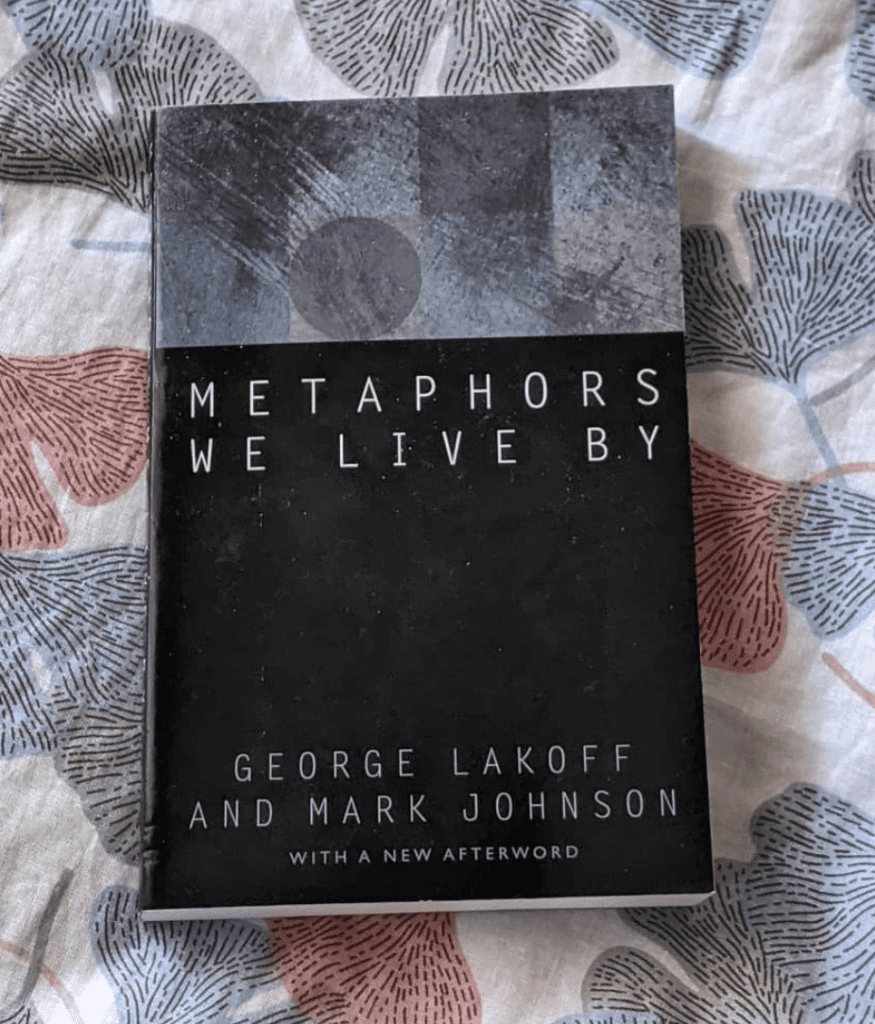
    What really works is the accessibility of the narrative and how it is structured. It’s never a “believe me because I told you so”. Instead, we are led through a series of visual and thought exercises that question our understanding of reality. Slowly, a shallow world of improvisations are revealed to us. The mind works on “precedents, not principles”, and our emotions are creative acts made by a superb interpreter – our mind. With multiple examples, he shows our capacity to create “meaning” from nothing. Our inventiveness is brought out by the metaphors we live by, which are not always bound by “cold logic”. And that’s why we are able to create AI in areas where solutions are precisely defined. A general AI would require imaginative interpretations, something humans are very good at, but not really able to explain how!

    This does lead to my favourite “free will vs determinism” debate, and once again, the answer is that at any point, despite the determinism that has happened because nature and nurture, we have the freedom to change our mind. But then again, if it is flat, what’s there to change? Or does it contain a coda of traditions and precedents in the form of genes? While we create meaning from nothing, our quest for the depths of the mind is also perhaps a need to find “meaning”. I’ll leave it at that.

  • The Origins of Political Order

    Francis Fukuyama

    Once upon a time, humans moved around in bands. Then there were tribes, and then there were states. States and the societies that make up its population have developed a bunch of institutions (defined as “stable, valued, recurring patterns of behaviour”), some of which are uniformly present across the globe, and some not. How did this variation happen?

    Why is every country not a democracy, which is largely accepted as the best trade-off for all concerned? How did different countries reach their current form? That’s what this book is all about – how did different countries develop institutions that currently make up their current society and state?

    (more…)