Category: Favourites

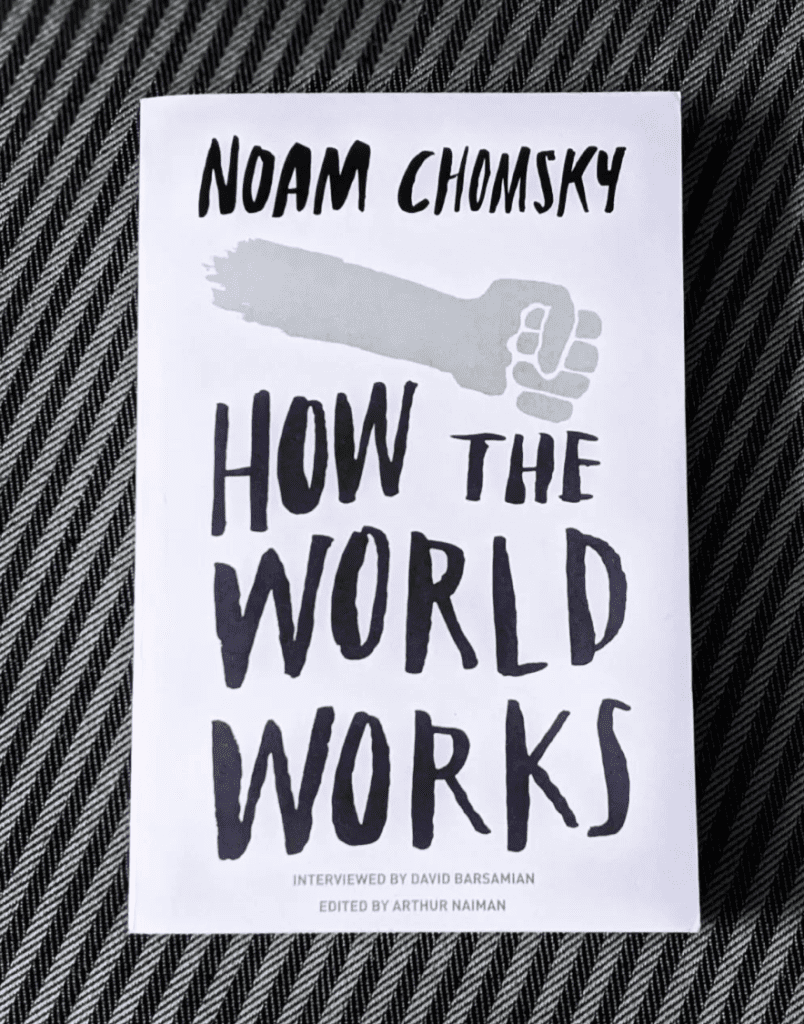
  • How the World Works

    Noam Chomsky

    I think the biggest proof of the US hegemony that Chomsky brings up regularly is how (relatively) unknown he is to the world at large. Because it’s not the kind of publicity the US would like. It’s true that the name has come up in many conversations online, and that is the reason I picked up this book, but for his quality of ideas, he really should be known and quoted a lot more.

    This book serves as a great introduction to Chomsky’s perspectives, not just because of the different topics that have been covered, but also because of how accessible it is – thanks to it being derived from the spoken word through Chomsky’s many media interactions. And yes, the index does help when you want to read about a specific topic and get a quote. There is some repetition, but that is to be expected, and as a contemporary reader, we may not have all the contexts, but that’s also a small price to pay. 

    Of the many topics covered, the US government acting as a bully inside and outside the country is one that’s central. Calling out its usage of government agencies, its military, its allies, as well as international organisations like the UN to enforce its will on nations is what makes Chomsky unpopular. Any nation or leader that attempts an alternate path, especially that is good for the people in the long term, is at the receiving end of many deterrents – local and international – acting in the interest of the US. Because an example is dangerous – it shows that something is possible, countries like Vietnam and many countries in Latin America like Brazil have had to pay the price. All of this became even more easier once the Cold War ended. Though it was convenient to show the USSR as the bogeyman, the US was also good at creating other villains. Within the country, the idea is to ensure that the social, economic and political agenda of an elite class is implemented and also that the general public doesn’t get to have a say in the matter even though it’s supposed to be a democracy. Big business has an important play in this and over a period of time, media which is supposed to be a conscience-keeper, becomes a cheerleader. 

    It’s amazing how well his insights age, as many of them can be used in current contexts. It is also fascinating to see history rhyme – Daimler-Benz and Fidelity as predecessors to Big Tech in holding cities ransom and threatening to vote with their feet if they didn’t get tax cuts.


    On one hand, it is a little heartening that the problems we face now aren’t new. The scale and manifestation might have changed, but the fundamental causes are the same. On the other hand, it does seem that there really is no hope on things getting better – the wealth gap decreasing, or the common citizen getting a level playing field. Chomsky’s view is that these are not laws of nature and that the individual can play a role in changing things, but he points out that it only works if everyone takes the subway. If some drive, it’s going to be better for those who drive! Classic prisoner’s dilemma. When educated classes line up for a parade, he says, people of conscience have three options – march in the parade, join the cheering throngs on the sidelines, or speak out against the parade (and of course, expect a price for doing that!) and that’s been the story for a thousand years and more. 

    I am not sure I have read anyone else who has so much information on things that happened in the world and is able to cite examples for any question asked, is able to convert that into knowledge that connects the assorted pieces, and then deliver such timeless insights. Irreplaceable, I think.

  • Klara and the Sun

    Kazuo Ishiguro

    “The Buried Giant” didn’t really work for me, so I started reading with a mix of anticipation and apprehension. The lump in the throat as I turn the final pages is what I expect from a Kazuo Ishiguro book, and it most certainly delivered on that ache of profound sadness. It reminded me not just of his earlier book “Never Let Me Go”, but also of Louisa Hall’s “Speak”, which is centred around AI’s evolution around stories and storytelling through time. 
    Klara, an “artificial friend” serves as the narrator in a dystopian future where children are “lifted” for enhancing their intelligence. The world at large seems to have a fair share of tribes and movements, as technology has caused a division of classes in which many are “post employed”. We first meet Klara in the store where she is put up for sale, as an observant MF, who loves watching the world through the store window, and who is devoted to the sun (she is solar powered). She is chosen by Josie, a 14-year old made unwell by the “lifting” process. 

    From then on, we see multiple themes playing out – some human, some human and AF, and some just AF. The relationship between the humans – Josie, her mother and father who are separated, their neighbour Helen and her son Rick (who is Josie’s dear friend), and Capaldi, whose studio Josie and her mother visit for her “portrait” – reveal the different “sides” of their selves that play out on different occasions, their understanding of their own fragility, and their diverse views about how society is evolving. This is closely connected to the humans’ interactions with Klara, which show their mindset towards the AFs, again polarised. Most poignant are the moments with the empathetic Manager. 

    But being the narrator, Klara’s own thoughts and actions are the most interesting. She sees the world in boxes (I wonder if that is connected to how we slot people), she “feels” enough for Josie to be prepared to sacrifice anything for her, and has a hatred for the Cootings Machine, both of which are all too human. Her observation also makes her very perceptive (“I understood that my presence wasn’t appropriate as it once had been,”) even though the humans around her are often not. (Spoiler sentence ahead) My favourite is the deep insight at the end, when she says that Capaldi’s belief that there was nothing special inside Josie that couldn’t be continued was flawed because he was looking in the wrong place – it wasn’t inside Josie, it was inside those who loved her. 

    Ishiguro has a way with prose that allows him to move the story forward without massive plot-changing interventions. And as always, he also manages to keep the reader interested with the layered narrative and wonderful insights that make us human. In this case, the book made me wonder about the time when (I am not sure it’s an “if”) AI becomes sentient/ develops consciousness – would humans be able to understand (Klara’s faith in the sun, for instance), what is the kind of loneliness the AI would face, how would it handle its obsolescence, would it also show different kinds of love (the selfish and the selfless), and yes, can it have a heart – “I don’t simply mean the organ, obviously. I’m speaking in the poetic sense”.

    Klara and the Sun
Kazuo Ishiguro

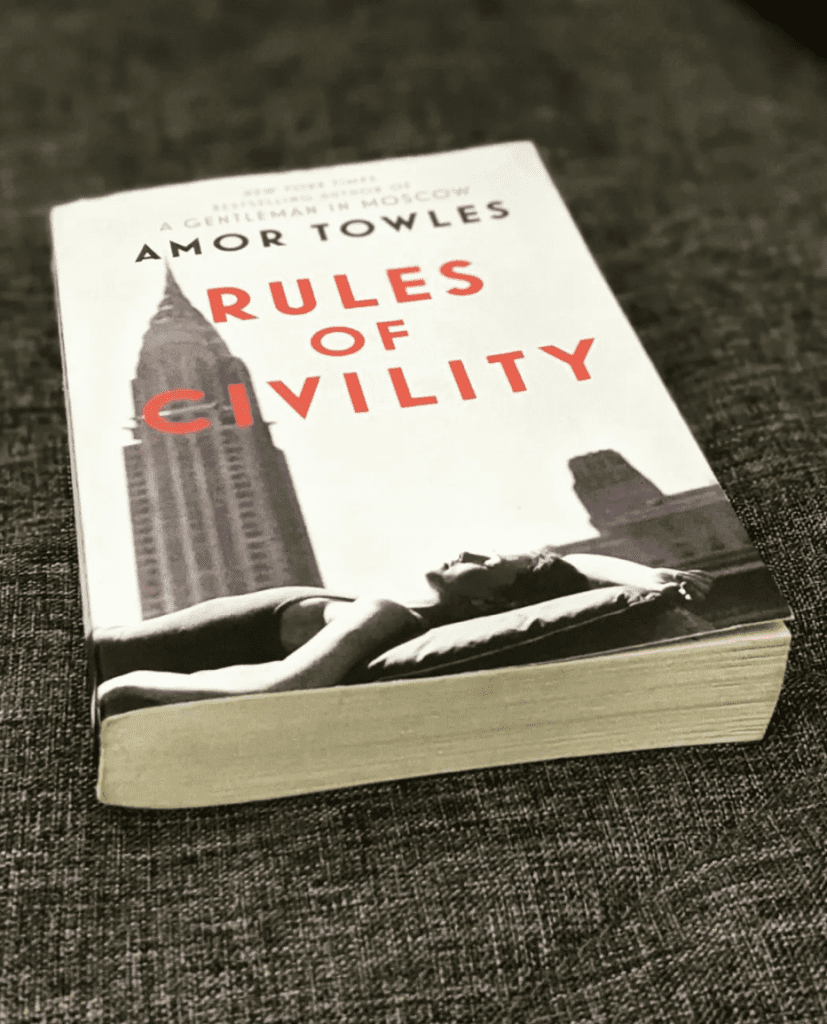
  • The Rules of Civility

    Amor Towles

    “For however inhospitable the wind, from this vantage point Manhattan was simply so improbable, so wonderful, so obviously full of promise — that you wanted to approach it for the rest of your life without ever quite arriving.” That last bit, that’s how I feel about some books. This is one those, just like “A Gentleman in Moscow”. I have to admit a bias because that book is among my all-time favourites. 

    In the preface, we meet Katey Kontent (originally a Russian immigrant Katya), who, in an exhibition in 1966, sees the photograph of an old acquaintance Tinker Grey. It catches him underweight, with a visibly dirty face, ill shaven, in a threadbare coat. As Katey’s memories come flooding back, she decides to leave, but catches another photo of Tinker at the exit – clean shaven, in a custom-made shirt and a cashmere coat. The second was from year before the first, prompting Katey’s husband Val to say “riches to rags”. “Not exactly” is Katey’s response, because in the first, Tinker’s eyes were bright and he had the slightest hint of a smile on his lips. And that sets the stage for a wonderful ride that starts on the last night on 1937, one Katey met Tinker for the first time. 

    The photographs remind Katey not just of Tinker, but a mix of people who would play important roles in her life – Wallace Wolcott, Dicky Vanderwhile, Anne Grandyn, and her best friend at that time – Evelyn Ross. And then there is New York, or specifically Manhattan whose different shades also appear, as Katey’s life changes. Amidst the parties, cocktails, flings and high-heels, there are extremely well-etched characters (some really powerful women among them), all different from each other, and all with moments of deep poignancy. 

    Anything more and I think I’d take way the joy of discovering the layers of the book, and the sharp revelations too. Enjoy the ride. 

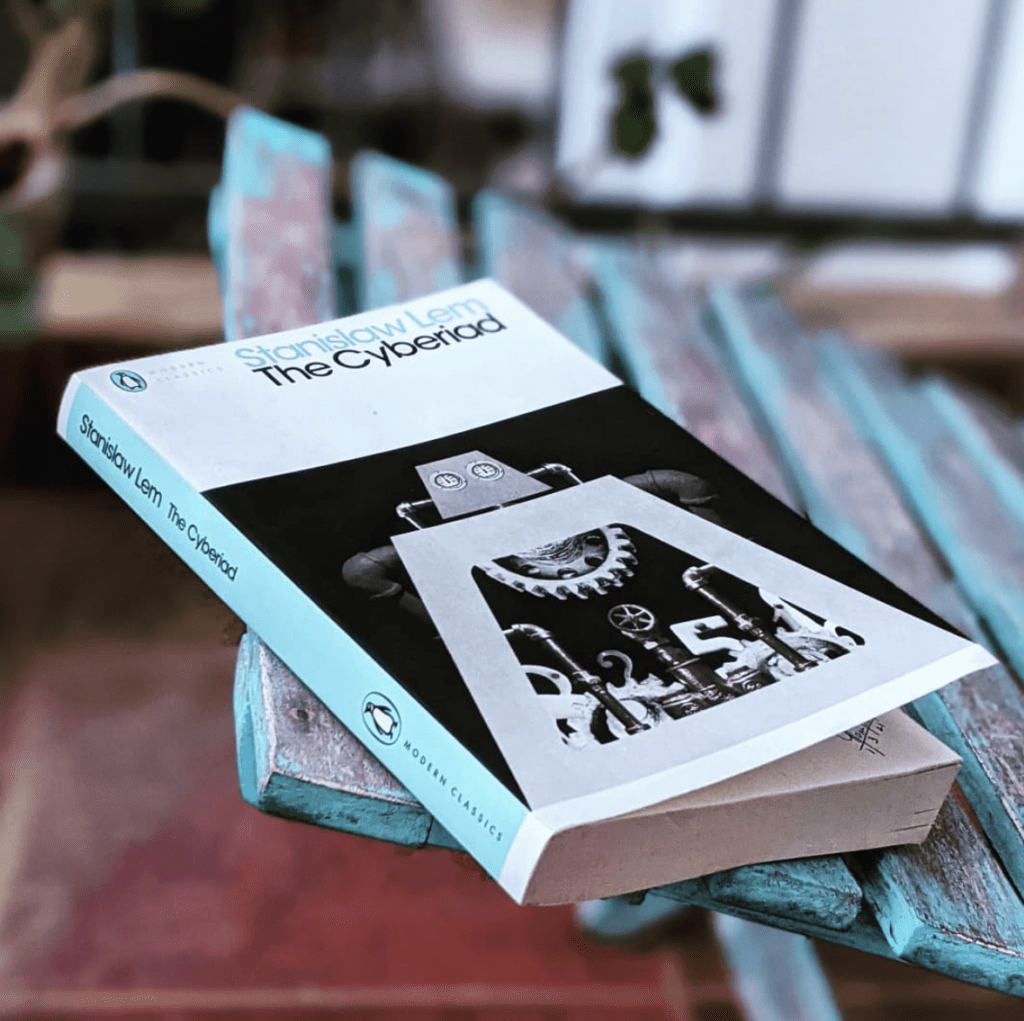
  • The Cyberiad

    Stanislaw Lem

    I discovered the book thanks to an online post that extolled Lem at the cost of my favourites like Asimov. The book was written in Polish in 1965 and translated in 1974. The introduction provides great context to the author, his work, and his relationship with his peers, especially the Americans. He was rebuffed by them, and apparently Philip K. Dick even contacted the FBI claiming Lem was a Communist agent. 

    The book is a collection of Lem’s stories most of them involving two constructors – Trurl and Klapaucius, who come up with things like “a machine that can create anything in the world, provided it starts with the latter ‘n’”. Now what happens if you tell it to create nothing? It’s definitely not by doing “nothing”. But I’ll let you read the story and find out. 

    One of my other favourites was a story within a story. In Tale of the Three Storytelling Machines – there is a character called Chlorian Theoreticus the Proph. One of his essays is The Evolution of Reason as a Two-cycle Phenomenon – a fascinating theory of how Automata and Albuminids create each other back and forth across eternity. 

    The stories, characters and expressions all actually sound quite silly (might remind you HGTG), though I enjoyed the play of words, which point to the intelligence beyond. But it’s when you scratch the surface and think about the underlying ideas and philosophy that you discover the genius of the author. They are deep and profound – sometimes a commentary on the society and politics of the time, and sometimes on the nature of the universe itself. A completely different take on science fiction from anything else I have read in the domain. Fascinating stuff. 

    P.S. A special note of appreciation for the translator, and you’ll know why after you read the verses and use of the English language. It cannot have been an easy job to reconstruct the ideas and their renditions in a new language.

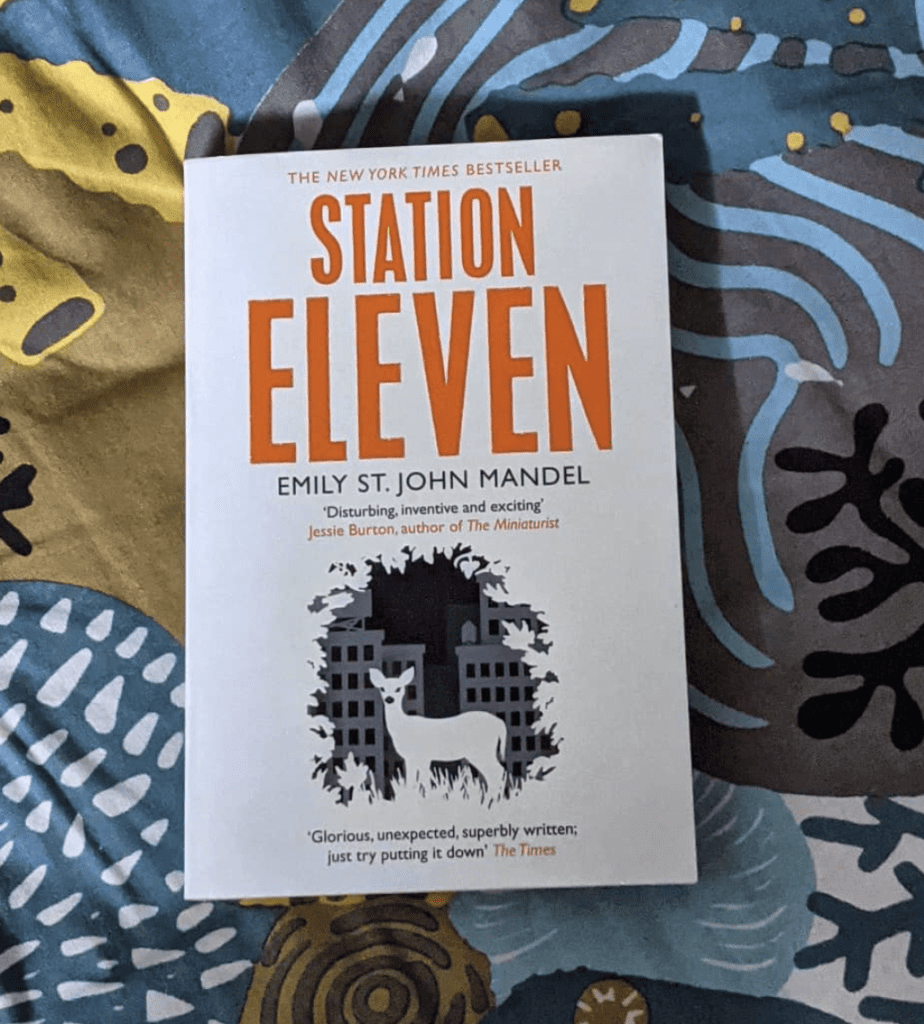
  • Station Eleven

    Emily St. John Mandel

    Disclaimer: I have not really seen/read a lot of apocalyptic/post-apocalyptic content, so pardon the n00b reactions. Contains some spoilers.

    When a famous actor Arthur Leander dies on stage while performing King Lear, the world does not realise that it is the last celebrity news that it will hear. Because Arthur Leander is only a side note in the larger drama playing out – unknown to those watching the play and many outside, the Georgia Flu is on its way to wiping out 99% of the world’s population. 

    The reason I liked this book that its narrative captures the impact at three levels, at least to some degree – individual, community, and civilisation. The pandemic systematically takes out the infrastructure of civilisation, and we see it play out through the experiences of different characters – predictably, the super markets get raided first, and people try to escape the city (though no one knows where to) even as traffic pileups extend for miles. The book is self aware – “Jeevan’s understanding of disaster preparedness was based entirely on action movies, but on the other hand, he’d seen a lot of action movies.” The world might have systems, but systems are after all, manned by people. The television networks go silent, internet access goes, and then the era of electricity is over. Days become weeks become years. 

    In Year 20, Kirsten, a child actor who was in Leander’s King Lear, is a performer in the Travelling Symphony, a band of actors and musicians who roam the land entertaining the communities that have sprung up in the post-apocalyptic world. Their motto – “Survival is insufficient,” borrowed from an episode of Star Trek: Voyager. Kirsten owns a few comics from a limited-edition hand-drawn series called Station Eleven. The creator is Miranda, who in turn is linked to Jeevan, a paparazzo turned paramedic. 

    And then there’s the airport. This made me stop and reflect. Imagine, you’re on/coming back from a vacation/business trip, your flight gets rerouted, and you land at an unfamiliar airport. First, you treat it as an inconvenience, then a temporary aberration, a story that you can tell friends, and then, after a few days, you realise you are permanently grounded, there is no going back. And finally, a community begins to form. And in that community is a curator who begins to collect the vestiges of a lost era – mobile phones, gaming consoles, credit cards. The very things that make up the mundaneness of our current life. This was almost visceral, and after 2020, an absolute possibility. 

    The narrative switches back and forth, in time, and among characters, zooming in on details that bring out characters and their varied experiences before and after the pandemic. In the flashbacks, we see the span of Arthur’s life – from obscurity to fame to the realisation of a life slipping away. We also see Clark’s view of Arthur’s life, as his closest friend, how it changed over time, and how Clark finds purpose after the pandemic. Clark was my favourite character, I could relate a lot. Kirsten has vague memories of a different world, and specific memories of her own past – she is part of a bridge generation between those who knew a life before the pandemic and those who didn’t. In all of these, there is nostalgia, memory, a yearning for the past, and the grief over its loss. It affects different generations differently – “The more you remember, the more you’ve lost“, because the longing for something you have experienced already hurts more. We go from Sartre’s “Hell is other people” to Mandel’s “Hell is the absence of the people you long for“. 

    I found it a poignant read, probably because of a life stage, and the specific time we are living through. 

    Station Eleven
Emily St.John Mandel