Tag: favourite

  • Cafe Max

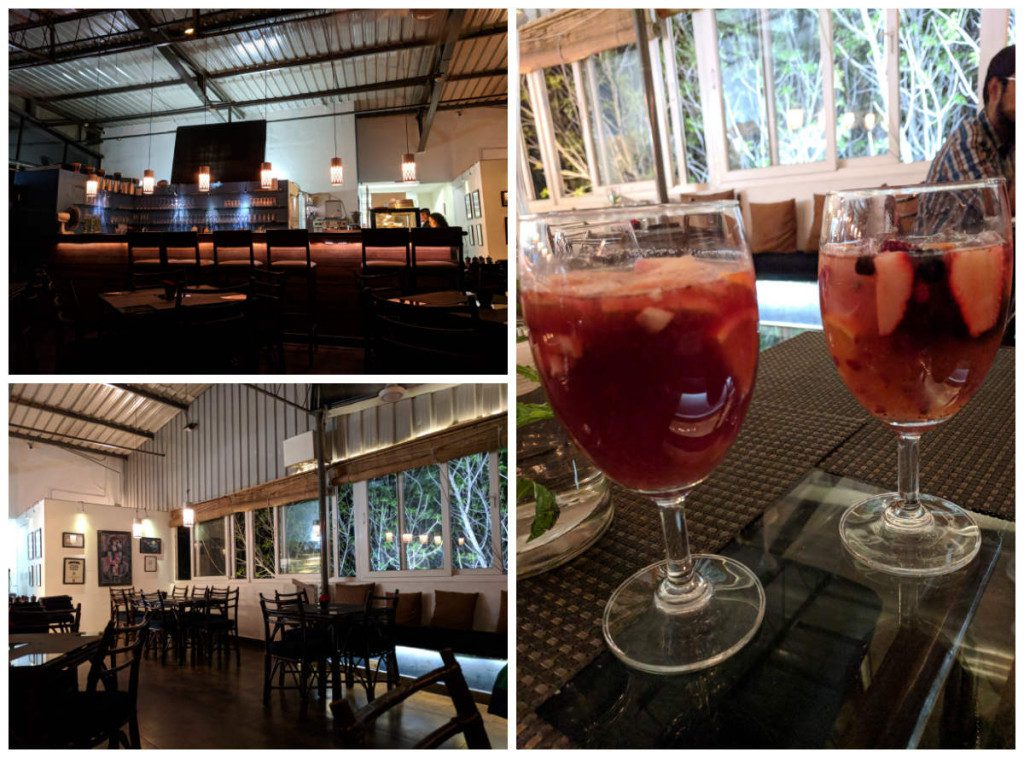
    I realised that though we had visited the place, I’d never written about it! And that a lot of the newer set in Bangalore don’t know of the place. I have to admit that it’s pretty well hidden in broad daylight, so that’s not surprising. The last time I was there for lunch, from work, I realised that the ambiance would actually be great for a dinner setting! And that’s how we made a visit on D’s birthday!

    The muted lighting, the tree canopy and an excellent playlist confirmed my cosy dinner spot hypothesis! We decided to start with Sangria – champagne for D and red for self. I have to say, I liked mine much more, for a change. Lots of fruits, and exactly the right amount of wine for a wholesome combination.

    collage 1 (more…)

  • The Gene : An Intimate History

    Siddhartha Mukherjee

    “As our island of knowledge grows, so does the shore of our ignorance.” probably best describes this book for me. My understanding of the subject grew manifold after reading this book, but I also realised how little we know!

    Perhaps the one question we all seek an answer to is “Why are we here?”. There probably is no universal answer to that question, as science and religion like to approach it in different ways. Personally, I think that purpose is either just a narrative in hindsight, or a story we build to create meaning in our lives.

    Meanwhile, science has raced ahead of religion in explaining “how are we here?” In terms of the two building blocks that have existed before us – atoms and genes – as well as the influence of the one we created – byte. This book is the story of what the author describes as “one of the most powerful and dangerous ideas in the history of science: the gene, the fundamental unit of heredity, and the basic unit of all biological information.” Indeed, it is the history of this unit – from its presence in a human’s mind as an abstract idea to the human attempts to write and rewrite it – that makes up this book. (more…)

  • The Moral Animal

    Robert Wright

    The last book I read in 2016 was “This Explains Everything: Deep, Beautiful, and Elegant Theories of How the World Works” where leading thinkers share their favourite deep and elegant theory. An overwhelming number of them cited Darwin’s theory of natural selection, and though I have not been asked, I’d say rightly so. As someone rightly pointed out, the beauty and elegance is when one theory explains a lot of diverse phenomena, and is almost a gift that keeps on giving.
    In The Moral Animal, Robert Wright uses Darwin’s theory to explain exactly what the book’s title says – why we are the way we are, using Darwin’s own life to illustrate several facets of classic human behaviour. I have thus far viewed the brain as a product of evolution, and feelings and emotions as a vague result of biochemistry triggered by the environment and the brain. My views have been shaped by some excellent and diverse books – Sapiens, Scarcity, Finite and Infinite Games – to name a significant few. This book, in many ways, is an amalgamation of the best insights that those have to offer. But the brilliance of the book is in how it goes beyond, and draws the connection between mental organs and behaviour in the modern world.
    The book throws light on the various behaviours we exhibit in our day to day life, many of which have their origins in the hunter-gatherer stage of our species and before. In fact, we even share some traits with our nearest relatives- chimpanzees and bonobos. Almost all facets of our life are addressed – relationship with parents, siblings, spouse, and society in general, politics, sex, friendship, religion etc.

    (more…)

  • Red Rhino

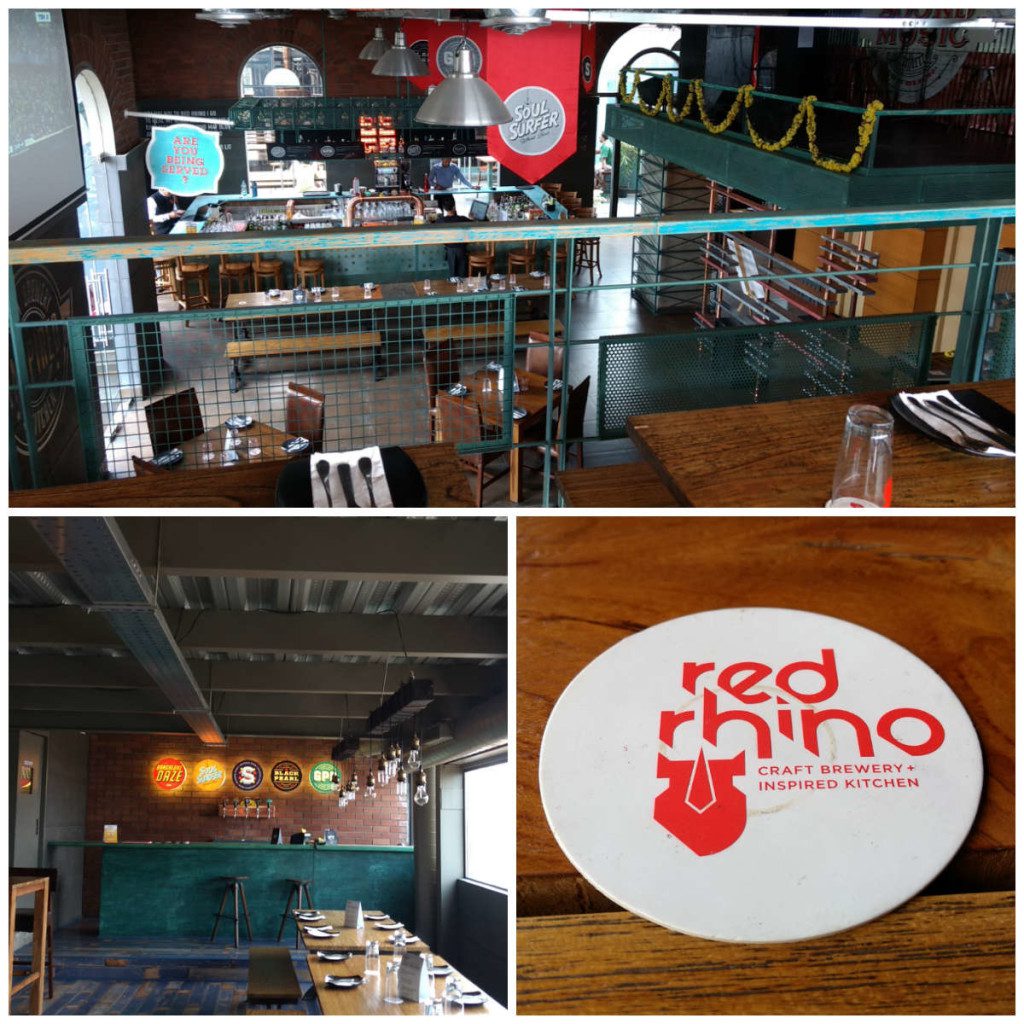
    The last time I visited the part of the world called Seegehalli, Uber made it seem like it was a rural heartland and therefore not a place it would operate in. That’s one of the reasons why we delayed the visit. That, and the fact that their brewery took a while to start. During the long weekend in the beginning of October, we felt adventurous and Uber was in a cooperative mood, and we finally decided to make the trip. There’s something about late Saturday lunches and craft brew that’s very appealing! 🙂

    Red Rhino is perched on top of MK Retail (map), taking up a couple of floors. Very tastefully done, with lots of wood furniture and decor, a stage for live music, and an alfresco section, the place gave us a sense of comfort very quickly. It helped that that it wasn’t very crowded. We sat on the upper floor with a fantastic view of ‘rural’ Whitefield. 🙂

    collage 1 (more…)

  • Throwing Rocks at the Google Bus

    Douglas Rushkoff

    At the beginning of the third chapter, the author asks us to imagine a world where there is only one operating system. In such a world, it would be difficult to imagine another OS, or even think of the OS as something that need not be the way it is. That, in a nutshell, is what money has become. “Central currency is the transactional tool that has overwhelmed business itself; money is the tail wagging the economy’s dog” because “money makes money faster than people or companies can create value”. The proof of it is in the abstractions that have come up in history – the stock exchange was an abstraction of commerce, and the derivatives market its further abstraction. The author notes how fitting it was when in 2013, a derivatives exchange had enough ‘value’ to buy the NYSE, its own creator of sorts!

    My introductory paragraph, and the title itself might give you the idea that this is some kind of a call for a bloody revolution against capitalism and technology. But it isn’t. The title is based on an incident in 2013 and in fact, the author notes how Google, using its buses, is actually doing its bit to protect the environment. He proceeds to ask “since when has doing the right thing become the wrong thing?” The buses, he argues, are soft targets, and the real culprit is a program that promotes growth above all else. So if the book is a call for revolution, it is against the concept of growth for growth’s sake, because such growth is the enemy of prosperity.  (more…)