Tag: favourite

  • Guns Germs & Steel

    Jared Diamond

    One of my favourite books in recent times has been Sapiens – it did a fantastic job of showing how the species ascended to the apex position in evolutionary biology. A vertical journey, so to speak. But why didn’t all humans, spread across various continents, develop equally in terms of civilisation and technology? To use the book’s blurb, “why has human history unfolded so differently across the globe?” In the modern world, why does an Africa or even a large part of Asia have to work hard to catch up with the western world? That’s what the book seeks to answer.

    It does that by asking very interesting questions. For instance, why is it that the Spanish conquered South American empires, and not the other way? The book doesn’t stop at the proximate answers – horses, weapons, germs etc- but keeps asking a series of questions for the answers that come up. Even beyond the time that recorded human history begins. To when the species first made their appearance on the planet – in Africa- and how slowly they made their way to different parts of the globe.

    Primarily, four factors have ultimately caused the disparity in the fortunes of various peoples- how early they started, the difference in the environment and biogeography of the areas they populated (what plants and animals there could be domesticated to scale up food production and create the surplus needed for new skills and ideas to develop), the spread of ideas (the fascinating aspect of how the axis of the continent – except for Eurasia, all continents have a north south axis – plays a large role in why a large number of major civilisations and developments occurred in this part of the world), and the densities of population that allowed competing societies within continents to come up with radical ideas.

    In addition, there are also related interesting ideas. For example, how invention is actually the mother of necessity (examples of how some inventions had been made before, but are credited to the person/s who made the right tweak at the right time for others to adopt it in large numbers) and how some non-intuitive solutions have endured (e.g. the QWERTY keyboard).

    All of this make for a fascinating, if not easy read. Even though it was published a couple of decades ago, I think it is an important book for this time because it shows how evolutionary determinism is not just about genes, but the environment as well.

    P.S. I do wish he had spent some pages on how the British could conquer India. The only clue he does drop is how India’s environment might have created a caste system which prevented the creation and proliferation of ideas it otherwise might have had.
  • The Rise of the Robots

    Martin Ford

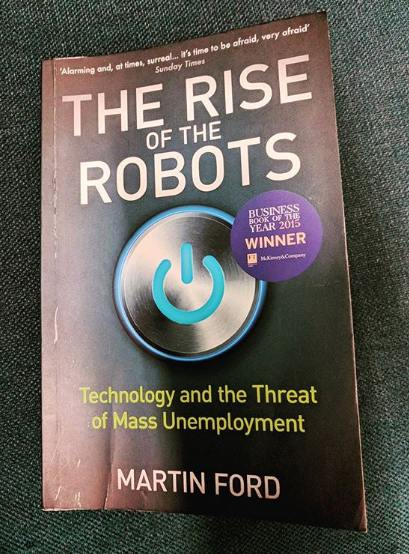
    The bad news – it would seem that the robocracy is inevitable. The good news – this is a very well written book!
    In most robotics and AI narratives, what gets lost is the nuance as folks very firmly root themselves in polarising camps on the future of our species. The reason why this book worked for me was because its focus was less on the dramatic headline (what) and more on why it would happen. It is a very well researched book and sets about debunking popular schools of thought in a very clinical manner. The author is also wise enough to call out the things he is not sure of and mention alternate points of view, as well as objective enough to not fall for the hype of everything that’s new and supposedly disruptive.

    Though he does begin with the now ascertained fact that the first wave of automation will take away the routine and predictable jobs, he also warns that it won’t stop there. Even what we would call the higher end jobs will be safe only for a while longer. He is clear that this is a wave of disruption different from what we have seen before because the cognitive abilities that get developed will be replicable and scalable. He also demolishes a couple of currently popular coping mechanisms – consistent re-skilling, and man-machine collaboration.

    The second half of the book focuses on the economic and societal implications of the rise of the robots. He predicts the fall of middle class demand as well as economic mobility, as incomes stagnate or disappear completely, and warns that economic growth would not be sustainable since robots cannot be expected to be consumers, and the plutocracy (top 5% of the population) which has the money can only consume so much!

    The solution he believes in is some version of a universal income which would ensure the participation of a larger segment of the population and give some semblance of prosperity to everyone. But he also sees several challenges in execution.

    Beyond the broader narrative, there are some fascinating statistics and anecdotes – the development of Watson, the scarily increasing time it takes for employment to regain its original levels after a recession, the sale price of Internet behemoths (YouTube, Instagram, Whatsapp) framed as a cost/employee, and so on.

    While the outcomes may not really be palatable to anyone who belongs to the species, it doesn’t take away from what a fascinating read this is!

  • Laughing Llama Gastropub

    Thanks to the traffic scene, the ‘town’ part of Bangalore is usually nostalgia territory. However, every once in a while, an opportunity presents itself. This time, when we were around Kundalahalli at midday, Google Maps indicated that the central district was only half an hour away. Since such fortune is rare, we quickly decided to try a place recommended by a colleague of mine. That’s how we landed up at the Laughing Llama Gastropub.

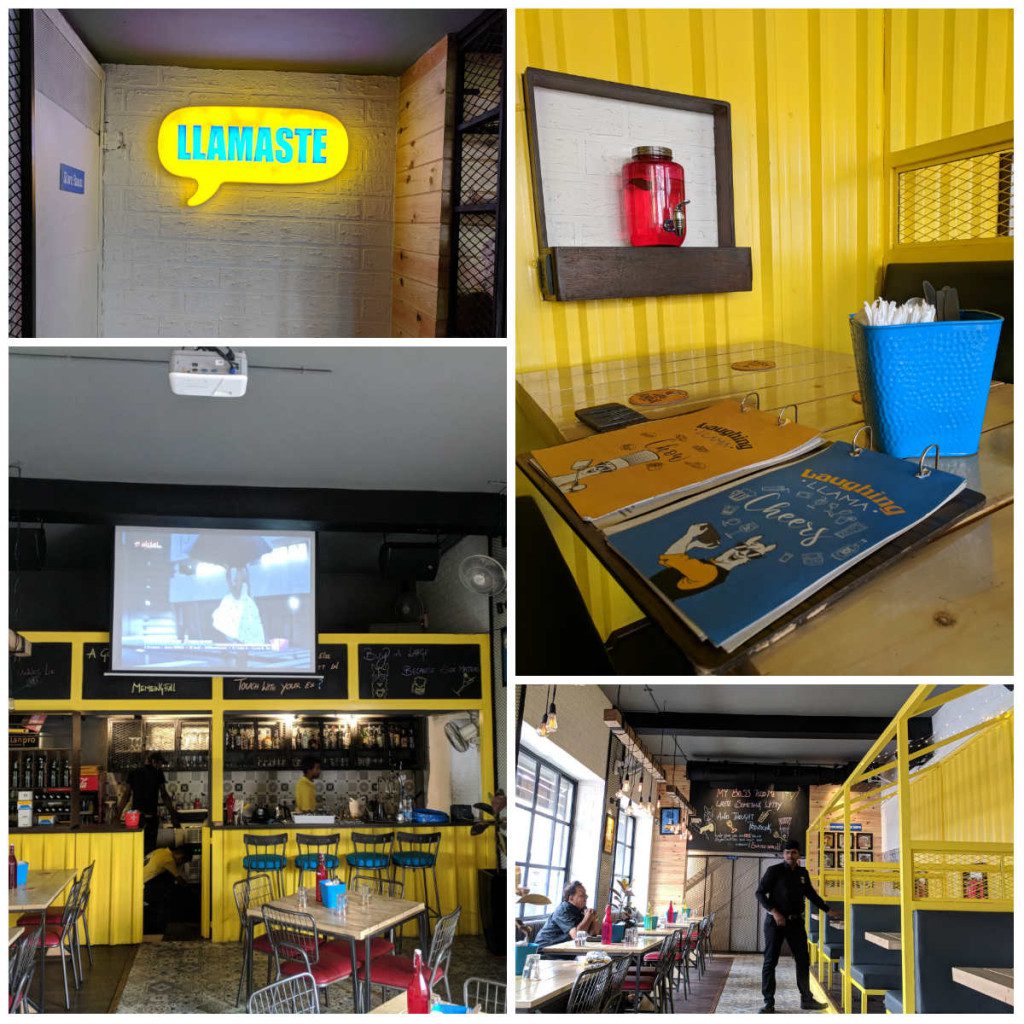
    It’s on Brigade Road, rather the extension of that towards Richmond Road. Very near to an old favourite that shut down a while ago. The bright yellow pop on the road is hard to miss and a yellow door takes you straight into Llama land. The decor has a load of Llama puns, and merchandise to boot. The space has been done up quite well – some diner seating and some standard long tables, a few bar stools, and a really narrow smoking section which is literally between two walls! The overall decor is lively, I really liked how they have converted drinking water into a DIY. (check the pic below)

    collage 1 (more…)

  • Stories of your Life and Others

    Ted Chiang

    I’m a fan!
    One of the reasons I like science fiction as a genre is because of its ability to broaden thinking horizons. This is speculative fiction at its best! Each of the eight stories is different yet wonderful in their own right, because they explore realms not just with imagination but with humaneness.

    What makes it even more fascinating is that unlike the usual hits in the genre, none of the stories are set in the future. In fact one is based on the Tower of Babel, another is more aligned to steampunk and the others seem more an alternate present than an alternate future. What is common among all these though is that the reader doesn’t really feel the temporal shift. Somehow the author normalises it in the first page itself! (more…)

  • MISU

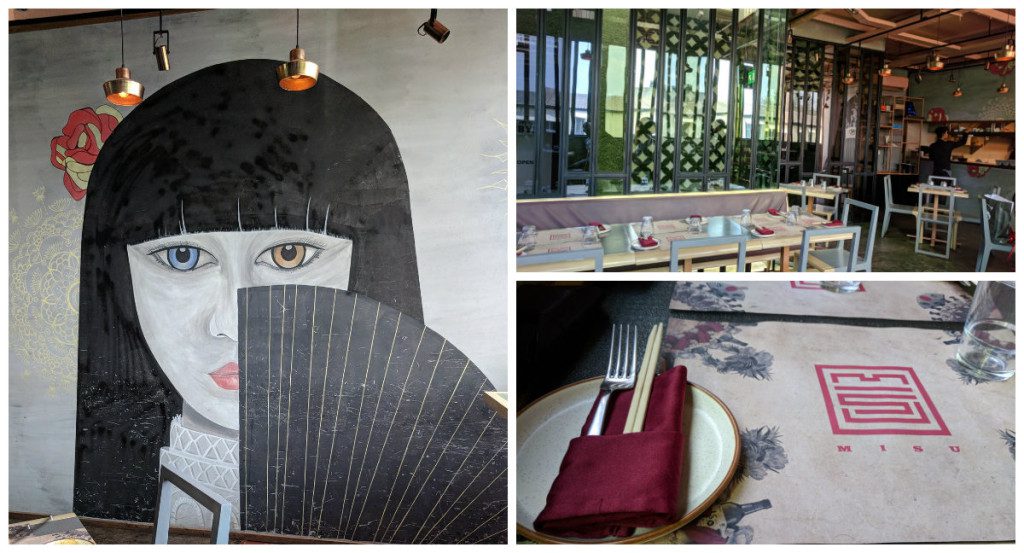
    Our current location dictates that visits to Bangalore have to be planned well in advance, and require a strong motive. Misu had been appearing in several conversations and the ratings hadn’t dropped after the initial fad fervour had died down, so there was motive enough – will travel for good food. One Sunday afternoon we were lucky enough to reach St.Marks Road from Whitefield in 45 minutes! Misu is in the same funny looking building as The Open Box. In fact, they exist side by side. Misu is actually tiny, though the mirror work suggests otherwise. In fact, the usage of space is really good, and the decor has a nice contemporary, grunge edge to it that gives the place character. Most seats (high stools) give you an excellent view.

    collage1a (more…)