
Tag: data

  • The future of Fintech marketing

    First published in ET Brand Equity

    Fintech is one of those small words that contains worlds. Just like marketing. While the former could be payments, lending, insurance, wealth management, neobanks etc, the latter includes brand management, digital acquisition, marketing automation, social media and so on. A combination of the two makes for a complex mix. It also means that crystal gazing has its limits and there really is no common answer. Having said that, let’s try our hand at “how it started, how it’s going to go…”

    Audience & Access: India’s digital economy now boasts over 700 million connected users. As per RBI data, the number of digital transactions are expected to make a 12x jump from 125 million a day in 2020 to 1.5 billion by 2025! Fintech has made leaps over the last 10 years – starting with personal finance products such as banking accounts and deposits, moving on to mobile payments and e-wallets, and finally leading to a full bouquet of financial services including trading, insurance and wealth management. But the pandemic has been a force multiplier for digitisation in many sectors, including personal finance. This audience avalanche means that marketers have to revisit their segmentation and personas, and deal with different cohorts of digital audiences at different levels of maturity. What are the new user segments, what financial products and services would they like to access, and what are the new use cases that will emerge?

    Brands & Behaviours: With new segments emerging, education and awareness will need to go hand in hand with acquisition strategies, and nuanced, personalised communication for different segments. While financial products on digital platforms may not be completely new to many consumers, brands will still need to earn the customer’s trust. This is especially true in the context of an unfamiliar investment product or service, and might require a revisit of customers’ needs, barriers and opportunities.

    This is crucial because we’re now living through a kind of liminality, a period marked by the uncertainty between an old normal, and what emerges next. Even more than before, marketers will need to have an empathetic mindset. Channeling this into communication will be necessary to build trust. Beyond actual trials, different consumer segments would have different surrogates for trust. And old wines and new bottles have challenges. Take celebrity endorsements, or its (relatively) poorer cousin – influencer marketing. Or “cause marketing”. All of them are susceptible to social media vigilantism and cancel culture, even as manufactured word of mouth thrives.

    The pandemic has forced us to relook our lives, and maybe even did a Marie Kondo on our lifestyle choices. “Experience shapes memory; memory shapes our view of the future.” What is the impact on the spending, saving and investing habits of your existing customers? What behaviours will we continue, what will we drop? Whom will we trust on money matters, and why?

    Cords & Cookies: We’re in the era of the second screen. After all, some people still use the television when they want a large screen experience. But seriously, though cord cutting may not be mass yet, such has been the rise of OTT and digital consumption in general that the erstwhile second screen is practically the first. This has a huge impact on the media mix, especially because of the range of customisation that’s possible on digital media. Of course, you might still be an IPL sponsor if you’re a mass brand, but it’s definitely possible to build brands with digital as the primary medium. Not that it’s without challenges. Some level of precision targeting will continue to be an option at the top of the funnel, but privacy concerns are making a cookie-less world imminent. Even as adtech is scrambling to find a replacement for cookies, (I believe that) first party data and a non-cookie cutter approach is something brands should focus on. Codeless designing, chatbots, and the ever increasing tools of marketing automation allow the digital marketer to create custom journeys using demographic, behavioural, and other parameters. Content marketing using multiple formats is still a great way to build domain authority and trust. Podcasts have seen quite a lift during the pandemic. In short, we have moved further from mainstream to many streams.

    Data & Delivery: The common theme in all the above points is fragmentation – of markets, messaging and media. And this is essentially what the future looks like. The challenge for the marketer is to ensure narrative cohesion. This requires us to get comfortable with collecting and analysing data, and being able to deliver this understanding via communication and channels. The other kind of delivery we’ll be responsible for is ROI. This will require us to find new ways to measure both effectiveness and efficiency across campaigns, channels and market segments.

    In closing: The “new normal” is unlikely to be the normal we knew. Especially for marketing, because even after the pandemic goes away, the uncertainty will linger in consumer minds. Despite the abundance of choice that customers have, there is an opportunity for brands. As Scott Galloway has astutely pointed out, “Choice is a tax on your time and attention. Consumers don’t want more choice, they want confidence in the choices presented.” In the race for wallet share, trust continues to be the best currency. Building a trusted brand in a fragmented world takes time and a growth mindset. It’s good to remember that there are no perfect solutions, only conscious trade-offs.
  • The path to immortality

    I’d written earlier on how brands could use an individual’s data (the personal API) to fit themselves into his/her narrative and had used Nike as an example.  But this data could also be used by fitness and health companies to discover ‘fault lines’, gradually delay wear and tear, and one day, totally prevent a machine shutdown. This video – A Day in the life of Tim Ferriss (watch for a minute from 3:25) – gave me an idea of how we might be moving faster in that direction because of  data collection.

    Back in 2011, in ‘God in the details‘, I’d opined that over a period of time, when our data capture capabilities were evolved enough, and we had a lot of data on people on a lot of their behaviour, consumption etc, we would potentially be able to answer the most profound questions about our existence, purpose etc, and unlock further dimensions. I was extremely happy to read the same thought in this (long, but) amazing read called ‘Navigating Stuckness‘. “I could sit safely at my desk and write computer programs to gather vast amounts of Internet data, which I thought could finally answer timeless questions like “what is love?” and “what is faith?” with precision and clarity.

    On one hand, data could help us in our path to immortality, and on the other, it could provide us the answers to fundamental existential questions. I wonder what would happen first, because, as I wrote in PhilosoRapture, I also wonder if those questions would remain relevant once we became immortal.

    Meanwhile, the other track to immortality that is rapidly developing is that of the augmented human, where human parts (including the brain) will be replaced by mechanical replicas. We’re only a part of evolution, as this wonderful, humbling video would show, and it is probably only our ego that makes us believe (if we do) that we’re the endpoint. Maybe, there will be a species later, of whom we’d be probably be creators, for whom our questions will seem irrelevant and who will have their own sets of answers to seek.

    cs

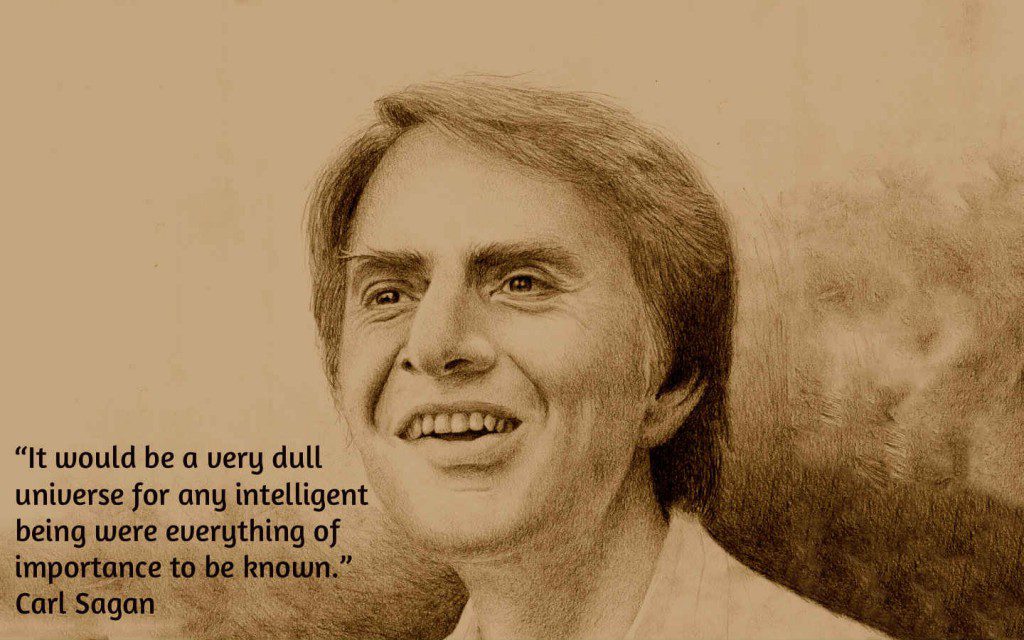
    (quote via, image via)

    So it would seem that whichever way we approach immortality, by the time we get there, chances are, it may not be that significant.

    The year we conquer morality, by the way, is 2040, as per Ray Kurzweil. I’ll be 62 then, or maybe not, or maybe it won’t matter, or maybe…  🙂

    until next time, live long and proper 🙂

  • Data.Information.Knowledge.Wisdom

    I still remember a time when most social media presentations considered the “One Size doesn’t fit all” slide mandatory. The platforms were new, and brands/practitioners were told that aping was not really the best policy. Yes, there were best practices to learn from, courtesy early adopters, but there were many factors to be considered before they could even be adapted, let alone, cloned.

    I still subscribe to that. Every organisation’s business objectives are different, even if they appear to compete in the same category and fight for the attention of the same audience. This difference could most likely stem from their different visions – from how they would scale over time, geography and even their business domain to the nuances in consumer tastes they want to target. This difference would then translate into how they conduct their business – internally and externally – how much hiring gets done in what function, what and how much of marketing is done, how customer care and operations works, what products and features are shipped first and how, to name a few.

    These would then dictate what the organisation’s metrics are, and how and when they are measured. Considering that social media is the most ‘direct contact’ and ‘mass’ set of platforms, these differences are arguably exaggerated, because audiences can be sliced thinner (compared to traditional media) and some organisations might deliberately do things to keep out certain audiences eg. what they communicate and how and where too.

    Why a repeat of these known perspectives? With more and more data being created by the activities of brands on social platforms, we are seeing tools that are trying to convert all this into usable information. Sometimes these tools are in human form too, and they bring their own perspectives (or lack of it) which essentially means comparison of apples and oranges just because they are fruits. I saw an example last week, which also included the brand I work on – Myntra. To quote Pico Iyer “Where once information had seemed the first step to knowledge, and then to wisdom, now it sometimes seemed their deepest enemy.” Goes for the step before too – data.

    Take a couple of examples – Facebook Page and Post Likes. Thanks to the subtle way in which Sponsored Stories/Page Post Ads work, it’s extremely difficult for any tool to bifurcate organic and inorganic Likes. (I am excluding the Page Admins of course) And yet, comparative analyses are made on Like growths. Or take Engagement – semantic analysis is at such an early stage that many tools would consider 100 comments on a post dissing the brand as high engagement. And yet, ‘insights’ are delivered on Engagement. Uff, engagement! My thoughts on that mother word have been documented earlier. These are operations mind you, I am not even getting started on strategy.

    Does that mean you should not consider this data/information- competitive or not – at all? Of course not! But how you use that is where knowledge and wisdom step in. Like the famous saying goes, “Knowledge is knowing the tomato is a fruit, wisdom is not putting it in a fruit salad.” Sadly, the way information is being used, oranges would soon be passe, apples would be compared to tomatoes because they are both fruits and are red in colour.

    until next time, data diarrhea

  • Data: Growing up

    The Facebook story might be facing rough weather, but that hasn’t stopped the social network from pushing out new and interesting things. It launched “Page Post Targeting Enhanced” – features that make it a media platform offering sharper slices to marketers (easily) by allowing filters based on gender, interests, relationship status etc. It has also rolled out Facebook Stories that highlights “people using Facebook in extraordinary ways”. Venture Beat has a very smart take on how this can be the future of news by intersecting two of the most interesting contexts – location and interest. As a media platform, one can imagine the advertising potential.

    Twitter already has local (city specific) trends, though, from experience, many people seem to think that they’re viewing national trends when Twitter is actually showing them local trends. Twitter already has Promoted Tweets and is enhancing features that allow better targeting.

    Media buying in the age of traditional media consisted of a plan being prepared (and negotiated) after evaluating the reach, cost and other parameters of various options across platforms – print, OOH, TV, Radio etc. The (reach) data has always been contested, and the (post) measurement is more of a myth than reality. New media platforms, on the other hand, are significantly better in terms of transparency and in addition, have better native and 3rd party tools for self publishing, distributing and measuring. The data is one click away from the marketer. After a certain tipping point of reach that these media achieve, traditional media would be forced to provide this level of accessibility, and then, IMO, the value provided by media agencies would be reduced significantly, as tools would make it easier for the marketer to plan real time and measure too, across platforms.

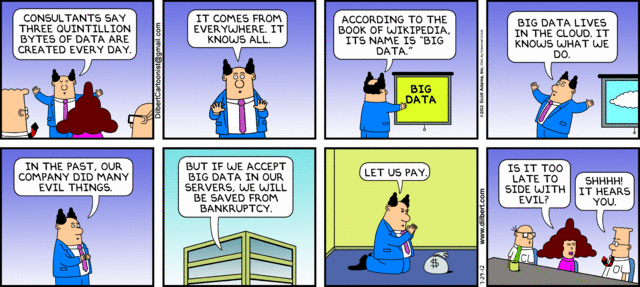
    In essence, data that the marketer needs, to make informed choices on the why/what/how/when of platforms, is easily becoming available.  The data that really needs to be converted into information is now flowing in the reverse direction – from the consumer and his actions across platforms to ______. And this data is not just for marketing, its use is across the board and affects product, customer care, operations, technology and so on. It is Big Data, the players are evolving, and the next stage in this ever changing game has begun.

    until next time, don’t worry, it’s already a buzzword. 😉

  • In trust we trust

    Karthik recently wrote a post on a subject I’ve been thinking about for a while now – “How should brands use public information you share on social media“, on British Airways’ “Know Me” scheme to personalise their service by providing iPads to their staff and “giving them instant access to customer data, including passengers’ travel history, meal requests and details of any previous complaints. They will also use Google Images to search for pictures to link with passenger profiles, helping staff to identify them next time they fly” (via) It has already been met with disapproval from some, but Karthik believes there is value if there is intelligent use of context to delight a consumer. I’d tend to agree.

    Any user of Rapportive would be familiar with the thrills it offers thanks to rich profiles provided as you read/write a mail from/to a contact. 🙂 At an enterprise level, any social media practitioner would also agree that it’s sometimes useful to butt into conversations where an @ has not been used, if you can provide value to a consumer. A Capgemini infographic, based on 16000 interviews in 16 countries, shows that 61% of digital shoppers want the store to remember their personal details, 54% want to receive persoanlised offers, and 41% actually want to be identified through digital devices when they enter a physical store! But when Orbitz starts showing Mac users different and costlier options as compared to Windows users,  I’d really wonder if the business is providing value to consumers in personalised offers!

    At paidContent, I read “Big data and the changing economics of privacy“, which discusses how easy it is to get info on people, and debates a ‘Do Not Collect’ law, especially in the context of new technologies like face recognition. Another suggestion I read at AdAge is to let consumers build their own tracking profiles – What consumers might prefer, if one were to actually ask them, is the ability to build, manage and get useful things from their own profile and data. Let consumers remain entirely anonymous and in control.

    As this Econsultancy report succinctly points out, personalisation is ultimately a trade off, and businesses need to learn to provide tangible value to consumers who share their data. But before that, they also need to make the consumer comfortable by using even freely available data intelligently in a way that shows their intent, asking consent when applicable, building trust and allowing users to retain control.

    I personally believe that if you’re putting any information out on the web, you should take responsibility for it – that includes what you share and who you share it with. From experience, it can give you great lessons in trust, and I think that applies to the relationship between people and businesses too.

    until next time, trust worthy