• Signals, Trade-offs, Outcomes, Perceptions

    In S2E6 of The Good Fight, which was our first go-to drama during the Corona lockdown, the focus is on Adrian Boseman (played superbly by Delroy Lindo ). Thanks to his appearance on a cable news show as a legal pundit, he becomes a viral sensation. They invite him back for a couple of shows and increasingly try to channel (pun unintended) his angst into a stereotype. In his third and final appearance on the show, Adrian rebels and lets it fly, causing the channel to let him go. The episode’s last scene has him looking in the mirror, without the greasepaint. I really liked this story arc. It’s almost as though, after he experiences viral fame, he sees it for what it is, and how he can’t play along, and gives the system the finger.

    Or maybe I am projecting. Not that I ever became a viral sensation, but my favourite phrase in this context has been “Popularity is the slutty little cousin of prestige.” (Edward Norton, Birdman) Now that’s a very arguable point of view. In my defence, I don’t think of it in the scathing, condescending manner of the original quote. It’s a tempered, mellower, “I can’t bring myself to do this sh*t” perspective. (more…)

  • Kochiites

    Bony Thomas

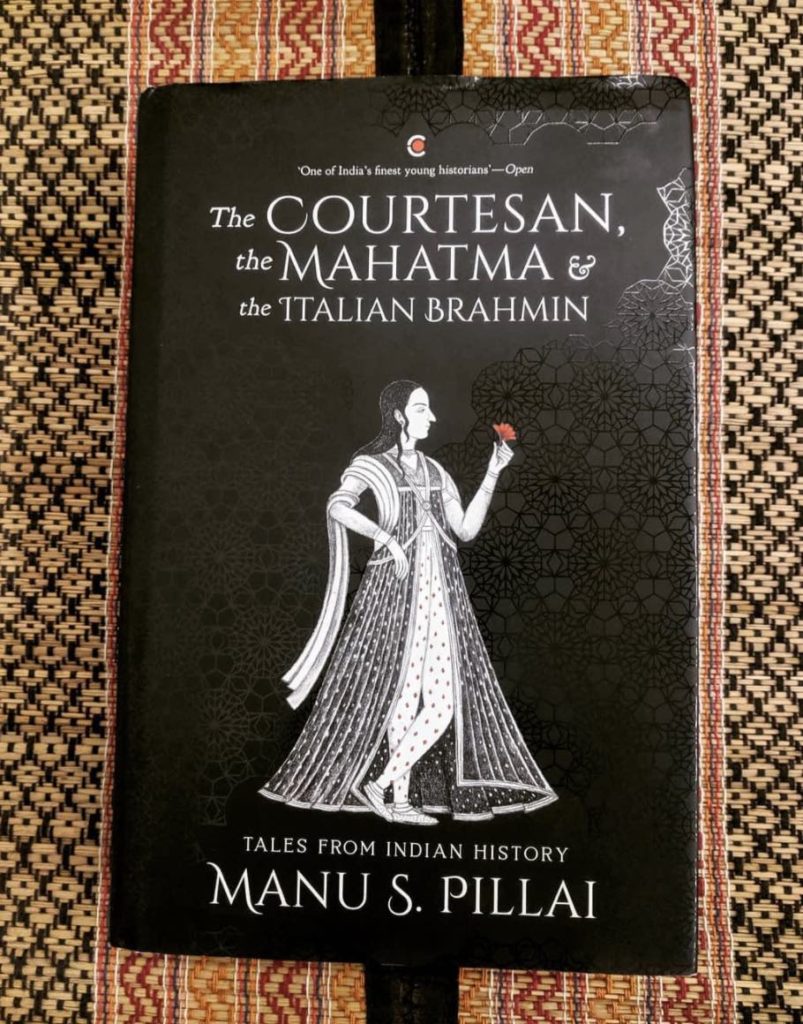
    I have always loved history, especially in the context of a particular city. But despite Kochi being my hometown, I must admit to complete ignorance on the place’s history. That’s why I was very excited about this book.

    In about 4.5 sq km in Fort Kochi and Mattancherry, there are around 30 communities! This small area is also host to the social and religious institutions of these various communities. The variety of people and the origin stories are simply astounding. From Portugal and Yemen to Kutch and the Indus Valley, and many places in between, there have been migrations that happened decades and in some cases, even centuries ago, creating a mosaic of different cultures. A lot of credit goes to the traditional kings of Kochi who were generous with their grants to migrants. It has to be said that this has been repaid manifold by the benefits to trade and the economy in general. (more…)

  • A space-time freedom continuum

    Spoiler 1: This has nothing to do with science! Signs, maybe.

    Spoiler 2: This has a lot of quotes. What can I say, smart people have already framed things so well. 

    I got an interesting response to Change Signalling – Sriks7 asked me what are the values based metrics you are thinking of for yourself? He also mentioned that in his case, they are seen to boil down to where to spend your attention and time. I can relate to that. In the words of Dylan, “A man is a success if he gets up in the morning and goes to bed at night and in between does what he wants to do.” I have noticed that my overall sense of well-being goes up when I allow myself unstructured time. I watch random things, torture D and twitter with bad wordplay, listen to music, and sometimes just watch clouds float. The last one is slightly more dynamic than paint drying. 🙂

    But my answer would have at least one more layer.  Though time is definitely a key element here, I think of it being part of a broader umbrella – freedom. My working definition of freedom is related to one of my favourite quotes “Between stimulus and response, there is a space. In that space is our power to choose our response. In our response lies our growth and our freedom.” ~ Viktor E. Frankl. Freedom, to me, is that space – to be able to choose a response that I can live with, always. Or, to paraphrase a bunch of Jean-Paul Sartre’s quotes, freedom is nothing but the existence of our will.

    As I wrote earlier, one approach that I have used is to reduce the stimuli. But increasingly, I find that there’s a limit to that.”The wide world is all about you: you can fence yourselves in, but you cannot for ever fence it out.” ~J.R.R.Tolkien. My introspection therefore, has been in the direction of the response. I have found that my power to choose a response depends on how secure I feel. I further explored this “security” and realised that it boiled down to money. It seems like when I can afford it, and that’s almost literal, I am nice to those around me. When I feel that our financial independence plan is threatened, I tend to react badly. It doesn’t help that I am blessed with a scarcity mindset.

    My belief is that by the time we are ready to activate the plan, I would have an abundance mindset. That is based on the changes I have seen in myself in the last few years. But I am also reasonably sure, from experience, that though there are these small wins that happen organically on the way, a mindset switch requires effort. A couple of challenges are immediately visible. One, since I do have a few more years of a full-time professional life left, there are trade-offs on a daily basis, and they require a balancing act between knowing who I am and being who I need to be. The challenge is being rooted on the first while executing the second. Two, while the ego might have been reasonably tamed, there is self image which has its own demands. In this dual tussle, there are choices and actions that might derail me.

    When, between changing circumstances and myself, I have learned to increase that space (in my earlier definition) I’d have achieved the freedom I desire. I do wonder about Loki’s (surprisingly) deep thought though – “Freedom is life’s great lie. Once you accept that, in your heart, you will know peace.”

  • The Power of Habit

    Charles Duhigg

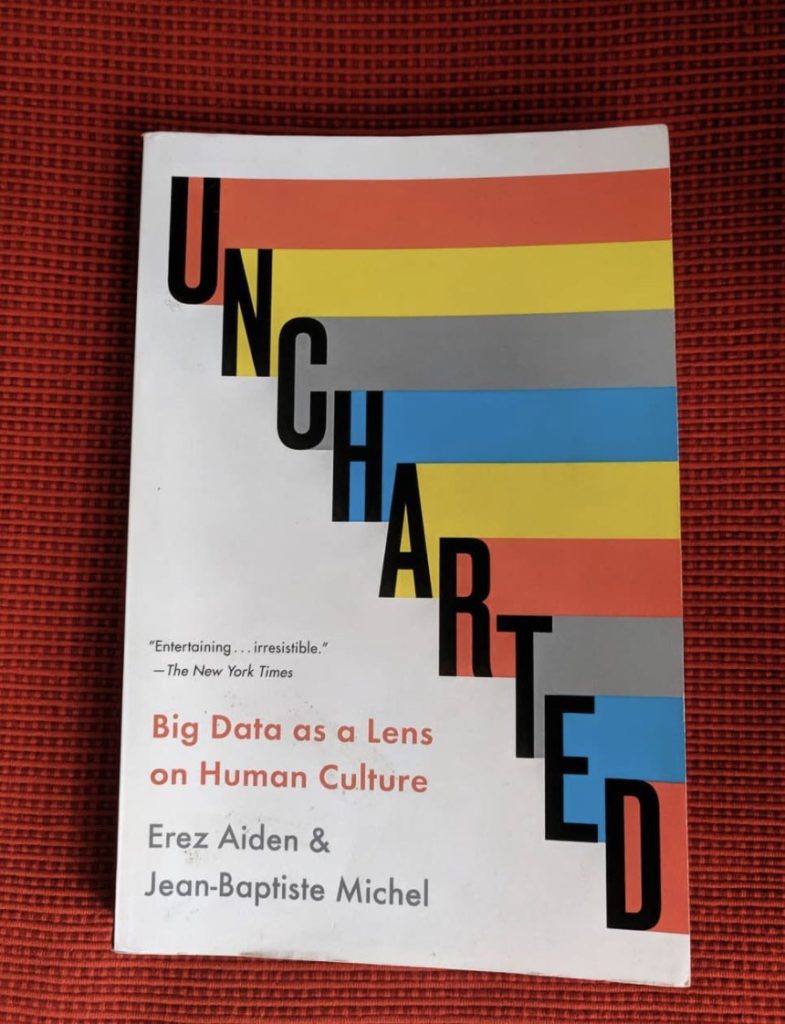
    There is something meta about me reading this book. I have my own book-reading habits – genres, number of books on the to-be-read shelf, and such. It is an example of the fundamental premise of this book – cue, routine, reward. Under normal circumstances, I reckon that this book might have landed up on my list 3-5 years down the line. But thanks to my wife D, it not only got into my shelf, but gave me a favourite book as well! Same cue, changed routine, same reward – the exact process to lose a bad habit and pick up/better a good one!

    Towards the end of the book, the author quotes William James – “All our life, so far as it has definite form, is but a mass of habits – practical, emotional, and intellectual – systematically organized for our weal or woe, and bearing us irresistibly toward our destiny, whatever the latter may be.” As a creature of habits, I wholeheartedly agree. Habits form character, and character forms destiny.

    The book can be helpful to anyone seeking to improve the self, whether it is in life or at work. From losing weight to raising children to building great teams, the importance of habits (individuals) and routines (groups), and the fundamentals of changing/bettering them do not change. The author demonstrates that in separate sections dedicated to individuals, companies and societies. Michael Phelps’ habits and routines, Howard Schultz’s (CEO, Starbucks) processes that have transformed not just how the organisation works, but employees’ lives, and Martin Luther King’s successful civil rights movement, all showcase a pattern that can be used to radically alter trajectories.
    I think the success of the book is also due to the excellent storytelling that converts what could have been a dry subject to one that is not just enlightening but entertaining too! I suspect there is some understanding of a reader’s cue-routine-reward mechanism here, because I was hooked soon as I started! 🙂

    There are a couple of wonderful analogies for habits at the end of the book – both using water. It captures the essence of the book beautifully, and encourages us to believe that we can choose our path, and swim wherever we want to.
    Pick it up. Now!

  • Stories – The Brew Chapter

    Back in 2014, when I told friends that I had visited a microbrewery in JP Nagar, they thought I had a hangover. It took a review to prove it. 6 years later, such is the level of gentrification that it’s become a multiple-choice question! Even if I exclude that abomination called The Yellow Submarine, and the meh Uru. Bangalore traffic has scarred us to the extent that it is less scarier than a potentially fatal virus. That’s how we landed at Stories in BTM.

    (This is interesting, because the post will be published only two months later. Would the virus scare be far enough in the rear view mirror?)

    As with most microbreweries, the place is fairly large, with multiple floors and sections. Lots of greenery, and not just the standard vertical version. Thanks to the ill-communicated “lockdown”, it was not overcrowded, though there was a fair crowd.

    A for Apple Cider for D, and B for Belgian Wit for me is how we started. The Wit seemed fresh and had a mild zing to it, an easy drink. I found the Cider a little too sweet for my liking, though D was fine with it. From the starters, we tried a Chowringhee Chilli Chicken, which was basic chilli chicken, and actually quite mild despite the name. The Chicken Suya Kebab was a much better dish and that was largely thanks to the gun powder coating.

    Though I wanted to try the Hefeweizen, I finally went with the Rauchbier. I had liked the version at XOOX, though that was an ale. This one was a lager, and milder as well, though the smokiness was very much around. The Fiery Chick pizza seemed like a good companion for the drinks, and with a combination of spicy chicken, chilli flakes, green chilli and mozzarella, it did that job just fine. An experiment followed – a Chicken Cannelloni that had a tandoori masala. Surprisingly, this was quite good!

    For desserts, there was an interesting-sounding Nutella Baklava, but we decided on a Decadent Mousse. This was brandy infused rich chocolate with some nice texture thanks to crumbs and sugar coated nuts.

    The bill came to around Rs.2500, which seemed par for the course. The service was prompt and friendly, though they did make a mistake with the bill. The playlist gave the place a lounge feel that matched the overall decor and ambiance.

    Stories – The Brew Chapter, 29th Main Road, Mahadeshwara Nagar, Stage 2, BTM 2nd Stage Ph: +918046809326