
Curry Meen has been on our radar for quite a while, but considering that we live in Keramangala, with multiple Mallu food options, we had been ignoring it. Thanks to a sale at Bangalore Central and my excitement towards checking out the Bangalore Metro, we zoomed in on Curry Meen, which is close to the Indiranagar Metro stop. The restaurant is located on the Double Road between CMH Road and BDA complex, Indiranagar. A not-so-accurate map here. It’s actually after that 5th Main junction when going from CMH Road.
Parking wouldn’t be very difficult. There’s space inside the compound, as well as options on the road outside. We saw an inactive Dosa Counter downstairs and some minimal seating on the ground floor, and proceeded to the first floor, which offered a decent view of the relatively uncrowded Double Road. On the way back, we also noticed that they had another room upstairs, where seating was available, but whose lights were switched off. 🙂 They’d probably open it only if required.
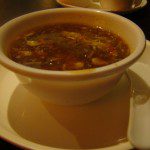
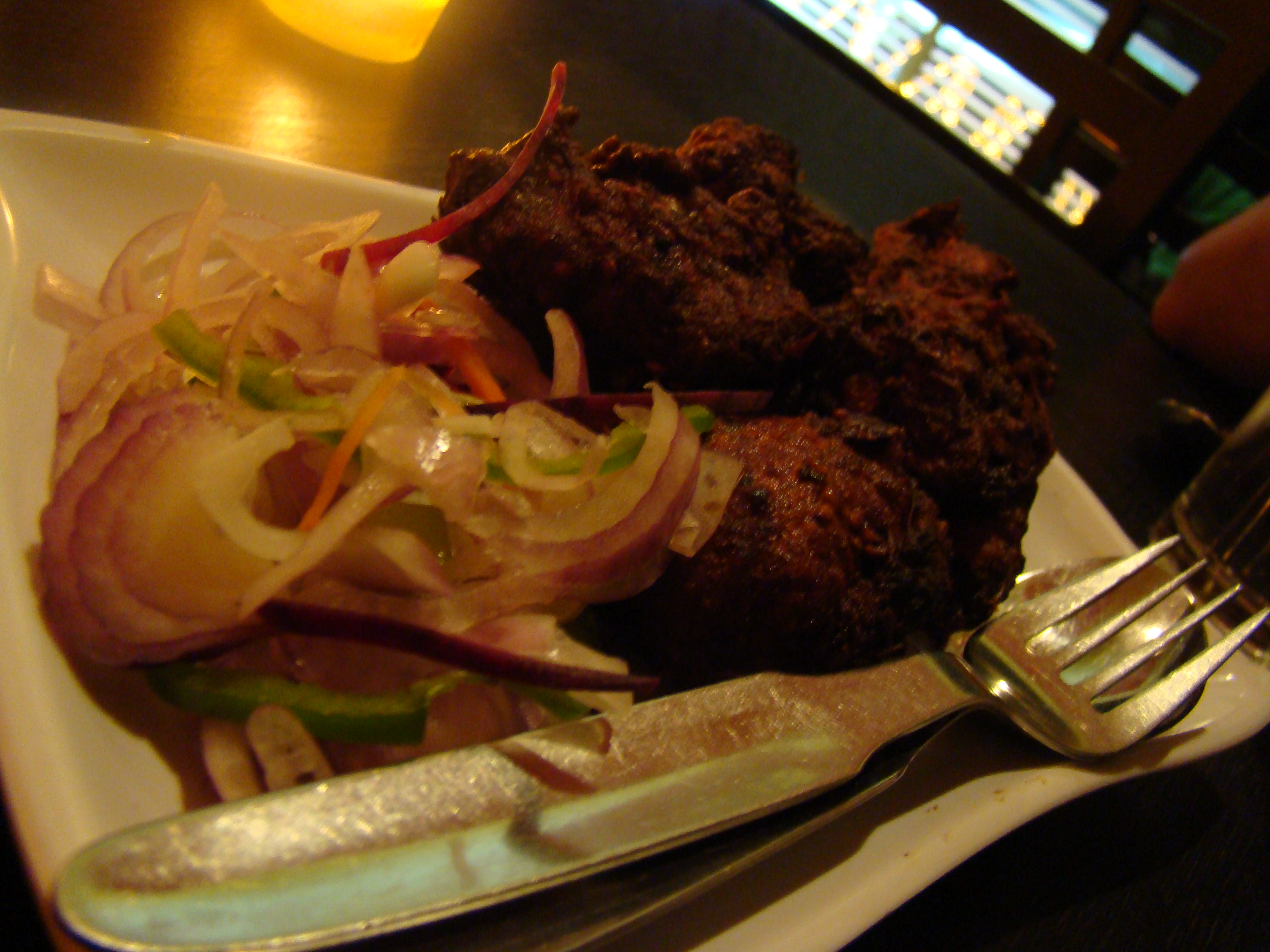
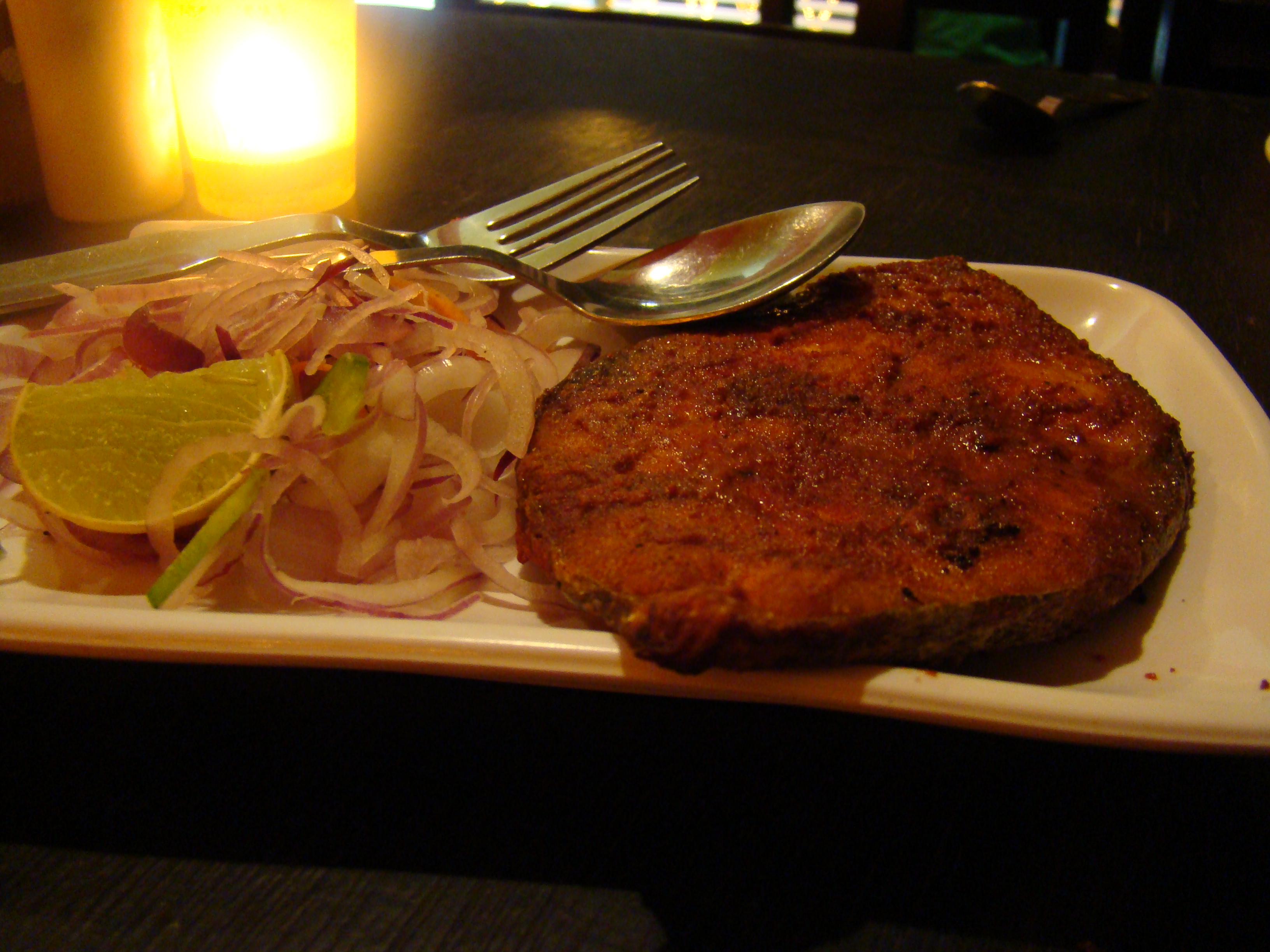 The menu can be found here, and is a bit of a Malabar-Chinese collaboration. We were here for the Kerala food, so we focused solely on that. The Mussels were not available, so we marked our protest by ordering a Hot & Sour Chicken soup and then started the actual meal with a Jinsi Chicken Kebab (half) and a Malabar Fish Fry. The soup was a homage to the pepper trade from Malabar, and our eyes watered at this historical hat tip, and for other reasons. The Jinsi Chicken was an attempt at Pakodas, it seemed, and a failed one at that. Avoid! The (seer) fish was quite good with a spicy masala coating.
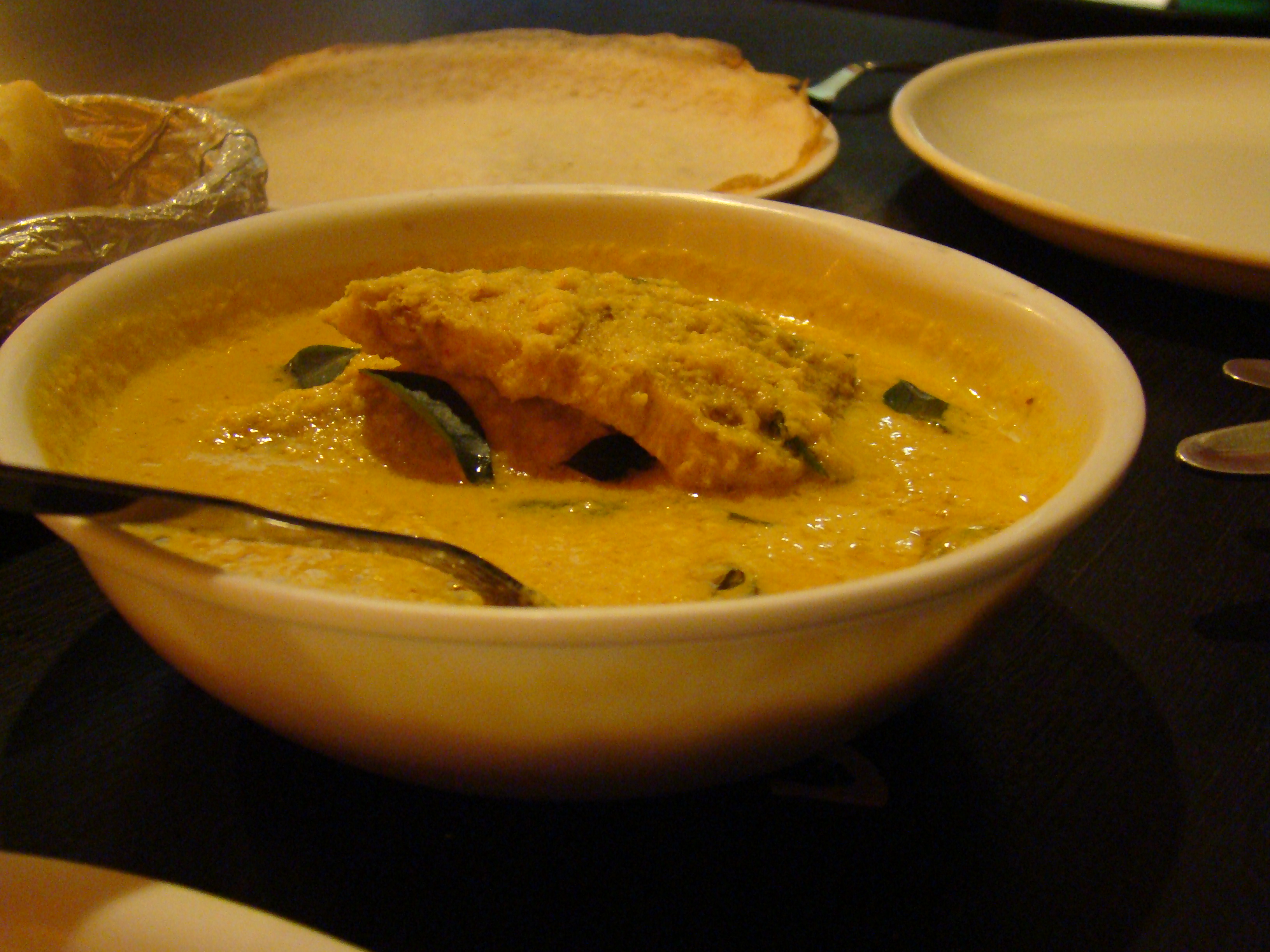
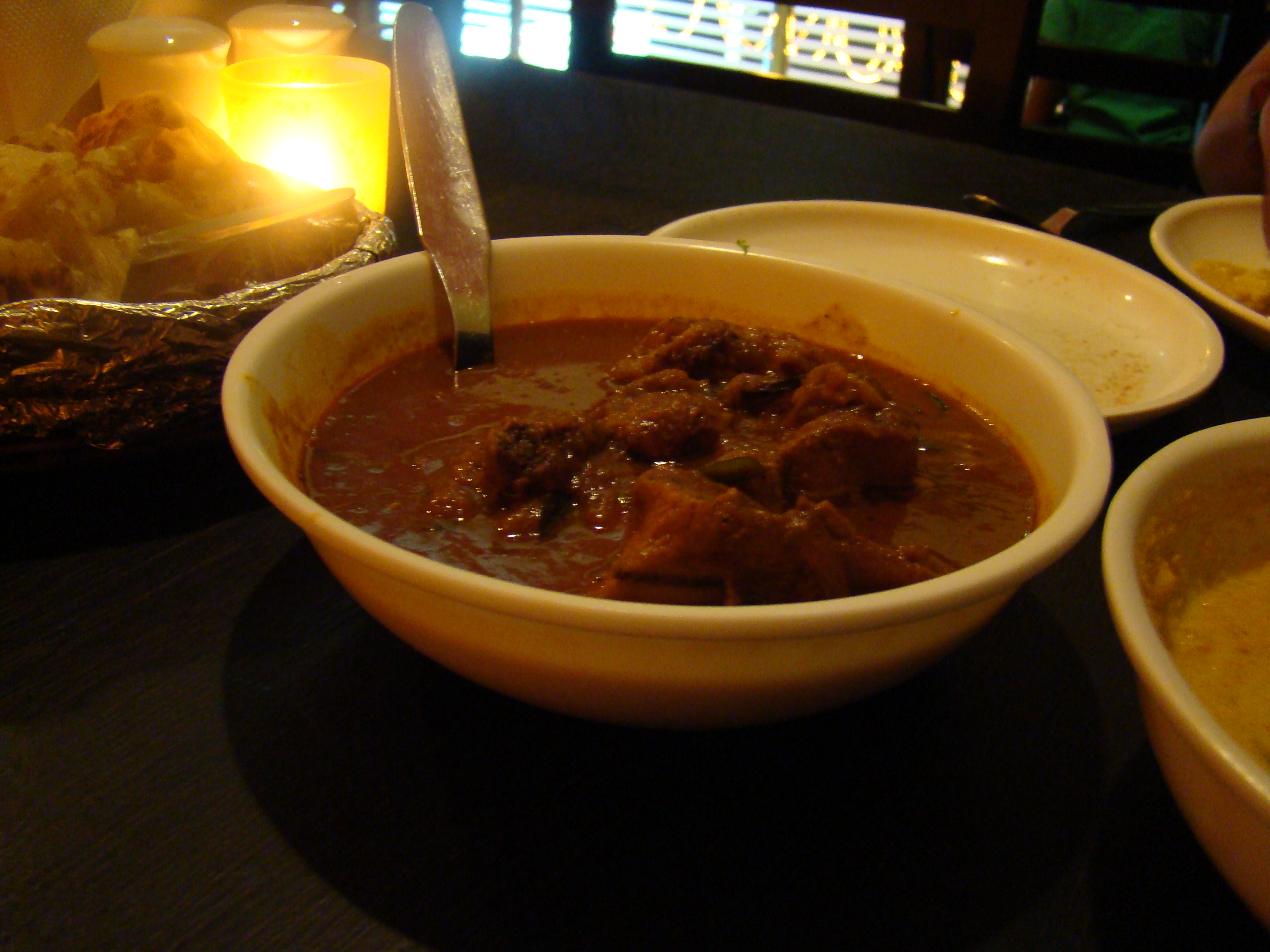
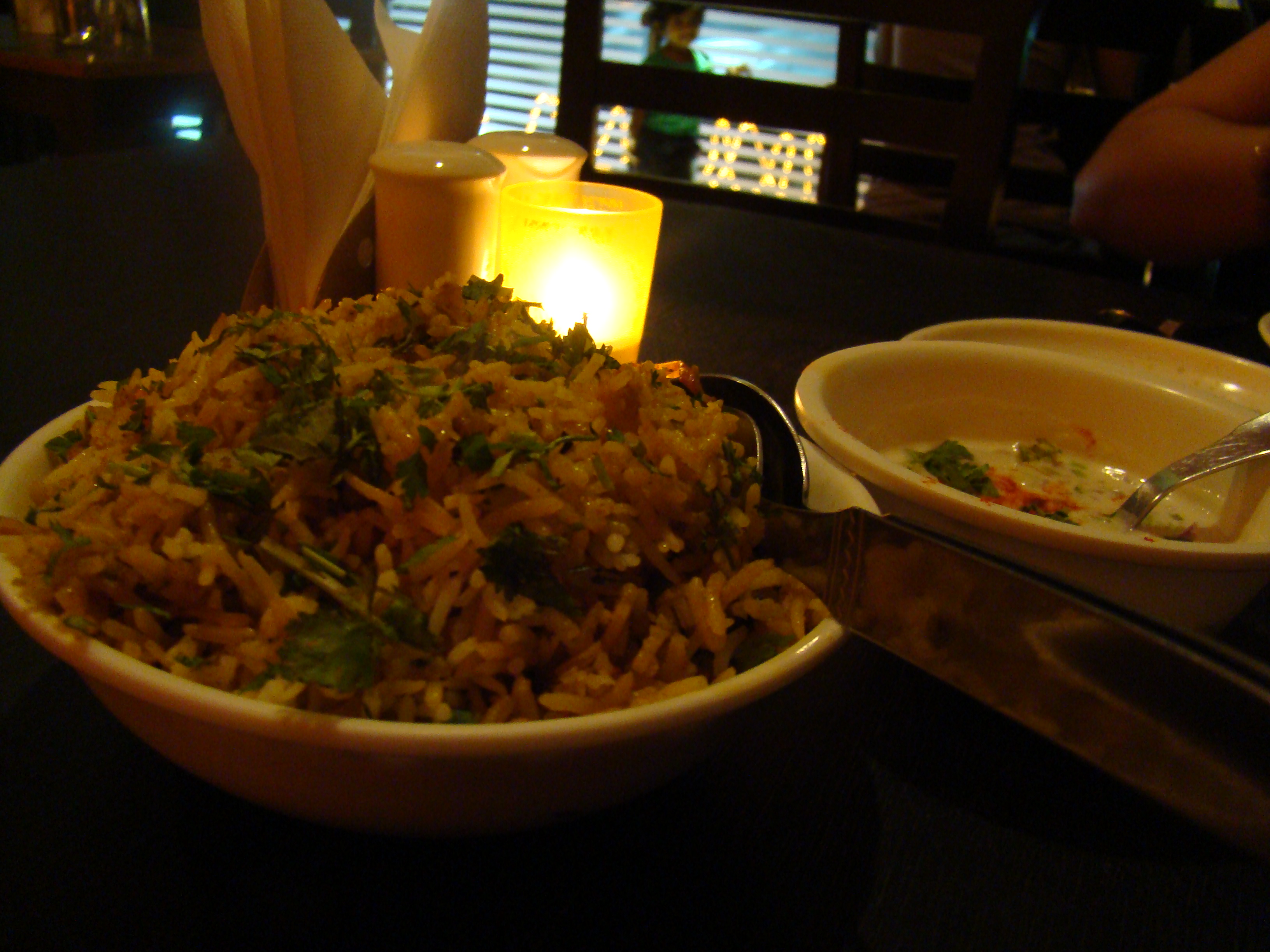 For the main course, we asked for a plate of appam, a Malabar Paratha, a Fish Moilee and a Kozhi (chicken) curry. I’ve tasted several poor versions of the Fish Moilee, but this one was an outright disaster. The appams didn’t help either. The chicken curry was thankfully quite tasty, spicy and seemed like a relative of the varutharacha curry, but without the coconut. Figure that. The Chicken Biriyani was served with an egg (extra points for that) and was reasonably good.
The staff didn’t seem to be from Kerala, but that didn’t hamper the experience much. They were quite prompt. All of the above cost us just over Rs.850. I think I’ll stick to our Koramangala favourites.
CurryMeen, No:218, Double Road, 1st Stage, Indiranagar, Ph:42283999