My earlier post on media consumption fragmentation also made me think of the other side – the creation perspective. Despite the hubbub of “integrated campaigns”, some platform, more often than not, plays the lead. In earlier eras, choices were easier – until televisions came into the picture, it was limited to newspapers, events, radio; even after TV made its inroads, things like objectives, costs, geographical reach of the brand etc could be used to make decisions. In general, I’ve seen TV trumping print more and more as time passes, taking on the role of project lead.
After the advent of social, and despite the low internet penetration, the above parameters have increasingly started working in favour of social ‘media’. Of course, there’s always the beginning of the curve when everyone wants in because of the shiny new object syndrome, but I do believe we are crossing that stage now. I still see “let’s do this on social media too” (after the entire campaign has been conceived and produced) or the single slide on social rampant, but that’s also part of the learning curve. As always, some brands are moving faster than others.
We already have brands, internationally, that are experimenting (and successfully) with ideas that are inherently social, and using traditional media for say, additional reach. Just as TV took over from newspapers, it is possible that social will take the seat at the head of the table at some point. It is also possible that it would go the way of digital – relegated to performance campaigns, and belying its potential. That is even more so if social is measured in the same ways as the media before it. However, I think this time the story would be played out differently. But then again, I also think there will be a fragmentation of the brand story, understanding each platform’s nuances, using its inherent strengths, making frameworks that have tailored measurement indices, and in the process, providing a cohesive perspective to the consumer, and cohesive metrics for the brand.
until next time, leaderboards 😉

 I saw
I saw 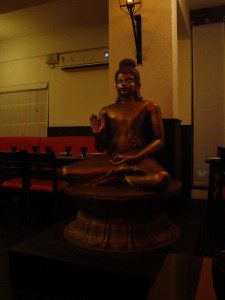 When we read about The Oriental Kitchen on the web, and saw the address, we thought it would make it the fifth restaurant in that building – the one that houses
 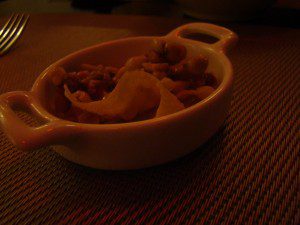 Since Zomato had the