Tangerine at Indiranagar had always been in my favourites list from the first time I dropped in there. But thanks to the column space hogged by Namma Metro construction and the resultant chaos on the road, and helped by competition ‘toitening’ its grip, my visits had tapered down to zero. So I was extremely happy when I saw a signboard late last year in Koramangala – one that was familiar in terms of font and colours – that announced the launch of the restaurant. I learned during my visit that the Indiranagar outlet had been shut down. A stone’s throw from the busy Sony World junction, (when coming from Indiranagar, it’s the first left after the Sony World Signal – it’s just off the road) and yet somehow retaining a sense of calmness, exists the new version of Tangerine that started operations in September. Yes, they do have valet parking and two wheelers can find easy parking in the lane.
Some of the tables offer a wonderful view of the road. The trademark light-coloured wooden furniture has made it, but sadly, their companions, the ‘chimney’ lampshades haven’t. You can check out the menu at Burrp. They also plan to have wines soon.
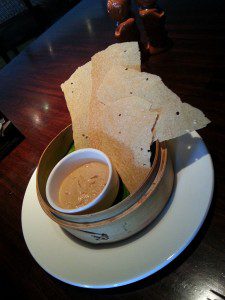
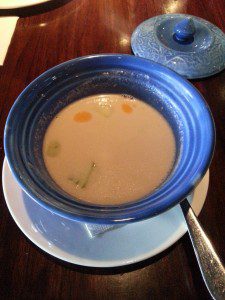
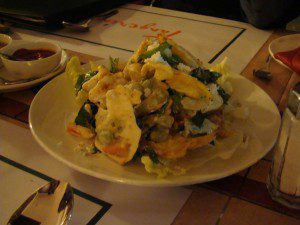 The Spicy Chicken and Coriander Soup had been a favourite, so we decided to begin with some nostalgia. Unfortunately, it hasn’t taken the location transition very well. It was thinner, stingier on the coconut cream, and the chillies hadn’t been informed about their role. The Fried Prawns that came next did nothing to salvage the situation. The prawns were leathery, and beer wasn’t the only thing that deserved to be battered. Mustard Chicken Sausage Flowers hooked us with its matter-of-fact, non-flowery description, but the actual dish, though not lacking in flavours, went a tad overboard on the saltiness. Hope took a long time coming, and it came from an unexpected quarter – Vegetables with Feta. But even that was too little, and too late, since we had to remind the service staff at least a couple of times that we had ordered a veg starter, as the vegetarians at the table cast mournful glances at the dishes that arrived much before theirs. In the end, they gloatingly offered to share their fried vegetables and tasty cheese dish with us meatheads!
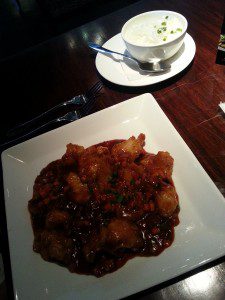
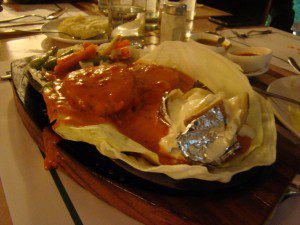
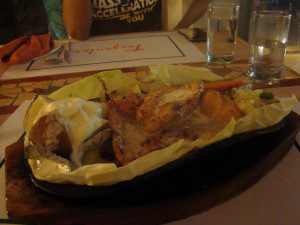
Despite unfortunate experiences with aquatic life earlier, we asked for a Fillet of Fish ‘Moutarde’. The last word sounds like a lot of things, but it’s only French for mustard, and that was indeed the prime player in the dish that also featured red chilli flakes and oregano, all of which complemented the grilled fish perfectly. But the Chicken ‘Desiree’ unfortunately left a lot to be desired. The chicken was rubbery, the jacket potatoes weren’t boiled well, and the sauce, despite featuring spiced honey and lemon (on paper) was rather insipid. The penne pasta, with a sauce that had minced chicken, red chilli flakes, tomatoes and herbs, thankfully brought some cheer. It wasn’t dry; the flavours were brought out really well, and it was just spicy enough to make an excellent dish. The vegetarians ran out of their beginners’ luck with the Stuffed Cottage Cheese Steaks, as the paprika and herb sauce proved to be extremely spicy. In case you want to experiment, there are some interesting Indian Sizzler options.
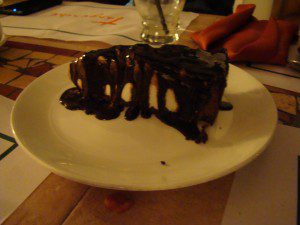 All the knives that were out thus far for the place were replaced with spoons after the desserts arrived. In a heavily competed section, the Mud Pie emerged the winner, despite having a slightly tough base. The unique Death by Chocolate would have won if it had not been at room temperature, and had been less grainy. The Tiramisu was not bad either. But the actual winner was the chocolate sauce and they clearly knew it, judging by its active presence in any dish that offered a chance!
For about Rs.1300, you could share a non veg starter, a couple of non veg main course dishes and a dessert. (Inclusive of taxes and service charge) The service delayed quite a few dishes and while they had their reasons, they weren’t really convincing.
The desserts and an old times’ sake fondness might get me to visit again, but Tangerine needs some tangible improvement if it hopes to win the affections its Indiranagar version had earned. In the journey from one end of 100 feet Road to another, something seems to have been missed out. It isn’t as though the food was uniformly bad, but in Koramangala, where we’re approaching the state of one restaurant per family, things need to be perfect for a restaurant to thrive.
Tangerine, 52, 100 feet Road, Koramangala, Ph: 080 41152678/9

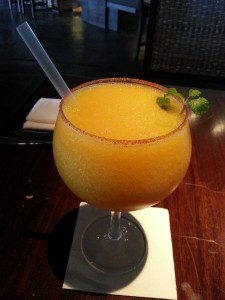 Though they had a very appealing Sunday brunch priced at Rs.1500 + taxes, we chose to go à la carte. You can take a look at the drinks menu on