• The evolution of work and the workplace

    I spent Rajinikanth’s birthday  at Jaipur, all thanks to one of my favourite bloggers – Kavi, who, in his official avatar, invited me to his organisation’s annual HR conference. The theme of the conference was Evolve Connect Enhance, and I can honestly say that many of my perspectives were enhanced during discussions about the real  implications and challenges for organisations, brought about by radical changes in the business environment.

    For now, I’ll let the talk do the talking!  (transcript below the ppt) Do comment with your thoughts!


    Final Talk Points by manuscrypts


    until next time, work it out

  • Himalaya

    Michael Palin, Basil Pao (Photographer) 

    Michael Palin’s amazing journey across the whole length of the Himalayas, beginning in Pakistan and ending in what was once known as East Pakistan, and covering on the way India, Nepal, Tibet, a small part of China, and Bhutan. What really comes through is the range of perspectives the author gains and shares with us through the journey itself, but more importantly, through the people he meets.
    Isolated tribes beyond Peshawar who would seem to be living in a different era altogether, the dangerous sports they indulge in, probably a minor sport compared to the inherent dangers of their frontier life, the second highest mountain in the world that intimidates by its sheer presence, the first glimpse of a river that spawned a civilisation, the fading yet glorious remnants of Mughal architecture in Lahore, the current power that resides in Rawalpindi, the modern planned fusion architecture in Islamabad and meeting with Imran Khan all give us a peek into what makes Pakistan.
    The influence of Tibet and Buddhism in Mcleodganj, a meeting with the pragmatic spiritual leader – the Dalai Lama, the beauty of Dal Lake where an aging houseboat owner tries to keep everything afloat (literally too), a sense of peace that the beauty of the place provides even while being a hotbed of violence, Ladakh, the famous roadsigns (Better Mr.Late than Late Mr.) and Thikse monastery – before he leaves for Nepal.
    The chill of being present when a person is abducted by the dreaded Maoists in Nepal, spending time with a man who has scaled Everest twice! (the second time napping on the summit while his team caught up with him), a chopper ride that offers a glimpse of how civilisations have grown, realising the cultural difference in viewing death, on the banks of a river and on to Tibet.
    The Everest base camp and hearing the stories of Mallory for the first time, the slow conversion of Lhasa into a state sponsored tourist attraction, while simultaneously encouraging the dominance of Chinese culture. Into China proper – a matrilineal society in Yunnan, with the face being an ex-model who found fame across the globe, Naxi music and a touch of the supernatural in Lijiang, an earthquake prone area which is trying to balance modernity and old ways of life, packaged minorities (with imported faux actors) and a village where you can keep one leg in Burma and one in China.
    Nagas comfortably living as Christians. A duo traveling on a train in Digboi – one, the offspring of a sahib and a teaplanter and the other, the granddaughter of the sahib’s sister. A celibate sect devoted to Vishnu with an all male Ramlila cast.
    Bhutan and its unique Gross National Happiness index, where a king tries to pace the steps towards modernity in a country which is still in ‘unison with the earth’.
    The ship breaking industry at Chittagong that’s on a slow decline, the pragmatic acceptance of bribes, the crowded Dhaka and its secular brand of Islam, a steamer ride towards the Sunderbans and a final adventure as part of filming a sunset.
    These are a few of the many instances and places in a book that spans 125 days of travel. Sometimes the author comes across scenarios – places and cultures that have remained unchanged for centuries, even as the world outside moves at a dizzy pace. The diary style of writing gives you a feel of traveling with the author, the photographs helping us visualise the people and the places, and the musings helping us go beyond the actual chronicling. A very good read!
  • Emotion as a Service

    More than a year back, I had written about institutional realignment and had briefly mentioned the institutions of marriage and parenting. ‘The currency of relationships‘ made me think of this, and family – immediate and extended – as a societal construct/contract/ institution, and probably even as a tradition. Where we are born, and whom we are born to, are apparently out of control, but we do have an illusion of control courtesy the choices we make as we go along. Thanks to these choices, our lifestyle and our perspectives may follow a trajectory that is totally different from the circumstances and people we grew up with/in. This is not just about the people from our childhood/youth, but is a continuous process through life. Each of us find our own ways to deal with the constant flow of people through our lives. These are again choices, and like most choices involves some amount of sacrifice and bring with them their own set of consequences.

    Clipboard02

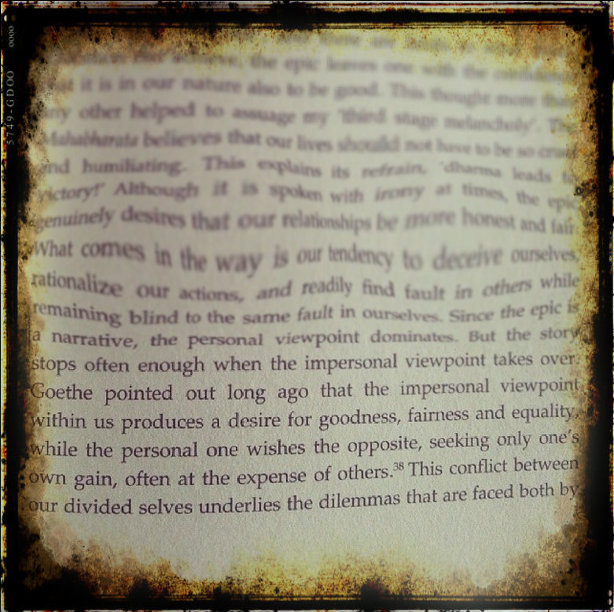
    I loved that Goethe paraphrase, because I think it sums up our relationships very well. At the risk of sounding cynical, (or receiving a ‘speak for yourself’ comment) I’d say that we’re increasingly becoming selfish as a species. I have always had the notion that most relationships are contextual, and it would be difficult to scale our emotions/feelings for others for an indefinite time frame. Yes, I do acknowledge there are exceptions, but that’s what they are – exceptions. Do a quick test and find out how many people across your life you’re still in touch with – bouts of nostalgia not included?

    It is with all this as the backdrop that I read Scott Adams’ “The Future of Marriage“. It articulates very well a thought that had crossed my mind earlier. (Of course, he obviously explores it way better than I could have) He deconstructs the institution of marriage and argues that marriage made sense “when the world was inefficient. You married a person nearby who could provide most of your important needs while hoping your lesser needs could also somehow be met.” Now, he says, the internet has allowed us to have a barter economy of relationships. In other words, a virtual spouse comprised of a dozen separate relationships. He tempers everything by saying that in the future, marriage may be one of the many options available. By sheer coincidence, and in a different context, I came across this quote attributed to Steve Macone “A tradition is a habit whose logic has faded“.

    I thought about this in the context of the expectations I had mentioned in the ‘currency of relationships’ post. If the institution of marriage can have a barter economy, why not other relationships? After all, isn’t every relationship a barter at its core? It’s just that we are rarely comfortable with voicing our expectations in the case of an emotional ‘transaction’, quantitatively or qualitatively. (generalising) Parents expect their children to look after them when they are old, in return for bringing you up; relatives expect you to return the favours they once did for you, and so on.

    So who knows, maybe our pace of life and our need to be (seen as) fair in all our relationships will conspire to form a barter ecosystem that offers emotion as a service. It is possible that an alternate path to prosperity might take us in a different direction, but in the era of the quantified self and the augmented human, when we slowly transition our selves into the cloud, maybe ‘Emotion as a Service’ (like)  is not an impossibility. What do you think?

    until next time, a qualified self

  • Like That Only

    One of the pleasant side effects of writing reviews on Zomato are gift vouchers – I got a couple for Like That Only. Though it is far from our regular haunts – in Whitefield – the end of season sale at Phoenix helped the first time, and a long weekend, the second time. This map is pretty accurate, and they have valet parking. The ambiance is totally unique – especially the decor elements. From a retro scooter at the entry to the tub shower and funky garden seating, it shows off a quirky, whimsical side very well. There are other seating options as well – inside, and a lounge section off the main passage.

    The menu is mostly Asian, with a skew towards starters and ‘small plates’. The drinks section is also worth a look – quite a few signature cocktails that are not found on standard bar menus. The one drink that we tried on both visits was the LikeThatOnly, which has hot and cold versions. I haven’t seen Earl Grey in a lot of cocktails, add to that gin, triple sec, dark rum and cinnamon bars, and you have a hot hit! We also tried the Fru Fru Colada and the LTO Style 3G and both were good. The complimentary bread basket is worth a mention as well.

    collage1

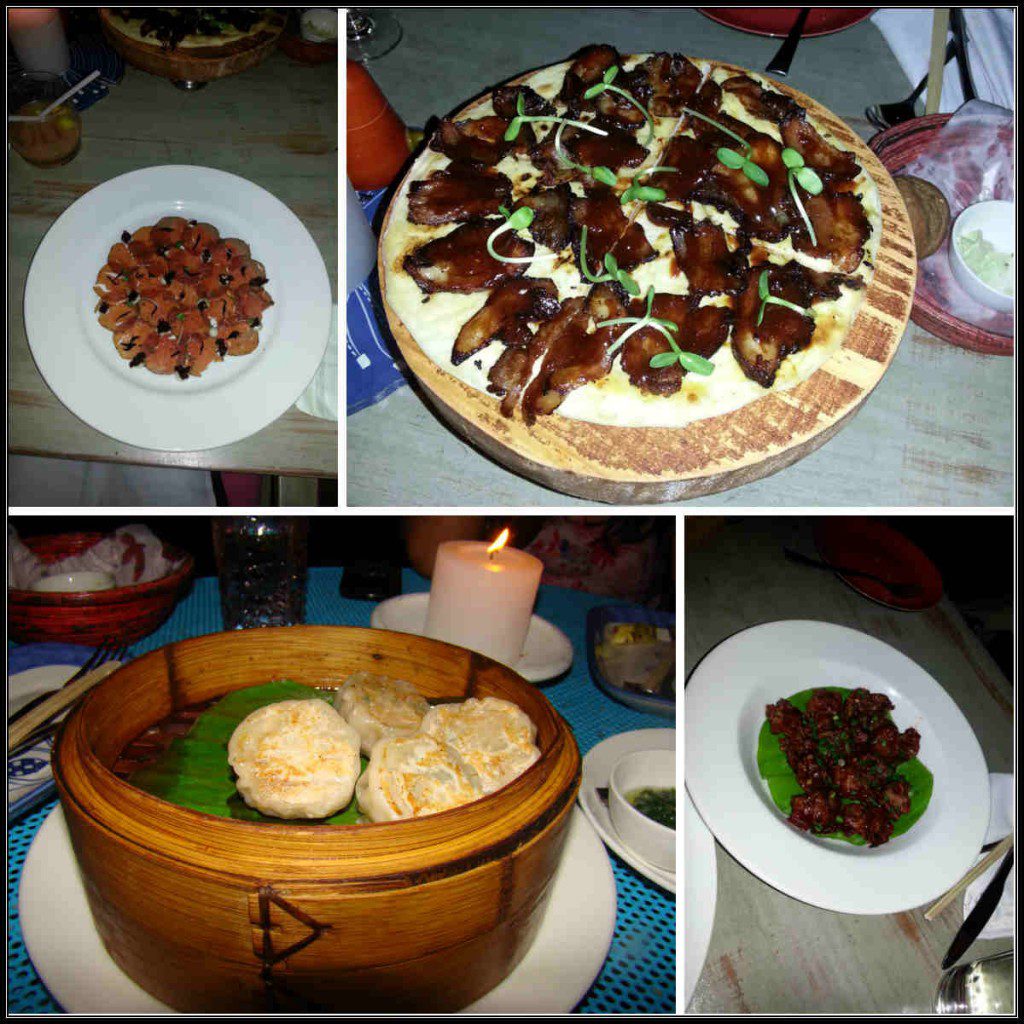
    During the first visit, we tried out a few ‘small plates’. General Tso’s Chicken has crispy, fried chicken in a chili sauce, but it’s not too spicy. The LTO Char Siu has BBQ pork on a flat bread – it had a cloyingly sweet flavour which we didn’t really like. The Beef Carpaccio has really thin slices of fillet and mustard cress with wasabi mayo, and was really tasty. During the second visit, we tried the Spicy Chicken and Celery Gyoza (pan seared dumplings) and it was spicy and fantastic.

    collage2

    The couple of main course dishes we tried were the Filipino Chicken Sizzling Sisig and the Steamed Snapper curry. Actually we wanted the Beef tenderloin stew in Pumpkin shells, but that was not available. The chicken dish had grilled cubes of chicken topped with a fried egg and served with Jasmine rice. It was spicy and also had an excellent tang, but I’m fairly sure it wasn’t Jasmine rice. The coconut flavour was really subtle in the snapper curry but the gravy was flavorful and was complemented well by the basil rice. Choosing desserts was a difficult process since we had a number of options we wished to try, but in the end the ‘Snicker bar’ won out. The LTO version has a crunchy nut base and a mousse on top of it and some wonderful salted caramel cream. Turned out to be an excellent choice.

    collage3

    A meal for two would cost between Rs. 2500-3000. The service was prompt on both occasions, and the ambiance is delightful enough for you to want to visit again.

    Like That Only, 14/31A, Hagadur Road, Behind Forum Value Mall, Whitefield, Ph: 65475610

  • To be a content brand

    I had a bit of an epiphany when I read this superbly written post on Snapchat and the nuances of storytelling. In my last post on the utility of a brand, I had pretty much glossed over ‘delivery’ because it was one part of a larger framework. (and a post that kept getting longer after I began writing!) While determining the larger purpose of the brand and its ‘job’ in a consumer’s life is important, it is also equally necessary to ‘deliver’ this to the consumer in relevant contexts, especially because we live in a world which has not fully learnt to combat  ‘filter failure’. I think ‘content’ strategy has a large role to play in this.

    The corporate narrative, referred to in the last post, is a constant work in progress and I fully agree that over a period of time, it will deliver all the advantages that the post mentions, but I do have a couple of different perspectives on the ‘narrative vs stories’ points in it. One, I think stories contribute to the larger narrative (either by collectively forming one or adding to an existing one) and probably don’t deserve to be separated from it. Two, I believe that stories are the devices which make the corporate narrative relevant to the consumer by adding context. This is even more pertinent because narratives are rarely linear in the way they are consumed now. Even not advertising is content that would influence perceptions.

    The brand narrative

    A brand’s narrative is no longer one that is broadcast to a user base that the brand considers its audience. In fact, thanks to the internet and then social, only a few contexts are now dictated by the brand, the rest of the narrative (in the consumer’s mind) is built by his/her ‘experiences and the best a brand can do is aim for cohesion. The consumer seeks/finds a need that the brand fills in his/her life. This need can be anything along Maslow’s hierarchy, and more. This, I think, is where stories play a crucial part, because the more the stories- from brands or other users – the more contexts a consumer finds to fit the brand into his/her life stream.

    The narrative of a brand in a consumer’s life is fluid, and it is cohesive stories that will define its evolution. It has probably always been so, but the explosion of self publishing has meant that brands have to not just get heard above competitors, but the user’s stream on various platforms too. The fluid narrative also means that the big idea every quarter (or year) is no longer enough. (or necessary, though that is debatable) It takes a ton of stories to build a perception and get a community to interact with the brand. But when they do, there is potential for magic. (ask Ikea) It also, only takes a whiff of controversy for it to be forgotten. This calls for an adaptive, agile methodology and some solid content structures that the brand can use to frame user contexts.

    Surprisingly, there is good news

    The good news is that social platforms do offer a better way to customise delivery according to a user need. That we still use these to broadcast and target according to pre determined audience segments is the beginning of bad news. But at some point when the race to mould the day’s popular social platforms to the existing paradigms of marketing segmentation ends courtesy saturation, hopefully ad tech will move more solidly towards delivering content and experiences that are an answer to the user’s needs. IBM’s trait tattoo based on tweets is a start. Further good news is that thanks to Facebook and Twitter, brands are slowly realising the need to create content that goes beyond broadcast. They are being forced to balance business agendas with the user’s needs.

    But, wait

    The bad news for marketers is that platforms are exploding and each has its own milieu. The content objectives and strategy are essentially different because user contexts change between platforms and even within it according to time. Right now reach trumps relevance thanks to the measurement parameters of an earlier era, but I’m guessing that will change soon as everyone begins to do the same thing on Facebook and Twitter. Further bad news is that marketing is not really structured or resourced for the changed communication scenario.

    Probably the worst news is the mindset and I have seen at least a few fundamental challenges to begin with, in addition to a few myths. One, brands still have the communication baggage of an earlier era. This manifests itself in a campaign based approach, the quest for perfection, the endless approval cycles, and a broadcast flavour to every piece of content, among other things. Two, thanks to Red Bull, everyone wants to get wings and start flying on the first day, as if there is a user waiting to hear the banality that is about to be uttered. It takes months to experiment and get a sense of the fitment of the content’s function (business needs with the objective to inform/entertain/inspire/persuade… the user), its form, (blog posts, tweet, FB post, videos, infographic, polls etc) flavour, (tonality) and frequency (timing) that will appeal to various users in various contexts – what is referred to as the ‘voice of the brand’. The last is the application of measurement parameters that were built for an earlier marketing framework.

    (via)

    However, all of this is part of the evolution, and given that the learning curve gets steeper by the day, brands will have no other choice but to catch up. The flip side is to be irrelevant, and no brand can afford it.

    until next time, discontentment

    P.S. function, form, flavour, frequency make 4 Fs. One more for F5. (refresh)