• An Ordinary Person’s Guide To Empire

    Arundhati Roy 

    Arundhati Roy continues right from where she left off (actually she never has) in The Algebra of Infinite Justice. This time, contexts and facts get repeated in essays, and that might put you off, but that should not take away from the messages.

    An Ordinary Person’s Guide to Empire, published in 2004, a couple of years after the other book, consists of 14 articles written between June 2002 and November 2004. The theme of the book is the working of the Empire, not the traditional imperial one built on a smattering of trade and an all powerful military, but the more modern, relatively more subtle one with many simultaneous strategies – ‘neoliberal capitalism’ aided by the IMF, World Bank etc, corporate globalization spearheaded by multinational corporations, and finally a healthy dose of good old state sponsored military might. As Roy writes, add oil and mix. Not to forget the media that makes the entire effort come out smelling of roses. “In this era of crisis reportage, if you don’t have a crisis to call your own, you’re not in the news. And if you’re not in the news, you don’t exist. It’s as though the virtual world constructed in the media has become more real than the real world.”

    A lot of the conversation is around Iraq, where the latest version of the above drama is being played out, but in many essays there are historical references of how the US has honed its ‘process’ through various wars it has fought. Creating, funding and then making a huge hue and cry over eliminating armies/heads of state who step out of line. Saddam being the latest. A series of acts that had spawned and now fuels a global threat – terrorism. Two opposing camps feeding off each other. “Al Qaida vs Al Fayda”.

    But the story is global, from the police in Kerala displaying the tribals’ bows and arrows as dangerous ammunition to encounter killings from Mumbai to Kashmir to Andhra Pradesh and indiscriminate and illegal uses of POTA to state sponsored terrorism in Gujarat and hunting down Maoists in Jharkand. The story is also of how democracy is just a process of ‘cyclical manipulation” We really have no choice.

    It gets scary when she writes how “Modern democracies have been around for long enough\ for neo-liberal capitalists to learn how to subvert them. They have mastered the technique of infiltrating the instruments of democracy-the “independent” judiciary, the “free” press, the parliament-and moulding them to their purpose. The project of corporate globalization has cracked the code. Free elections, a free press, and an independent judiciary mean little when the free market has reduced them to commodities available on sale to the highest bidder.”

    And somewhere in all this, is the thread of the slow attrition of the concept of justice, especially for the poor and the powerless. “… for most people in the world, peace is war – a daily battle against hunger, thirst, and the violation of their dignity.” The saddest one is about the man in Hasud, a town that was supposed to be ‘relocated’ entirely, courtesy a dam. The man was given a cheque of Rs.25000 as compensation for demolishing his hut. Thrice he went to the town in a bus to cash it. Then his money ran out, and he walked, miles and miles, on his wooden leg. “The bank sent him away and asked him to come after three days.”

    Roy has her critics, and she might have many faults, but it is when she brings out such incidents that I feel she is doing justice to the written word and her skill with it. For this reason, do take time to read it.
  • The path to immortality

    I’d written earlier on how brands could use an individual’s data (the personal API) to fit themselves into his/her narrative and had used Nike as an example.  But this data could also be used by fitness and health companies to discover ‘fault lines’, gradually delay wear and tear, and one day, totally prevent a machine shutdown. This video – A Day in the life of Tim Ferriss (watch for a minute from 3:25) – gave me an idea of how we might be moving faster in that direction because of  data collection.

    Back in 2011, in ‘God in the details‘, I’d opined that over a period of time, when our data capture capabilities were evolved enough, and we had a lot of data on people on a lot of their behaviour, consumption etc, we would potentially be able to answer the most profound questions about our existence, purpose etc, and unlock further dimensions. I was extremely happy to read the same thought in this (long, but) amazing read called ‘Navigating Stuckness‘. “I could sit safely at my desk and write computer programs to gather vast amounts of Internet data, which I thought could finally answer timeless questions like “what is love?” and “what is faith?” with precision and clarity.

    On one hand, data could help us in our path to immortality, and on the other, it could provide us the answers to fundamental existential questions. I wonder what would happen first, because, as I wrote in PhilosoRapture, I also wonder if those questions would remain relevant once we became immortal.

    Meanwhile, the other track to immortality that is rapidly developing is that of the augmented human, where human parts (including the brain) will be replaced by mechanical replicas. We’re only a part of evolution, as this wonderful, humbling video would show, and it is probably only our ego that makes us believe (if we do) that we’re the endpoint. Maybe, there will be a species later, of whom we’d be probably be creators, for whom our questions will seem irrelevant and who will have their own sets of answers to seek.

    cs

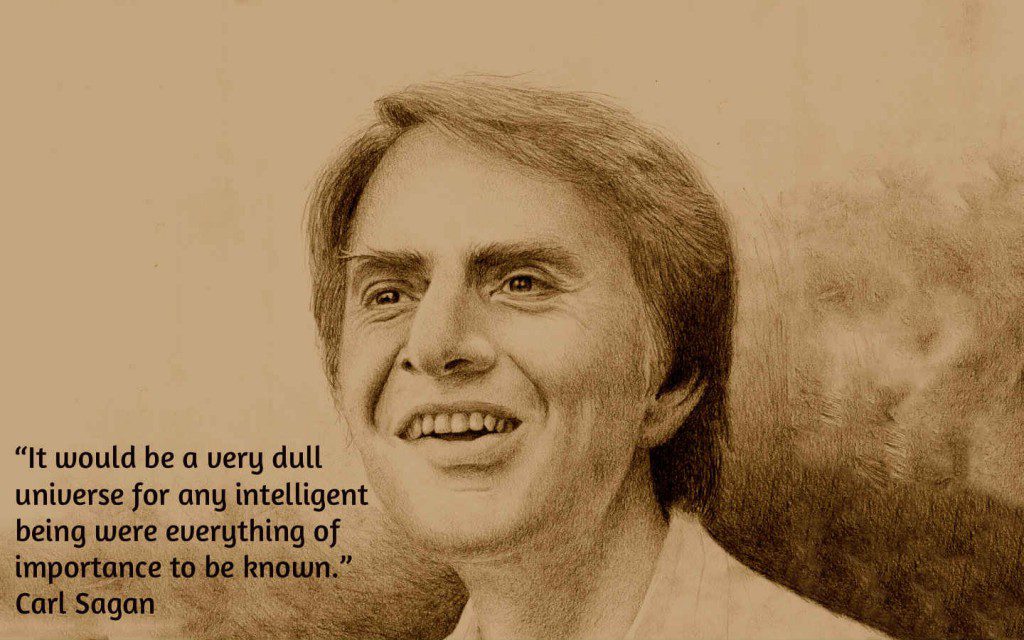
    (quote via, image via)

    So it would seem that whichever way we approach immortality, by the time we get there, chances are, it may not be that significant.

    The year we conquer morality, by the way, is 2040, as per Ray Kurzweil. I’ll be 62 then, or maybe not, or maybe it won’t matter, or maybe…  🙂

    until next time, live long and proper 🙂

  • Kanua

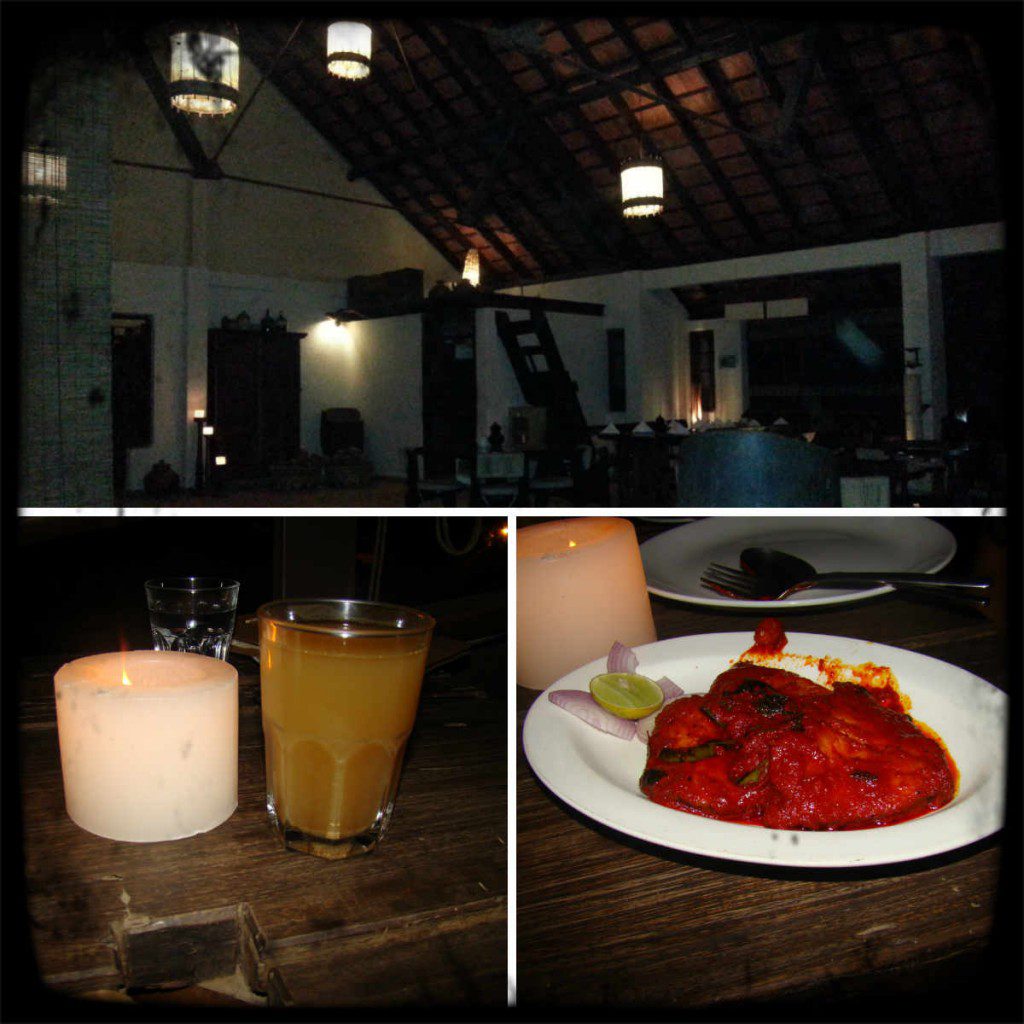
    Kanua has been on our radar for a long while now, and D had loudly voiced her protests when I finally managed a visit with my office friends crowd. So, on a weekend when she had a craving for seafood, this automatically became our destination. Kanua is easy to miss if you do not know exactly where it exists. This map is accurate, but since the restaurant is on the top floor, it is not easily visible from the road. Parking is usually not a problem.

    The decor has lots of elements that collectively give a feel that you’re at a traditional coastal residence. We chose a small two-seater that also gave us a good view of distant lights. The overall ambiance is fantastic and they have Karunesh and the likes playing at a moderate volume so you can have a conversation and listen to some soothing music as well. It’s probably because of the distance from the main road that at some points you can feel a silence, notwithstanding noisy kids. 🙂

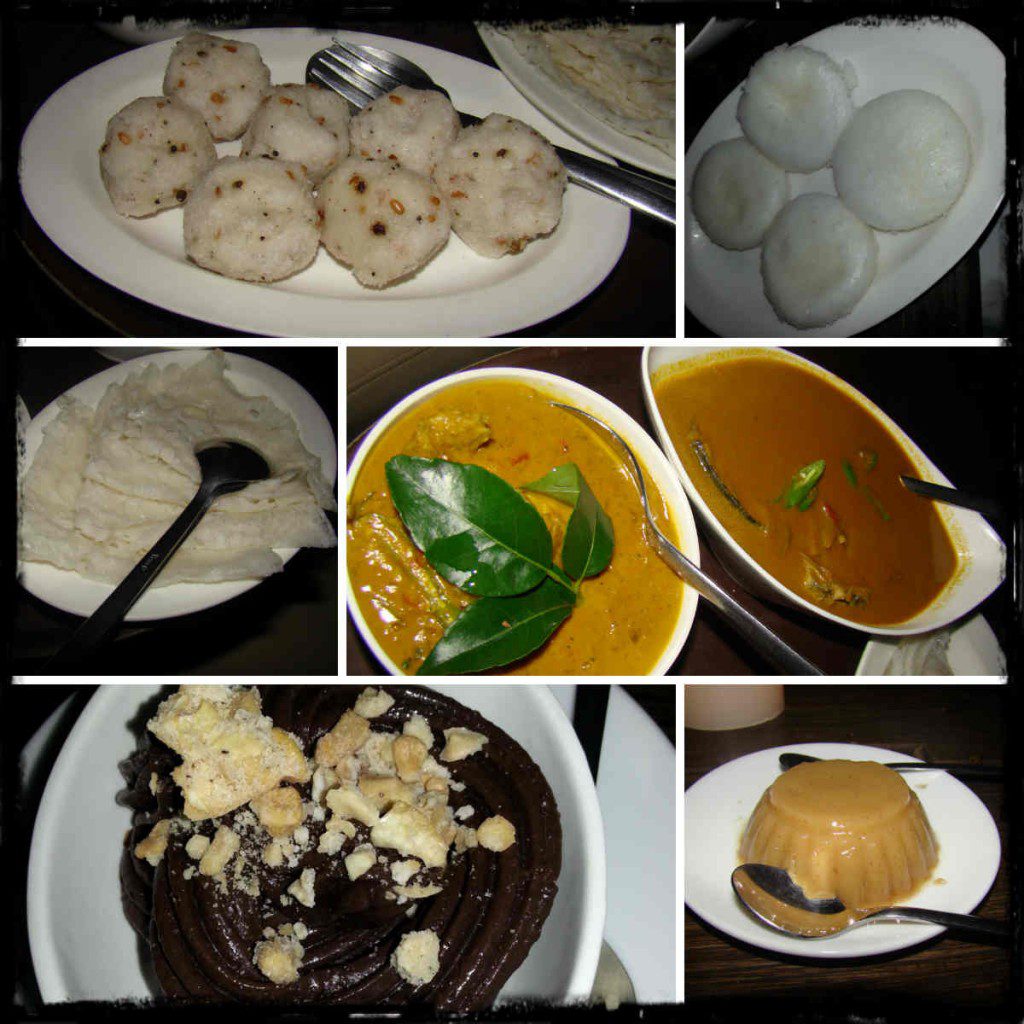
    We began with the Paanak, which was the most unique (non alcoholic) drink we saw on the menu. I think they serve wine – have had that on my last trip – though we were not given a menu. A herbal cooler – sweet, sour and spicy is what was promised, and the ginger based drink delivered on everything except sour. From the starters section, we asked for the Zalke Naked Masala – the Anjal (seer) version. The spicy masala was finger lickin’ good as promised.

    collage1

    It was around this time that we figured out that the stamps on the menu weren’t for decoration! Duh! Also a good time to note that the menu is a fantastic job in terms of presentation. We were a little spoiled for choice, but decided to try out a Zalke Randhei and a Gawnche Chicken Curry with Oondies and Paanpole to go with them. The first is a fish curry with a red coconut based gravy, but it wasn’t thick as promised and I got an overdose of what I thought was turmeric, but it could have been saffron as well. D thinks it was mustard! We preferred the chicken dish with its ground peanut – based thick gravy! The Oondies – six in a plate – (seasoned steamed rice dumplings) were fantastic, and so were the exactly-right-moist and soft paanpoles. We also wanted to try the Khotto but they weren’t available. So we turned out to the dependable sannas and thankfully they were great too – fluffy and soft and a perfect combo with the chicken curry. Dessert was chosen after grueling rounds of elimination. The Raagi Manni was a raagi based version of a souffle and reminded us of the ada pradhaman Kerala payasam.  I’ve had the chocolate mousse earlier, and it is fantastic.

    collage2

    All of the above came to just less than Rs.2000. I really love the serene ambiance, and since the menu offers scope for more experimentation, we’ll definitely be back.

    Kanua, No.1,Survey No.6/2,Kasavanhalli, (off) Sarjapur Main Road. Ph: 65374471/2

  • Brand Agility

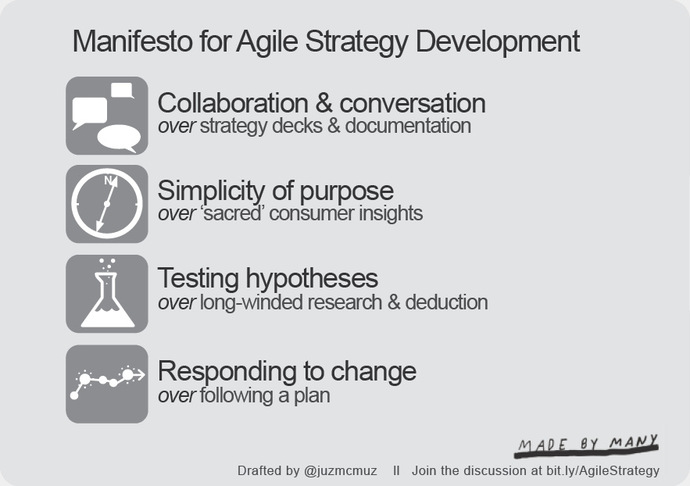
    One of the movements that I’d mentioned in the drivers for brand/marketing in 2014 and beyond is agile marketing. In my mind, there are various factors that are contributing to this eventuality like fragmentation of media platforms and the phenomenal amount of data being created and consumed to begin with.

    Simulations, testing, analysing data, and quickly adapting are the basics of this approach to marketing. In terms of ‘ingredients’ to play with, I’d still go with the traditional 4Ps of the marketing mix- Product, (includes packaging) Price, Place (I include the internet with Platform) and Promotion, with Purpose being an umbrella addition. The input and the output, I have categorised into business dynamics, using the other favourite marketing letter – C. These are consumer, competition, channel, content and context, and the cohesive narrative that is created. I’m trying to evolve a framework from these, while watching brands actually practice it – with or without a theoretical structure to the approach.

    One of the brands I’ve noticed doing a good job using many of these ingredients and the I/O is Uber. That’s despite the recent surge pricing bad press. In fact, I’d see this as an example of their ability and willingness to adapt. In the US, they’ve been honing their craft for a while – free rides for students during the Boston school bus driver strike was the first occurrence I noticed, and then soon after, the delightful hat tip to pop culture on National Cat Day in a tie up with Cheezburger.

    They launched in India recently, and true to form, wasted no time in launching the UberSLEIGH during Christmas in Delhi, Bangalore and Hyderabad –  a tie up with Goonj. From a critical agile marketing evaluation perspective, it would be easy to argue that Christmas is a recurring annual event that brands plan for. But auto-rickshaw strikes are relatively less predictable. A fortnight later, on January 6th, Uber slashed rates by 75% in Bangalore in response to a strike. What is easy to see is the anatomy of an agile strategy. To me, it seems that they are well on their way to developing a flexible marketing framework that helps them take advantage of any variations in the ‘input-output’ factors I’d mentioned earlier – in this case, pricing product and place in response to consumer and context.

    Newer brands might have an advantage in developing these frameworks because of minimal ‘baggage’ in their brand philosophy. But then again, the advantage for existing brands might be their existing role in a consumer’s life. Traditionally, brands have attempted to build a unique/distinguishable/identifiable ‘idea’ of itself in the mind of the consumer, with different forms of the promise+identity+attributes+personality framework and (relatively) limited broadcast media options. Iterations cycles were lengthy and included brand tracks and insights which resulted in large campaigns. Several things have changed now. Consumers have shorter attention spans and are increasingly fragmented in their consumption habits. Social platforms have caused brands to cede control over the conversations – any consumer’s experience can potentially create the perception for millions of potential customers. Platforms for reaching the consumer are exploding, and each have their protocols. The potential amount of data from all of this is huge! The challenge for brands is to stay relevant across contexts and create a cohesive narrative, and this requires an evolution in marketing processes. Like I’ve written before, if technology is invading marketing, then perhaps agile – which is a popular approach among that kind – is the way to go!

    manifesto_agile_strategy_development_3_content

    until next time, sprints and marathons

  • Ruler of the World (Empire of the Moghul, #3)

    Alex Rutherford 

    The third in Alex Rutherford’s ‘Empire of the Moghul’, and the one that focuses on the greatest Mughal of them all – Jalal-ud-Din Muhammad Akbar. The first Mughal to be born in Hindustan (technically Pakistan now) and crowned emperor at the age of 13 on the death of his father Humayun.

    His early years were lived in the shadow of his trusted advisor Bairam Khan, who as time went on, Akbar began to resent. This was probably the first of Akbar’s failed close relationships – a theme that comes out in the book quite clearly. Except for his mother, and his aunt, Akbar’s relationships – be it with his milk mother and brother, sons, wives were cordial at best. His early experiences made it difficult for him to trust people, but that did not deter him from creating an empire that stood the test of time, and gaining the respect and admiration of his subjects. The only exception to this mistrust was Abul Fazl, who though has been shown in a slightly negative light himself, should be thanked for elaborately chronicling the details of everything that happened in Akbar’s life. This assumes greater importance because it was an important period in India’s history, in terms of trade, relations with neighbours, Christian missionaries arriving in India and so on.

    Indeed, it was probably due to Abul Fazl that Akbar’s relationship with his eldest son Salim became as strained as it did. The book explores this relationship between father and son quite well. Feuds between brothers had been common in Mughal succession, but in this case, Salim felt his father was blocking him from inheriting what was rightfully his. It was only thanks to his grandmother Hamida – Akbar’s mother – that things were always settled amicably.

    Though displaying several vices, Salim is shown to rise above them, many a time thanks to Suleiman Beg, his close friend, but forever feels let down by his father – a mutual feeling. This would probably prove to be a hereditary curse as the end of the book shows a strained relationship between Jahangir (the name Salim adopts) and his son Khusrau.

    The book focuses as much on Salim as Akbar himself. In fact, the military, political, administrative and other contributions that Akbar made have been underplayed a bit. Towards the end, Salim’s frustrations and Akbar’s mismanagement of his son cause many more fissures – the Anarkali episode, rebellion etc.

    It also captures Akbar as a person – his failings as a father, a hint of megalomania especially when he goes on to start his own faith, his illiteracy, in addition to his sense of justice and fairness, his readiness to work alongside labourers, his love for his grandsons and so on.

    I liked this book more than its predecessors, because though it probably doesn’t do justice to the greatness of Akbar as much as I’d have liked it to, (the author does note that he has omitted events and timescales) the narrative is gripping and never falters.