• A new medium

    I haven’t taken you outside of the blog in a while, but here goes.

    LinkedIn recently opened up its publishing platform, and since it’s a contextually relevant platform to publish my ‘work’ posts, I was immediately interested. Thanks to Gautam, I discovered this link, applied, and soon got publishing rights. It was a harder task to write something though! I have finally managed something that is a differently framed version of concepts that I have written on the blog already. Do take a look here.

  • The Fiction Collection 2 (Penguin)

    This book was a little ‘Inception’ of time travel. It’s been 6.5 years since it was published and commemorates 20 years of Penguin in India. It consists of excerpts from the many works the publishing house has brought out, many of them from several years back. There were a few from books I had already read, a few by authors whose other works I was familiar with, and then there were authors and works I had never even heard of – and that’s why reading this was a wonderful experience – like rediscovering a few old friends and making new ones. 🙂

    In a few of them, I did miss the larger context, but those were a rare few. There are a few translated works too, and I was surprised by the justice they seemed to do to the original work – ‘after the hanging’ by OV Vijayan being a perfect example. The other interesting part was reading a different rendition of something I had read earlier – Indu Sundaresan’s ‘the twentieth wife’ on Mehrunnisa and Salim (the early part of which I could associate thanks to Alex Rutherford’s “Empire of the Moghul”) or Khushwant Singh’s ‘delhi’ (‘nihal singh’ is set during the first war of independence and some of the events I remember from William Dalrymple’s “The Last Mughal”)

    My other favourites included works that gave a glimpse of places as they once were – Bombay in Eunice de Souza’s “dangerlok”, (a wonderful piece of work) Delhi in Navtej Sarna’s “We weren’t lovers like that” and more tragic ones like Punjab in Neel Kamal Puri’s ‘death toll’ and Kerala in Jaishree Misra’s ‘from ancient promises’.

    The best part is that with more than 50 different works, you are practically guaranteed to find many glimpses that you’d like and might make you want to explore the canvas further. It also took me to a different era of story telling – before IITs, IIMs, call centres, urban angst with corporate backgrounds and cliched marital ‘crises’, packaged mythology and such. For all of these reasons, a must read.

  • A mind beyond auto pilot

    The world we create for ourselves, as I wrote a fortnight back, is a filtered version of all the stimuli we encounter. As we grow older, our stream of consciousness gets more populated because of our experiences and we automatically try to find patterns. That’s the brain’s basic learning process which helps us to navigate stimuli. The world though, does become complex, the navigation more difficult, and that’s probably how we slip into auto pilot.

    We think we’re conscious of the things we do, and we are, at a superficial level, but are we really mindful? The simple experiment to do, and I think I’ve written this earlier, is to re-imagine the last hour of your life. How many actions you can remember is probably an indicator of mindfulness. There’s no question that the auto pilot is useful, but I doubt we’re in actual control of the takeover, and that’s where the problem is. Our decisions and our actions become mechanical, and even when they’re not, they’re dictated by filters designed by the auto pilot.

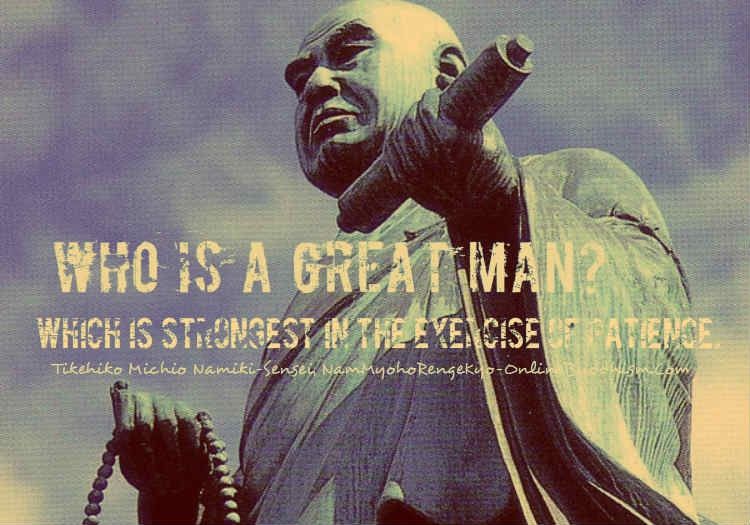
    mindfulness2

    (via)

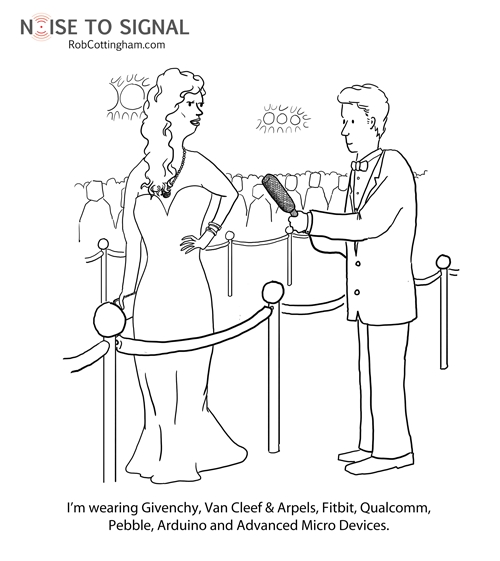
    But I think there is hope. One of the best 2014 trend reports I’ve seen – by Zambezi – has ‘Mindful Society’ as its first trend. While that is more a take on digital devices and our time spent on them, the JWT trend forecast has ‘Mindful Living’ as their final trend, and talks about a growing interest to experience everything in a more present, conscious way. I also think that we might have unwittingly figured out a way to start out on this. One of the hottest trends this year is the quantified self – self knowledge through numbers – it encourages people to monitor all aspects of their physical, emotional, cognitive, social, domestic and working lives. (via)

    At this point, it is more focused on the physiological aspects, and there will most likely be a deluge of devices, services and allied products that would be an end in itself. However, it is also possible that we will truly understand our body, as numbers show the impact of our behaviour and consumption, and as a result, we’ll become more mindful in our actions. And maybe, just maybe, once we’re done with that, we’ll begin trying to do the same for our mind, and the decisions it makes. It’s difficult to imagine how that will work out, I agree, but hey, even five years back, did you think something you wear on your wrist could give you analytics on your sleep patterns?

    until next time, a qualified self 🙂

  • bon South

    Five years have passed since we visited the first version of bon South, in Koramangala. bon South had soon shifted to Malleswaram, and the original location now houses Prost, I think. The new version of bon South is where Ping (#youremember) used to be – the one way from Intermediate Ring Road towards Jyothi Nivas. (map) They have valet parking.

    We went there for lunch on a Sunday, and think we were lucky to get a table without reservation. The place was packed! They seemed to have learnt from the earlier experience – there was no cold welcome towel and there is a clear shift from extravagance to value for money. They only have a buffet (menu) – different rates for weekdays/weekends and veg/non veg. Special rates for kids. Smart. They seem to have more space than Ping used to, and while the flooring and walls seem to have been left unchanged (from the previous owner – some multi cuisine placeholder) they have added some decor elements that lend a touch of authenticity to the theme. The old fashioned light shades deserve a mention here.

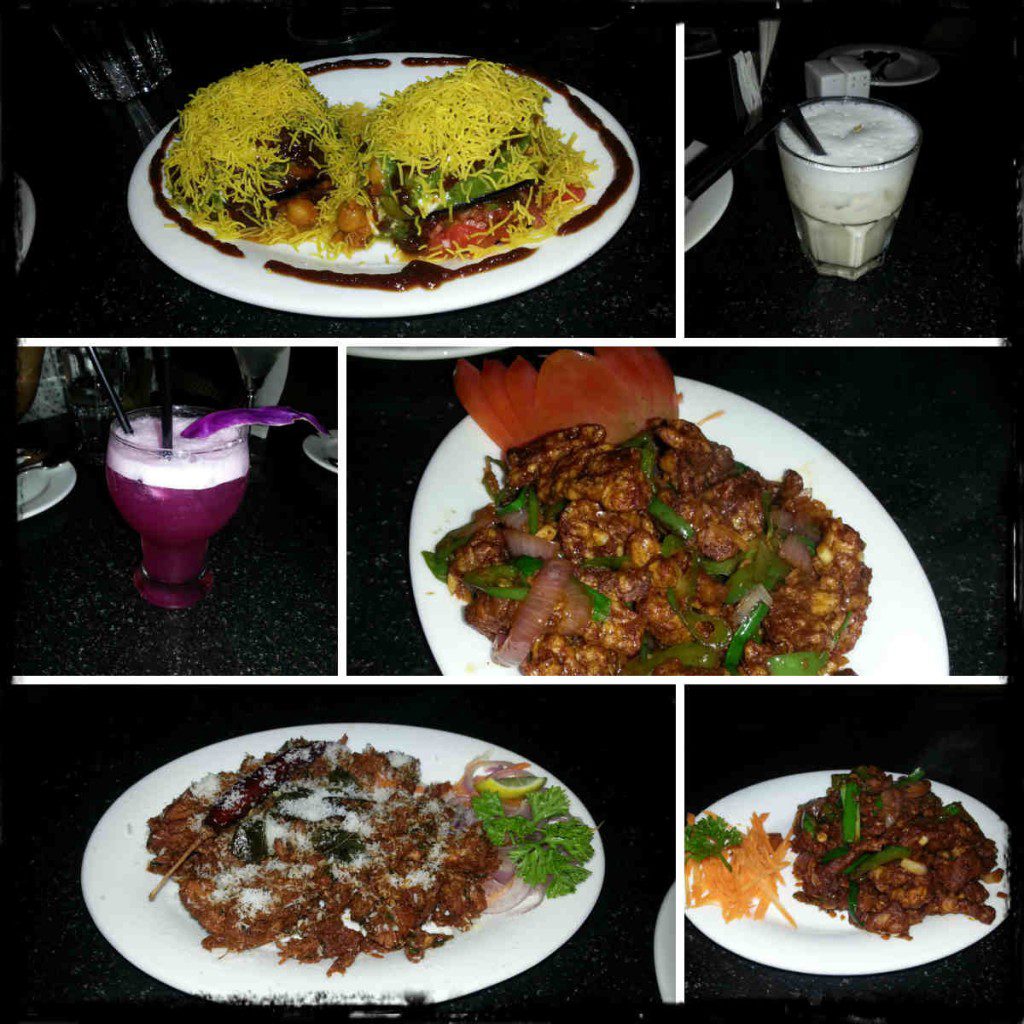
    The live counter items are served on the table along with the choice of welcome drink. (beer/bottled drinks/kokum juice/buttermilk/mocktail of the day) D chose the mocktail which turned out to be a fruit punch, and I had a buttermilk. The fruit punch was strawberry heavy and just okay. The buttermilk was cold but a bit diluted and wasn’t the spicy kind I prefer. The menu differed a bit from what we’d seen on Zomato. The pick of the starters for me would be the podi idly – small, soft, spicy! This would be closely followed by the spicy grilled chicken and the thair (curd) vada. The mutton patties, the steamed fish (raw mango  flavoured and served in a banana leaf) and the uthapizza (I’m calling it that because it was an uthappam served in a pizza-like slice) were also very good. The corn, and the glazed pineapple were decent. The not-so-good items were the paneer, prawns (both were bland) and the veg patties.

    collage1

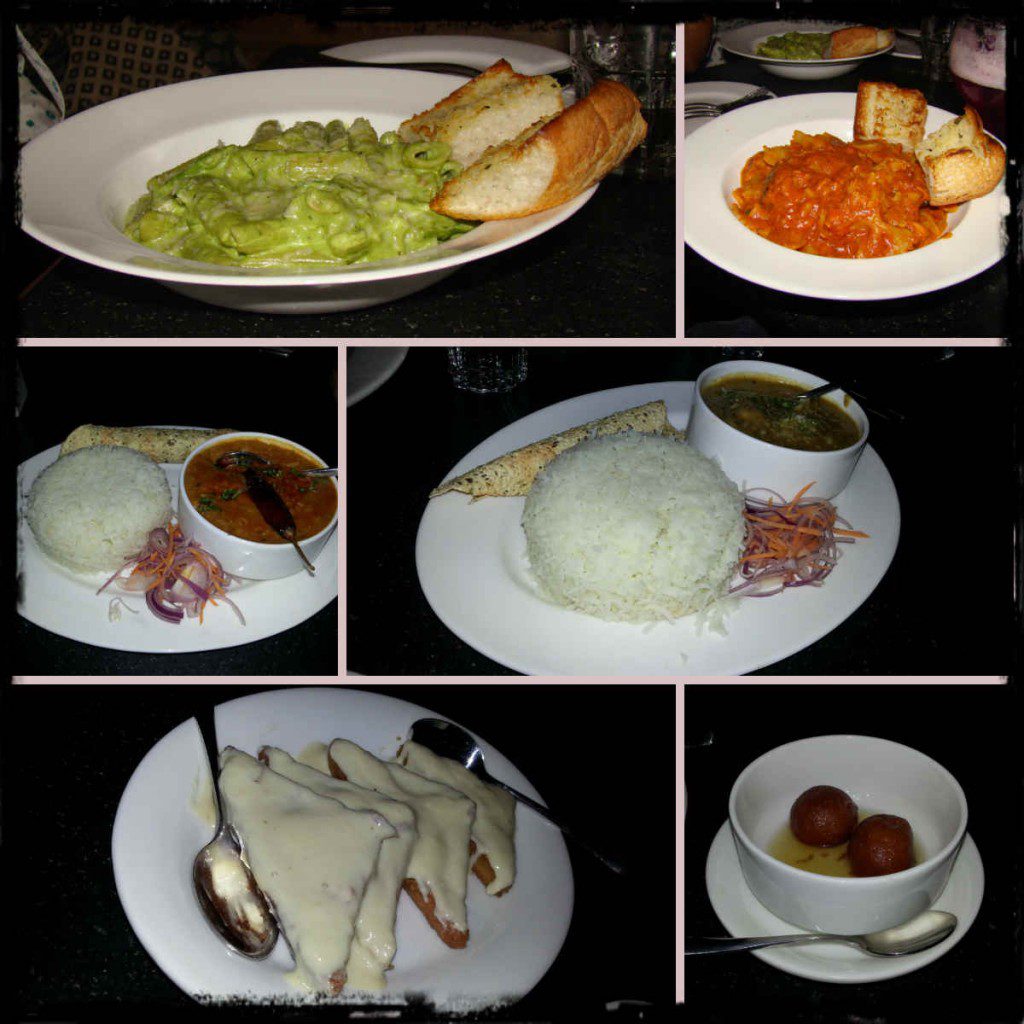
    The main course is the traditional buffet style – you have to go to the food. 🙂 The photogenic pickle and podi spread grabs your attention before anything else. In the main course, we skipped the soup options (mutton stock, rasam) and began with the fish, mutton and chicken (all gravies) The appam/porotta/dosa/podi dosa will be brought to the table after you tell them what you’d prefer. A good idea would be to order this just before you pick up the dishes. The fish turned out to be quite bland and D didn’t like the crab masala she’d picked up. The chicken and mutton were both curry leaves based, but differed in taste. I thought the mutton was really good and D favoured the chicken. The appams were very good, as were the podi dosas. (I’d gladly pay for that podi if they’re selling it!) The Kerala Porotta and the dosa were decent enough. In the next round, we tried the chicken biryani, which wasn’t that great. There are enough veg options, it’s just that we skipped them – except for the stew, which was really good.

    collage2

    We barely had space for desserts but bravely soldiered on. The elaneer payasam is magic and a must try. I had 2 mini glasses. D loved the jalebis as well. The phirni, pastry, pradhaman, jamun and rasagullas were standard fare. We were too stuffed for the gola! 🙁 The meal ended with a filter coffee.

    collage3

    It cost us Rs.1200 including service charge and taxes. I think that’s excellent value for money, especially given the location. The service deserves a special mention – enthusiastic, pleasant and prompt! I’d definitely drop in again.

    bon South, 130, 1st Cross, 5th Block, (behind Sukh Sagar) Koramangala Ph: 2552 6362 / 6363

  • The overhaul of currency

    Back in 2012, in my first post on institutional realignment, I’d written this – “…my biggest hope is that the current currency of our lives – money – will have a better successor, one that will be better connected with our unique identities, and weave in contexts better.” In the two years since, this movement has not only begun, but is also figuring out its own dynamics. I had expected, or wanted, a disruption of money, but it will most likely be a transition. At this stage, I see at least three broad areas to frame this movement -the democratisation of finance, alternate currencies and marketplaces for value exchange.

    Democratisation of finance: This is probably where it began, because the internet has a reputation for removing intermediaries who do not add value in this case, financial institutions. From projects in Kickstarter, Indiegogo, and GoFundMe to social investments like RangDe and Milaap, there are now many ways to mobilise funds for me and you from people like me and you, according to personal passions, interests and belief systems. I’ll add more to this in the ‘marketplace’ section.

    Alternate currencies: Arguably, money as an institution has built a network involving processes, dependencies and establishments keeping in mind the dynamics of an earlier era. A civilisation connected by the www may find these tedious and irrelevant, and thus it’s only natural that it builds its own institutions. Bitcoin (a good introductory guide) is the one that made this phenomenon (relatively) mainstream, to the point that it even has ATMs. Bitcoin may or may not survive, it is probably the Napster in its domain, it has changed the game irretrievably. While on the subject, do read this fantastic tongue-in-cheek take on how it’d be if the roles were reversed – a cash based mechanism replacing digital currency. Meanwhile, there are other currencies similar to Bitcoin, and then there are completely different thoughts – for example, Pay With a Tweet. Which leads us to the various payment mechanisms that are being built.

    Marketplaces & Value Exchange: While the other two are the dynamics, this is where the mechanics play a part as well. In the ‘democratisation’ section, I had referred to several platforms that aid both discovery and action. There are many more stories in this line – from AgreeIt, an app that allows crowdfunding from friends on Facebook to crowdsourcing for emotional advice, ideas and so on to selling one’s reservation at a restaurant/spot in a line through Shout to  a ‘new media company’ Ideapod that wants to “amplify the ideas that shape our world, create genuine and enduring dialogue around ideas and spread ideas that matter through new and traditional media channels.” to ordering food from neighbours, (Eatro in London and Imli – a startup I mentor at the Microsoft Accelerator- closer to home) there are various models of value exchange that are shaping themselves. In fact, the entire ‘social commerce via collaborative consumption‘ route is based on these marketplaces. (a few good perspectives and stats on its drivers here)

    But, irrespective of the currency, every transaction requires (another) key element – trust. The social web is also building its own mechanics for this – from relatively generic clout mechanisms (Klout, Kred and the likes) to more context specific ones like LinkedIn or GitHub or even Wiki and review mechanisms. (from Amazon to TripAdvisor to Foursquare to GoodReads to Zomato) We earn trust through our knowledge and actions in these mechanisms. We earn social currency. That brings me to the final portion – how does all of this impact brands and what would be their role?

    Brands & the trust economy: Across the ages, corporations have been built on competitive advantages pertinent to the economies they operated in. I found a fantastic illustration in this context here

    Economies and competitive advantages

    I think relationships are indeed going to be the major competitive advantage in the future, and if so, the currency that would play a bigger role than money would be trust. As in many other developments prior to this, there are opportunities here for brands to weave themselves into the consumer’s narratives and go beyond transactional relationships, and to earn social currency. Many of them are already on it, finding ways to earn consumer trust and helping him/her develop and change perspectives about various currencies and relationships between them. Since we’re talking of finance, let’s use an example in that domain. Fidor bank helps its consumers discover crowd sourcing options, staying true a bank’s generic commitment of excellent wealth management. Yes, it’s still money, but it understands that it can be deployed beyond traditional options. In the process, it also helps the consumer to belong to a community.

    Brands actually have an option to join in wherever there is consumer spending. Nike+, as usual, did something back in 2012 – they allowed runners to trade in (running) mileage for Nike goods (I had shared the video in the institutional realignment post too) While this ties in beautifully with Nike’s business purpose, maybe some brands would have to lean a little more towards the consumer side and get into relatively unrelated narratives, and a relationship, before connecting it back to the business purpose. For example, airBaltic’s loyalty program Baltic Miles rewards frequent fliers who jog enough to burn off the same number of calories as miles they’ve flown. One of the aspects of agile marketing would be to enable identification of opportunities early. For example, imagine Coke getting into the act in Beijing’s first reverse vending machines that pay subway credits in exchange for returned containers.

    In what might seem like a ‘changing of goalposts’, just as brands are beginning to vaguely realise that their currencies of engagement with consumers need to change, the consumer’s relationship with the common currency of transaction – money – is also changing. The two are very related, and brands need to tackle both to have meaning and relevance in a consumer’s life, because if (as Godin says) “money is a story“, we’re probably nearing a plot twist.

    until next time, the end of money’s monopoly

    P.S. For another detailed look at the subject, you’d want to read Gauravonomics’ post on ‘The Future of Money‘.