• The Bah

    My friend A has fantastic taste in design, and from the few samples I’ve had, cooks well to. So when she decided to start The Bah, in our little village of Whitefield, I was absolutely thrilled. We visited right when it opened, and then made a repeat visit recently.

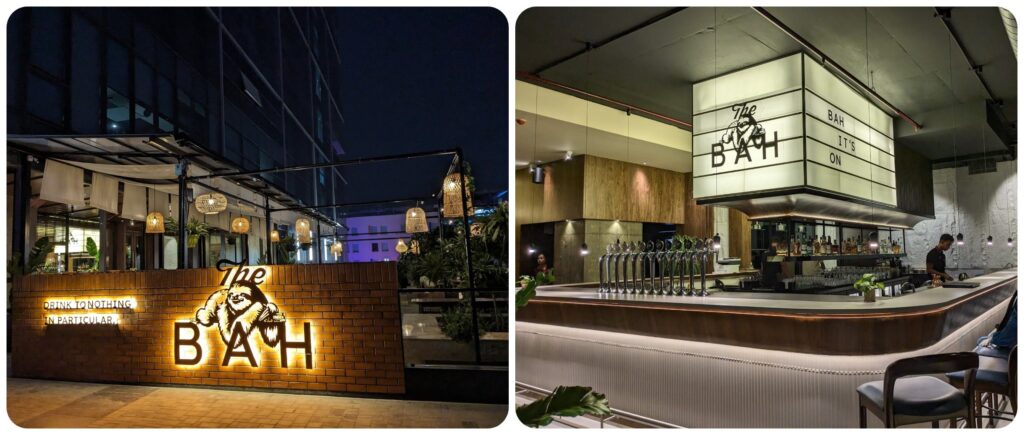
    The Bah is reasonably well-hidden, like every treasure should be. But if you’re willing to step into that corporate monstrosity of a building, and step on to that seemingly lonesome escalator, you will find a lovely space – in terms of ambiance, food, and drinks. The fun tone manages to blend seamlessly with the seriousness in aesthetics and dining.

    We loved the al fresco seating because… Bangalore weather. We also liked that children are only allowed during specific times. That thankfully keeps away the kind of crowd that leave their children to ‘graze’ on other people’s spaces while they themselves enjoy. A gave us a little guided tour when we visited first, and I loved the thoughtfulness in the different kind of seating spaces.

    The Bah

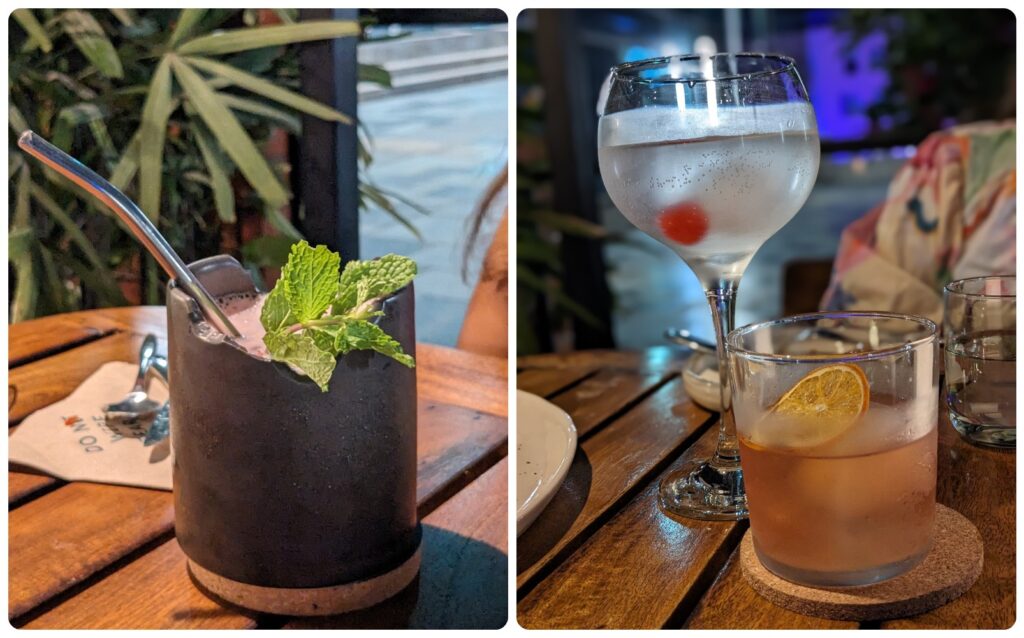
    Anyone who makes me a good Old Fashioned is my BFF. The Bah’s Old Fashioned is just the way I like it, none of that syrupy sweetness that most places degrade it to. On the first visit, D had a berry concoction that was fantastic. A had recommended but I can’t find it in the menu. But then, my attention span is low beyond whisky and rum. 😐 She ordered The Lonely G & Not T the next time, and got lucky again.

    The Bah

    During my most recent visit, I also got a taste of one of the soon-to-be-introduced flavours – Salted Caramel Rum! Absolutely fantastic, and very well suited to my tastes.

    The Bah

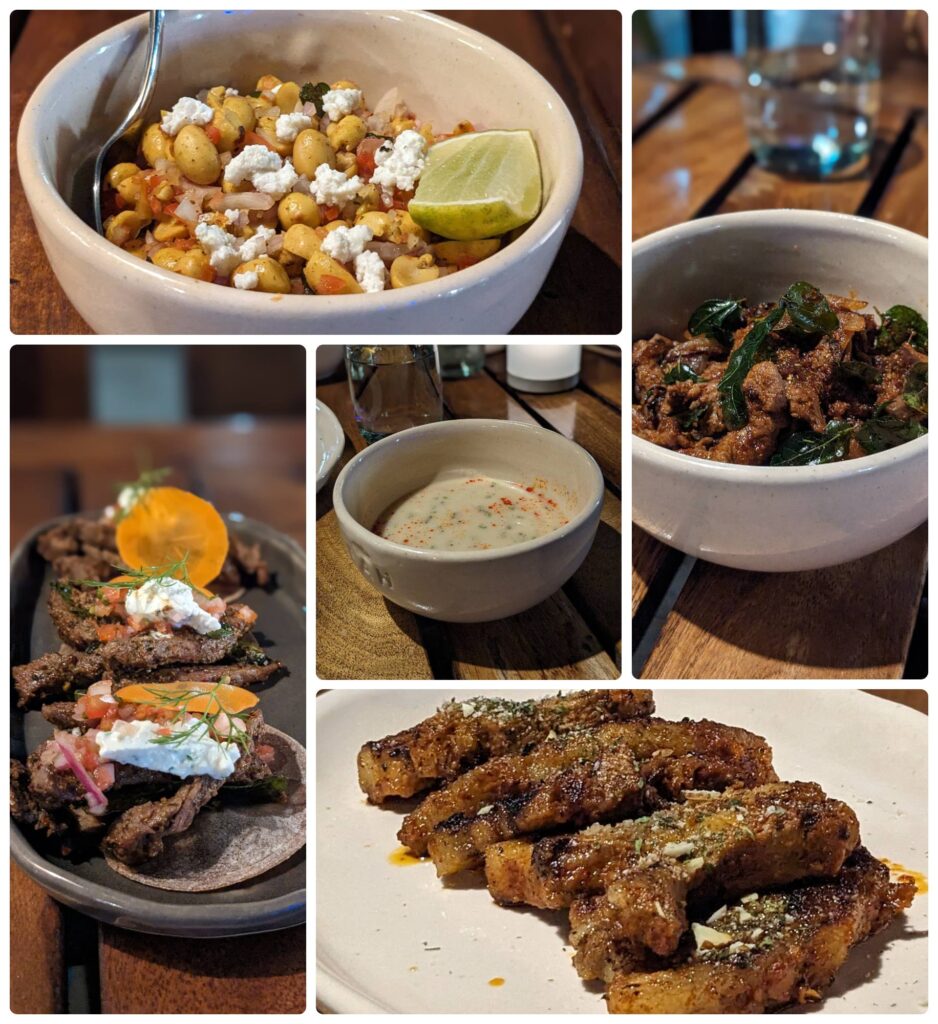
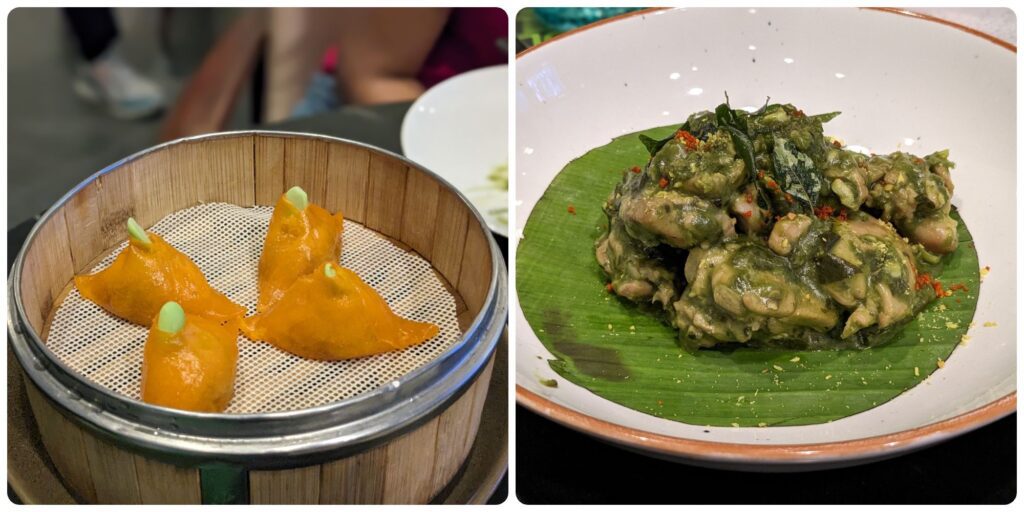
    ‘The Other Nuts’ is a great nibble with drinks. The usually humble masala peanuts elevated with feta. When Bangalore’s lovely weather permits, try the Creamy Chicken soup too, it’s delicious. The big winner in starters is the Shotgun Pork Strips, to the extent that we repeated it in our second visit, a rare thing for us to do. The only disappointment were the beef dishes – we tried the Namauru Beef Fry Taco and the Beef Sukkha and weren’t fans of either. The beef was fine, the masala was out of flavour, and favour.

    The Bah

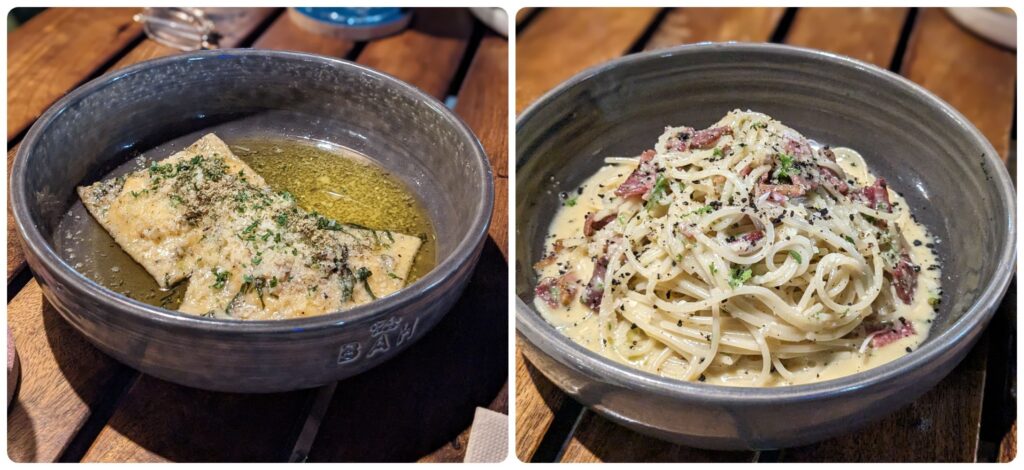
    For a change, I managed to pick a winner. The Sunny-side Ravioli is an absolute delight, with a killer herbed butter sauce. The Guanciale Carbonara is good too, again the rich egg yolk – parmesan sauce making the difference.

    The Bah

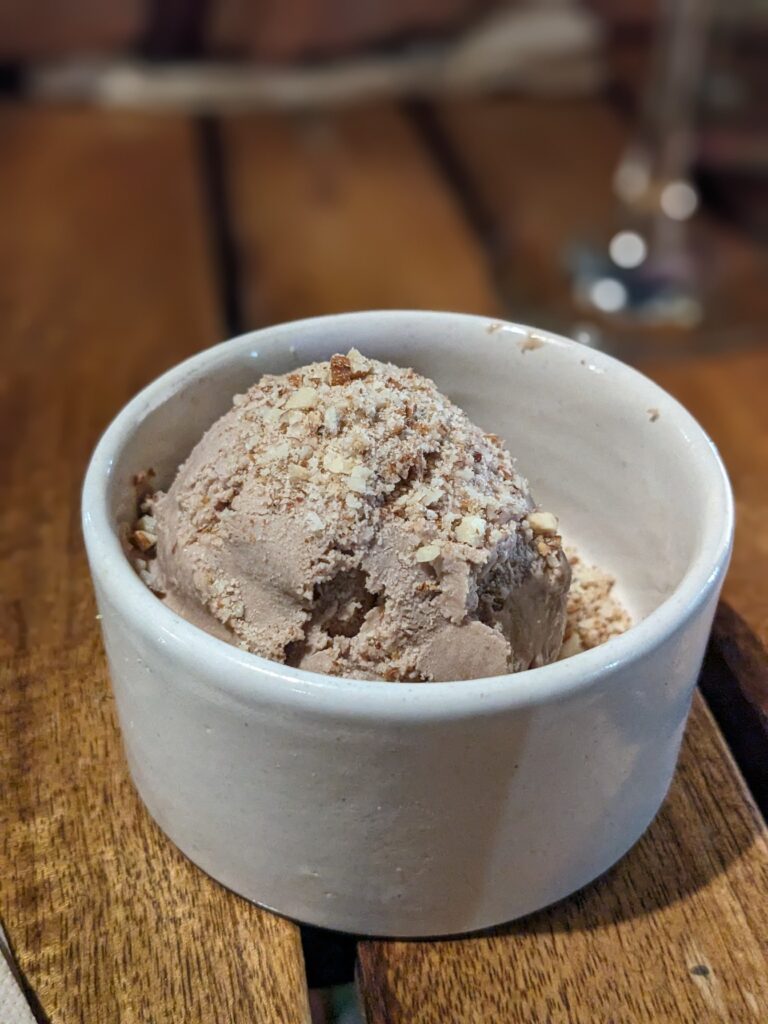
    It is not a looker, but it’s a keeper. I don’t think I can ever get enough of the Chocolate Peanut Butter ice cream here. The win again is the subtlety of flavours. That is going to be a problem in future, because there are at least three other desserts here that I’d want to try.

    The Bah

    The service is great, and the tasteful music adds to the ambiance. Our meal cost us a little over Rs. 4000, which I thought was money well spent, given the experience. I am absolutely biased but I’ve also heard good things from others who visited. So if you’re ever in the rural outpost called Whitefield, drop in.

    The Bah, 2nd Floor, Primeco Union City, ITPL Main Road, Whitefield Ph: 9611081642

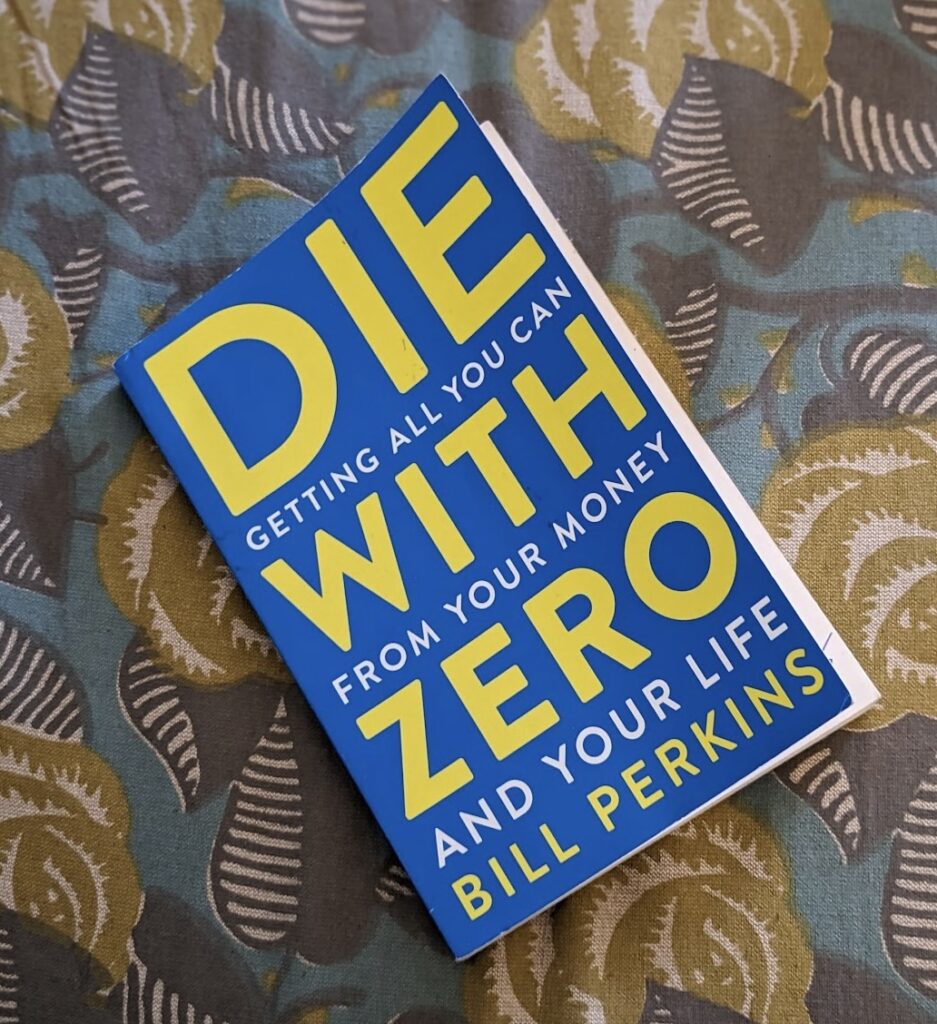
  • Die with Zero: Getting All You Can from Your Money and Your Life

    Bill Perkins

    Remember Aesop’s The Ant & the Grasshopper? The one that is told to teach us the virtues of hard work and the importance of saving for a rainy day. Given the values still hold, most books that have anything to do with money are written for ‘grasshoppers’, but Die with Zero is more for the ants, or in the author’s words, to drag the ant towards the grasshopper.

    The basic premise of the book is that we should make full use of our money when we have the capability to enjoy what it brings us. As we age, that capability diminishes, a function of our desires, as well as deteriorating health. While we could still enjoy many things, the yield or utility per dollar goes down with age.

    A part of the book is devoted to elaborating on this perspective and proving it with data and anecdotes. Data shows that a lot of people end up over-saving and underspending during retirement and die with a large sum of money still left. Hence the need to temper delayed gratification. Concepts like consumption smoothing – one’s spending not mirroring the variations of income, and transferring money from years of abundance to leaner years. In other words, spend more than your income, if required, early in life for experiences that will give you memories to cherish in your old age, because you can repay it as income increases. To be fair, the author obviously discourages reckless spending.

    This also goes for money you wish to give to your near and dear, as well as charity. For instance, better to give the kid money when you’re 65 and he/she is 35, rather than 80 and 50 respectively. The peak utility of money is highest between 35 and 50, when people have the health and the desire. Even within retirement, there are go-go years, slow-go years, and no-go years, and one should bulk up the spending at the top. He also recommends getting a sense of your life expectancy using calculators so you can plan accordingly.

    Another useful concept is that of time buckets. Take a duration, say 10 years, and look at 40-50, 50-60 and so on. Now slot the things you want to do, and when you’re best placed to do it. Usually the control variable is money, here it is health and desire. This will help you figure that some things are better when done at certain ages. It’s a perspective shift. The other related shift is seeing your peak as a date (related to biological age) and not a number.

    The book also addresses the ‘how’ of implementing this, and overcoming the mental barriers that people commonly have towards this approach, including the not-so-common “I love my job”.

    The book does offer a reasonably unique perspective, and at its core, it urges thinking on first principles and making conscious decisions, both of which I support. But I felt that the author underestimates the scarcity mindset, or probably lacks the empathy required for it. The other aspect I didn’t like is the tendency to quantify aspects of life that have multiple dimensions of quality. And finally, the ‘inefficiency’ comment on Sylvia Bloom, who worked as a legal secretary for 67 years, and when she died at 96, bequeathed $8.2m to charity. According to the author, she should have done this earlier while she was alive. Absolute tone-deafness.

  • An entropic guide to history

    In the last year, I have read four ( + one) books that I thought summed up the why-what-how of humanity’s evolution very well. Respectively, The Case Against Reality: How Evolution Hid the Truth from Our Eyes (Donald D. Hoffman), and Being You: A New Science of Consciousness (Anil Seth) (my favourite this year), The Master and His Emissary: The Divided Brain and the Making of the Western World (Ian McGilchrist) (first among my favourites last year), The WEIRDest People in the World: How the West Became Psychologically Peculiar and Particularly Prosperous (Joseph Henrich) (don’t worry, it is inclusive enough in this context), and finally the + one The Cosmic Game: Explorations of the Frontiers of Human Consciousness (Stanislav Grof) because while it is fringe science and despite the qualitative proof, I wasn’t convinced on the existence of divinity, I think our experiences in our non-ordinary states of consciousness has a connection with the ‘why’.

    The theme that unites them is entropy and ‘order’. Haha, school stuff, I know. So here’s a quick refresher. Simplistically, entropy is the measure of the degree of disorder in a system. The second law of thermodynamics states that in any isolated system, the total entropy tends to increase or remain constant over time. Our universe is an isolated system because, as far as we know, there is nothing else other than our universe; there is no external environment that our universe can exchange matter or energy with.

    Let’s begin with Hoffman. He points out how natural selection is the only process we know that ‘fights’ entropy. It pushes organisms to higher degrees of functional order to try and delay entropy if not offset it completely. Across a vast amount of time, it has tweaked living systems to not just be fit for survival, but also reduce disorder. But there is a trade-off. We don’t see reality as it is. He posits that “some form of reality may exist, but may be completely different from the reality our brains model and perceive.Maya, anyone? He compares this to icons on our screens that are a way of interacting with the system but don’t look/feel/behave like the system underneath. They are a user interface that spares you tiresome details on software, transistors, magnetic fields, logic gates etc. And everything we perceive around us through our sensory organs and mind is just like that – icons that help us navigate. Our perceptions don’t even have the right language to understand/describe reality. Think of it like the UI or formats we have evolved for navigating the world, and there are different ‘languages’ for different species.

    The non-ordinary experiences – courtesy psychedelics etc – that Grof writes about , I suspect, opens up our brain to a different language and thus a different interpretation of the world. A perception of reality in a different language.

    Anil Seth also touches upon how our brain is wired for survival and the functional order that natural selection is driving towards. Reality is an interpretation, and the entire process is not optimised for accuracy, it is designed for utility. ‘We perceive the world not as it is, but as it is useful to us.’ A mechanism of making it seem real so we respond to it. Additionally, perception is a ‘controlled hallucination’ (phrase by Chris Frith), an active construction as opposed to a passive registering of an external reality. The brain constantly makes predictions about the causes of its sensory signals through a Bayesian process in which the sensory signals (also) continuously rein in the brain’s various hypotheses. Perception is thus a continual process of prediction error minimisation (reducing the difference between what the brain expects and what the signal provides) because lesser error, more order, lesser entropy.

    McGilchrist ‘s work goes deeper into the functioning. The right is present and pays attention to the world outside, the left re-presents. The differences between them are less about what they do and more about how they approach something. A fascinating perspective on how the two halves of our brain have quite different worldviews – the “left hemisphere is detail-oriented, prefers mechanisms to living things, and is inclined to self-interest, where the right hemisphere has greater breadth, flexibility, and generosity.” Relatively, mechanisms offer more control (order) and predictability than living things. Thanks to its ability to break things down into simple answers and better articulation, the left hemisphere has been able to grab control at an accelerated pace since the Industrial Revolution, and create a world where it prizes precisely these capabilities in individuals, institutions, and culture at large.

    And finally, Henrich, overlapping with McGilchrist, shows how cultural learning adaptively rewires our brains and biology to calibrate them for navigating our culturally constructed worlds. “Unlike other animals, we have evolved genetically to rely on learning from others to acquire an immense amount of behavioural information, including motivations, heuristics, and beliefs that are central to our survival and reproduction.” From kinship altruism and pair bonding to our own motor patterns to projectile technology and food processing to grammar and social norms. When you look around, the dominant narrative is the WEIRD (Western, Educated, Industrialised, Rich, Democratic) one. Broadly, individualism and personal motivation (self focus, guilt over shame, dispositional thinking – based on intent not context, low conformity, self regulation and control and patience, time thrift, value of labour, desire for control and choice), impersonal pro-sociality (impartial principles, trust, honesty and cooperation with strangers and impersonal institutions, emphasising mental states in moral judgment, not revengeful but willing to punish third parties for not sticking to principles, reduced in-group favouritism, free will, belief in moral truths like physics principles, linear time), and perceptual and cognitive abilities and biases (analytical over holistic thinking, attention to foreground and not surroundings, endowment effect, overconfidence on own abilities) are all features of this, and the correlation with higher functional order is evident.

    If I look around the metro crowd in India and across the world, the optimisation for WEIRD is rising. As I wrote in Kaumpromise, we can still see an alternate way in patches. It’s interesting how with the rise of AI, we are at once creating even more order in many ways but at the same time ceding control to blackboxes. That requires some thought, and another post!

    P.S. There is a nice time dimension to this as well, brought out in monochronic and polychronic cultures. Read more here.

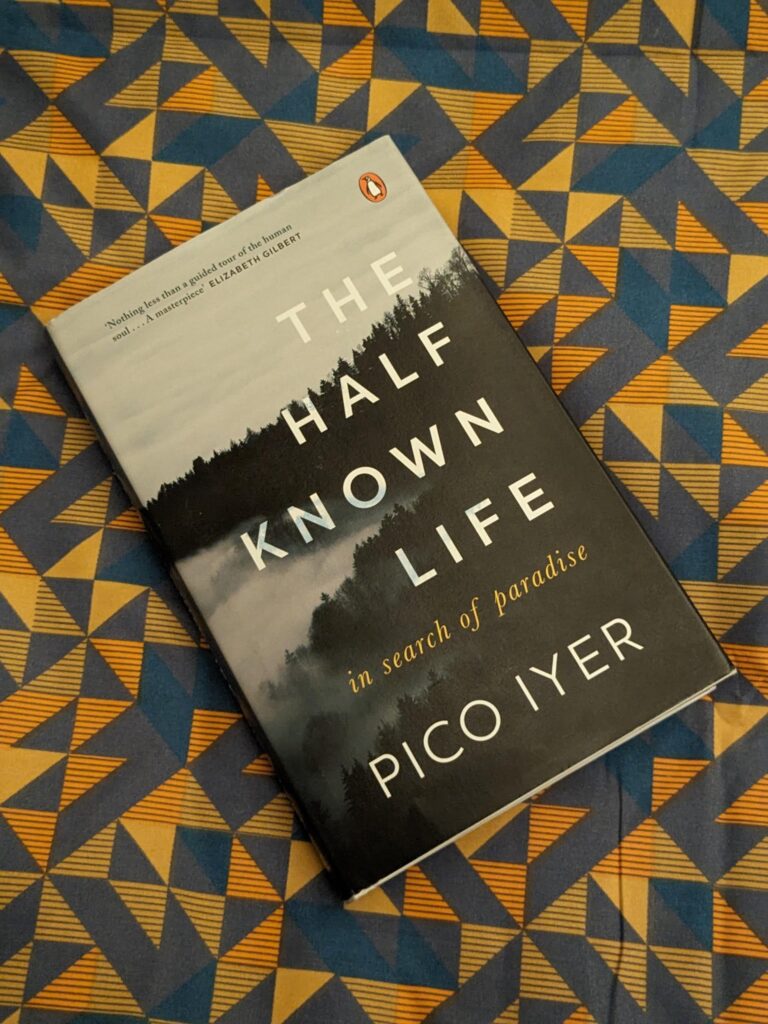
  • The Half Known Life: In Search of Paradise

    Pico Iyer

    I always have a bias for Pico Iyer’s writing, and many a time I end up reading his books at times when I need an alternate perspective. In The Half Known Life: In Search of Paradise, the search is for what different people define as paradise – a place with no worry or anxiety. Except, for some it is a particular place, for others a moment in time and something that can be accessed if we put our mind to it, and for some others it can only be enjoyed after death.

    From Jerusalem to Benaras, and Japan to Ladakh, Pico explores these concepts and the people who believe in the different definitions. As is usually the case with his writing, it is as much introspection as it is travel, and written in wonderful prose. He blends his personal experiences with philosophical musings seamlessly. Through the people he meets, and his encounters with those from varied backgrounds, he reflects on the nature of life, and its many meanings.

    In solitude and contemplation, he reaches out to thinkers before him- from the Stoics to William James to Henry David Thoreau, in an effort to decipher the complexities of our existence. Each essay is a meditation, and amidst the noise and chaos of this busy world, I’ll probably pick it up again later in life to get a different rendition of the half-known truths that lie deep inside all of us.

    The Half Known Life
  • Prime Golf Brewing & Golfing

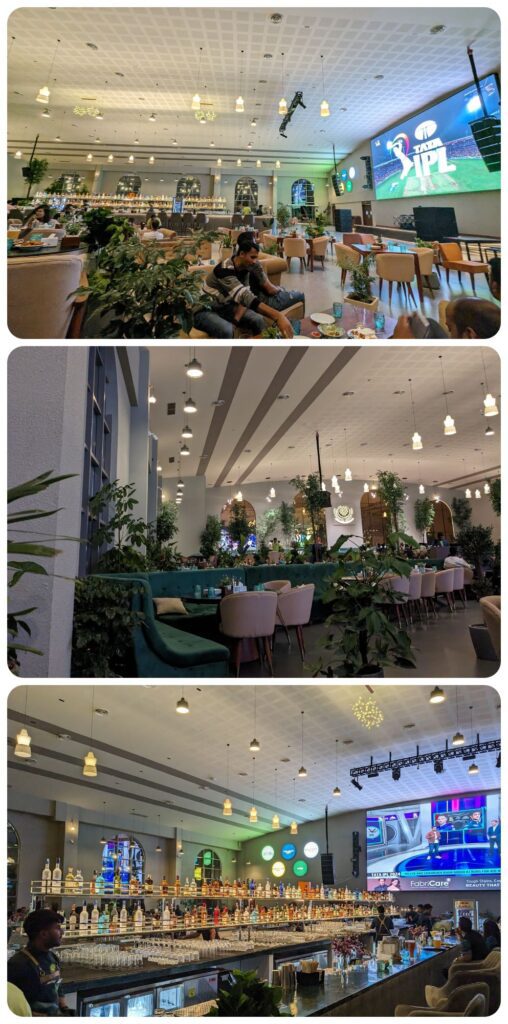
    In the spirit of ‘Who has a bigger schtick?’ Prime Golf, in Whitefield, has apparently overtaken Ironhill as the largest brewpub in Asia. Who cares about the beer and food? For those wondering, I suspect the golf is mini golf.

    It’s pretty vast, apparently a seating capacity of 1500. There are multiple seating options – indoor and al fresco and for various group sizes. Unfortunately, they have designed it in such a way that the outdoor view is pretty much dead on arrival. As is characteristic of such places, there is a gigantic TV screen so you can dine out and do the same thing that you do at home anyway. Yay.

    Prime Golf Brewing & Golfing

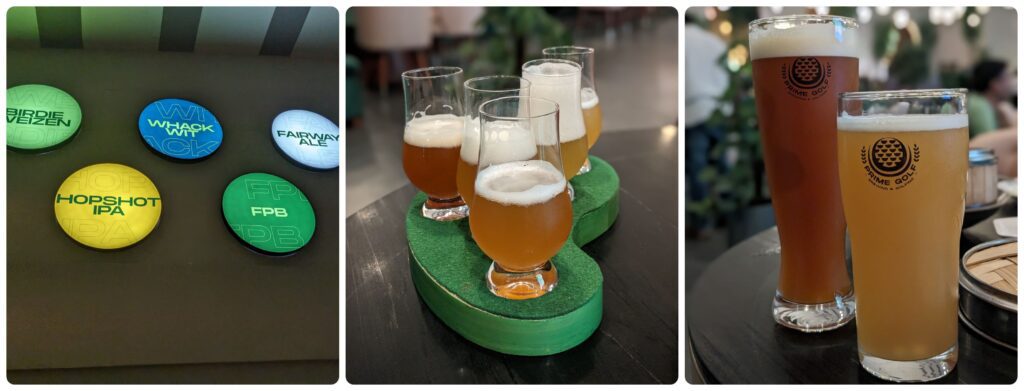
    One of the beers in the list was unavailable, and what they had instead was a Weizenbock. We tried out the samplers, and chose the least of all the evils – Whack Wit and Weizenbock. The first is a Belgian style wheat beer and the second is essentially a hybrid of the Weiss beer and the German Bock (close to a Dunkelweizen). That was the technical understanding, our friends have made their own interpretations.

    Prime Golf Brewing & Golfing

    The Chicken & Celery dumpling wasn’t too bad, and they got the Andhra Chilli Chicken fairly right, though I do still prefer their neighbour’s (Red Rhino) version.

    Prime Golf Brewing & Golfing

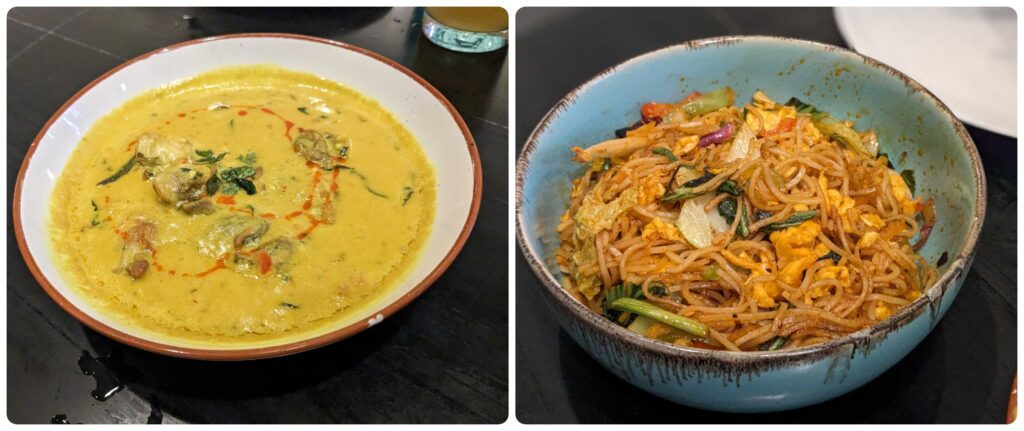
    Mapas Manok sounded interesting (Manok seemed Filipino – turns out it’s chicken, and Mapas reminded me of Kerala) This isn’t like the Kerala dish, but it definitely has coconut milk, so we didn’t mind. The only problem was the late realisation that we were still a little hungry and should have ordered something with it. We asked for what we thought would be simple to do – Wok Tossed Chili Garlic Noodles, but either chef was busy or didn’t anticipate people ordering Chinese. Whatever that might be, it took ages to come to the table. I suspect they plan for seating but don’t think of these people ordering!

    Prime Golf Brewing & Golfing

    Overall, as you might have noticed, I was mightily unimpressed. That could be the excitement of a new brewery in the neighbourhood having turned into a meh ambience and experience. But that crowd that likes Ironhill will like this one too. And that tribe is the dominant one. Sigh. The bill came to a little over Rs.3000 and I think that’s money I could have put to better use.

    Prime Golf Brewing & Golfing, 5/206, SBR Central, Whitefield Ph: +917892512790