
• The Lowland

    Jhumpa Lahiri

    The good part is that the usual characters are all present – Kolkata, Boston, melancholy, wistfulness. The better part is that Jhumpa Lahiri is in top form. I was a bit disappointed with the last book so I started this with a skeptical mindset, but am extremely glad to have been proved wrong.
    The story spans about four generations, beginning in the 1950s and ending in contemporary times. What is interesting is that, though at least a couple of the characters seem easy enough to slot into standard stereotypes – a Naxalite moved by his milieu into embracing a fiery ideology, and his brother who moves to the US and becomes the immigrant absorbed in scientific research building a new life in an alien country, the author takes them beyond that in the story arc, giving them depth and layers.

    One wonders whether it is the story of Udayan whose influence in the lives of the characters extend far beyond his death, or that of Subhash and the women in his life – a mother disappointed by his choice, a wife who never loved him as he wished she would, and a daughter whom he raised but is not his own. Or is it really the story of Gauri, and her journey which seems to be played out in a real as well as philosophical level? “Plato says that the purpose of philosophy is to teach us how to die.” Between these three, the author travels the spectrum of human nature – from its most benevolent to its most selfish. The Lowland is the stretch of land between two ponds – probably also symbolising the two brothers and Gauri. (more…)

  • Adaptability & Actualisation

    “It is not the strongest species that survive, nor the most intelligent, but the ones most responsive to change“, Darwin had said, in a more long-winded form. I have been in awe of evolution as a concept for a while now, and have rather prided myself on being adaptive, specially in my work context. In terms of hard skills, I still believe that’s the way to go. However, when dealing with people, both in personal and professional settings, I have realised that it is possible to go overboard on being adaptive.

    A meta prequel before I get to that. On hindsight, I am seeing an evolution in my thinking on this subject. Back in April of last year, I figured out that I am happier when I don’t judge myself.  Later, in October, I realised that there is a correlation, and probably even a causation, between my happiness and the way I treat others. I decided to fix my happiness as my compass. But when I read this post from a couple of months ago, it seems as though I had wandered off the track I had decided on.  (more…)

  • The Glass House

    Though we’ve been hearing a lot about this place on Lavelle Road, (map, they have valet parking) a love for my internal organs had made me resist it every time D made the suggestion. But for her birthday dinner, we decided to finally drop in there. The place is indeed lovely, especially at night, when the roof can be seen in full glory. Some of the open air seating on the ground floor makes for a good setting, but we preferred sitting upstairs in a corner overlooking the next compound and a jackfruit tree! We arrived early and had a table reserved, but it did get crowded by around 8.30, so you might want to book a table.

    They have a pretty impressive wine list and we tried the Malbec Bodega Norton Coleccion and Shiraz/Cabernet Sauvignon Redvale ‘Rivergum’. The first had a sweet spice hint and the latter was more full blooded with a berry undertone. We asked for a Bacon and pickled chilly hash, served with a three cheeses dip. That was just average since the flavours mentioned in the name never really appeared. D volunteered to finish my wine so I could try a Tennessee Coffee. JD, coffee and chocolate were all very well represented in this one, and I enjoyed the play of the flavours.

    collage1 (more…)

  • Money : AI :: Present : Future

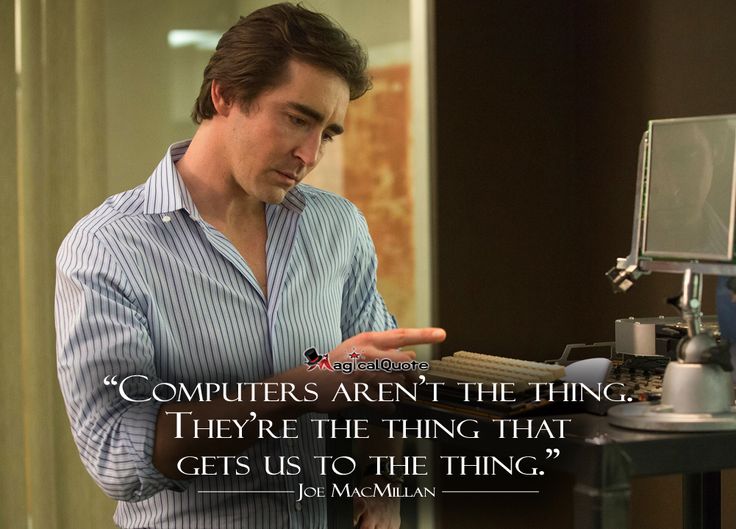
    Thing

    I might have found a remedy for the Mad Men withdrawal symptoms. “Halt and Catch Fire” – that’s where the line is from. While the show has me glued, it also made me really consider the connection between money & AI.

    A key factor that is driving the increasing adoption of AI in the work context is efficiency. Somewhere in the equation of calculating efficiency lies money, and how much of it can be saved. I am ignoring ‘time’ for now, because even that, mostly comes down to “time is money”. Jobs increasingly become task oriented and the objective is to make each task more and more efficient. If we continue that way, the pessimistic AI future is easy to imagine – it will happen in a ‘frog in boiling water’ manner, but it will happen. (more…)

  • The Diamond Age: or, A Young Lady’s Illustrated Primer

     Neal Stephenson

    Snow Crash remains one of my favourite books in the genre, and it would only be a slight exaggeration to say that this book does for nanotechnology what the former did for the internet – give a fantastic perspective of the possibilities. I have to confess that Stephenson’s books are not the easiest to read- as anyone who has attempted The Baroque Cycle would agree to – but what I give him the most credit for is his scope of imagination. That matter compiler, (MC) which is one of the standard technologies in this book, is probably an advanced form of 3D printing, and this book was written in 1995!

    From a plot perspective, there are at least two main protagonists. Nell, who escapes from domestic abuse with the help of her brother and gets a copy of the Primer, a book that adapts to the life conditions of the reader, and was originally made at the behest of an ‘Equity Lord’ for his granddaughter to propel her towards a more interesting life. (read subversive ideas) John Percival Hackworth, the architect of the Primer, who begins to be used by two separate forces to meet their own objectives. The story primarily focuses on Nell’s ‘evolution’ after she gets the Primer and Hackworth’s journey after he hands over the Primer. (more…)