• The immortality of time

    Thoughts on immortality and its implications on personal and societal aspects of life have long been a favourite subject here. It has also been an area of interest from a philosophical standpoint. For instance, if we could live forever, what would be the relevance of time? Would our current existential questions be rendered irrelevant?  There is also an understanding that it is a process – our lifespans would progressively increase – as we replace our bodies (and later, minds) with mechanisms (augmented human) even more robust than the ones nature gave us.

    I found an excellent post on Quartz which dwells on the evolution of time management and makes the point that time management is actually making our lives worse. It also brings up something I had written about recently in the context of work, money and AI – the never ending race for efficiency. The article argues that the idea that managing time would get one back in control is a fantasy that only works in a finite world and that our to-do list is actually like the mythological Hydra!  (more…)
  • Narcopolis

     Jeet Thayil

    What a trip! Right from the single sentence prologue that lasts 7 pages which, to me, also gives a clue on how to consume this book – “Do I take a single continuous drag? You can, but then you have to recycle it inside your lungs, better to take short pulls, “How long should I hold it in?… it depends how much nasha you want” In essence, I could have read it in one shot and deconstructed it in my head, or I could consume it languorously and let the author take me through it at his own pace. I chose the latter, trying to keep up with his lucidity and fantasy. I honestly don’t know if I got it all right.

    The narrator Dom leaves us soon after the book begins – to Rashid, the owner of an opium den, Dimple, the eunuch who is his ‘kaamvali’, and to a small extent Rumi. (no, just a shortened form of Ramesh) The networks of stories are like waves, probably matching opium induced undulations of the mind. They are continuous, and have similarities – of pain, and a need for belonging and love. But they are unique too, as we watch time pass by – backward and forward – through the perspectives of different characters. The Stoneman references give us an indication of the timeframe the novel is set, but we also get a glimpse of the socio-political scene of China in the 1940s thanks to Mr.Lee. (more…)

  • The case against cosmic justice

    Evolution, as I have already stated sometime back on this blog, is a fascination these days. Fundamentally, I see it as a gigantic A/B testing mechanism operating over large swathes of time, with only one seeming agenda – moving on. A lot of things make immense sense when I accept that as the only framework. Including the idea of God, which has several key roles. e.g. to provide the impetus to move on even when things are not going well (faith), explain the things that science cannot (yet) and so on. If it helps someone, it is a great idea, though as a species we have been consistently been stupid enough to let the practitioners of organised faith take advantage of us for their own needs.

    Clipboard01

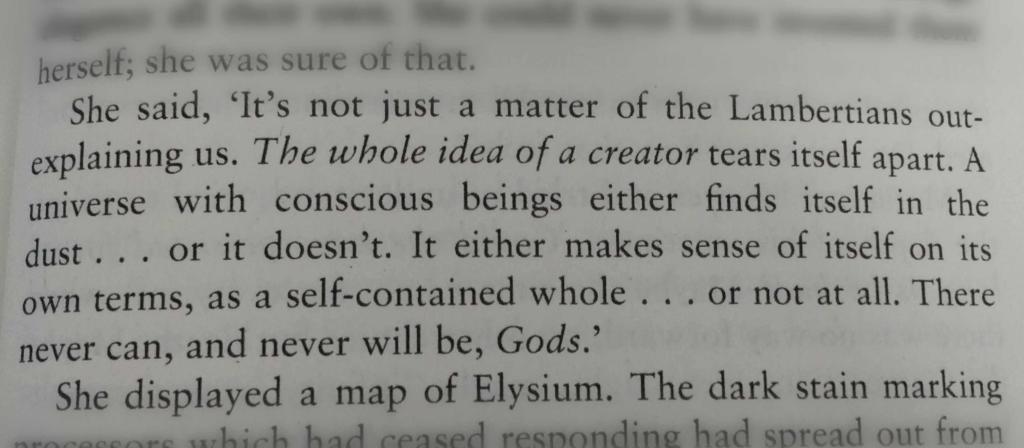
    But that’s not what this post is about. One of the offshoots of faith (God/Cosmos/insert whatever works for you) is the related idea of cosmic/divine justice. I used to believe in that until very recently, and it was one of the attributes of being what I called myself – a spiritual person. But at this point, I don’t think it exists. There are at least two perspectives that brought me to it. (more…)

  • Onesta

    First published in Bangalore Mirror

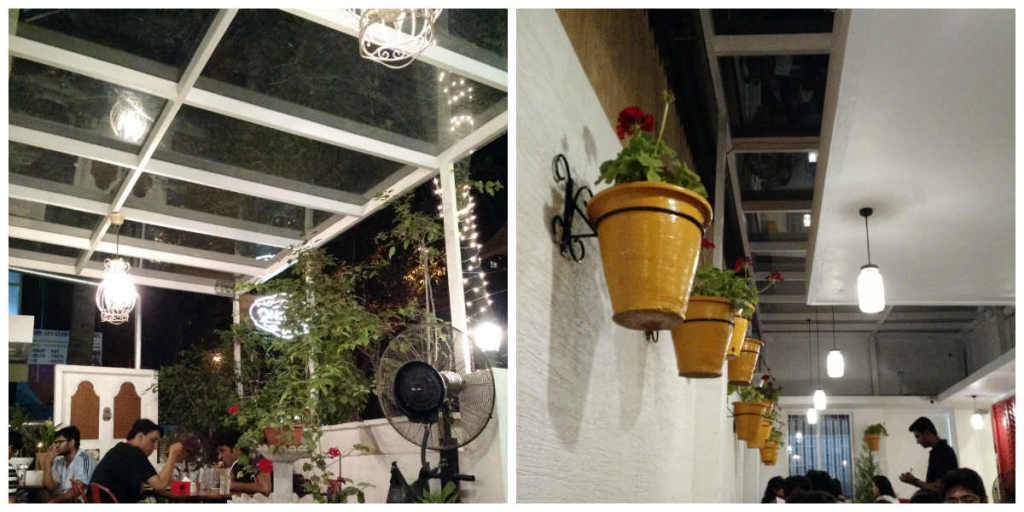
    Under normal circumstances, 7.30PM is a safe time to walk into a restaurant without a reservation – experience suggests that it’s too early for the twenty-somethings to have started their Saturday nocturnal agenda. But then one comes across places like Onesta that completely defy this logic. Onesta is on the Ooty Chocolates road off 100 feet Road Koramangala. (map) Best of luck on the parking. We barely managed to get a table, and in the two hours we spent there, there was hardly a moment when a whippersnapper wasn’t waltzing in and asking for a table, seemingly oblivious of folks who were already waiting. Having landed a table right at the entrance, we were at the receiving end of a ton of evil eyes, all of which were questioning the legitimate amount of time one should be allowed to spend with pizzas. This is amazing for an outlet which has been around for only a month, and it immediately raised hopes of some fantastic food. But, according to the menu, you need to wait for 25 minutes before the food reaches you. So let me attempt to distract you with the ambiance. Imagine walking off a Koramangala road straight into a cobbled street in Europe, complete with a tiny fountain, white walls and shutter doors. In the first ten minutes, we even had a two-girl band crooning to lyrics sourced real time on a mobile phone! Music reminds me, there’s a heavy metal fan right next to the fountain, and while the idea (coolness in summer) is indeed sound, it does result in water sprays every five minutes if you’re seated anywhere near it. That notwithstanding, the yellow flower pots, red and black chairs, the quaint lampshades and glass bottles, and paneled wood tables all contribute to a bright yet chic elegance that’s warm and charming.

    collage1 (more…)

  • Re-framing employment

    For untold generations work was simply a matter of maintaining the status quo.

    Across the world, the debates on productivity, reduced work hours, 4 day work weeks, DND after work hours etc are intensifying. Add to this the narratives of “the end of employment” and the “gig economy”, (and therefore the case against full time employment) and the signs of an upheaval of our concept of work seems imminent. I can vouch for that from my own experience as well – expressed to a certain extent in earlier posts –  The Entrepreneur & the Professional, and Re-skill. My posts on AI and its impact on employment are also related to this in a “bigger picture” way.

    It is personal in a different way too, because it’s increasingly an application of a broader life framework and worldview. In fact, I was accusing myself of over thinking this, until I read this fantastic piece – How Not to Let Work Explode Your Life. That’s where the quote at the start has been taken from. It traces the origin of the clashes we are facing in our work-life environments now to trends that have been forming for centuries. Long, fascinating read, and a confirmation of many of my complicated thoughts! (more…)