Category: Society & Culture

  • Bridge over troubled water

    In ‘Tin Fish‘, there is a wonderful speech given by the school captain, which goes (edited a bit)

    …..I am not what I’d have liked to be. The school is aiming to prepare me for others. I want to be for myself. But it is growing increasingly difficult for me to prepare myself for myself as my expectations grow greater. A reformed, open-hearted school can help me. Till then, I shall stand on the beaches, look towards the sea and wait for a solution to be washed ashore.

    The novel is set in a boarding school in Rajasthan, deals with peer and parental pressure, and has the chaotic politics of the 70s as the backdrop. As a late 70s born, I could identify with the book because though the cultural icons had changed (rock bands/actresses etc) societal changes seemed to have moved at a much slower pace. The value and belief systems as well as the prejudices – caste, religion, income are a part of the 80s too.

    I could also identify with the above excerpt on two counts. ‘Preparing me for others’ ..the pressure to conform – on the kind of education one should have, the kind of career one chose, the kind of person one could get married to, one’s conduct with family, boss, and one’s behaviour in society in general, all had their own sets of conformity. ‘Prepare myself for myself’..when I wrote this post sometime back, I had mentioned the conformity that the blog imposes on the blogger, it is something that happens in real life too – we create an image of ourselves, consciously or more likely, sub consciously, and try to stick to it. In either case, more often than not, objectivity will be lost.

    Sometime back, I also came across this wonderful piece in the New York magazine, titled ‘Say Everything’. It talks about how as the young population gets increasingly used to the net, there are many among them, for whom, sharing their ‘stuff’ online is the natural way to be, and for whom, privacy has an entirely different definition. In fact they consider the extreme caution of the earlier net generation to be narcissistic and are prepared for the implications that the shared stuff might have on their lives decades later. The author sees this as the biggest generation gap in a long time, perhaps since the hippie generation. She even wonders whether in this era of surveillance cameras and tracked card transactions, their belief that privacy is an illusion might be the sane approach. The article outlines a series of changes that are happening with this generation –ย  “they think of themselves as having an audience, they have archived their adolescence, their skin is thicker than ours”

    Now, one could say that they are conforming to an online audience (like my blog example), but as the author points out, over a period of time, will this generation, which has been growing up with the net, move towards such degrees of comfort that they are totally un-self conscious? And perhaps, to quote the extreme example used by the author, a Paris Hilton level where what could have been the worst humiliation possible, was used as a stepping stone for fame? A generation so transparent that any ‘forced’ conformity would be easily detected and would be undesired. And moving on, to use the words I had seen in a totally different context (link), would transparency be (or subsume) objectivity?

    At this stage, we are of course, smack in the middle of these changes, but unlike the above generation, technology (more specifically, the web) entered our lives relatively much later. We perhaps have the baggage of not just peers/parents/society but also the ones we have created for ourselves earlier on in our lives. We might struggle to adjust, but yet we are perhaps the bridge generation, across the cultural changes wrought by the www or even liberalisation (in India). Did every generation have to play similar roles? ๐Ÿ™‚

    until next time, stage fright

  • Imago

    That I worship Bill Watterson and simply adore Calvin & Hobbes is not a secret. In fact, it mostly irritates people when i quote from that unique mix of humour/sarcasm/wit and profundity. But no, this is not a gushing post. A few days back, when a friend was talking about her kids, I told her to be thankful that they weren’t like Calvin. She said one of them does have imaginary friends. I am not sure about kids these days, but I simply cannot remember any imaginary friends I might have had in my childhood. To be very fair to everyone concerned, I am quite befuddled even when it comes to recognising real friends of that era and erm, a few eras later too.

    But I wonder about the character of these childhood imaginary friends, and why they exist. Is it loneliness? Considering the minimal baggage that we have at that young age, are they confidants of doubts and thoughts that we think we can’t share with others, even if they are of the same age? Calvin has his club, theories about society and education, ‘scientific experiments’ etc which he shared with Hobbes. Is it because he felt that he would be laughed at, if he shared them with others?ย  Hobbes usually attempts to give him a more mature perspective on all the stuff he discusses. I’d like to ask the kids with imaginary friends about the conversations. ๐Ÿ™‚

    Maybe, as we grow up, our baggage grows and as we conform to the norms around us, we figure out that imaginary friends have to go? Or it is perhaps a need that gets filled or forgotten about amongst other priorities, as we acquire new real people – friends, relatives or any other relationships along the way, and maybe figure out that we can share different things with different people, and not have to reveal ourselves totally to everyone? And that takes away the reason for having an imaginary friend to whom we confide all?

    Real people bring their own baggage, they perhaps shield us a bit, and tell us things that we want to hear. They perhaps validate our beliefs and thoughts and inferences, either because they don’t want to be the people who deliver the bad news or they don’t care enough. Of course, I am not taking away anything from the good friends that we manage to get, if we are lucky enough – the conscience keepers. But they’re human too, and their objectivity would waver, they’d have their biases. Perhaps, we should build an imaginary friend all over again, our own objective self, one which can show our own prejudices without fear of retribution.

    until next time, object of my imaginary attention ๐Ÿ™‚

  • Characteristics

    There are nearly seven billion people on this planet. Each one unique, different. What are the chances of that? And why? Is it simply biology, physiology that determines this diversity? A collection of thoughts, memories, experiences that carve out our own special place? Or is it something more than this? Perhaps there’s a master plan that drives the randomness of creation, something unknowable that dwells in the soul, and presents each one of us with a unique set of challenges, that will help us discover who we really are.

    We are all connected, joined together by an invisible thread, infinite in its potential and fragile in its design. Yet while connected, we are also merely individuals, empty vessels to be filled with infinite possibilities, an assortment of thoughts, beliefs, a collection of disjointed memories and experiences… Can I be me without these? Can you be you?

    And if this invisible thread that holds us together were to sever, to cease, what then? What would become of billions of lone, disconnected souls? Therein lies the great quest of our lives, to find, to connect, to hold on. For when our hearts are pure, and our thoughts in line, we are all truly one, capable of repairing our fragile world, and creating a universe of infinite possibilities.

    Thus spake Mohinder Suresh in”An Invisible Thread”, the season finale of ‘Heroes’.

    And as if on cue, a large number of conversations and experiences popped up as conversations inside my head. Yes, those nice voices in the head. ๐Ÿ™‚

    I remembered the conversations that Mo and i keep having on the subject of identity, purpose, character and other stuff that she completely gets. Okay i get too, but muddled up. ๐Ÿ™‚ I remembered how, when I was reading Archer’s ‘Sons of Fortune’..again, I suddenly figured out why he is my favourite author. In addition to that amazing gift of story telling he has got, its his characters, and their character. Good or bad, they seem to have a moral code. They are noble – noble heroes and noble villains. (remember that word, shall come back to it in a while) Even when they come in contact with their character’s grey areas, they have a rationale they can apply to the situation. They make you aspire for such clarity in thought and deed, in being true to themselves and their character.

    Meanwhile, I see around me, a lot of young people eager to emulate – even things that I hoped would question and better. And as i keep a watch on that, I sense that they do it to belong, at any cost. They are willing to take their lessons from second hand accounts – not accounts of mistakes, which could be argued as a good thing, but enriching experiences that would shape their character. Of course, not every young person I know is like that. I also come across quite a few who have more character and maturity than many people double their age. But I do see more of the first kind. It is a different kind of conforming than what i was have seen earlier – aย  need to fit into their peer group’s collective terms.

    On twitter and Facebook and all the services which connect us, I see this set, and more coming in every day to add to their number. And in this collective consciousness, I glimpse the desperation in the need to belong at any cost – evenย  at the cost of a character that is still being formed. A shared identity and a strong character, can it co exist? I wonder, if in this age of possibilities, they will be satisfied with this belonging, I also hope that they will not wake up, one day, years later and rue this conformity that they created for themselves.

    And then, I remember what a smart young lady from that age group once told me “Manu, this is so archaic. Only you could use the word ‘noble’ in conversation”. So, I wonder whether there is something in this connectedness that I don’t understand, whether the ‘plan’ requires all kinds of characters – with or without a strong character, to maintain the balance,ย  or whether the kind of disconnectedness that I’m feeling now is one that characterises that thing we all do – ageing. ๐Ÿ™‚

    until next time, time for adages?

  • Liberation.. deliberation

    PD*28939360

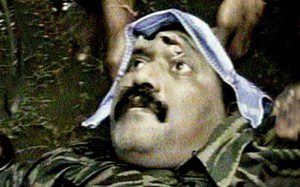
    It’s been a couple of weeks since this image was THE news item on all forms of media. It’s stale news now. Like most people, yet unlike them because of the descriptions, Velupillai Prabhakaran was a different person to different people – many people here associate him with the assassination of Rajiv Gandhi, to most Sri Lankan Tamils he was a messiah, to the Sinhalese, he was a ruthless killer, and so on.

    A day before this photograph was released, Rediff had a very interesting slideshow on him, with a set of photos that showed a completely different side. A married guy with children, who would’ve celebrated his 25th wedding anniversary later this year. Within a day of the above photo being released, the bodies of the family members (except Charles Anthony, who was killed a few days earlier) were also found, within 600 metres from where Prabhakaran’s body was found, all with gunshot wounds on their head.

    I couldn’t help but spare a thought for the man. The person that existed, perhaps forgotten, beneath the persona. If this article is to be believed, a persona that was created by India. In his last moments, if the cliched ‘whole life flashing before the eyes’ happened, what would’ve been his thoughts? Was it that of the persona – the crushing sadness that a collective dream, of which he was the keeper, had been left unfulfilled? Or was it that of the person – the despairing helplessness of someone who suddenly realised that it was all over, and wondered whether dedicating a lifetime to a cause was worth the life he had taken a long time ago – his own.

    until next time, the purpose of it all….

    image courtesy: The Telegraph

  • Juley

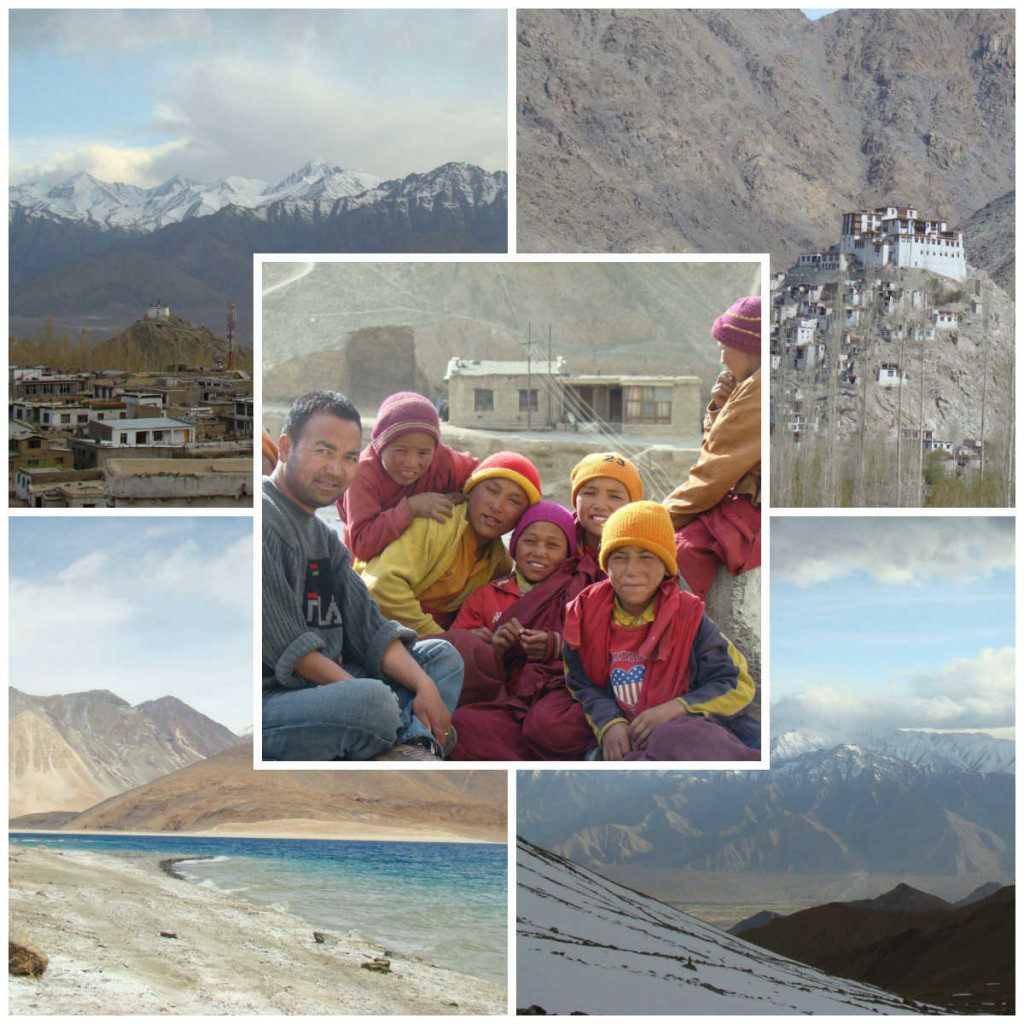
    In my mind, I can still hear that Ladakhi greeting, though its been a few days since our return from Leh. There are stories of mountains and mountains of stories I could tell you. Of the trip that almost didn’t start because the taxi service got the day and month right, and booked us a cab for 2010!! Of the Delhi weather which over delivered on the warm welcome premise at 40 deg C.

    Of the jovial captain of the Leh flight, who said that one third of our trip cost would be ‘made up’ by the first view of Leh. Of him being proven right by a sight so magical that one could hear a collective gasp as the lofty snowy peaks were seen for the first time through the windows. Of the mountains that for one moment looked the magnificent phenomena they were, and in another looked like clay models that kids made for school exhibitions.ย  Of another statement the captain delivered on – a free camel ride, he called it – the landing at the Kushok Bakula Rimpoche Airport.

    Of being on a high already and wondering whether one would be hit by the much written about high altitude sickness. Of being phlegmatic while popping pills and drinking bitter cough syrup at the first sign of phlegm. Of wandering through streets where tiny wrinkled old people chanted with prayer wheels in hand, and the next generation listened to heavy metal and peddled rock bands’ skull tees. Of wandering up mazes to see the ruins of the old palace and then lazing in the relatively palatial comforts of the hotel. Of waking up at dawn and setting out on journeys in which every view was click worthy, of getting tired of clicking and relying on the video mode far too much, even as the mind captured images. Of the visit to the gurudwara, where one was caught between the twin pleasures of the awesome sweet tea and the warmth from the cup.

    Of gazing at the mighty river that spawned a civilisation, and wondering how much has changed for the nomadic tribes that live in tents and roam about with their Dzo (a hybrid of yak and cow). Of the noisy rush of air as one climbed up mountains to gompas (monasteries) that awed you with their silence. Of glass cases that carefully and lovingly stored centuries old manuscripts and a realisation of the tiny timeframe of six years of blogging. Of the excitement of staying in a tent, quickly followed by the realisation of how exactly one could feeze to death, and then feeling an intense thankfulness for one’s supple and warm bed companion, despite the rubbery exterior -the hot water bag.

    Of boarding passes that got you to 35000 ft in no time, and mountain passes at half the height that made you crawl for almost three hours to get to them. Of being driven up narrow mountain roads, slipping on snow every now and then, and wondering if your final destination was going to be up or down. Of pitying the military guys who lived in the severe cold, and then muttering at them for making decisions that cost us an entire day. Of creating yellow snow after getting tired of holes in the ground and portable loos that cleared up the blocked sinuses in no time!! Of seeing a lake at 13500 ft- Pangong, shared by two countries, that competed with the sky for the shades of blue that could be displayed. Of a heavy snow fall that forced one to get out of the comforts of the push back seats in the vehicle and attempt to push the vehicle, which pushed back!! Of the disappointment of knowing that nature took only a few minutes to shatter one’s well laid plans.ย Of begging and pleading and cajoling cops to let us through after the official closing time.

    But most importantly, of the wonderful wonderful person who took it upon himself to make sure that we got to see all the sights we wanted to – Tsewang. He, who confessed after much questioning, that he was having his first meal of the day at 3 pm after driving 9 straight hours through horrible conditions at altitudes above 14000 ft.ย  And then proceeded to drive up to Khardung La, the world’s highest motorable road at 18380 ft-ย  all in a day’s work, he said. Nothing I said or did could assuage my guilt.

    The long journeys through the mountainscape pushed random thoughts into my head- of heaven, and whether living at such high altitudes meant that one was closer to God. ๐Ÿ™‚ Of whether the milieu that nature offered in these places instilled the compassion and concern for fellow humans, that I saw in many around, and if that was the secret behind the peaceful and happy faces, despite the hard conditions and lack of even common facilities in several places. The great heights and its citizens gave me perspectives and a sense of harmony that I still seem to be carrying with me, hoping that the daily grind won’t take it away.

    As I looked at Leh before I stepped into the airplane, I realised that this might be the only time I’d visit this place. I also realised that perhaps my memories would fade, and I might forget the images I could now easily recollect in my mind. But I like to think that there’s one picture that will never go away – the lofty peaks of the mighty Himalayas, glistening with snow, and a light breeze that causes the flags at the monastery to flutter silently, all of this can only make up the background for the innocent, peaceful joy on Tsewang’s face as he plays with the Lama kids, and as he sees me approaching, heย  asks me with his customary smile, if I’m ready to continue the journey.

    until next time, a daily lama

    PS. You can catch a few photos here.

    collage1