Category: Flawsophy

  • The world we create

    A while ago, I had written about the narratives of our lives, a look at various narratives across time – from religions and nations to popular culture and brands to the internet – that have (arguably) tried to fulfill our sense of belonging. All the narratives I had considered were external in nature, though they might be dictated by our choices and preferences.

    An excellent comment on the post by The Lit Room made me consider ‘the narrative of individual imagination’. As I answered, it is probably the most important one, as it takes all sorts of external stimuli, and converts it into a unique stream of consciousness. Just when I began thinking of writing a follow up post by including that aspect, I was reintroduced, thanks to Devdutt Pattanaik’s Sita, to the concept of ‘aham brahmasmi‘ – “every human creates his own imagined version of the world, and of himself. Every human is therefore Brahma, creator of his own aham“. I think it is impossible to crack everything that goes into the making of one’s own consciousness, which is probably what led to

    Clipboard01

    (image via)

    But there are at least a couple of perspectives that the book provides in terms of how one can create an ideal ‘world’ for oneself. It says, “stay true to the idea of dharma. Be the best you can be, in the worst of circumstances, even when no one is watching.” I thought a bit about what actually drives our actions, and realised that at the bottom of it is fear. (debatable) Not just one fear, but many, many fears driven by our contexts – some we acknowledge, some we don’t. George Lucas probably figured it out earlier, (see) though we might travel paths different from what Yoda has suggested. The book also states that – Fear is a constant, and faith is a choice. Fear comes from karma, from faith arises dharma. Faith in what, was the next thing I pondered over. In oneself, and a moral code that one adheres to? Or a higher power/cosmic law that governs all that happens? Or is it just a mechanical process with the fittest surviving? There are more options as well, probably, but I like to go with the first, because in the world that I create, my actions can ensure I do not have to fear.

    Meanwhile, also from the book – Shiva chooses the path of asceticism and self control to control the aham, and the world it creates. Vishnu chose to live amidst materialism and yet find a way to break free – a middle path. (now I can see why Buddha is assumed to be a form of Vishnu) I think there are several degrees to choose from, and there lies the challenge. I also realise that it if each of us are creating our own worlds, we cannot really answer the questions of the world at large – a universal answer – because it is an aggregate of each of our worlds, which are different from each other and have unique rules. We can only find the answers to our own world, and through our individual paths, find our own version of the answer to the purpose of life.

    until next time, muddled path

  • A measure of helplessness

    A while back, I’d seen a Malayalam movie titled Pigman. Not really a typical movie by any standards, and that explains the poor performance at the box office. It is the story of a young man whose life pretty much becomes an abyss. (spoiler) The movie starts with him pursuing a doctorate in linguistics but failing to get it because of his research guide, who is miffed at him rejecting her advances. He sees no point in continuing and thanks to his family’s dire financial circumstances, is forced to take a job. He gets a clerical job at a pig farm courtesy a friend. A series of altercations with the corrupt management gets him demoted to the lowest job in the system – that of a pigman. He continues his protestations and the movie ends with him losing his mental faculties after being given electric shocks.

    It is a depressing story, and one can really feel his helplessness as his life spirals downwards degree by degree. In fact, the entire theme of the movie is failures in life, and it is as though, the intent is to drive home the point that some lives are meant to be lived in a continued state of helplessness.

    I think we have all felt helpless at some points in time, in varying degrees. Helpless in traffic (probably tactical helplessness, for the lack of a better word) at one end to probably the other extreme of watching a loved one die and not being able to do anything to prevent it or alleviate the suffering. I couldn’t help but compare it against what I’d call (again for the lack of a better word) chronic helplessness -a life consistently going down in quality (defined in this context as standard of living) – like the life of Pigman’s protagonist. In turn, I also couldn’t help but compare this to someone who has never had a decent standard of life. I wondered whether, among the last two, the last was better – if one hadn’t really experienced a higher standard of living, one wouldn’t know what one was missing, and therefore the suffering would be lesser than someone who had experienced it earlier, but could no longer do so because of circumstances.

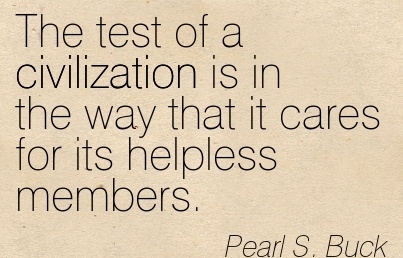
    And that is the really enigmatic thing about this business of living – there is no objective measure of mental anguish. If there were, probably we’d be better at helping those less fortunate than us. That would at least be a step up from feeling helpless at the injustice of it all. Help more, to feel less helpless. Sounds like a plan?

    until next time,

    Clipboard02

  • The path to immortality

    I’d written earlier on how brands could use an individual’s data (the personal API) to fit themselves into his/her narrative and had used Nike as an example.  But this data could also be used by fitness and health companies to discover ‘fault lines’, gradually delay wear and tear, and one day, totally prevent a machine shutdown. This video – A Day in the life of Tim Ferriss (watch for a minute from 3:25) – gave me an idea of how we might be moving faster in that direction because of  data collection.

    Back in 2011, in ‘God in the details‘, I’d opined that over a period of time, when our data capture capabilities were evolved enough, and we had a lot of data on people on a lot of their behaviour, consumption etc, we would potentially be able to answer the most profound questions about our existence, purpose etc, and unlock further dimensions. I was extremely happy to read the same thought in this (long, but) amazing read called ‘Navigating Stuckness‘. “I could sit safely at my desk and write computer programs to gather vast amounts of Internet data, which I thought could finally answer timeless questions like “what is love?” and “what is faith?” with precision and clarity.

    On one hand, data could help us in our path to immortality, and on the other, it could provide us the answers to fundamental existential questions. I wonder what would happen first, because, as I wrote in PhilosoRapture, I also wonder if those questions would remain relevant once we became immortal.

    Meanwhile, the other track to immortality that is rapidly developing is that of the augmented human, where human parts (including the brain) will be replaced by mechanical replicas. We’re only a part of evolution, as this wonderful, humbling video would show, and it is probably only our ego that makes us believe (if we do) that we’re the endpoint. Maybe, there will be a species later, of whom we’d be probably be creators, for whom our questions will seem irrelevant and who will have their own sets of answers to seek.

    cs

    (quote via, image via)

    So it would seem that whichever way we approach immortality, by the time we get there, chances are, it may not be that significant.

    The year we conquer morality, by the way, is 2040, as per Ray Kurzweil. I’ll be 62 then, or maybe not, or maybe it won’t matter, or maybe…  🙂

    until next time, live long and proper 🙂

  • Notion states

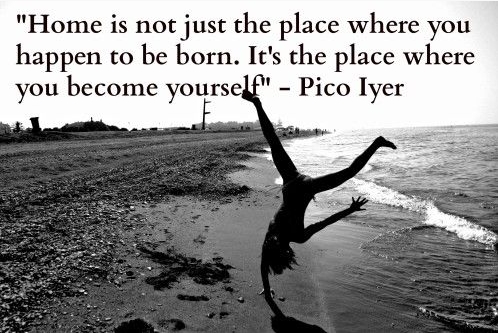
    My last post on the subject of home was in the context of the multicultural world we are creating, how in our pursuit of convenience and familiarity we might end up creating a homogeneous world, and whether the idea of home would change with time, as we begin to choose places that connect to our soul over the soil we were born in. (soul vs soil courtesy Pico Iyer)

    One of my main punching bags in the institutional realignment line of thinking is the concept of the nation state, more specifically its relevance in a massively connected world. A simplistic view is that economics, trade and many other things might be better off without them, given how much of an enabler technology is turning out to be, and geo politics will anyway be a lesser phenomenon if there aren’t any nation states. Arguable, yes.

    However, I had very little idea on the replacement concept. Geography (land) would exist and would have to be organised in some way. What way? In a wonderful display of appropriateness, Wired gave a possible answer – in the form of a post titled “Software Is Reorganizing the World“. I loved the concept of ‘geodesic distance’, and the mapping of not nation states but states of mind. (soul) The idea of (what is now) cloud communities taking physical shape is fantastic! While it might sound far fetched, it really isn’t – the post gives historical precedence and emerging patterns to back up the idea. As does Tony Hsieh’s The Downtown Project in the present day to transform the decaying and blighted part of the old Vegas Strip into the most community-focused large city in the world.

    Around the same time, I came across this Facebook (official) note titled “Coordinated Migration“, (thanks MJ) which shows how Facebook is using ‘hometown’ and ‘current city’ descriptions to track migratory patterns across the world. Probably, in a few years, this would be a mapping everyone would take a keen interest in, to find kindred souls, and to be what they are destined to be.

    pico2

    (via)

    until next time, a state of bliss

  • PhilosoRapture

    In one of the slides in the presentation I shared last week, I had touched upon institutional realignment, and ‘health’ as one of the drivers. But the origins of this thought go back at least 4 years to The Man..the machine, and  Life…streamers, and the subject of immortality and the path to it – the augmented human – have since then made several appearances here – ‘The Immortal’s Reality‘, ‘Back to Eternity‘,  ‘Your Next Avatar‘, and Remember the Feeling to name a few. As I read these posts recently, I realised (again) that the possibility of the current version of the human being just another step in evolution is a humbling one.

    On one hand, I remembered the story of Yudhishtira and the Yaksha, and the answer to a part of Question 9. The Yaksha asks, ‘What is the greatest wonder?‘ and Yudhishtira answers “Day after day countless people die. Yet the living wish to/think they will live forever. O Lord, what can be a greater wonder?” On the other hand, I also read that Google (which shares its first two letters with God) has invested in a company that will work on combating aging and disease. Google is not the first company to attempt this, and scientists are already figuring out how to reverse ageing, but it does have the Ray Kurzweil advantage. (also read) This is promising to be a fight to the death! 🙂

    On the same day that the Google article was published, my favourite thinker on the subject – Scott Adams – posted an article on our ‘choice’ of immortality- one was the Google way of doing away with aging, the second was we would be able to transfer our mind to robots, and the last was transferring our minds into virtual worlds. I am inclined towards the augmented human route – body parts getting replaced one by one, until we become a ‘Ship of Theseus‘ and a perfect example of the paradox. But one way or the other, it seems as though we’re destined to be immortal. The funny thing is that despite that, the question would remain – ‘what is life and why do we exist?’ I wonder if an eternity would be enough to answer it. Or probably, our state of consciousness would be such that we wouldn’t feel this urge for an answer. After all, according to my 500th photo on Instagram,

    Clipboard02

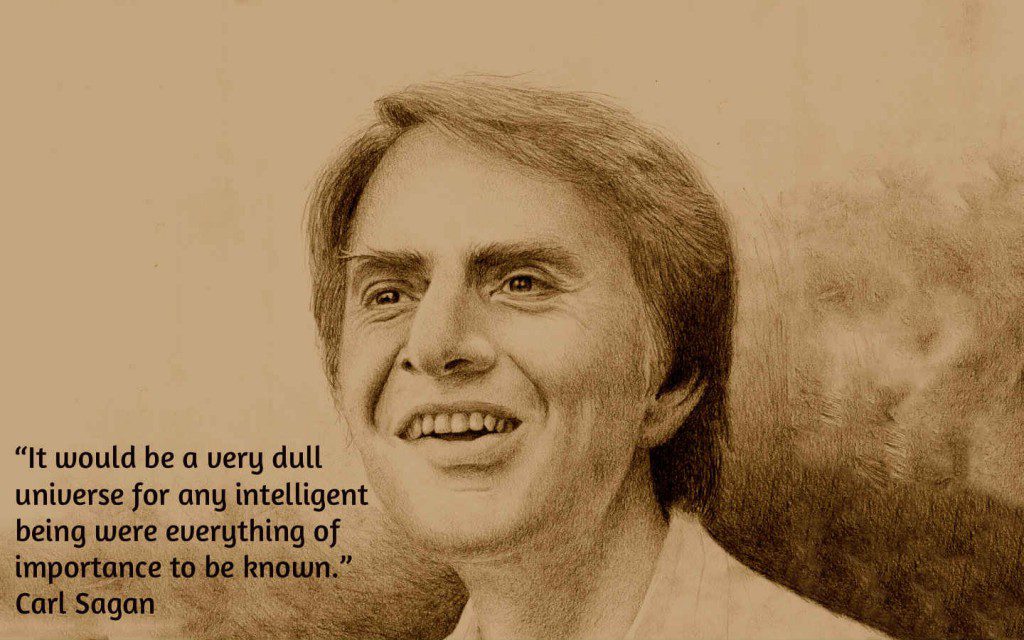
    The end of death is probably the end of philosophical questions as well. Whether that is a good thing is an open question. Or not. After all, Carl Sagan did say “I think if we ever reach the point where we think we thoroughly understand who we are and where we came from, we will have failed.” 🙂

    until next time, cogito ergo hmm

    P.S. Not a big fan of donuts, but a fantastic take on the subject of life and its context – http://imgur.com/K6EKeRW