
Category: Choices

  • Artificial Humanity

    In Natural Law, I had touched upon the idea that we will have to make choices as a species in the context of the role of artificial intelligence in our lives, and how/if compassion towards each other would play a part in these decisions. As I watch thoughts and events unfolding around me, I am beginning to think that it will most likely not be one crucial decision later in time, but a lot of smaller choices, made at individual and regional levels now, that will shape our society in terms of acceptability, morality etc. And so, just as I wrote in a post around five years ago, that we might not be able to recognise the final step we make in our integration with AI, there might be an increasing inevitability about our choices as we move forward in time.

    What sparked this line of thought? On one hand, I read a New Yorker post titled “Better All the Time” which begins with how a focus on performance came to athletics and has now moved on to many other spheres of our life. On the other hand, I read this very scary post in The Telegraph “The Dark Side of Silicon Valley” and a bus that’s named Hotel 22 because it serves as an unofficial home for the homeless. It shows one of the first manifestations of an extreme scenario (the nation’s highest percentage of homeless and highest average household income are in the same area!) that could soon become common. The connection I made between these two posts is that increasingly, there will be one set of humans who have the will and the means to be economically viable and another much larger set that doesn’t have one, or both. This disparity is going to become even more stark as we move forward in time. I think, before we reach the golden age of abundance, (if we do) there will be a near and medium term of scarcity for the majority.
    (more…)

  • Happiness: The End

    A while ago, in Happiness and Compassion, I had written about what Fahadh Fasil described as the biggest lesson he learnt from failure – he said it made him decide that he would only do things that made him happy. The more I read, the more I think, and the more I live, the more I start relating to what Fahadh is doing, and what Aristotle said, “Happiness is the meaning and the purpose of life, the whole aim and end of human existence.” Everything else – fame, power, money, compassion, detachment etc – is probably just the means we create.

    The thing though is, even if happiness were indeed the purpose, I can see at least a couple of challenges. In this excellent read “10 truths you will learn before you find happiness“, the first point is “It is impossible for anyone else to define YOU”. This echoed my first challenge – a difficulty in defining what happiness is to me. At the next level, I felt that the paths to happiness are confusing and have many things going against them. For instance, fame – “..other people’s heads are a wretched place to be the home of a man’s true happiness.” (Schopenhauer) Or compassion/pity (not kindness, which I regard as a more active expression, though the following might apply to it as well) – “There is a certain indelicacy and intrusiveness in pity; ‘visiting the sick’ is an orgasm of superiority in the contemplation of our neighbour’s helplessness” (Nietzsche) As you can see, it isn’t difficult to bring each down.

    (more…)

  • A republic of convenience

    Masala Republic is a Malayalam movie I watched recently. First, my sympathies with those who attempted the heroic task of watching it in a theatre, but to be fair, it did give me some food for thought. No, not about my choice of movies, but things slightly more important in the scheme of things. It talked, for instance, of issues that needed a voice – the changing socio-political and economic dynamics of Kerala caused by a huge influx of people, mostly low wage workers from Bengal and the North East.

    The movie begins with the disruption brought about in the life of these folks by a ban imposed on Gutka, which apparently is part of their staple diet! This reminded me of the (real) scenario I witnessed when the liquor ban was announced in Kerala. Almost overnight, I saw an ecosystem disbanded – small shops around bars, auto-rickshaws that ferried drunk guys home, to name a few components.

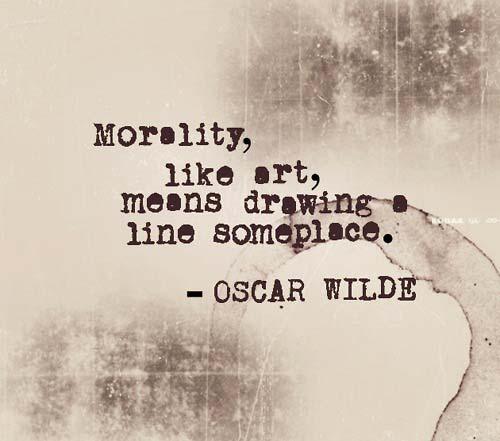
    Notwithstanding the political play that brought about this ban, I was forced to ask – isn’t alcohol consumption an individual’s choice? One might cite domestic violence, decrease in productivity, drunken driving etc, but unlike say, smoking, it does not automatically cause damage to the larger society. Isn’t a blanket ban a bit like banning automobiles because of road accidents? If the justification is that individual choice must bow before collective progress, then can we really condemn Sanjay Gandhi for the infamous sterilisation programme? After all, population control would, at least arguably, have meant progress. What we are debating therefore, (I think) is the means. And means is exactly what an alcohol ban is. Does society really have the moral right to take such a decision? Who decides society’s collective moral compass and what can resist such selective applications of morality?

    Clipboard01

    (via)

    Who decides where the line is?

    P.S. Would be glad if you could point out whether I am missing some relevant piece of information or logic here.

  • Happiness and compassion

    Though I’d explored the idea of inculcating a sense of compassion in others in this post a fortnight back, I still think our own compassion needs to serve as a solid base. Not being judgmental is one way, but it’s not easy to practice. So I took a step back and wondered if compassion was a result and not a behaviour. The first behavioural direction I could think of was happiness. In myself, I have seen a correlation if not a causation. I am more compassionate when I’m happier. So I decided to explore this a bit. (more…)

  • The people we are….with

    After I shared the “We, the storytellers” post on Twitter, Surekha sparked off this interesting discussion on how we could persuade others to be less judgmental and more compassionate. I really didn’t have a fix-it-all answer and felt that it was more important that we simply practice this ourselves. That, however, did not stop me from thinking about it.

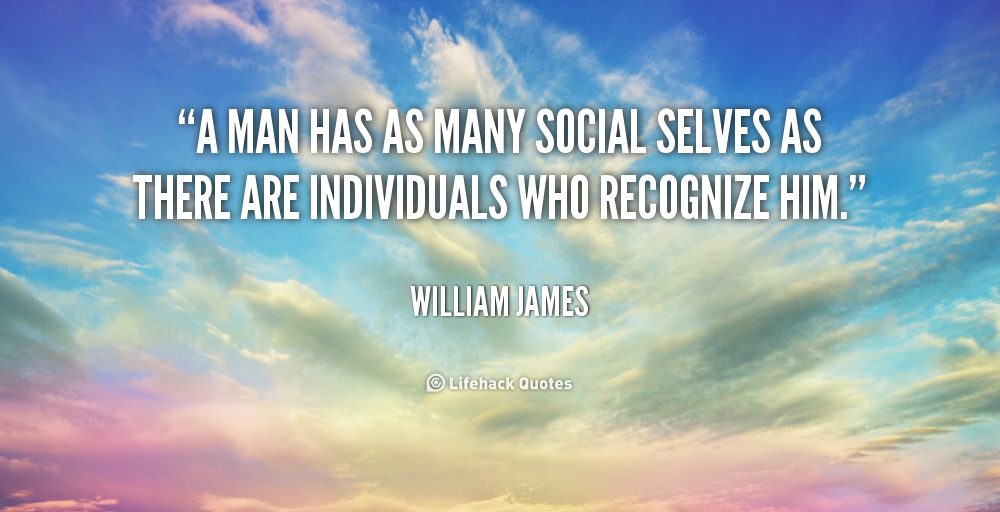
    The next day, my reading list had this post, which touched upon things that get people to change their behaviour. I remembered this William James quote used in the post from something I had seen a while back at Brain Pickings.

    Clipboard01

    (more…)