Category: Choices

  • Adaptability & Actualisation

    “It is not the strongest species that survive, nor the most intelligent, but the ones most responsive to change“, Darwin had said, in a more long-winded form. I have been in awe of evolution as a concept for a while now, and have rather prided myself on being adaptive, specially in my work context. In terms of hard skills, I still believe that’s the way to go. However, when dealing with people, both in personal and professional settings, I have realised that it is possible to go overboard on being adaptive.

    A meta prequel before I get to that. On hindsight, I am seeing an evolution in my thinking on this subject. Back in April of last year, I figured out that I am happier when I don’t judge myself.  Later, in October, I realised that there is a correlation, and probably even a causation, between my happiness and the way I treat others. I decided to fix my happiness as my compass. But when I read this post from a couple of months ago, it seems as though I had wandered off the track I had decided on.  (more…)
  • Money : AI :: Present : Future

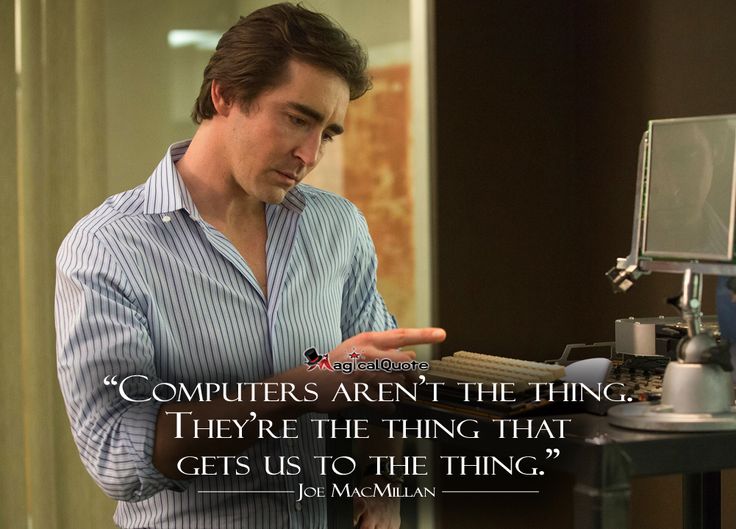
    Thing

    I might have found a remedy for the Mad Men withdrawal symptoms. “Halt and Catch Fire” – that’s where the line is from. While the show has me glued, it also made me really consider the connection between money & AI.

    A key factor that is driving the increasing adoption of AI in the work context is efficiency. Somewhere in the equation of calculating efficiency lies money, and how much of it can be saved. I am ignoring ‘time’ for now, because even that, mostly comes down to “time is money”. Jobs increasingly become task oriented and the objective is to make each task more and more efficient. If we continue that way, the pessimistic AI future is easy to imagine – it will happen in a ‘frog in boiling water’ manner, but it will happen. (more…)

  • Wills and ways

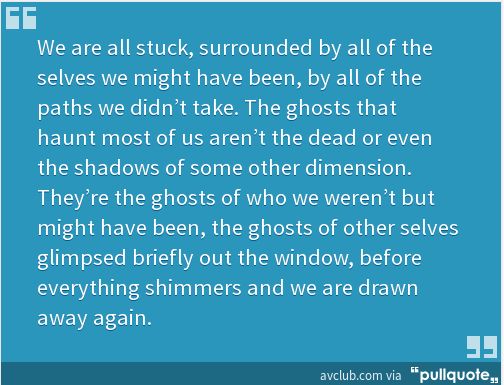
    It seems I never tire of writing about choices! Mad Men, and its reviews, is the reason for the latest bout of thinking on the subject. Very specifically, S7E6 and the review at AV Club. As the show nears its end, it is easy to see how each character’s choices have led them to a particular point. Much like our own lives. This, from the review, pretty much sums it up

    Clipboard02 (more…)

  • Dignity Gritty

    Amongst stories of soaring e-commerce valuations, this Mint story on Indiaplaza, and how it ran out of cash, was quite a sobering read. But it wasn’t the business angle that stuck with me long after I finished reading it. I somehow felt that all Mr.Vaitheeswaran was seeking, was a little dignity. I have no idea of what really happened, so I cannot comment on whether that is deserved or not.

    A few weekends ago, we were visited by someone who is a consultant for some work we needed done at home. She charged us Rs.2000 for a couple of hours, and after business was concluded, she spoke about how, a few years ago,  she had been a VP at a well known consultancy firm. Her current business, born out of her passion, was not doing well. She wanted to get back to work but was finding it extremely difficult to land a job. After she left, I wondered aloud to D, how she must feel, having to go to strangers’ houses on Sundays, and working for a compensation far below what she might have been earning. What would this experience be doing to her sense of dignity? (more…)

  • Currencies of hope

    In The Narratives of our lives, I had written about how, thanks to the advances of civilisation, many institutional narratives like religion, nation, culture etc have assumed increasing levels of importance in our lives, and how these (and our personal) narratives are probably our way of ensuring a sense of belonging. ‘The Age of Spiritual Machines‘, criticism on the concept of singularity notwithstanding, has convinced me on the cold, sanitised nature of evolution, so these days, I try to see what evolution’s play is, in these narratives.

    Thanks to a wine-induced pop philosophy conversation, I got thinking about theism and atheism. The epiphany (for me) was that they are just two sides of the same coin, and the currency was hope. Simply put, the foundation of the theist’s hope is God, and that of the atheist’s is the ability to determine his own future. ‘Our beliefs create the world we live in’, but across belief systems, hope is a critical ingredient for man’s survival. I realised that as long as we are the dominant species, hope has to hang around, or vice versa. By virtue of providing a common imaginary friend to a sufficiently high mass, religion not only addresses our need to belong, it also gives us hope. What each of us hope for is a very subjective thing, but collectively, it makes religion a really dominant narrative in many lives. When I thought about it, I recognised an even bigger force – money. (more…)