Category: Life Ordinary

  • Growth, Prosperity & Infinite Games

    One of the things that struck me in Douglas Rushkoff’s “Throwing Rocks at the Google Bus” was how much the line of thought on growth resembled the “infinite game” philosophy of James P Carse. In the former, the author explains how, as money becomes an end to itself as opposed to a means, a system built on a central currency gets into a growth trap. i.e. growth for the sake of growth. To frame it in the second book’s context, this tends to be a zero-sum game for all involved. There is a clear winner, and that winner takes all. i.e. a finite game.

    Rushkoff explains how at this point in time, platform monopolies, (e.g. Amazon, Uber, AirBnB) and businesses in general, are playing finite games. And that is how growth has become the enemy of prosperity. In the second half of the book, he calls for more sustainable (and inclusive) ways of growth. This has much in common with Carse’ definition of an Infinite game, whose only purpose is the continuation of play, and sometimes, bringing more players into the game.  (more…)

  • Please find detached

    Between stimulus and response, there is a space. In that space is our power to choose our response. In our response lies our growth and our freedom.” ~ Viktor E. Frankl

    This quote has been a favourite since I first read it, and creating that space is something that I not only constantly try to work on, but also write about – the challenges and the learning. However, this post is on a tangent – what if we delay the stimulus itself? Yes, I admit it’s quite impossible to do that with people, but what about consumption in general? Given that we are now debating the direction(s) of the ‘arrow of time’, there’s no better time to discuss that space. After all, in my consumption, I am what is called the ‘observer’, and I’m the one creating the moment of interaction.

    That wouldn’t be a problem, except for the increasing dominance of the urgent over the important. Seth Godin had a very interesting post titled “Spectator sports” about how we have taken the discourse around things of significance to the level of spectator sports because we can “vent without remorse.” A longer read in context is Helen Boaden’s commentary on the state of journalism as she retires from BBC Radio. The devices, features and services popping up around me indicate that ephemerality is trending upward. Think about the cycle – watch something live on TV, tweet about it/post on FB/Whatsapp, someone has a comment, a discussion ensues, and somehow inexplicably reaches generic areas of conflict like religion or liberalism (a variation of Godwin’s law, if you will) before the next cycle starts. Rinse, repeat. Did we have a discussion aimed at understanding each others’ perspective and expanding a worldview? More often than not, not!  (more…)

  • There is no middle path?

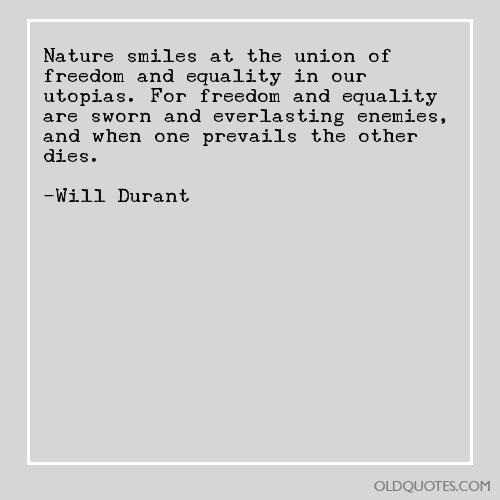
    Will Durant is a pleasure to read, and it has largely to do with the succinct way in which he expresses complex thoughts, be it in history or philosophy. In The Lessons of History (by him and Ariel Durant) I found this idea particularly thought provoking –

    346474

    Very intuitively, I have always thought the ideas of freedom and equality as ends which are allied. But a bit more thought, and helped by the Durants’ arguments, and it is quite evident that they aren’t. This reminded me of something I’d written about five years ago on happiness vs peace of mind. (read the very interesting comments by Surekha on it) (more…)

  • De-privacy

    A few unrelated incidents in the last month or so made me think about privacy, or rather, the lack of it. The first was news coverage on Bangalore Mirror where they skipped the standard blurring of the face of the accused/victim. I tweeted about it then.

    A couple of weeks later, I read the agonising story of the woman whose picture was all over social media during the Brussels bombing. It wasn’t just her harrowing experience that bothered me, but the fact that this was an exposure she didn’t want. She had no say in the matter from the time the first photo was clicked.  (more…)

  • Framing passion

    A lovely Malayalam movie came out earlier this year – Maheshinte Prathikaaram – a simple premise based on actual events. The movie is set in Idukki, which makes for a great backdrop and also provides excellent material in the form of the simplicity of the people and their lifestyles. We saw the movie soon as it released and I loved it. Very few scripts manage to  bring together an enjoyable mix (read balance) of humour and poignancy, and it requires a well chosen and talented cast to execute it well. This movie did both.

    While the principal narrative track (the revenge that is suggested in the film’s name) around Mahesh, the protagonist, is entertaining in itself, the idea around his father’s character – Vincent Bhavana – interested me a tad more. Recently, I saw the movie again, and now that I knew how it would play out, I could pay more attention to this track.  (more…)