
Category: Future

  • Re-framing employment

    For untold generations work was simply a matter of maintaining the status quo.

    Across the world, the debates on productivity, reduced work hours, 4 day work weeks, DND after work hours etc are intensifying. Add to this the narratives of “the end of employment” and the “gig economy”, (and therefore the case against full time employment) and the signs of an upheaval of our concept of work seems imminent. I can vouch for that from my own experience as well – expressed to a certain extent in earlier posts –  The Entrepreneur & the Professional, and Re-skill. My posts on AI and its impact on employment are also related to this in a “bigger picture” way.

    It is personal in a different way too, because it’s increasingly an application of a broader life framework and worldview. In fact, I was accusing myself of over thinking this, until I read this fantastic piece – How Not to Let Work Explode Your Life. That’s where the quote at the start has been taken from. It traces the origin of the clashes we are facing in our work-life environments now to trends that have been forming for centuries. Long, fascinating read, and a confirmation of many of my complicated thoughts! (more…)
  • Money : AI :: Present : Future

    Thing

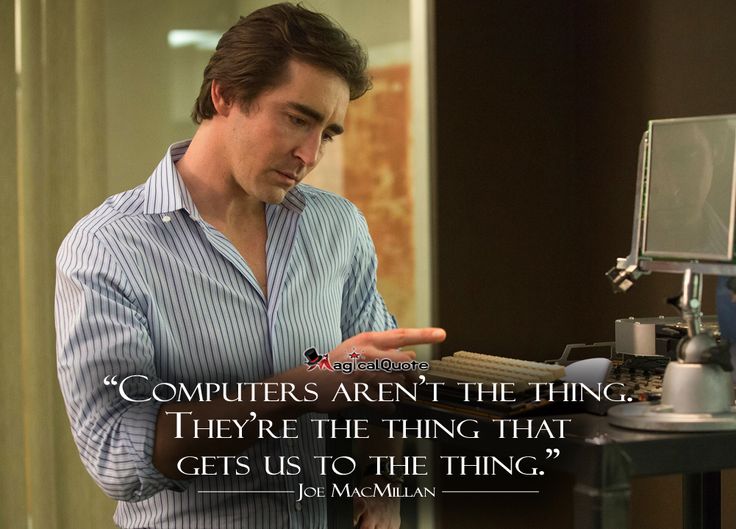
    I might have found a remedy for the Mad Men withdrawal symptoms. “Halt and Catch Fire” – that’s where the line is from. While the show has me glued, it also made me really consider the connection between money & AI.

    A key factor that is driving the increasing adoption of AI in the work context is efficiency. Somewhere in the equation of calculating efficiency lies money, and how much of it can be saved. I am ignoring ‘time’ for now, because even that, mostly comes down to “time is money”. Jobs increasingly become task oriented and the objective is to make each task more and more efficient. If we continue that way, the pessimistic AI future is easy to imagine – it will happen in a ‘frog in boiling water’ manner, but it will happen. (more…)

  • The redefinition of life

    This article about the man who was one-upping Darwin interested me a lot, because of the question he asked – What qualifies something as alive or not. His paper, currently under peer review, explains theoretically how, under certain physical circumstances, life could emerge from nonlife. Arguably, consciousness is the factor that separates life from non life. However, there’s also a new theory that proposes that consciousness is far less powerful than people believe, serving as a passive conduit rather than an active force that exerts control. The article compares it to the internet, and says that just like the internet can be used to discover, share, buy etc, it’s actually the person on the web/mobile who is actually deciding. It even argues that consciousness is not made to study itself.  (more…)

  • Re: Org

    Timehop, which takes me on a nostalgia trip everyday, reminded me recently that it has been a year since I wrote The Change Imperative. The opening slide features a quote – “If you don’t like change, you’re going to like irrelevance even less“- attributed to Gen. Eric Shinseki. In the times we work in, I believe this cannot be overstated, not just for individuals but for organisations as well. Even as business dynamics force changes on the external manifestation of an organisation – the brand – any organisation that faces a client/consumer will also be forced to adapt its internal structure and practices to suit changing needs.

    For a long while now, I have been ambivalent about processes. I have worked in an era, and in organisations, where processes had a way of getting things done. But in parallel, I have also felt that many a time, processes have a way of forgetting what they were made for. The output overshadows the outcome. Over the last few months, my surmisal has been that, to use a Taleb classification, processes can make an organisation robust, but not anti-fragile. This very informative post by Aaron Dignan of Undercurrent – The Last Re-Org You’ll Ever Do -highlights many ways that organisations have tried to change standard structures and practices, and even suggests a six step path to reorganisation. (more…)

  • Inequality & Technology

    A few weeks ago, I’d written about inequality and the role of meritocracy in shaping its future. Another related force, whose influence has been rising rapidly, is technology. I had written about it earlier in a post – Algorithms of Wealth – and my thoughts ended in at least three directions! At least two are relevant here. In the post, I had mentioned the abundance that The Second Machine Age promises and whether the disparity we see now is an inevitable step towards that. But I had also wondered whether any notion of sustained reduced disparity is a lost cause and that as we advance further, the gaps will keep widening.

    A recent HBR article titled The Great Decoupling, based on an interview with the authors of The Second Machine Age, indicates that the authors themselves now believe in the second path – while digital technologies will help economies grow faster, not everyone will benefit equally. In my earlier post I had also brought up how I had hoped that the internet would be the great leveller, and my disillusionment since then when I realised that it created its own hierarchies. (on a related note, read) (more…)