Category: Future

  • On books and realness

    Optimized-shelf copy

    The books on the bookshelf. Each with a story to tell – when I bought them, where, and why. Some of them are gifts. There is a tangible sense of our history (theirs and mine) and collective mortality when I run my hand across their spines, and flip through their pages. Sometimes they also contain the stories of unknown others. Many of my earliest memories are book -related – trips to Paico, Amar Chitra Katha purchased at railway stations, and so on. Some of the reasons why, despite not being the calibre of reader (and collector) JP Rangaswami is, I can still easily relate to why he is not buying a Kindle. Because I’ve had a love affair with books ever since I can remember as well.  (more…)

  • The transience of consumption & marketing

    Rajesh wrote a very interesting post recently on ownership, and how it would impact brand/marketing/purchase. My own view of ownership has undergone a massive change in the last couple of years, thanks to a combination of factors like increasing life spans, the changing nature of jobs, and the rise of on-demand services. Add to that extreme income disparity, economic flux, and technological advances that have the potential to create obsolescence faster than ever before, and I’m reasonably sure the concept of ownership is up for a revamp.

    Rajesh brings up two factors that caused previous generations to value ownership – financial success (trophies) and asset building. If I have to analyse my own motivations in the past, both of these would find a place. If I dig deeper, I also see a couple of others. One would be lack of access on demand. (eg. music/movie CDs, books, even say, photographs) You can see how streaming and cloud storage have changed this. The other subtext I can vaguely discern is ‘control’. A car, home, all lend an air of certainty and being in control. Maybe it has something to do with growing up in middle class India which had quite a lot of experience with scarcity. But in the line of anti fragile thinking, the key skill going forward would be agility rather than trying to retain control. In essence, a whole lot of cases for ownership that no longer seem relevant.  (more…)

  • A worked up future

    One of the most fascinating reads I’ve come across online recently is Breaking Smart. I’ve only reached Chapter 5 of 22 in Season 1, but it’s already given me a whole lot of insights and perspectives not only on its primary premise – “software is eating the world” – but also on the future of work and employment, an area I have been very interested in for a while now. Chapter 3 (Getting Reoriented) for instance, dwells upon how classic generational conflicts of previous eras is playing out as an economy-wide technological disruption nowThis chapter also talks of the dilemma that pretty much everyone faces these days, (though I can’t be sure how many have thought about/acknowledged this) should I abandon some of my investments in the industrial social order and join the dynamic new social order, or hold on to the status quo as long as possible?  (more…)

  • Empathy & Monoculture

    Thanks to Shefaly, I saw this excellent video on Aeon about “outrospection.” As opposed to discovering who we are and what we do in this world by looking inwards (introspection), “outrospection” is about discovering it through cognitive empathy – consciously looking to understand the perspectives of others, and going beyond the labels we might have made for them. The idea is that outrospection is the ask of the times we live in, and not introspection.

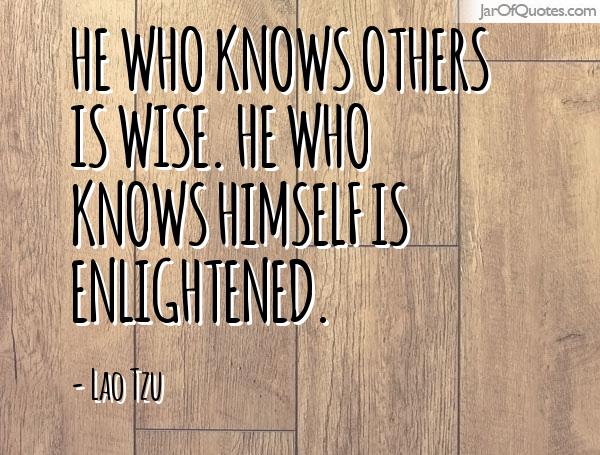
    I quite disagree with that either-or view, and think both have their place in this era. They both work in tandem. For example, to let go of my prejudices, I’d have to understand why they exist in the first place and then proceed to change my perspective. Here outrospection follows introspection. Once I let go of my biases and listen more objectively, my worldview and my view of myself starts shifting again. In this case, introspection follows outrospection. As Lao Tzu says,

    3f3f3c8752b634128418895a84c26f6b (more…)

  • Algorithms, the institution of the future!

    Tom Goodwin’s precise summing up of the shifting business environment is now legend – Uber, the world’s largest taxi company, owns no vehicles. Facebook, the world’s most popular media owner, creates no content. Alibaba, the most valuable retailer, has no inventory. And Airbnb, the world’s largest accommodation provider, owns no real estate. Something interesting is happening. 

    Institutional realignment is now on an accelerated path. In this superb, nuanced post titled ‘Uber and AirBnB make the rules now – but to whose benefit?“, Vili Lehdonvirta brings up very interesting perspectives. (To paraphrase)

    – If buyers switch to a new market, sometimes sellers have no choice but to follow, irrespective of whether it brings them gains or losses (eg. if there is very little business outside of Uber to be had)

    – Even if everyone participates with interests intact, the collective effects on society may not always be positive (eg. AirBnB rooms causing nuisance to neighbours)

    – These conflicting interests are usually reconciled by political institutions, but they face the challenge of siding with incumbents or upstarts.

    And towards the end of the article, this very important thought – these new platforms appear to provide access to those who have been denied it by the institutions and processes thus far, but is it that simple? In this context, the new jobs being created are quite different from the typical ‘job’ description. That brings me to a key institution – the traditional workplace.

    (more…)