Category: Augmented Human

  • Artificial Morality

    It wasn’t my intention, but the title did make me think of the morality we impose on ourselves, and that perhaps has some amount of implication on the subject of this post too. The post is about this – we seemed to have moved from debating artificial intelligence to the arguably more complex area of morality in robots!  When I first read about robots and ethical choices, (did they mean moral?) my reaction was this


    It’s probably a good time to discuss this, since a robot has recently become a Board member in a VC firm as well. Ah, well, in the Foundation series, R. Daneel Olivaw pretty much influenced the mental state of others and controlled the universe. That seems to be one direction where we are headed. The Verge article mentions funding for an in-depth survey to analyze what people think about when they make a moral choice. The researchers will then attempt to simulate that reasoning in a robot. They plan to start with studying moral development in infants.

    Thanks to this article, I learned that there were different kinds of morality – operational morality, functional morality, and full moral agency. This is all fascinating stuff and my mind was racing in multiple directions. For one, did morality develop because living in groups was more advantageous from a survival perspective and to live in groups, there had to be some rules that governed this coexistence? Did this ethics then evolve into an acceptable moral framework? These may or may not be in line with our individual instincts. Does that explain why each of us have a different moral code? If that is so, can we ever develop a uniform code for robots? To be noted that ethics are a tad more objective than morals, so they might be relatively more easier to ‘code’.

    I also began to think if the augmented human would serve as the bridge between humans and AI and as he develops, will find ways to transfer moral intelligence to AI. Or maybe it would just be logic. Alternately if, as per this awesome post on what increasing AI in our midst would mean, if we do start focusing on human endeavours beyond functional (and driven by money alone) maybe our moral quotient will also evolve and become a homogeneous concept.

    In Michener’s Hawaii, one man of science and spirituality discusses dinosaurs with a man of spirituality. I shared this on Instagram, wondering if humanity will be talked about in this manner.
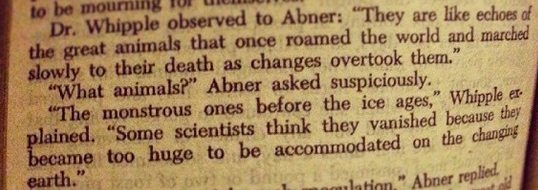
    Hawaii

    The changes could be the ones we’re causing nature to make and ‘huge’ could be our gluttonous consumption of resources. In the context of robotics and morality, I immediately thought of Asimov’s Zeroth Law “A robot may not harm humanity, or, by inaction, allow humanity to come to harm.” What would happen when one set of humans begin to do something that might harm humanity? What would a robot do?

    The answers, are evolving. It’s a good time to be human, and to be able to experience wonder.

    until next time, moral science

    P.S. On a  related note – Bicentennial Man – RIP Robin Williams :'(
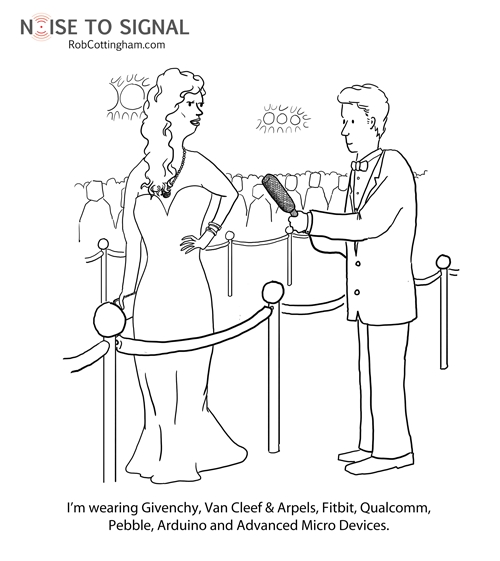
  • The era of wearables

    In the post on the Internet of Things last month, I’d mentioned two narratives on social products that I considered were working in tandem to shape the future of marketing, consumption, and living itself. Both using sensors – one on things (IoT), and the other on humans (Wearables, though I stubbornly use Techsessories!)  This post is on the latter.

    Why I think it matters: Though nowhere remotely close to Chris Dancy levels, I have been interested in this for a while. As I mentioned in my Personal API post, I see it as an evolution of my lifelogging pursuit – from logging in experiences to sensors automatically picking up data – and something that is highly relevant to my area of work – brands. In the big picture, I also see this domain as a key player in the evolution of our species – from our persistent movement towards immortality (physical) as well as, what I hope will be, a more gradual steps towards mindfulness. (mental, emotional)

    What is it? Smartwatches are just the beginning, and at a broad level, wearables can already be categorised into

    (Some statistics, a primer, and a good classification to broaden your perspectives)

    Where is all this going? For the scope of this post, let’s briefly look at the impact/deliverables from three points of view

    Consumer: There are quite a number of views (read concerns) that wearables are probably the first step towards turning us into cyborgs. (what I refer to as the augmented human here) There is another line of thought that wonders if all of this is taking us closer to ‘sofalarity‘. I can argue the Hug Shirt both ways! I wonder if, as we race towards singularity, there is an unconscious adaptation that our species is going through to survive, or continue to thrive. Personally, I like to think that technology is giving me the means to first quantify, and then use that data (converted to information and then to insights) to consistently work towards being a better human. ( a qualified self, so to speak)  I have already taken the first step with Goqii. While there is no dearth of trackers, I found their ecosystem approach interesting. I also envision creation of personal APIs becoming easier in the next few years, allowing us to store, analyse and transmit data and information to others.

    Ecosystem: At one level, there is going to be some effort in making wearables really mainstream. There is definitely going to be resistance. The answer, as always, is in using wearables as a means to address human needs. On another level, while devices are expanding in scope, quality and sheer numbers, as Chris Dancy mentions in the interview (linked earlier) interoperability is still a concern. (just as in the case of IoT) It’s not just wearables talking to each other, but talking to a larger universe of the IoT.

    Brands: This domain has seen its share of brands – standalone ones as well as majors like Apple, Google and Samsung who want in on the action. There are fashion brands too, and I can imagine a near future when technology will be a hygiene factor in many kinds of apparel. While this happens on the device side, the data generated finds application across spheres – think, for example, how this can be applied in the health domain, (from medication to insurance) employment, sports and so on. Thus, there are many roles for brands – a standalone device and ecosystem with minimum connectivity, or devices and/or ecosystems that work in a complementary manner with another set and provide a product/service. As privacy concerns escalate, I believe the role of the consumer will be the key one to watch. This is the opportunity for brands to connect its business purpose to the consumer’s narrative. Brands should work towards gaining the trust of consumers early on and create seamless platforms for connecting devices, data, and users, working towards a common shared purpose.

    Wearables

    (via)

    From not believing that the world needed more than five computers (1943), we have reached more than 1.8 billion smartphones (source) that arguably do more than what a ‘computer’ can. So, a wearable (or a set of them) soon superseding a mobile is very much in the realms of possibility. As functions evolve, form factors will change – that’s inevitable, and on shorter cycles. The last decade in particular  has seen a massive technological evolution, but I think this is just the beginning – we’re at the cusp of a sea change in the way we live and work – about to push beyond the known boundaries of the body and mind. In the context of this evolution, Carl Jung’s profound statement would be a good one to remember – “Who looks outside, dreams. Who looks inside, awakens.

    until next time, wearabouts!

    P.S.  If the subject interest you, do follow my Techsessories and Health boards

    P.P.S. Need a #lulz worthy wearable strategy – Check this out!

  • The path to immortality

    I’d written earlier on how brands could use an individual’s data (the personal API) to fit themselves into his/her narrative and had used Nike as an example.  But this data could also be used by fitness and health companies to discover ‘fault lines’, gradually delay wear and tear, and one day, totally prevent a machine shutdown. This video – A Day in the life of Tim Ferriss (watch for a minute from 3:25) – gave me an idea of how we might be moving faster in that direction because of  data collection.

    Back in 2011, in ‘God in the details‘, I’d opined that over a period of time, when our data capture capabilities were evolved enough, and we had a lot of data on people on a lot of their behaviour, consumption etc, we would potentially be able to answer the most profound questions about our existence, purpose etc, and unlock further dimensions. I was extremely happy to read the same thought in this (long, but) amazing read called ‘Navigating Stuckness‘. “I could sit safely at my desk and write computer programs to gather vast amounts of Internet data, which I thought could finally answer timeless questions like “what is love?” and “what is faith?” with precision and clarity.

    On one hand, data could help us in our path to immortality, and on the other, it could provide us the answers to fundamental existential questions. I wonder what would happen first, because, as I wrote in PhilosoRapture, I also wonder if those questions would remain relevant once we became immortal.

    Meanwhile, the other track to immortality that is rapidly developing is that of the augmented human, where human parts (including the brain) will be replaced by mechanical replicas. We’re only a part of evolution, as this wonderful, humbling video would show, and it is probably only our ego that makes us believe (if we do) that we’re the endpoint. Maybe, there will be a species later, of whom we’d be probably be creators, for whom our questions will seem irrelevant and who will have their own sets of answers to seek.

    cs

    (quote via, image via)

    So it would seem that whichever way we approach immortality, by the time we get there, chances are, it may not be that significant.

    The year we conquer morality, by the way, is 2040, as per Ray Kurzweil. I’ll be 62 then, or maybe not, or maybe it won’t matter, or maybe…  🙂

    until next time, live long and proper 🙂

  • PhilosoRapture

    In one of the slides in the presentation I shared last week, I had touched upon institutional realignment, and ‘health’ as one of the drivers. But the origins of this thought go back at least 4 years to The Man..the machine, and  Life…streamers, and the subject of immortality and the path to it – the augmented human – have since then made several appearances here – ‘The Immortal’s Reality‘, ‘Back to Eternity‘,  ‘Your Next Avatar‘, and Remember the Feeling to name a few. As I read these posts recently, I realised (again) that the possibility of the current version of the human being just another step in evolution is a humbling one.

    On one hand, I remembered the story of Yudhishtira and the Yaksha, and the answer to a part of Question 9. The Yaksha asks, ‘What is the greatest wonder?‘ and Yudhishtira answers “Day after day countless people die. Yet the living wish to/think they will live forever. O Lord, what can be a greater wonder?” On the other hand, I also read that Google (which shares its first two letters with God) has invested in a company that will work on combating aging and disease. Google is not the first company to attempt this, and scientists are already figuring out how to reverse ageing, but it does have the Ray Kurzweil advantage. (also read) This is promising to be a fight to the death! 🙂

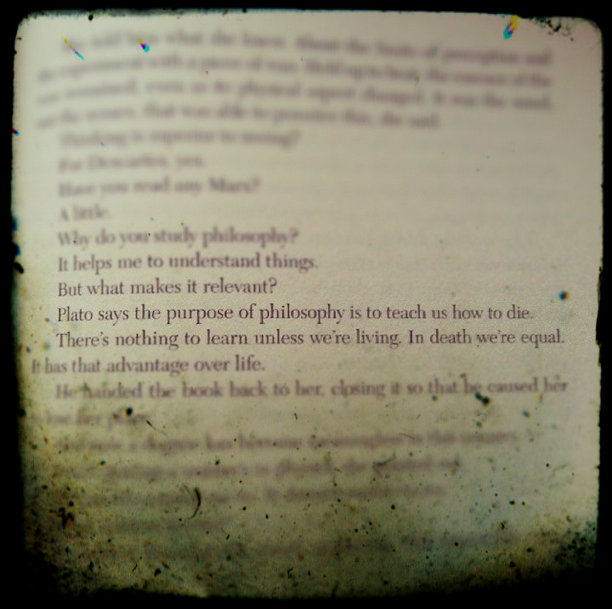
    On the same day that the Google article was published, my favourite thinker on the subject – Scott Adams – posted an article on our ‘choice’ of immortality- one was the Google way of doing away with aging, the second was we would be able to transfer our mind to robots, and the last was transferring our minds into virtual worlds. I am inclined towards the augmented human route – body parts getting replaced one by one, until we become a ‘Ship of Theseus‘ and a perfect example of the paradox. But one way or the other, it seems as though we’re destined to be immortal. The funny thing is that despite that, the question would remain – ‘what is life and why do we exist?’ I wonder if an eternity would be enough to answer it. Or probably, our state of consciousness would be such that we wouldn’t feel this urge for an answer. After all, according to my 500th photo on Instagram,

    Clipboard02

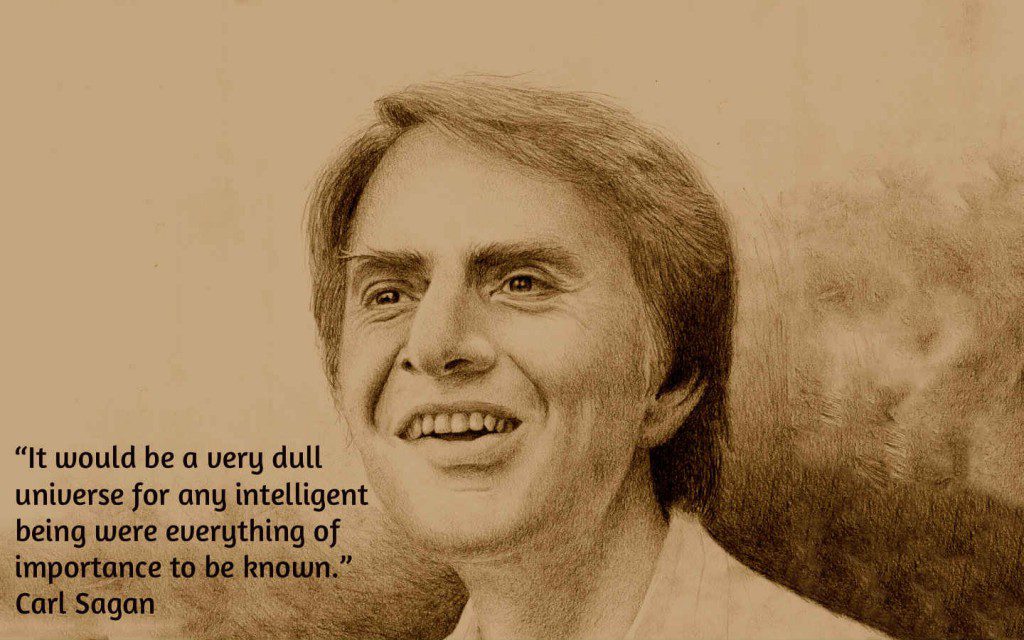
    The end of death is probably the end of philosophical questions as well. Whether that is a good thing is an open question. Or not. After all, Carl Sagan did say “I think if we ever reach the point where we think we thoroughly understand who we are and where we came from, we will have failed.” 🙂

    until next time, cogito ergo hmm

    P.S. Not a big fan of donuts, but a fantastic take on the subject of life and its context – http://imgur.com/K6EKeRW

  • Emotion as a Service

    More than a year back, I had written about institutional realignment and had briefly mentioned the institutions of marriage and parenting. ‘The currency of relationships‘ made me think of this, and family – immediate and extended – as a societal construct/contract/ institution, and probably even as a tradition. Where we are born, and whom we are born to, are apparently out of control, but we do have an illusion of control courtesy the choices we make as we go along. Thanks to these choices, our lifestyle and our perspectives may follow a trajectory that is totally different from the circumstances and people we grew up with/in. This is not just about the people from our childhood/youth, but is a continuous process through life. Each of us find our own ways to deal with the constant flow of people through our lives. These are again choices, and like most choices involves some amount of sacrifice and bring with them their own set of consequences.

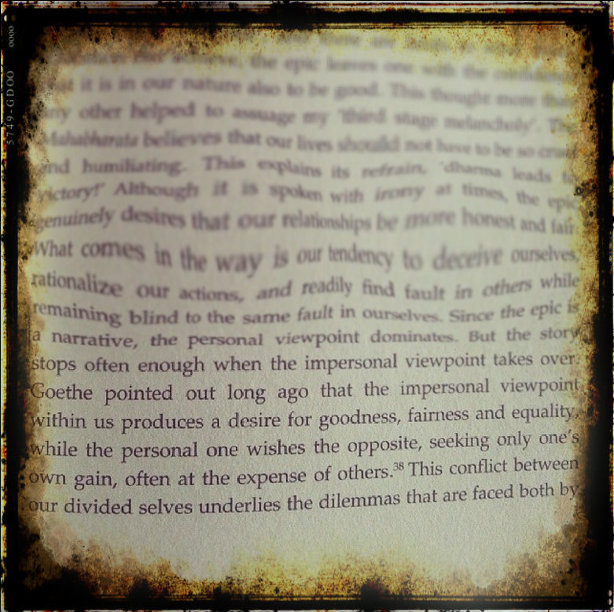
    Clipboard02

    I loved that Goethe paraphrase, because I think it sums up our relationships very well. At the risk of sounding cynical, (or receiving a ‘speak for yourself’ comment) I’d say that we’re increasingly becoming selfish as a species. I have always had the notion that most relationships are contextual, and it would be difficult to scale our emotions/feelings for others for an indefinite time frame. Yes, I do acknowledge there are exceptions, but that’s what they are – exceptions. Do a quick test and find out how many people across your life you’re still in touch with – bouts of nostalgia not included?

    It is with all this as the backdrop that I read Scott Adams’ “The Future of Marriage“. It articulates very well a thought that had crossed my mind earlier. (Of course, he obviously explores it way better than I could have) He deconstructs the institution of marriage and argues that marriage made sense “when the world was inefficient. You married a person nearby who could provide most of your important needs while hoping your lesser needs could also somehow be met.” Now, he says, the internet has allowed us to have a barter economy of relationships. In other words, a virtual spouse comprised of a dozen separate relationships. He tempers everything by saying that in the future, marriage may be one of the many options available. By sheer coincidence, and in a different context, I came across this quote attributed to Steve Macone “A tradition is a habit whose logic has faded“.

    I thought about this in the context of the expectations I had mentioned in the ‘currency of relationships’ post. If the institution of marriage can have a barter economy, why not other relationships? After all, isn’t every relationship a barter at its core? It’s just that we are rarely comfortable with voicing our expectations in the case of an emotional ‘transaction’, quantitatively or qualitatively. (generalising) Parents expect their children to look after them when they are old, in return for bringing you up; relatives expect you to return the favours they once did for you, and so on.

    So who knows, maybe our pace of life and our need to be (seen as) fair in all our relationships will conspire to form a barter ecosystem that offers emotion as a service. It is possible that an alternate path to prosperity might take us in a different direction, but in the era of the quantified self and the augmented human, when we slowly transition our selves into the cloud, maybe ‘Emotion as a Service’ (like)  is not an impossibility. What do you think?

    until next time, a qualified self