Category: Philosophy & Worldview

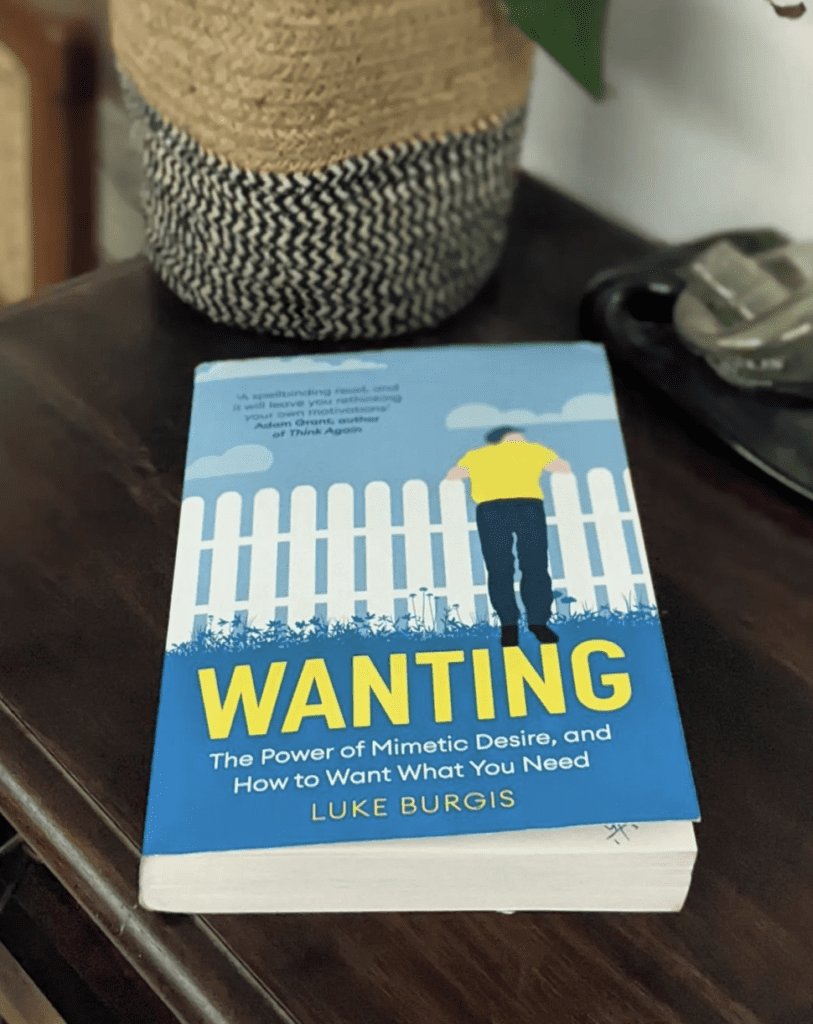
  • Wanting: The Power of Mimetic Desire, and How to Want What You Need

    Luke Burgis

    Schopenhauer is believed to have said “A man can do as he wills, but not will as he wills.” We can replace will with ‘want’ and it still holds. But we have convinced ourselves otherwise – that we desire things independently. Based on the work and philosophy of René Girard, and his own experiences, Luke Burgis sets about dismantling this notion – what the book calls the Romantic Lie – self delusion.

    If, in the free will debate, genetic and environmental determinism hasn’t made an impression on you, Girard postulates that most of what we desire is mimetic (imitative) and not intrinsic. We want what other people want. These desires are different from needs. Think of the latter as the two bottom rows of Maslow’s hierarchy and the former as the top three. And our choice of these desires are courtesy models – people or things that show us what is worth wanting. Look hard enough, and in all of your consumption and behaviour – from the choice of travel destinations to life partners, you will discover them. 

    Mimetic desire can lead us to destructive or productive cycles, and the book explores both paths. In the first part, we learn how mimetic desire starts in infancy to its evolution in adults, how it changes according to the person’s relationship with the model, how it works in groups (and causes societal conflicts) and how society has found ways (scapegoat mechanism) to diffuse it. This section has an excellent example of ‘models’ in action – Edward Bernays popularising smoking amongst women at a time when it was quite taboo. Another good example is that of a Romantic Lie – the efficient markets hypothesis – and what has been its anti-thesis consistently – Tesla. Musk clearly understands the power of mimetic desire really well. Dogecoin, anyone?

    Desire, according to René Girard, is always for something we think we lack — or else it wouldn’t be desire at all. And hence the model – the one who has what we lack. The person’s relationship with the model – either people belonging to the same time, place or social sphere (Freshmanistan, our immediate world) or outside it (Celebristan, outside our ‘world’) also has an impact on the kind of mimesis that happens. We don’t really compete with the latter, in fact we imitate them freely and openly, but with the former, we compete. [Sidebar – The use of ‘stan’ and the usage of phrases right below chapter titles indicated to me that the author probably has Taleb as one of his models]

    In a simpler world, our Freshmanistan was limited to those we actually were in touch in reality. And then came Facebook, which gave us practically infinite models. Scrolling, judging, comparing, imitating, seeking validation and praise….and feeling angsty! Burgis gives the example of one friend introducing another to baking, and how the desire to become the better baker locks them in mimetic rivalry that doesn’t end well. 

    A related part is about how the value of experts has shifted from people with a deep understanding of the subject to those with mimetic value. Just as we used to make fun of the Kardashians as ‘being famous for being famous’, we have experts who are ‘experts at being experts’. Also interesting that apparently Steve Jobs had a model too – Robert Friedland, a fellow student in college. And the example of Zappos, which was once a model, but imploded. 

    Mimetic desire spreads through culture, and creates competition and conflicts in societies. Early societies used sacrifice and the scapegoat mechanism – pinning the blame of the conflict on a specific entity – to diffuse the situation. It continues to this day – fired CEOs and coaches, ‘cancel culture’ etc. All parties silently agree that now that the conflict has been resolved, things will get better. There is an interesting perspective that the story of Jesus survived because though the mob tried to make him a scapegoat, it caused an enormous division in society, and one section called out the scapegoat mechanism – the folly of the crowd is shown to the reader of the scriptures, and hence it was unique for its time. 

    In the second part of the book, the focus is on how to break out of this cycle using techniques like disruptive empathy and intentionally discerning between thin and thick desires. Empathy is defined as the ability to share another person’s perspective without imitating or identifying with them to the extent of losing one’s own individuality. Developing thick desires, which endure and provide meaning, are a good way to not get distracted by thin, mimetic desires. Another interesting concept is ‘calculating thought’ and ‘meditative thought’. The former is the default, and the latter is slow, patient, and in the current usage of the word – nonproductive. This part also has a section on how to apply this to leadership, and ends with a perspective on the future of desire. 

    Mimetic desire permeates everything from the educational system to social media to venture capital, hijacking the original purpose of these entities. At an individual level, it impacts our work, relationships, parenting, and distorts the way we live our life. This book gives us a good perspective on making a different kind of attempt. By asking ourselves, why do we want what we want, really? 

    P.S. I tried reading Girard’s original work and couldn’t make a lot of headway. This is more accessible, and at some point, I am going to give the original work another shot.

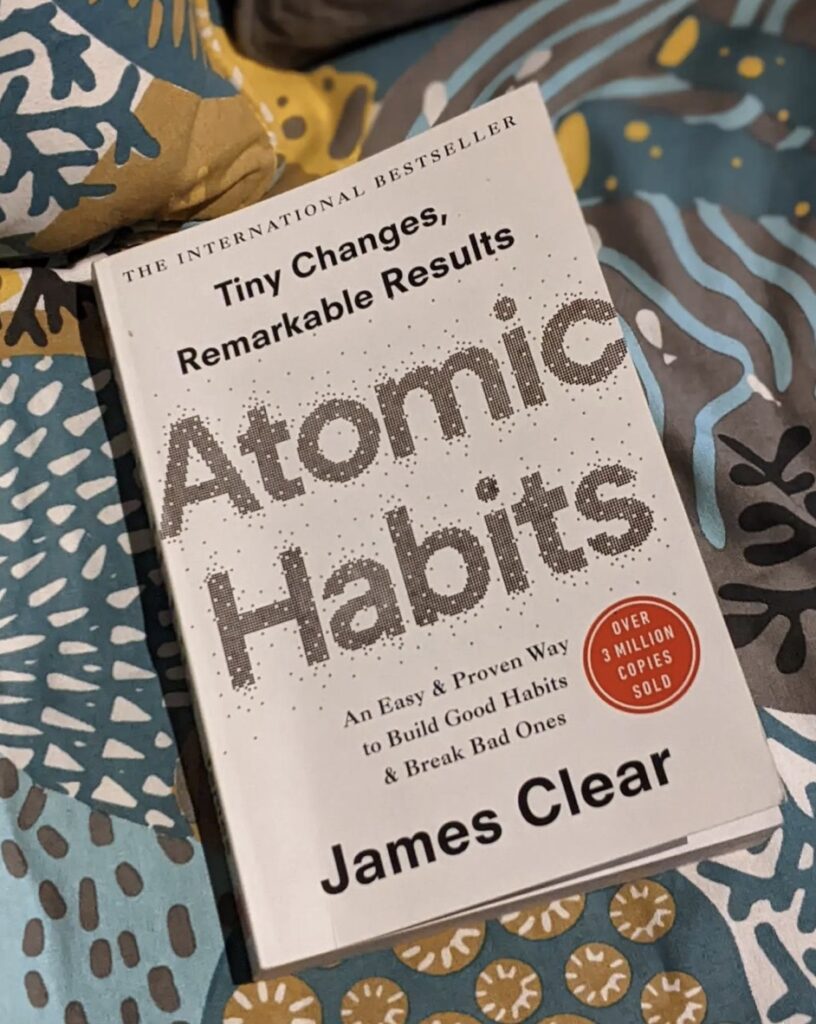
  • Atomic Habits

    James Clear

    Given that I read The Power of Habit a while back, and have been a subscriber to James Clear’s newsletter for a while, I should have read this a long time ago. But better late than never. 

    He begins by explaining how small changes can make a big difference over a period of time. Positively and negatively. ‘Habits are the compound interest of self-improvement.‘ Hence the word atomic – small, part of a larger system, and the building blocks of great results. 

    I think one of the best insights of the book is the three layers of behaviour change framework – outcomes, processes, identity. While most people focus on outcomes, systems (processes) are a better way. ‘ You do not rise to the level of your goals, You fall to the level of your systems.‘ But the best way is to focus on the ‘identity’ – the person you want to become. The first stop is to figure out one’s habits, which tend to be quite a few over a period of time. As per research, apparently 40-50% of our daily actions are habits. And many of them are not even consciously-created ones. A habit, as Clear brings up right at the beginning, is a routine or behaviour that is performed regularly – and in many cases, automatically. From an evolutionary perspective, ‘Habits are, simply, reliable solutions to recurring problems in our environment‘. And that means, nature has its own way of creating things that reduce our cognitive load. 

    He then proceeds to breaking down the process. The process of building a new habit (or getting rid of one) has four steps – cue, craving, response, and reward. Correspondingly, to create a good habit, make it obvious, make it attractive, make it easy, and make it satisfying (and their inversion to get rid of a habit). These make up the Four Laws of Behaviour Change. The remaining chapters are all about bringing this to life. From managing one’s environment to the role of friends and family, fixing procrastination, using commitment devices and motivation rituals, reducing friction, how to stick to good habits, and even automate them when possible. By the time you read the end of this part, you have a fantastic table that can be quite easily applied. 

    I liked the last 50-odd pages the most because of my own interest in the topics. The perspectives on the role of nature and nurture – ‘genes can predispose, but they don’t predetermine‘, and how to determine the game where your odds of success are higher. Habits are easier when they align to one’s natural abilities. ‘Boiling water will soften a potato but harden an egg. You can’t control whether you are a potato or an egg, but you can decide to play where it’s better to be hard or soft.’ 

    He also brings up the downsides of even good habits, the importance of reviews and realignment, and how one can break the beliefs that are holding one back. Becoming the best version of yourself requires you to periodically edit your beliefs and worldview, and expand your identity. 
    Some of the frameworks have been inspired by others (and Clear makes sure he mentions those) but through framing, easily relatable examples, and ways to implement them in daily lives, he makes application very easy. This is a must-read book, especially if you’re in your 20s and 30s. From experience, compounding is probably the most underrated phenomenon. The earlier you start, the better. ‘The costs of your good habits are in the present. The costs of your bad habits are in the future.’

  • The Stranger in the Woods: The Extraordinary Story of the Last True Hermit

    Michael Finkel

    Michael Finkel begins the book with a quote attributed to Socrates – “How many things there are that I do not want.” It’s a perfect start because the subject of the book – Christopher Knight – eschewed everything that was non-essential to himself back in 1986, the year that Chernobyl happened, when he was twenty. In his first road trip, he drove till he nearly ran out of gas. “I took a small road. Then a small road of that small road. Then a trail off that.” And then he disappeared for the next twenty-seven years, in the woods of “the maine land of New England”, Maine. Living less than three miles from society, and yet inhabiting a world that was only his. 

    He ‘raided’ camps for his food, fuel, entertainment and other requirements. Books were a weakness – spy novels and science fiction to Ulysses, his favourite was ‘The Rise and Fall of the Third Reich’. Never extravagant, he only took what he absolutely needed, and felt deeply guilty about that. Reactions to him ranged from a deep admiration for the life he chose to hatred for the feeling of insecurity he created among residents. Eventually, he came to be known as the hermit. One whom no one could track, because he didn’t even leave footprints. He tried not to even give a hint that the place had been robbed, even refitting doors if it came to that! Though sensors and surveillance tools became more efficient, he managed to evade them. A camp for the disabled was ‘his private Costco’, and that’s where he was finally caught. 

    He didn’t really know why he chose to do this, but he was an introvert who found interactions with society and its rules tedious. Hermits are usually of three types – protesters, pilgrims, and pursuers. Japan has a million of the first kind – hikikomori – dubbed the lost generation. Most religions have the second kind. The third are the most modern, and they seek ‘alone time’ for what they want to do -from artistic freedom to self discovery. 

    Knight left because ‘the world was not made to accommodate people like him.’ ‘It wasn’t so much a protest as was a quest; he was like a refugee from the human race. The forest offered him shelter.‘ His plan was to eventually die in the forest. After he was apprehended, he spent some time in prison. In his own way, he tried to adjust. But he just couldn’t socialise, even his meetings with the author were awkward and full of silence. When the author saw him last, in court, after he had been living with his family for a while, he seemed compliant, where once he had been full of defiance. ‘He had seen the bottomless nonsense of our world and has decided, like most of us, to simply try to tolerate it‘. 

    I found the book deeply poignant. There is something noble about a person whose response to the way of the world was to quietly withdraw from it. Twenty seven years is a long time to survive outdoors, especially in a geography whose winters are cruel. And yet, that’s where he found peace. 

    Favourite quote: Not till we have lost the world do we begin to find ourselves ~ Henry David Thoreau

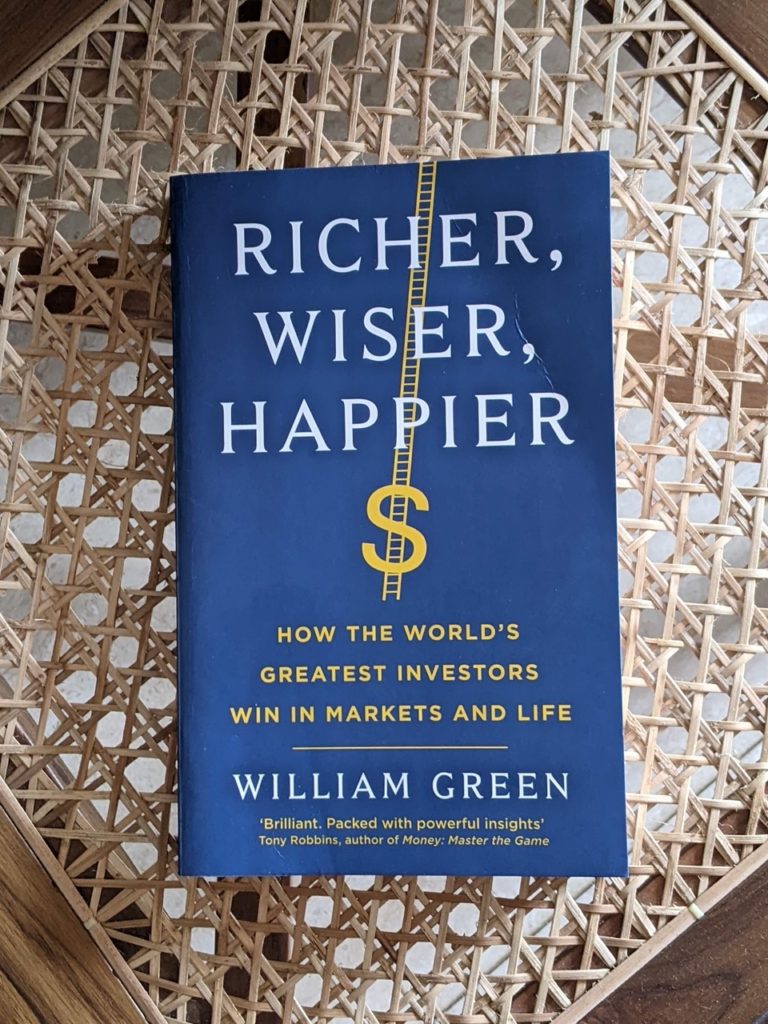
  • Richer, Wiser, Happier: How the World’s Greatest Investors Win in Markets and Life

    William P. Green

    As a journalist and for this book, William Green interacted with over forty marquee investors – from Warren Buffett and Charlie Munger to Jack Bogle, Sir John Templeton, Howard Marks, Nick Sleep & Qais Zakaria, and many others whom I encountered for the first time. With access to not just their behaviour and rituals, but even their homes, relationships and deepest philosophies, Green is able to glean insights and synthesise them into great lessons for investing, and to some extent, life. 

    There are fantastic stories – Mohnish Pabrai’s relentless cloning, John Templeton’s cold remorseless discipline (in evaluations of others and self), his willingness to be lonely, and that amazing ‘short’ during the dot-com boom and bust when he was in his late eighties(!), Howard Marks’ lessons of humility from Japanese Buddhism, Eveillard’s view on not depending on the kindness of strangers (amen), McLennan’s appreciation for entropy being the ironclad rule of the universe, Greenblatt’s preference of a sensible and good enough strategy over an optimal one, Tom Gayner’s approach of small, incremental advances over long stretches of time, Geritz’s ‘price of a hotel room’ heuristic in a country she’s considering for investments, Kahn’s prudent thoughts on preserving wealth, and Munger’s principles for avoiding idiocy, and his seminal lesson to Buffett- ‘It’s far better to buy a wonderful company at a fair price than a fair company at a wonderful price.’ And yes, omnipresent is the towering godfather whose influence is visible in many conversations – Benjamin Graham.

    Their philosophical inspirations range from Vivekananda and Buddha to Marcus Aurelius and Epictetus to Robert M. Pirsig (Zen and the Art of Motorcycle Maintenance). The great truths, as Green mentions, are deceptively simple, but few have the wisdom, the focus, and the nerve to create and apply their philosophy, while subtracting everything else, over extended periods of time. 

    After I finished reading, I wondered whether there is an over-indexing on richer, then wiser, and only then happier. Why is this important? While money definitely is not a guarantor of happiness, and people can be wise and happy even while not being rich, both wisdom and happiness have its own mindset play and a line of thinking and doing, to achieve it. It isn’t that it doesn’t get a mention. Many investors do bring up their philosophical inspirations and the books they read, in addition to fitness, mental health, family and relationships, ‘purpose’, but the focus is clearly on investing. In my case, I have realised that I need to be financially secure for me to get (what I currently think is) my gateway to happiness – freedom, from the opinion of others, and time (which they use to read). This is interestingly a common point that I share with at least a couple of investors. That’s encouraging!

    Favourite quotes
    Hope is not a method‘ ~ Jeffrey Gundlach 
    Nothing is easier than self-deceit. For what each man wishes, that he also believes to be true.’ ~ Demosthenes

  • Blueprint

    Nicholas A. Christakis

    I had hoped to begin the year with a book that broadens my thinking, and Blueprint most definitely does. It is in different ways related to two books that I read recently – Behave, and The Dawn of Everything. The former was about why we behave the way we do, starting from neurotransmitters and hormones right back to evolution even before we became a species. The latter was about why our linear way of seeing the evolution of humanity is inherently flawed, and how that is increasingly being proved by archaeological evidence. Blueprint is about how our genes affect not only our bodies and behaviours, but also the ways in which we make societies. It also does a fantastic job of (granularly) showing how all this is evolution at play from a time far before we became a species.

    There is another way in which Blueprint resembles Behave. The first hundred pages don’t do justice to the rest of the book. While it was the complexity in the latter, in this it’s the seeming simplicity. From the preface onwards, there is a focus on balancing a couple of diverse ideas – the universality of our shared inheritance and the uniqueness of the culture we have built and the individuals we are. The objective in the early part of the book is to illustrate the “social suite” inherent in all societies – having and recognising individual identity, love for partners and offspring, friendship, social networks, cooperation, preference for one’s own group (in-group bias), (only) mild hierarchy, and social learning and teaching. So irrespective of the origins of any particular society, it follows a blueprint that evolution has provided. There are examples in intentional, unintentional (say, shipwrecks) and artificial (experiments). Having said that, one should also be conscious of context emergence – the collective having a set of properties that might be different from the components. (an excellent example is carbon atoms creating both graphite and diamonds). An interesting point on the environment humans face – the one thing that does not vary is the presence of other humans, and this has a big impact on how we have evolved. 

    With this base, he moves to how our species came to prefer pair-bonding (an internal state – loving one specific mate), after cycles of polygyny and monogamy (external state and behaviour) – either “ecologically imposed” or “culturally imposed”. At a basic level, ‘the evolutionary psychology of both men and women is to exchange love for support.’ And genes ‘affect an individual’s attraction to, and choice of, particular partners.’ Pair bonding formed the basis of attachment which then spread outwards from immediate family and kin to friends and groups. An interesting exception is the Na tribe in Tibet (10000+) in which permanent relationships between a couple are forbidden. Some of their arrangements reminded me of the Sambandhams in Kerala’s matrilineal communities. 

    In uncertain environments, friendships work great for mutual aid and co-operation, and that’s how it probably started – as a survival hedge. Kin after all, could be completion for family resources, and sometimes kin are not sufficient for large group activities like a hunt, either in terms of numbers or skills. Additionally, because of their attention to us, our friends also make us feel engaged and wanted, something relevant today as well. And this ‘social shell’ allows us to weather difficult circumstances. 

    A crucial factor in ensuring non-kin co-operation is recognising and remembering individuals is important. It’s interesting to see this skill present in many primates, as well as elephants and Cetaceans. And it’s not just this skill, but reflections of emotions, cognition, morality, and other attributes like friendship, cooperation, and transmission of knowledge by social learning. The many stories of elephants are a treat.

    The next part is what I found most interesting. Organisms manipulating the inanimate material around them. Christakis calls it an ‘exophenotype’ (Richard Dawkins called it an ‘extended phenotype’ earlier). Similar to birds building nests, spiders spinning webs and snails making shells. There are some mind-blowing examples of parasites that do this – fungi creating zombie ants, and snail flukes. In our case, the social suite is an exophenotype – an expression of genes outside of our bodies. And thus, our genes could affect other people too. Like animals manipulate physical objects, we affect the social environment around us! 

    And that is how the last sections focus on culture, and how ideas and technologies are created, and then passed on to the next generation. Genes and culture now work together on evolution. A great example is of the discovery of fire, change in eating habits, and thus a shift in the kind of dental and gastric mechanisms we have. As we gain control of the environment through our ‘culture’ (includes technology), the impact of genes might start dipping. I thought of both language and money as exophenotypes because of (respectively) the unique ability to transfer knowledge and become a universal currency that is increasingly an end and not the means, but they weren’t a part of the narrative. I was especially intrigued because he also mentions that it takes strong cultural forces to suppress the tendencies of our social suite. He does cover religion, technology and sees AI and CRISPR as phenomena that could have a massive impact. 

    The blurb tries to pitch the book as a solution to the current polarised environment, but I didn’t see a lot of that. What it does is show how a blueprint to create a good society indeed exists. That’s what made us the dominant species on the planet. What remains unanswered is whether we can still cooperate for our common good. It’s a fascinating read, and the numerous fantastic examples make it scientifically robust and supremely insightful.