Category: Philosophy & Worldview

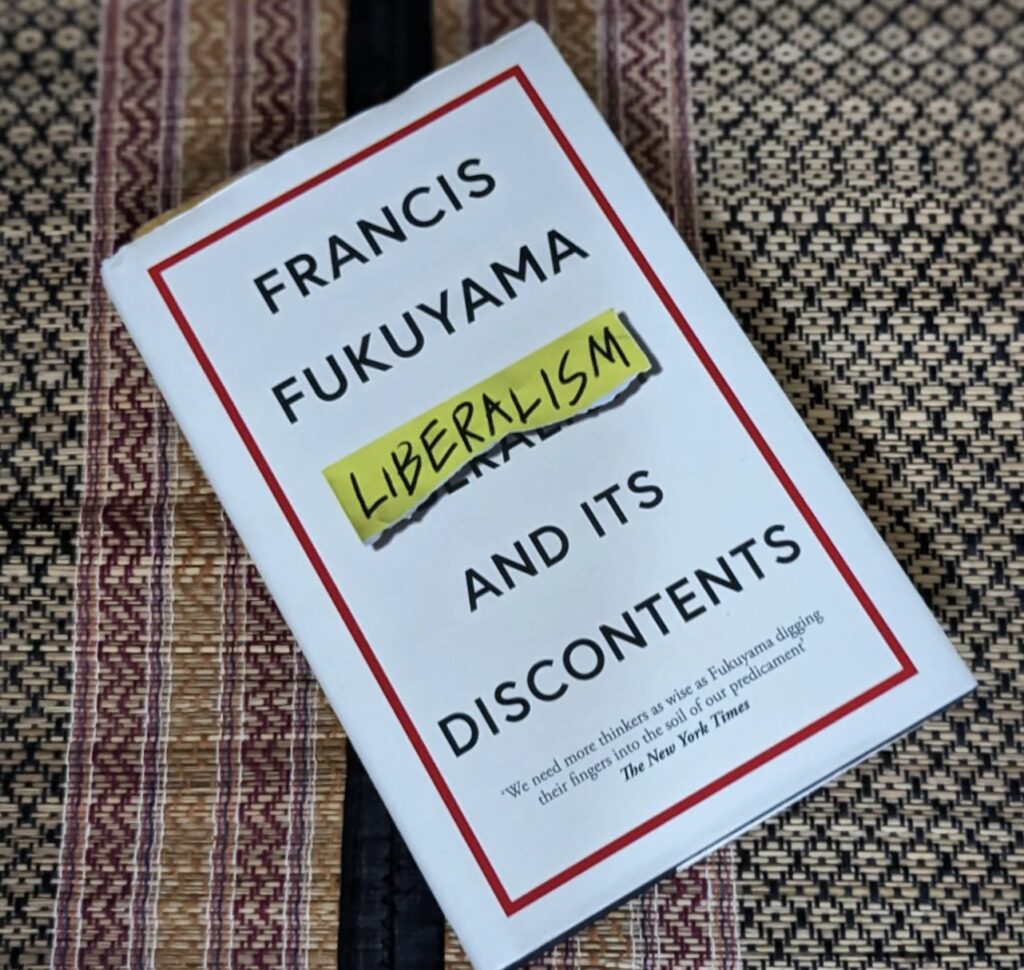
  • Liberalism and Its Discontents

    Francis Fukuyama

    In The Shock Doctrine – Naomi Klein’s book on how capitalism hijacked crisis to further its own unbridled growth agenda – she calls out Francis Fukuyama’s “History has ended. Capitalism and freedom go hand in hand” and essentially considered liberalism the endpoint of mankind’s ideological revolution. That book gave me a lot of (alternate) context on the general narrative of capitalism, and also shifted my view on Fukuyama because of his role in (probably) encouraging the Chicago School of thought that impacted the development of multiple countries across the globe.

    That meant I picked up “Liberalism and Its Discontents” with some skepticism, but though Fukuyama defends liberalism, I felt that he has tried to dissociate himself from the extreme forms the ideology has taken, and attempted to see the criticism and shortcomings objectively. In that sense, probably redeemed himself in my eyes a bit. (not that he cares)

    He begins by acknowledging the challenges facing liberal democracies, and then steps back to trace the historical and philosophical evolution of liberalism and how it came to be the go-to ideology after the Cold War, and begins his defence by reminding us of the significance of individual rights, rule of law, and market economies in creating and maintaining political and economic freedom. He also looks at liberalism’s internal frictions and contradictions. For instance, tension between individual rights and collective identities, and the excessive focus on individualism undermining social cohesion and communal solidarity. Individualism, which has resulted in the twin extremes of identity politics and populist nationalism.

    Liberalism is attacked on many fronts since its basic tenets are all open to separate criticism, thereby questioning its essence. Collectively, these forces challenge the principles of liberal democracy by undermining institutional structures, eroding trust, and fostering polarisation in the general public. What has also compounded this is the the rise of social media, surveillance technologies, and artificial intelligence, and while these could be beneficial to liberal values theoretically, the current usage is mainly manipulation of information, erosion of privacy, and the potential for authoritarian control.

    But what I felt was that his thinking is still largely Western, and thus does not really go deep into the nuanced challenges faced by other parts of the world, or the intersections of related issues – globalisation, economic inequality, and complicated cultural dynamics, which foment populist movements. And because of that, his dismantling of the alternatives seem less convincing, and look closer to the paraphrasing he attributed to Winston Churchill – liberalism is the worst form of government, except for all the others.

    Liberalism and its discontents | Francis Fukuyama
    Screenshot
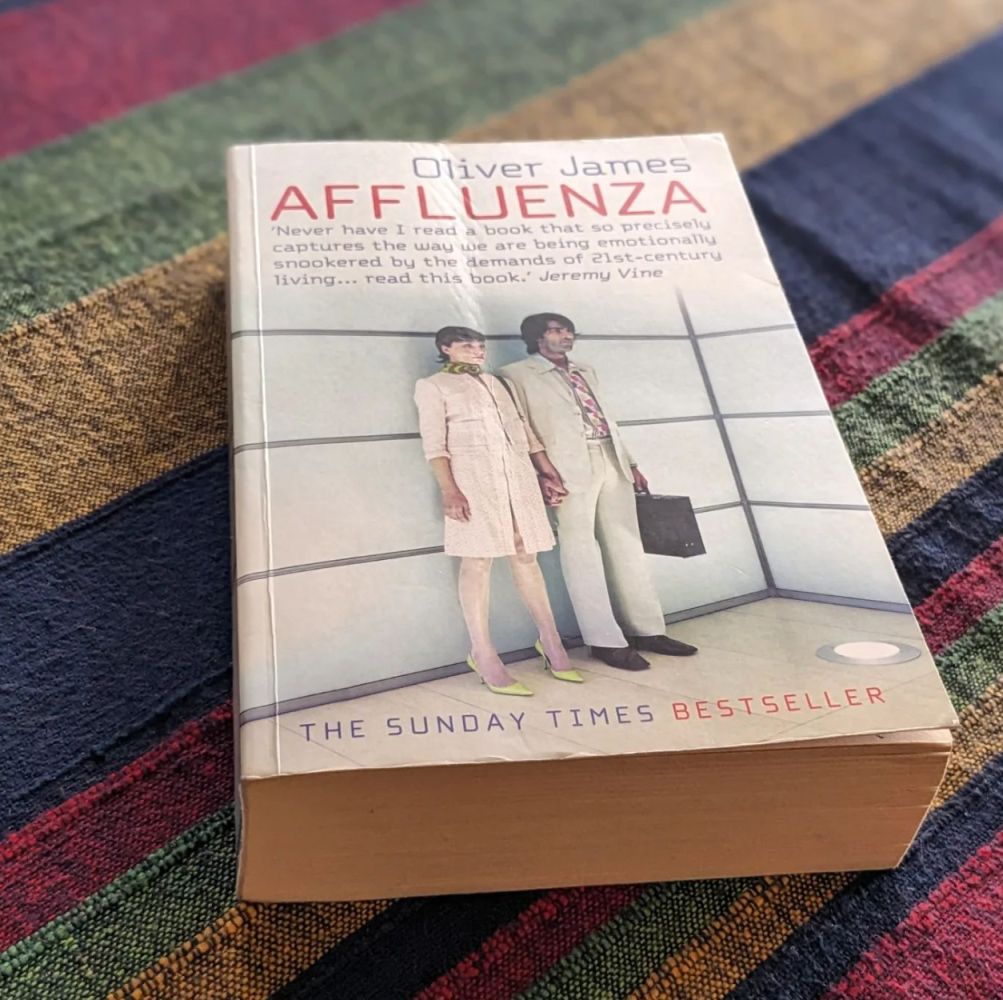
  • Affluenza

    Oliver James

    The title grabbed my attention, but the book remained on ‘want to read’ for a while. But the moment I started Affluenza, I knew I would be biased. For starters, it was echoing my own worldview, and that too, quoting Erich Fromm, whose Fear of Freedom was in my favourites list in 2022. However, here’s the kicker – when I showed an excerpt to a couple of people whom I thought would especially benefit from it, they immediately acknowledged that it was a great insight for the current times. Except, this book is from 2007. That could fill you with hope or despair.

    Oliver James introduces Affluenza as a virus that inculcates a set of values that increase the chance of emotional distress. Its source – a political economy that he calls Selfish Capitalism, a mix of unregulated capitalism and consumerism. The book is a critical examination of the impact of consumerism and materialism on society and individuals.

    In eight of the chapters, he uses research from multiple countries to highlight the psychological, social, and environmental consequences of the pursuit of material wealth and argues that affluence, rather than bringing happiness and fulfilment, can actually lead to a range of psychological problems and social ills. Advertising and marketing campaigns are designed to exploit our insecurities and desires in order to create an insatiable appetite for consumer goods. As a result, people become obsessed with their own image and status, constantly seeking validation through the acquisition of new and more expensive possessions. A vicious cycle, creating in addition to the familiar haves and have-nots, the have-mores! The end result, as Fromm also predicted, is person-as-commodity, and thus unbridled self-promotion.

    The chapters move from personal to familial and then societal, and offer a point of view at the end (of each) called ‘vaccines’. At the individual level, ironically, as we make all efforts for attaining more material wealth, the impact of affluence on our psychological well-being is not automatically great. He argues that material wealth can lead to a range of mental health problems, including anxiety, depression, and addiction. This is because the constant pursuit of material possessions can never truly satisfy our deeper emotional needs, leading to a sense of emptiness and meaninglessness in our lives. In fact he sees emotional stress as a rational response to sick societies. The chapter on motives and goals is the one I found to be critical to break out of the ‘zombie existence’.

    At the familial level, the focus is a lot on parenting and parenthood. This is particularly important because childhood circumstances have a huge impact on our wiring – motives and goals. Given where we are, he recommends understanding them and replacing them systematically. He does have a few controversial views on motherhood and career orientation, but I think they are up for an objective debate. (The case of a 3 year old in China with the packed schedule was appalling)

    At the societal level, it is not just about the selves we present to each other, and the ‘keep up with (and overtake) the Joneses’. It is also about the kind of education and priorities we pass on to the next generation. Additionally, there is also the impact of consumer culture on the environment. James argues that our obsession with material possessions is leading to the depletion of natural resources and the degradation of the environment. He suggests that we need to adopt a more sustainable and responsible approach to consumption in order to protect the planet for future generations. He also takes a sharp shot at what Selfish Capitalism has done to the ideas of neoliberalism – meritocracy, egalitarianism, female emancipation and democracy (see excerpt below)

    The book has its fair share of criticism, but I think by asking us to question our own values and priorities, and to consider whether there might be more fulfilling and sustainable paths to happiness and well-being, he is on to something. “The solution is to think hard about what you really enjoy. The chances are that you have not done this, truly, for a very long time.” I think that’s a good place to start.

    Excerpts

    Modern education has been sold under a false prospectus containing three untruths. The first is that it will bring meritocracy, which it has not; and the pretence of it, requiring absurdly long hours devoted to passing mind-sapping, pathology-inducing exams, is hugely harmful to our children’s (and especially our daughters’) well-being. The second is that by enabling people to rise up the system, it will confer well-being, which it does not. The third is that exam results are crucial for our individual and national economic prosperity, and that is simply not true.

    Let’s look at the four basic, closely related, defining political ideals of modern social organisation which my travels call into question, at least in their present form: meritocracy, egalitarianism, female emancipation and democracy itself. I want to examine them not because I doubt their desirability, but because I fear they have been hijacked by Selfish Capitalism. All the ideals have been rock-solid vote-winners: what majority of Western electorates would not want to be able to advance through merit rather than class, to have equality of opportunity and to liberate women from their traditional role? As time passed, both ruling parties subtly perverted the use of these words to refer to Virus values, rather than their true meanings. Insidiously, meritocracy became a method for educating the workforce and selecting the most promising managers of an economy increasingly geared to making the rich richer and consumers carry on consuming. Opportunity became a mantra for becoming rich, for the material aspiration of everyone to better themselves, so that consumption would flourish. Female emancipation became a cracking good stunt for increasing the size and quality of the workforce and enabling employers to smash the unions in an economy with gender- neutral jobs. Democracy became the right to vote for people who would make you richer and better able to pleasure yourself. All these changes were invariably served up with lavish helpings of the word ‘freedom’, which must have set George Orwell turning in his grave, muttering ‘remember double- think, remember doublethink’. The problem was not with the four ideals but with what was done in their name. If they had been implemented to increase our emotional well-being, rather than the wealth of a tiny minority, they would have taken very different forms.

    Affluenza
  • Broad Band: The Untold Story of the Women Who Made the Internet

    Claire L. Evans

    I had a sense of deja vu while reading this, and later realised that it was thanks to Maria Popova’s Figuring. The books are very different in terms of scope, but are connected by the women-oriented narrative, the idea of intellectual successors, and the presence of what one could call a ‘crossover character’ – Maria Mitchell.

    When we think about the internet’s history, and its current pantheon, the names that pop up are all, or at least mostly, male. But Claire Evans points out that the origin stories are actually mostly female. Their contributions are practically invisible both in the public eye, and while we use the web.

    (more…)
  • Home in the world

    Amartya Sen

    It’s really difficult to write anything about a memoir because while it is written for an audience, it is also intensely personal. But I think the perspectives are such that it deserves a larger audience, and I hope even this drop in the ocean can help in that!

    The book is more about the life, and less about the work. They obviously intermingle to a large extent, but the focus is on the relationships and the exchange of thoughts. In some cases, the subjects of discussion also manage to creep in, but they aren’t inaccessible, except on a couple of occasions.
    In the beginning, when I started reading about his background, and his family’s relationship with Tagore, I thought he was privileged. What added to it was the seemingly casual mention of historical figures, Gandhi downwards! It would be easy to think of this as incessant name-dropping, but Amartya Sen bends over backwards in acknowledging the privilege, and luck, that shaped his life.

    (more…)
  • The Year of Magical Thinking

    Joan Didion

    We never know we go,—when we are going
    We jest and shut the door;
    Fate following behind us bolts it,
    And we accost no more
    .” ~ Emily Dickinson

    Death and illness is around us, and as we grow older, even more so. Or maybe we become even more conscious of it. And yet, it is as Yudhishtira answered the Yaksha’s question – “What is the greatest wonder?” with “Day after day countless people die. Yet the living wish to think they will live forever. O Lord, what can be a greater wonder?

    (more…)