Category: Philosophy & Worldview

  • The Story of Philosophy

    Will Durant

    “Science gives us knowledge, but only philosophy can give us wisdom”, states Will Durant in the introduction to this book that chronicles the lives and opinions of Western philosophers from Socrates to John Dewey. The idea behind this book is to make philosophy accessible to the layman, and as one among the intended audience, I can say that it does a fantastic job of it!

    There are nine chapters each dedicated to a philosopher, and two additional ones that capture the thoughts (in lesser detail) of three European and three American contemporary philosophers. (the book was published in 1924, so ‘contemporary’ is actually almost a century away) One of the great aspects of this book is how it manages to give the milieu in which the philosophers operated – both the socio-political contexts and the influences of his predecessors.

    This gives a wonderful flow to the overall narrative and gives the reader a kind of seamless path of thought. The effect of their personal lives on their thinking has also been well captured. (more…)

  • The Difficulty of Being Good

     Gurcharan Das

    I’d liked Gurcharan Das’ “India Unbound” (that was a long while back, I haven’t read his later works) and I’m generally a sucker for all things epic, so buying The Difficulty of Being Good was a given.

    The blurb created quite the hype for me by stating that the book “shows us how we can come to terms with the uncertain ethics of the world today.” (a world which according to them can be compared to the one in Mahabharata) On hindsight, this does seem a reasonably impossible task and I should have figured that out before I started.

    (more…)
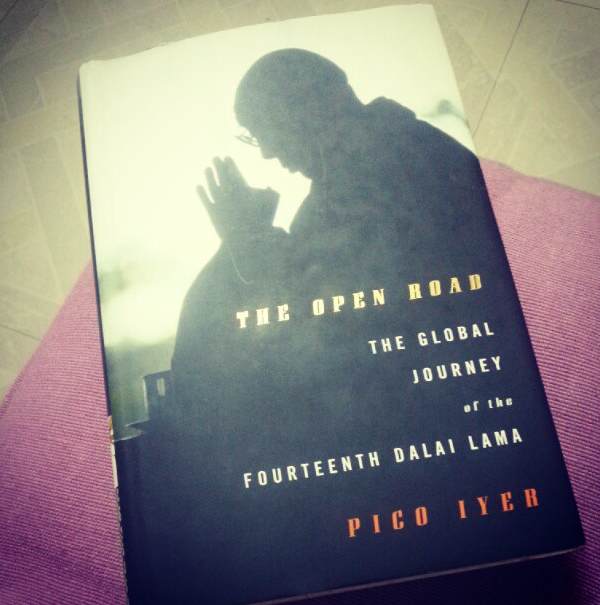
  • The Open Road: The Global Journey of the Fourteenth Dalai Lama

    Pico Iyer

    One of my favourite authors writing about a human being who has intrigued me from the time I read Siddhartha. It didn’t disappoint at all!

    What is it like to live, practice, preach a faith while facing oppression from one of the most powerful countries in the world? Even as Tibet becomes more of a Chinese province day by day – the Potala Palace is treated as just another tourist attraction and the streets of Lhasa are filled with entertainment and shopping options – and several Tibetans question the wisdom of his approach, he is respected across the globe as a spiritual leader for the universal truths he espouses.

    And yet, he underplays the role of religion, and stresses his own humanity while creating a future for Tibetans that is less dependent on him. He has brought Tibet to the world – a culture that was as hidden as a treasure and also gave the world a brand of Buddhism that is universal in appeal. Pico puts Tibet well in the context of a world that has moved from too little info about itself to too much in a few years.

    Pico also writes well about how even with all the respect, people probably see his images and messages through the ‘keyhole of their own priorities’. He once mentions an instance when the Dalai Lama cried- he was asked ‘what is the quickest, cheapest, easiest way to attain enlightenment’.

    While much of the book deals with His Holiness’ thoughts and perspectives, there are also mentions of his family, his early days including the time he was forced to flee from Tibet, and quite a few pages devoted to Dharmasala. Dharamsala – where foreigners come seeking wisdom, antiquity and mysticism from every Tibetan they see, and some Tibetans play the part to understand and probably even reach the lands of ‘abundance and freedom’. Pico Iyer writes about the confusion faced by young Tibetans – on whether to stay on in Dharmasala or go back to Tibet to either change or be changed. Dharmasala – also the place to which Tibetans flock, braving persecution by the Chinese, just for a glimpse of their leader and their belief that at some point in time, he will solve their problems.
    In addition to all of this, the wonderful quotes, the additional sources of information on the subject, and various perspectives all offer us some thoughts on ‘joyful participation in a world of sorrows’.

    Clipboard02

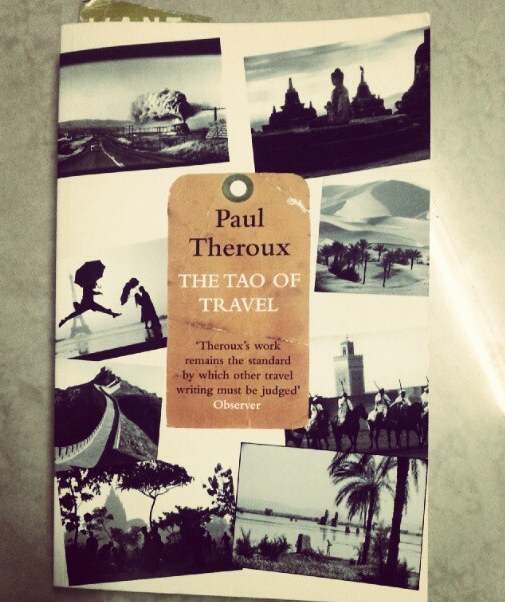
  • The Tao of Travel: Enlightenments from Lives on the Road

    Paul Theroux 

    Whenever I take a vacation, I arrive as a tourist and like to think that I leave at least partly converted into a traveler. I am forever envious of travelers, many of whose journeys serve as a purpose in itself. This book is an excellent little guide to what the author mentions in the preface – paraphrasing the Buddha – “You cannot travel the path before you become the path itself”, and how travel is also a way of living, and thinking.

    In addition to excerpts from various works by different travel writers and adventurers, classified by unique and amazing themes from Railways, time spent in travel to Murphy’s laws, to imaginary journeys, how places are different from what they sound like and so on, the book is peppered with Travel Wisdom from various authors.

    There are gems hidden in the pages – little quotes that somehow tell you that the spirit within each wanderer is essentially the same. The description of places and times by masters are splendid enough to transport you to locales across to world from Alaska to Africa and Russia to South America….And it’s not just the places, but the people who live there, the way they think, and one can sense the cord that invisibly connects humanity.

    In 275 pages, the author manages to indeed provide a Tao of Travel across time and space. Must read.

    Clipboard02

  • An Ordinary Person’s Guide To Empire

    Arundhati Roy 

    Arundhati Roy continues right from where she left off (actually she never has) in The Algebra of Infinite Justice. This time, contexts and facts get repeated in essays, and that might put you off, but that should not take away from the messages.

    An Ordinary Person’s Guide to Empire, published in 2004, a couple of years after the other book, consists of 14 articles written between June 2002 and November 2004. The theme of the book is the working of the Empire, not the traditional imperial one built on a smattering of trade and an all powerful military, but the more modern, relatively more subtle one with many simultaneous strategies – ‘neoliberal capitalism’ aided by the IMF, World Bank etc, corporate globalization spearheaded by multinational corporations, and finally a healthy dose of good old state sponsored military might. As Roy writes, add oil and mix. Not to forget the media that makes the entire effort come out smelling of roses. “In this era of crisis reportage, if you don’t have a crisis to call your own, you’re not in the news. And if you’re not in the news, you don’t exist. It’s as though the virtual world constructed in the media has become more real than the real world.”

    A lot of the conversation is around Iraq, where the latest version of the above drama is being played out, but in many essays there are historical references of how the US has honed its ‘process’ through various wars it has fought. Creating, funding and then making a huge hue and cry over eliminating armies/heads of state who step out of line. Saddam being the latest. A series of acts that had spawned and now fuels a global threat – terrorism. Two opposing camps feeding off each other. “Al Qaida vs Al Fayda”.

    But the story is global, from the police in Kerala displaying the tribals’ bows and arrows as dangerous ammunition to encounter killings from Mumbai to Kashmir to Andhra Pradesh and indiscriminate and illegal uses of POTA to state sponsored terrorism in Gujarat and hunting down Maoists in Jharkand. The story is also of how democracy is just a process of ‘cyclical manipulation” We really have no choice.

    It gets scary when she writes how “Modern democracies have been around for long enough\ for neo-liberal capitalists to learn how to subvert them. They have mastered the technique of infiltrating the instruments of democracy-the “independent” judiciary, the “free” press, the parliament-and moulding them to their purpose. The project of corporate globalization has cracked the code. Free elections, a free press, and an independent judiciary mean little when the free market has reduced them to commodities available on sale to the highest bidder.”

    And somewhere in all this, is the thread of the slow attrition of the concept of justice, especially for the poor and the powerless. “… for most people in the world, peace is war – a daily battle against hunger, thirst, and the violation of their dignity.” The saddest one is about the man in Hasud, a town that was supposed to be ‘relocated’ entirely, courtesy a dam. The man was given a cheque of Rs.25000 as compensation for demolishing his hut. Thrice he went to the town in a bus to cash it. Then his money ran out, and he walked, miles and miles, on his wooden leg. “The bank sent him away and asked him to come after three days.”

    Roy has her critics, and she might have many faults, but it is when she brings out such incidents that I feel she is doing justice to the written word and her skill with it. For this reason, do take time to read it.