Category: Philosophy & Worldview

  • How Fascism Works

    Jason F. Stanley

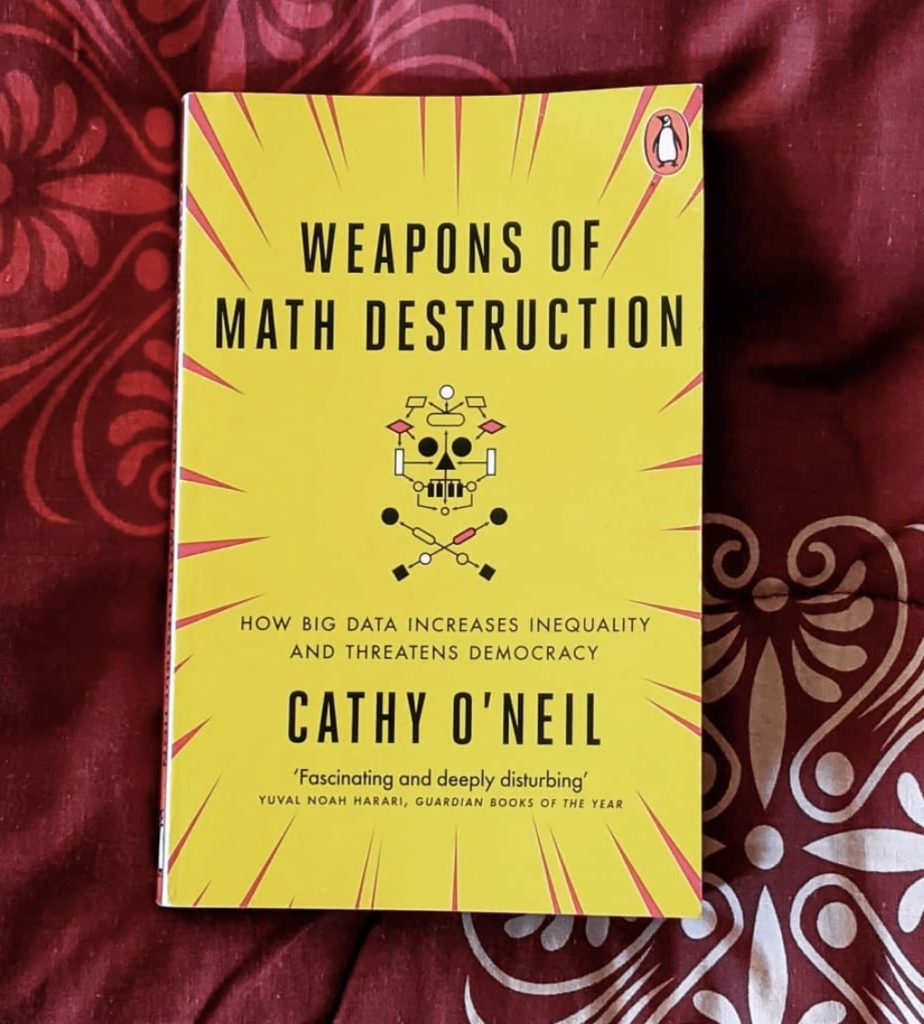
    In “The Origins of Political Order“, Francis Fukuyama talks about three institutions that have to be in stable balance for democracy to take root and thrive – the state, the rule of law, and accountable government. When that doesn’t happen is when we get contemporary Russia or China. But in various countries, there has been a sharp spike in fascist organisations, either overt or covert, and a polarisation in political discourse. Nations such as Myanmar, India, Poland, Hungary and even the United States may not be called fascist at this point, but are increasingly vulnerable. 

    In “How Fascism Works”, Jason Stanley looks at the structures that are common to Fascist movements – the ten tactics that are the pillars on which the narrative of “us vs them” is created and reinforced. A mythic past that breaks down common history and is rewritten to support the Fascist vision for the present and future. Propaganda that twists democratic ideals to serve their purpose. Anti-intellectualism that attacks universities and academia in general who might challenge their ideas. These three work in tandem to create an “unreality”, followed by the onslaught of conspiracy theories and fake news.

    Group differences are then highlighted, and scientific support for hierarchy is formed. As divisions multiply, victimhood among the dominant population is stoked the moment any minority moves towards progress. As gender equity advances, patriarchy gets threatened, increasing sexual anxiety, which is used to fuel conflict even further. Law and order is then cast as a tool for the majority “us” to be used against “them”. The narrative of us is most applied in the rural heartland, where “our” pure values and traditions still survive. And finally, unions and any social organisation that tries to build unity among diverse citizens is dismantled. So is public welfare since “they” are exploiting “our” generosity. 

    The nation replaces the state, creating a group identity, and using a sense of collective victimhood to call for the defence of that shared identity – ethnicity, religion, skin colour etc. Pluralism and tolerance are targeted in order to isolate “them”. The nation then artificially creates the conditions that would legitimise ethnic cleansing or genocide. 

    If you live in India, as I do, you are bound to recognise a lot of these – the pure Hindu past, love jihad, the sacred cow and lynching of Muslims, attacks on universities, imprisonment and/or killing of writers and activists, the biased use of law and order, and so on. The plight of the Rohingyas in Myanmar is a nearby example too. So is the United States under Trump. 
    There is a systematic normalisation that would make any charge of Fascism seem like an overreaction. This too is part of the process. The way to combat this is by first understanding the tactics, see them for what they are, and share the perspectives widely. That’s why this book is an important read for everyone.

  • The Moment of Lift

    Melinda French Gates

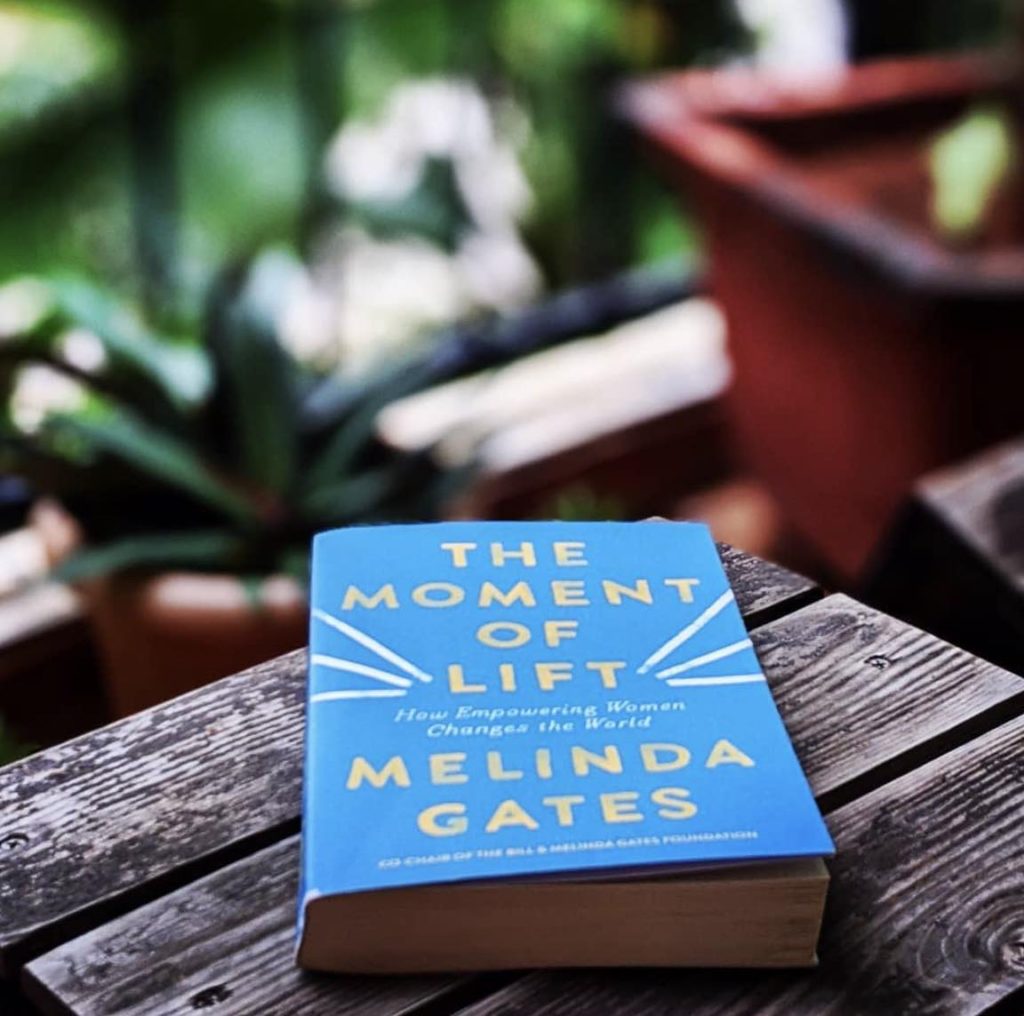
    “When we invest in women and girls, we are investing in the people who invest in everyone else.” That’s indeed how we can change the world, and the best part is that despite the tremendous experience she has on the subject, Melinda French Gates neither makes the book prescriptive, nor makes it about herself. 

    The book is only about 270 pages, but it covers a whole lot of ground. From maternal and newborn health, to the importance of contraceptives and family planning, to education for girls, the unpaid work that women do, and gender inequity in the workplace, it is clear that nothing in this context is an isolated problem. And to solve them, the work has to be done at both the macro and micro level. While many of the anecdotes are heartbreaking, it is a testament to the narration that one closes the last page with hope. 
    There are two things that impressed me a lot. The first is an intellectual honesty with which she approaches each subject. Right from “American billionaires giving away money will mess everything up” – she provides the reasons for this towards the end of the book, and there is a tremendous objectivity at work here. The second is the understanding that there is much learning to do. Several times in the book, she admits that she writes from a position of privilege, and there are aspects that took her time to grasp. But she spends the time to listen and learn. That’s also why she lets others tell their stories. 

    These are women in Africa and Asia who have been directly affected, but have had the courage and will to create a solution. There is compelling data, but what’s more moving is the humanity of it. The school on a railway platform, the BandhanTod network, Avahan – simple things that one wouldn’t think is a problem, or access to necessities one takes for granted, is a struggle for many others. Leymah’s story about the Liberian Women’s initiative carried an important lesson about how successful social movements needed a combination- strong activism and the ability to take pain without passing it on. That second part underlines why women are best placed to heal the angst that the world experiences every day. 
    The only exception (to letting others tell their story) is when she believes that her own experiences can get people to think differently. I found her perspectives on marriage and empathy at the workplace extremely insightful. 

    In the book, Melinda, quotes Mary Maxwell Gates – “From those to whom much is given, much is expected”. From whatever I have read, Melinda French Gates is on it! It is not just the empathy she shows towards those who are less fortunate, but the active steps she has been taking to overcome the obstacles that hold women back. The book is a compelling read, and a great learning experience.

  • 12 Rules for Life

    Jordan B Peterson

    Though the book is categorised as “self help”, and has the kind of material that would qualify it for that label (if you’re so inclined), I read it more as a bunch of perspective on living and being. Or rather, Being, as the author prefers. And perspectives there are – the psychology professor and practitioner refers to the thoughts of everyone from Nietzsche, Solzhenitsyn and Dostoevsky to Milton and Jung. Not to mention theology – Tao, Buddha and especially the Bible play a part too. To the extent that even the Pareto principle gets connected to a Bible reference.

    (more…)
  • The Presentation of Self in Everyday Life

    Erving Goffman

    I picked the book up thanks to a post on “backstage” based on it – the stage is where we present ourselves to the world, and backstage is where we allow our true selves to just be. The context was how “social media” was shrinking the backstage area because we are always on show.

    I wondered how a 250-page book could be written on the subject of “presentation of self”, but realised the depths as soon as I had read a few pages of The Presentation of Self in Everyday Life. How we behave in the presence of others is indeed a fascinating subject. Goffman uses the metaphor of a theatrical performance to explore the nuances and interplay that occur in practically every interaction we have. A dramaturgical analysis. This interaction need not even be with another specific person but just with the world at large. For instance, he uses an example of how we present ourselves when stepping out on to a beach – our facial expression, the book we carry (or not), whether we go for a swim (or not). Just as an actor uses techniques to present a character, we give performances in everyday life to guide others’ impression of us. The expressions we “give” and the impressions we “give off”. Many stages (contexts), many props (subjects we talk about, clothes we wear, attitudes, beliefs etc) for many audiences. I realised that some are so ingrained that I have to really “step outside” to catch it. 

    It gets even more interesting when we consider that others are also doing the same thing. This leads to intriguing dynamics. It not only means we have to sometimes co-opt them, but that we also play a role in their performance. Teamwork, which involves many rules – in performances within and without- that we must conform to, if we want to stay a part of the team. Familiarity, solidarity and a working consensus on individual roles and interplay all lead to the creation of the team’s “mythology”. The audience is also a part of the performance and without their tacit agreement, the show would fall apart. There is also a “definition of situation” that all constituents must agree on. This not only plays out in social gatherings, but in society at large, which expects its performers to play a role. 

    “Impression management” is a very useful takeaway from The Presentation of Self in Everyday Life. Reality and perception not necessarily being the same. Not that we aren’t doing it already, but the nuances, and perspectives on the tool-kits we should make for ourselves. The “expressive control” for instance, the lack of which might give away a the believability of a performance. While The Presentation of Self in Everyday Life has been written more than half a century ago and social interactions have changed a lot since then, including the explosion of non face-to-face forms like the internet, there is a lot it offers in terms of perspective, lessons and actionable insights. It is not an easy read, and I have had to re-read paragraphs and pages a few times, but it is definitely worth the effort.

  • Invisible Women: Exposing Data Bias in a World Designed for Men

    Caroline Criado Perez

    Enlightening! While a part of the title reads “exposing data bias in a world designed for men”, I think it extends well beyond that. It provides perspectives that I had not even considered, even though in the last few years, I have tried to be more conscious of the challenges that women face at the workplace, in public spaces, their everyday lives, and how the world works differently for them in the many, many things that men take for granted. This, therefore, is a book that I think men and women should read, for different reasons.

    For women, it will probably serve as an insightful articulation of many things that they have thought about, talked about, or attempted to change, and give them information about how women around the world have taken them up as challenges and sometimes succeeded in setting things right. I will stop at that, and not be presumptuous in assumptions.
    For men. Where do I even start? I think we will see the world differently after reading this book. The challenge for us would be to be conscious of the inherent bias in our thinking, our behaviour, and the way we design objects and systems. As the blurb says, imagine a world where the phone you use is too large for your hand, where the safety of the vehicle you travel in has not really been designed with you in mind, and the medicine you have been prescribed is just wrong for you because you weren’t adequately represented in trials! In essence, “the lives of men have been taken to represent those of humans overall.”

    The author uses data and case studies from multiple domains to highlight how women haven’t been fairly represented, and in many cases to also show how correcting this could lead to a better result not just for women, but for humanity overall. Public transport, urinals (ever wondered why there’s always a queue for women while men seem to find things much easier), workplace practices, product design, medicine, disaster relief, the pain is everywhere. And they are at various levels of seriousness. Some made me say “oh, I didn’t think of it that way”, many made me grimace, and most are just appalling.
    It has given me many perspectives, and a resolve to work harder at contributing to fix this. One really doesn’t have to be a genius to understand the impact better representation can make, at an individual and species level. With all that being said, in the end, I also have to admit, quite sheepishly, and to underline the point, that while many of my favourite authors are female, I might have completely missed this book if my wife hadn’t made it part of our list! See? 🙂