Category: Mind

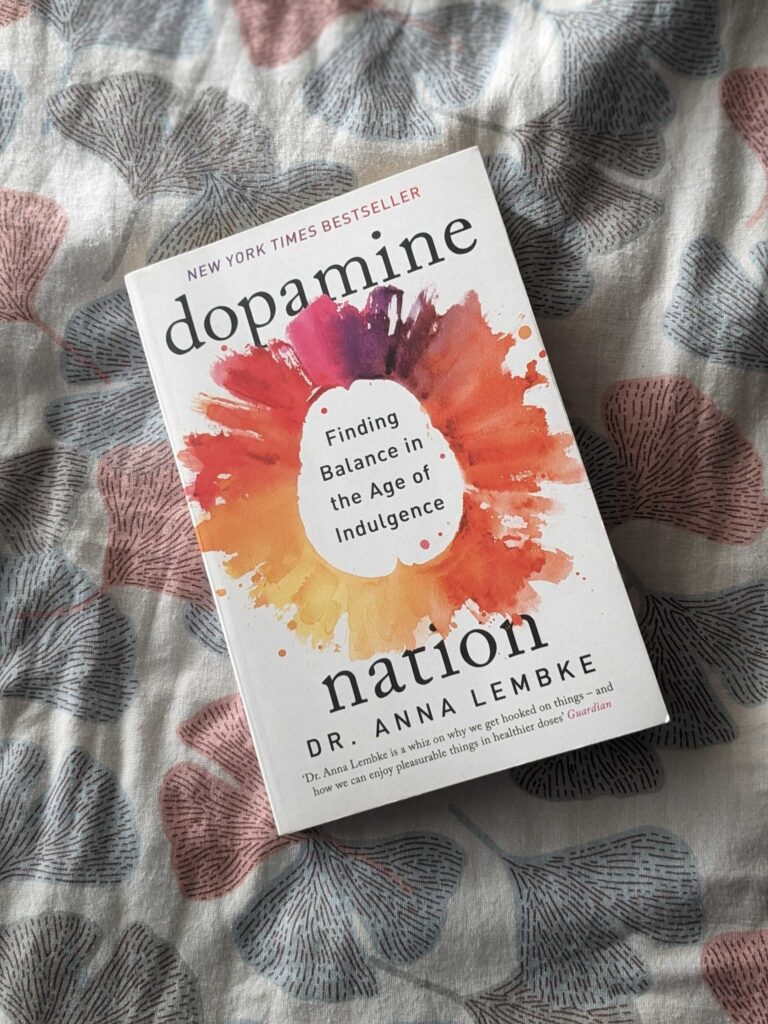
  • Dopamine Nation: Why our Addiction to Pleasure is Causing us Pain

    Anna Lembke

    A book that made it into my recommendations list in 2022 was ‘The Molecule of More‘ by Daniel Z. Lieberman & Michael E. Long. That book, as I wrote in my review then, made a complex subject very accessible and even entertaining, with interesting experiments, real-life scenarios and very less jargon. And it got me interested in the subject. I discovered Dopamine Nation thanks to a podcast, where Dr. Anna Lembke gave a very lucid explanation of the relationship between pleasure and pain.

    Dopamine Nation is divided into three sections – The Pursuit of Pleasure, Self-Binding, and The Pursuit of Pain. Each of these is further divided into three chapters giving the book a structure that is easy to follow. In her introduction, she writes about the overwhelming amount of stimuli around us and calls the smartphone ‘the modern-day hypodermic needle delivering digital dopamine for a wired generation.’ So how does one find balance in this age of indulgence? A big risk-factor in addiction is ease of access and across digital and reality, that has very less mediation. ” I was struck by how much hotel rooms are like latter-day Skinner boxes: a bed, a TV, and a minibar. Nothing to do but press the lever for a drug”. A dopamine economy or ‘limbic capitalism’ (David Courtwright).

    Continuing this thought, she writes about how we run from pain. She throws light on how “the pursuit of personal happiness has become a modern maxim, crowding out other definitions of the “good life”. Even acts of kindness towards others are framed as a strategy for personal happiness. Altruism, no longer merely a good in itself, has become a vehicle for our own ‘well-being’”.

    To illustrate the pleasure-pain balance, she imagines our brain having a balance – a scale with a fulcrum. When we experience pleasure, dopamine is released in our reward pathway and the balance tips to the side of pleasure. (the first in a packet of chips) But the problem is that the system wants homeostasis. The self-regulating system now starts functioning. Meanwhile, with repeated exposure to the pleasure, the initial deviation of the scale towards pleasure becomes weaker and shorter, and the response from the self regulation gets stronger and longer. This is neuroadaptation. Now you need the second chip from the packet, and the more you eat, the bigger the craving and more the irritation if you don’t get it. You consume the chips though it no longer gives you pleasure, just to avoid the pain. It doesn’t end there. The biggest paradox is that hedonism leads to anhedonia, the inability to enjoy pleasure of any kind. The good news is that abstinence can lead to a natural homeostasis.

    In short, “science teaches us that every pleasure extracts a price, and the pain that follows is longer and lasting and more intense than the pleasure that gave rise to it. With prolonged and repeated exposure to pleasurable stimuli, our capacity to tolerate pain decreases, and our threshold for experiencing pleasure increases.”

    In the Self-Binding section, she charts out the escape path with an acronym for dopamine – data, objectives, problems, abstinence, mindfulness, insight, next steps, experiment. Broadly, abstinence can be aided by space (physically creating barriers to access, or even reminders), time (restricting consumption to a certain time, or only as a reward) and by finding meaning in something, to replace the pull of the craving. In the last chapter of this section, she points out how anti-depressants can actually go beyond their call of duty and limit the ability to experience the full range of emotions. Making us a person different from our natural self. A difficult trade-off.

    I found the third section of Dopamine Nation very interesting on two counts. One, a new idea in the first chapter of this section. What if we reverse the pain-pleasure balance by pushing on the side of pain? “With intermittent exposure to pain, our natural (self regulating) hedonic set point gets weighted to the side of pleasure, such that we become less vulnerable to pain and more able to feel pleasure over time”. Cold water baths is an example used. So are extreme sports. Obviously too much of anything will result in addiction.

    Two, some excellent connections in the second chapter of this section, titled Radical Honesty, which also touches upon the trend of ‘disclosure p0rn’. The connection is on a favourite topic of mine – scarcity and abundance mindsets. The author’s hypothesis is that truth-telling engenders an abundance mindset, and lies, a scarcity mindset. She explains this both in terms of us feeling more confident about the world when people around us tell the truth, as well as how when resources are (perceived to be) scarce, people are more invested in immediate gains. I connected this to something I read in The molecule of more – the two kinds of activities we do. Agentic, formed for the purpose of accomplishing a goal and orchestrated by dopamine, vs affiliative, formed for the pleasure of interaction, driven by oxytocin, vasopressin and others more interested in the here and now. The connection I made? Scarcity mindset – Lies – Agentic activities – Dopamine pathways for quick rewards. I am still thinking of direction and causality, but I intuitively sense a thread.

    In essence, I found Dopamine Nation a very interesting read. And if you’re intrigued by behaviour – yours or others’ – I think this will be an engaging read for you as well. Best paired with the book I mentioned in the beginning.

    Dopamine Nation
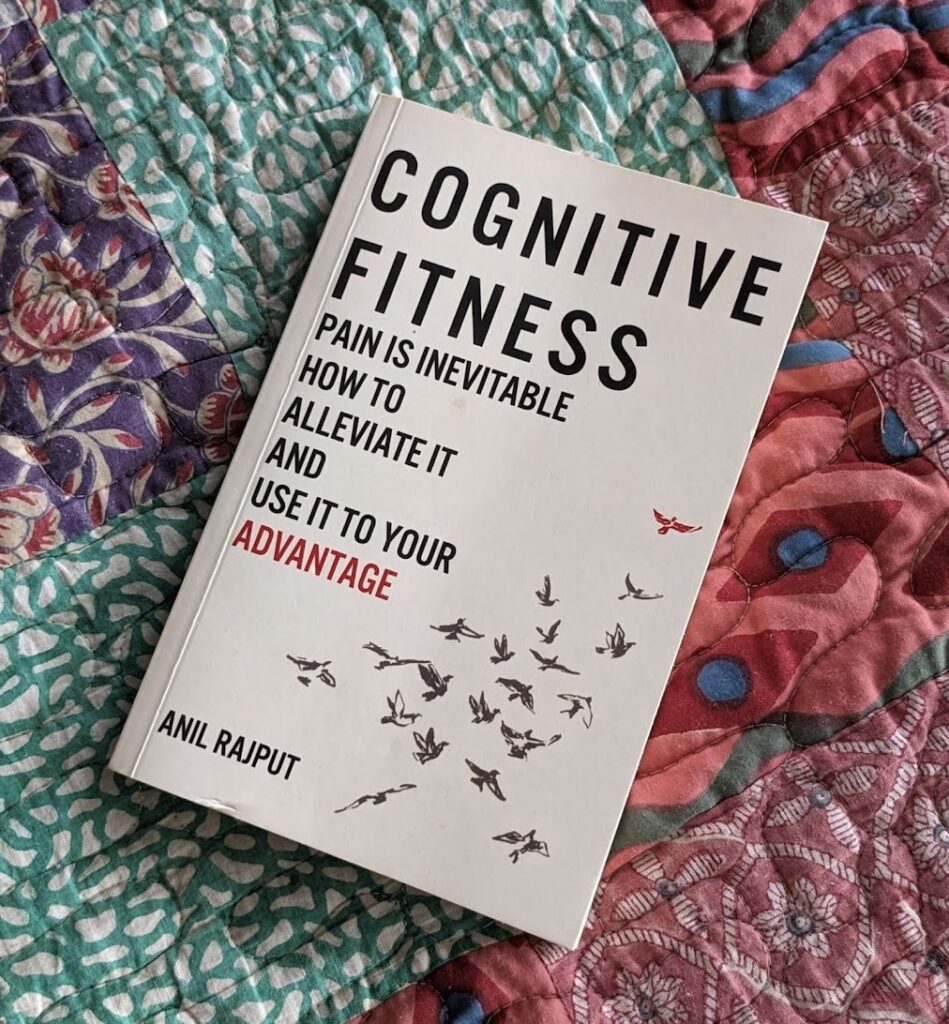
  • Cognitive Fitness: Pain Is Inevitable. How to Alleviate It and Use It to Your Advantage

    Anil Rajput

    Some books just happen to me, this is one of those. It found me. I really liked the framing – cognitive fitness. An analogy based on physical fitness. If I had to sum it all up, I’d say this is a scientific (with a little bit of philosophy) take on mindfulness. Though I am not sure that word is even used once, in the book. In the author’s words, “cognitive fitness is the leadership that holds perceptions, thoughts, emotions, actions, motivations, imagination, and illusory intelligence in such a way that suffering is minimal and happiness is possible.

    Indeed, as with the Buddha, Anil Rajput is also of the opinion that pain is inevitable. As the second part of the title states, the idea is to alleviate it, and even use it to our advantage. It is interesting that an obsessive desire for pleasure, or an inability to endure pain, are both conducive to pain, not pleasure. Also, the absence of pain is not enough for happiness.

    The book has seven chapters which goes into several related areas. In the first chapter, the author points out the purpose of pain and pleasure – both pain and pleasure are feedback mechanisms, and they aren’t really our end goals, though we don’t always perceive it that way. In general pain motivates you to think, act, and solve a problem, while pleasure tells you that you’re on the right path. This feedback can be flawed too, for instance, the instant pleasure of drug abuse actually creates long term pain! This chapter also brings up the complexity of individual, social, and natural aspects of life, as well as nihilism and its inherent contradiction.

    The second chapter shifts focus to our bounded brain and its component parts, pitched against the world of infinite information it can never completely grasp. And thus, the inevitability of illusions and ignorance, including ones in perception, cognition, and emotion that emerge from the imperfect information processing of the neural circuits. We fill in details where we don’t have any, and our ignorance also makes us overconfident. He points out how animals never commit suicide. Our evolution beyond survival seems to have given us this unique concept.

    The third chapter is about the psychology of pain and pleasure, the deception of our own emotions, and how pain can be actually used to get clarity. This chapter has a very interesting portion on the life cycle of pleasure – desire (wanting) that might lead to happiness (if we end up liking what we desired – we need not), and how that happiness decreases over time due to habituation and might even disappear, which then leads to the next desire. The hedonistic treadmill. “Desire is wanting, not liking, and that makes all the difference.

    Psychological pain is an indication that our subjective map of the world needs a revision. The good news is that the brain does have a powerful cognitive immune system, which reduces the effects of suffering – self-affirmation, self-deception, positive illusions, dissonance reduction and defence mechanisms. But it is interesting that the brain focuses more on negatives than positives -because it was essential to save us in the early days of humanity, as compared to say, the pleasure of say, a better mate. We could always have the latter later!

    The important point raised in this chapter is how the ability to endure pain is a requirement to minimise it! Think of it exactly like the muscle you exercise, so as to strengthen it. Except, you wouldn’t go looking for pain, but enduring it and learning from it when it appears is important. The key antidotes to pain are hope, equanimity and courage, which take us away from the fear and panic that lies behind the pain. When we think coolly, we realise that from a survival perspective, the latter is needed only in a physical fight or flight. The rest is emotional, and we can learn to manage it.

    Chapter 4 is about how the brain can be its own worst enemy, and we need to be able to control it to some extent to flourish. This chapter has an interesting portion on conditioning – classic, which is a response to a stimulus (a soldier who returns from war has anxiety when hearing a helicopter even within a safe city) and operant, which is learned by punishment and reward (kid being rewarded for good behaviour). We also learn from observation, and it can be implicit or explicit.

    This chapter also points out how the sub-conscious brain is built for speed and is therefore also prone to wrong judgment. Interesting that our memory can be implicit or explicit. The former is the collection of procedural memory (cognitive and motor skills) and priming (perception enhanced by stimulus). Explicit memory is divided into episodic memory (your experiences) and semantic memory (your knowledge). We make our maps of the world early – a subjective, simple and limited map of the objective, complex and infinite universe. A map critical to make sense of the world. But many times, we find it difficult to change in the face of a challenge, and facts supporting it.

    The next chapter is about the psychology of physical action, the efficiency of cognitive action, and the importance of a subjective purpose and meaning, which motivates us to face the chaos and uncertainties. This also prevents our emotions being hijacked by fear and panic. In this context, it is interesting that rewards are of two kinds – consummatory (moment) and incentive (better future). It is also interesting that when mechanical skills are required, thinking about the reward betters performance, whereas when cognitive skills are required, that thinking might derail us. This is especially so because in many cases, the rewards are not completely in our hands. Only the effort is.

    Chapter 6 is about the importance of focus and how meditation can help. And the final chapter is about how knowledge acquisition on a regular basis is the first step to taking some amount of control over all this.

    As he rightly points out, “we live in a socioeconomic world with a biological body, among other known and unknown things, and problem in our life can be because of multiple factors in multiple domains, many of which may or may not be in our direct or indirect control.” And that is why cognitive fitness is important.

    I really liked ‘the book Cognitive Fitness for the material and perspectives it contains. However, I do think, it could have done with a better editor. That doesn’t take away from the content though. It’s in my long list of 2023’s favourite reads.

    Cognitive Fitness by Anil Rajput
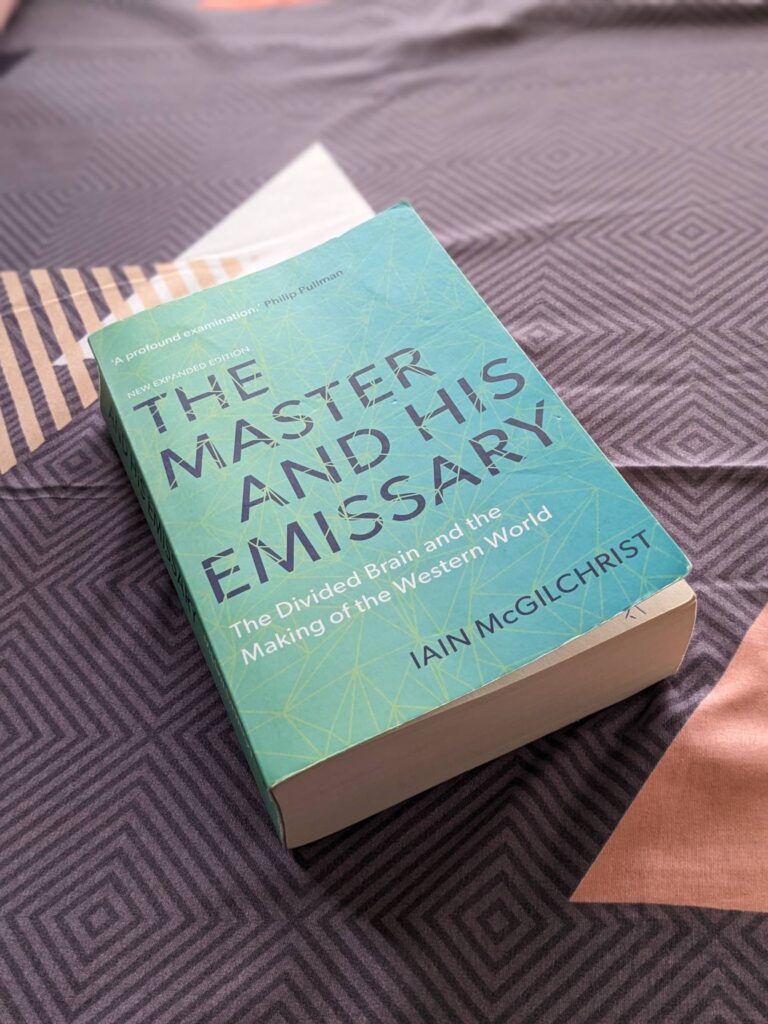
  • The Master and His Emissary: The Divided Brain and the Making of the Western World

    Iain McGilchrist

    As is the case most of the time these days, I discovered The Master and His Emissary thanks to a podcast. Iain McGilchrist’s concepts seemed extremely intriguing, and now I have to admit (as he mentions early in the book) maybe intuitively consistent with my lived experience, and I had to read the book soon. Turns out that it goes directly to my all-time favourites, and was in my Bibliofiles 2023 list.

    As the subtitle suggests, the book is divided into two parts – the divided brain, and the making of the Western World, each with half a dozen chapters. The first part deals with the brain itself – the asymmetry of the right and left hemispheres, their collective and individual roles, how their functioning actually leads to different perspectives, how this affected the evolution of music and then language (which can be seen as a key component in the progression of the species), the primacy of the right hemisphere, and how its emissary – the left hemisphere – has now usurped control.

    The heuristic ways of looking at the hemispheres, e.g. left analytical, right creative etc, is replaced by a nuanced view. The differences between them are less about what they do and more about how they approach something. The left’s utilitarian ability to ‘grasp’ (look at how the metaphor applies to thoughts), its ability to provide simple answers and articulate them well, have all enabled it to grab control at an accelerated pace since the Industrial Revolution, and create a world where it prizes precisely these capabilities in individuals, institutions, and culture at large.

    This is in many ways opposed to the right, which takes more holistic views, understands ideas and metaphors, perceives emotions better, specialises in non-verbal communication, and is humble about what it knows. The right deals with whatever is implicit, the left is tied to more explicit and more conscious processing. The right is present and pays attention to the world outside, the left re-presents. We need both hemispheres, and the right knows it, but the left thinks it knows everything. The left creates a world, and when it stops communications with the right, will not even accept reality if it counters the ‘truth’ of the world it has created. Its role was to provide a map of reality, it now thinks the map is reality, and if not, it will remake reality to fit the map.

    The second part then digs into how this has manifested in the world around. It begins with the concept of mimesis (my favourite part) and how it was the crux of our leap into what we now call culture. The meta-skill that enables all other skills – imitation – possibly explains the rapid expansion of the brain in early hominids. Through the next five chapters, Iain takes us through history – from the early Greeks to the post-modern world, and how, though history has seen a see-saw in terms of the dominance of the hemispheres – Renaissance, Reformation, Enlightenment, Romanticism, and the Industrial Revolution – the impact of the last one was such that we are now in a world where a swing towards the right seems near impossible. Much like an addict, who is not even conscious that his next dose is not just another dose. ‘There is a vicious cycle between feelings of boredom, emptiness and restlessness, on the one hand, and gross stimulation and sensationalism on the other’.

    The research is deep, in both sections, as evidenced by over a hundred pages of notes and bibliography. I especially appreciated the decision of not having same-page notes – it really does help the flow of reading. Iain has painstakingly tried to make a large number of diverse topics as accessible as possible. The first half is based on conclusions from scientific research and experiments across history, and various domains. The second half is itself an accordion of topics across centuries – arts, music, politics, language, and everything we call culture.

    I think my bias for this book and its argument is based on my own experience. As a person and a professional who has to balance both hemispheres, I have been pulled to the left for the longest while. And in many workshops, the recommendation to me has been to let my right side ‘play’. It is only very recently that I have been able to start doing that, and I have to say that I am much happier. The Master and His Emissaryis a book I hugely recommend. It is not the easiest of reads, and I deliberately slowed down my reading speed so as to not gloss over it (though I still did in some of the arts discussions!) but it will open up how you think – the narrative you have made about yourself, and the world around you.

    Quotes and ideas from The Master and His Emissary
    There are four main pathways to truth – science, reason, intuition, and imagination
    “The question is not what you look at, but what you see” ~ Henry Thoreau
    Attention changes what kind of thing comes into being for us : in that way it changes the world. Whether they are humans (say, employer vs friend) or things – a mountain is landmark to a navigator, a source of wealth to the prospector, and a dwelling place of gods for another. There is no ‘real’ mountain which can be distinguished from these, no one way of thinking which reveals the true mountain.
    Manipulospatial abilities may have provided the basis for primitive language. Function gestures become manipulative, syntax developed to form language, expression of our will. (p 111) Even in left handers, grasping actions controlled by left hemisphere, thus right hand.
    Language’s origin in music. Language originates as an embodied expression of emotion, that is communicated by one individual ‘inhabiting’ the emotional world of the other. A process that could have been derived from music. Grooming – music – language, all picked up by imitation. (p 123)
    Adam Zeman’s three principal meanings of consciousness – as a waking state, as experience, as mind (p 187)
    The river is not only passing across the landscape, but entering into it and changing it too, as the landscape has ‘changed’ and yet not changed the water. The landscape cannot make the river. It does not try to put a river together. It does not even say ‘yes’ to the river. It merely says ‘no’ to the water – or does not say ‘no’ to the water, whatever that it is that it does so, it allows the river to come into being. The river does not exist before the encounter. Only water exists before the encounter, and the river actually comes into benign the process of encountering the landscape, with its power to say ‘no’ or not to say ‘no’.
    The idea that the ‘separation’ of the two hemispheres took place in Homeric Greece. (voices of gods) (p260 -275)
    Gnothi seauton – know thyself
    In sooth I know not why I am so sad,
    It wearies me, you say it wearies you;
    But how I caught it, found it, or came by it,
    What stuff ’tis made of, whereof it is born,
    I am to learn.
    ~ Shakespeare, The Merchant of Venice
    The difference between reason and rationality. The former depends on seeing in things in context – right hemisphere. Latter is left, context-independent.
    Kant described marriage as an agreement between two people as to the ‘reciprocal use of each others’ sexual organs’
    ‘Life is a progress from want to want, not from enjoyment to enjoyment’ ~ Sam Johnson
    Modern consumers everywhere are in a ‘permanent state of unfulfilled desire’
    Certainty is the greatest of all illusions: whatever kind of a fundamentalism it may underwrite, that of religion or of science, it is what the ancients meant by hubris.

    The Master and His Emissary
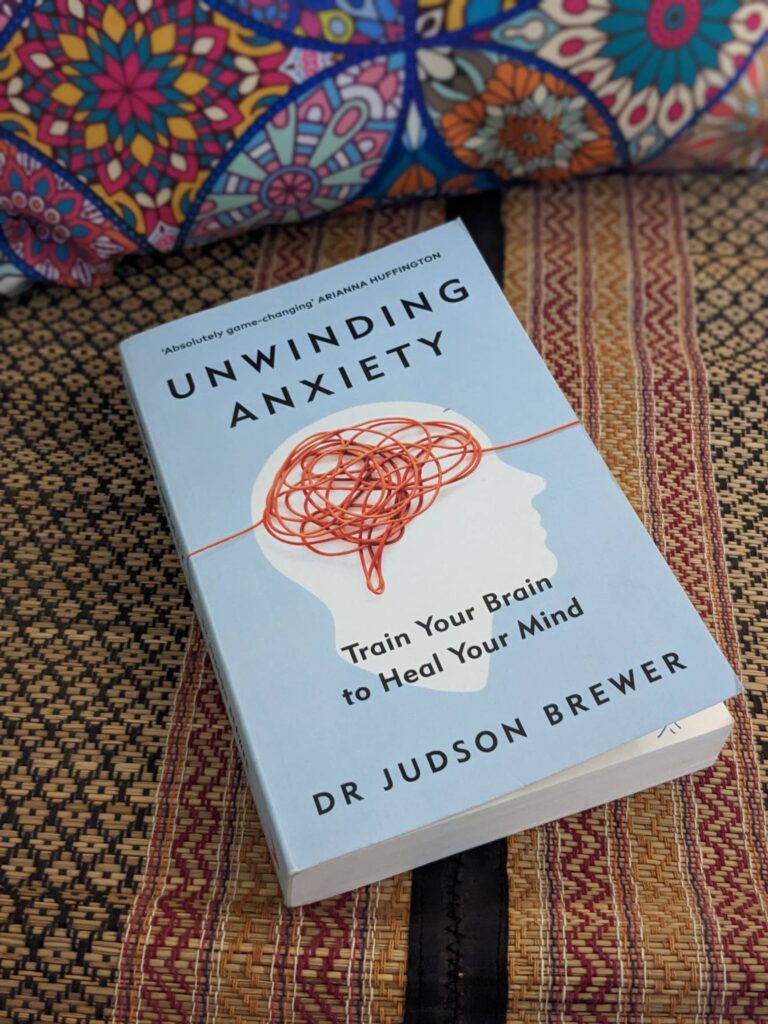
  • Unwinding Anxiety: Train Your Brain to Heal Your Mind

    Judson Brewer

    The book descriptor is what drew me in – ‘train your brain to heal your mind’. in “Unwinding Anxiety”, Dr. Judson Brewer attempts to do this with a three act structure – set up, confrontation, resolution. In this context, identifying the triggers, understanding the why behind the cycles and updating the brain’s reward networks, and then tapping into the brain’s learning centres to break the cycles.

    The book begins on point with the dictionary definition of anxiety – ‘a feeling of worry, nervousness, or unease, typically about an imminent event or something with an uncertain outcome’, born when our brain doesn’t have enough information to predict the future. Fear + Uncertainty = Anxiety. An early example of the author’s mother-in-law manifesting anxiety in the form of snapping (irritability) was something I could relate to (in my own behaviour!)

    In the first part, the book also covers why the typical weapons against habits don’t work- willpower, immediate substitution, environment priming, and mindfulness. In the second part, I found the idea of changing behaviour by addressing ‘the felt experience of the rewards’ useful. This is different from thinking our way out of a behaviour, something that has failed for me in the past. Another reinforcement was about how reliving the past doesn’t really fix it, what we have is the present. In this section, the twenty one day habit-building timeframe is also debunked. The third section has useful frameworks like RAIN (Recognise, Allow/Accept, Investigate, Note) and a little part on meta worry – worrying about the next time you’ll worry. A final useful bit was not focusing on the ‘why’ of the anxiety, but instead on resolving it.

    While the title says anxiety, I felt that a lot of the book was about addiction and bad habits (smoking, overeating, alcoholism etc) and the habit changing methods that you would find in other books like The Power of Habit, or Atomic Habits. If it’s specifically anti-anxiety tips that you’re reading this for, I am not sure how useful it would be. It is arguable that anxiety is a habit, and what works for changing other habits can work for this as well. Somehow, I think that might be a superficial cure, and we don’t really know how to fix the real problem yet.

    Unwinding Anxiety
  • Gut : The Inside Story of Our Body’s Most Under-Rated Organ

    Giulia Enders

    When you think of it, it’s quite amazing how emotions we might attribute to the mind find metaphors related to another part of the body – ‘gut feel’, ‘butterflies in the stomach’, ‘sh*t your pants’, ‘pit in your stomach’ and so on. The metaphors are based on actual physical sensations, and so on hindsight, it is quite obvious that the gut and the brain have quite a connection.

    If we consider our development as an embryo, it goes along three ‘tubes’ – cardio-vascular, nervous, and the gut systems. But unlike the heroes of the first two – the heart and the brain, who have attention and literature, we rarely even think about the gut unless we have an ailment. But it is amazingly complex, with links to even something like mental health, and that’s what makes “the inside story of our body’s most underrated organ” a really interesting read.

    Giulia Enders does an excellent job of breaking down the complexities, much like some of her favourite bacteria that find a mention in the book! The book is not just accessible but entertaining too, with fun illustrations popping up on a regular basis. However, despite not sounding like a boring thesis, the book is full of not just information, but insight. This goes all the from the scenes of the behind like how does pooing work, and the kinds of poo, to behind-the-scenes walkthroughs of important and not-so-known processes like the gut structure and how organs transport food, to practical advice on everything from allergies, things like reflux and constipation, and diets, to cleanliness, and the MCU equivalent of the microbes in our gut.

    As someone who has been at the mercy of clueless gastro-intestinal practitioners, I’d say that her stated aim of making information available to a broad audience is in itself worthy of an applause. An absolutely fascinating read, even if you’re only vaguely interested in this inner piece of ours!

    Things I learned
    – The gut accounts for two-thirds of our immune system
    – There are inner and outer sphincters, representing our unconscious inner world and our consciousness respectively. Their understanding of the respective spaces, and their ‘conversations’ and relationship determine when you fart, or when you have to just go!
    – Squatting is indeed the best way to defecate, as it leads to a nice, straight intestinal tract. This is scientifically proven in the book
    – Saliva is basically filtered blood! It also contains a painkiller stronger than morphine, called opiorphin. Because the mouth is super sensitive thanks to more nerve endings than any other part of the body
    – The stomach is shaped like ‘Quasimodo’ so that water and food can be treated separately
    – Lactose intolerance is not an allergy, it’s a deficiency – the body not having the enzyme to break the two sugar molecules. In 75% of the population, the gene for digesting lactose begins to switch off as we grow older because we are no longer reliant on mother’s milk
    – Rumbling tummy is the ‘migrating motor complex’ at work. And it’s more from the small intestine. Housekeeping when that and the stomach are empty. If something enters, the process stops. In this context, regular snacking isn’t a good idea, and needs separation of at least 5 hours
    – Solve constipation with dietary fibres, fluids, pro and prebiotics
    – The extraordinary story of the sea squirt, which navigates the oceans, finds a good place to settle down, and then proceeds to eat its own brain!
    – Irritable bowel syndrome could be caused by micro inflammations, bad gut flora or undetected food intolerances (but as you might have experienced, doctors pooh pooh patients as hypochondriacs or malingerers!)
    – The brain can receive information from the gut at the insular cortex. Bud Craig’s theory is that human self awareness originates in the insular cortex. It consists of three hypothesis – this part gets info from all over the body and organises it to form an image – a representation of our feelings. The second part of the hypothesis is that the purpose of the brain is to create movement – for the best life possible. The third part of the hypothesis is that to make the best possible movement, the images are important and the brain and the gut are both qualifiers for the central role in giving this information
    – Gut bacteria vary by geography too – climate, food etc all play a part
    – “Genes are possibilities. Genes are information. Genes can be dominant, forcing features on you or they can just offer their abilities for us to use or not. But most of all, genes are plans.” Lovely!
    – Our collective gut bacteria have 150 more times genes than a human. Who are we really made of!
    – Gut bacteria are of 3 types- bactericides, prevotella, ruminococcus.
    – Haem is needed for many things, like production of blood. Its lack is a genetic defect that has been seen in Romania – results in symptoms that include garlic intolerance, sensitivity to sunlight, and red urine. Vlad!
    – Yoghurt is nothing but milk pre-digested by bacteria. Buy ones that use bacteria that produce dextrorotatory lactic acids rather than levorotatory.
    – Lactobacillus Reuteri can significantly lower cholesterol and lipid levels, and increase HDL
    – A toxoplasmata infection causes our immune system to activate an enzyme IDO which breaks down the substance the invaders like to eat and forces them to enter a dormant state. But this eatable is also an ingredient needed to produce serotonin. This potentially causes suicidal behaviour.
    -Eat prebiotic dishes

    Gut : The Inside Story of Our Bodys Most Under-Rated Organ