Category: History & Politics

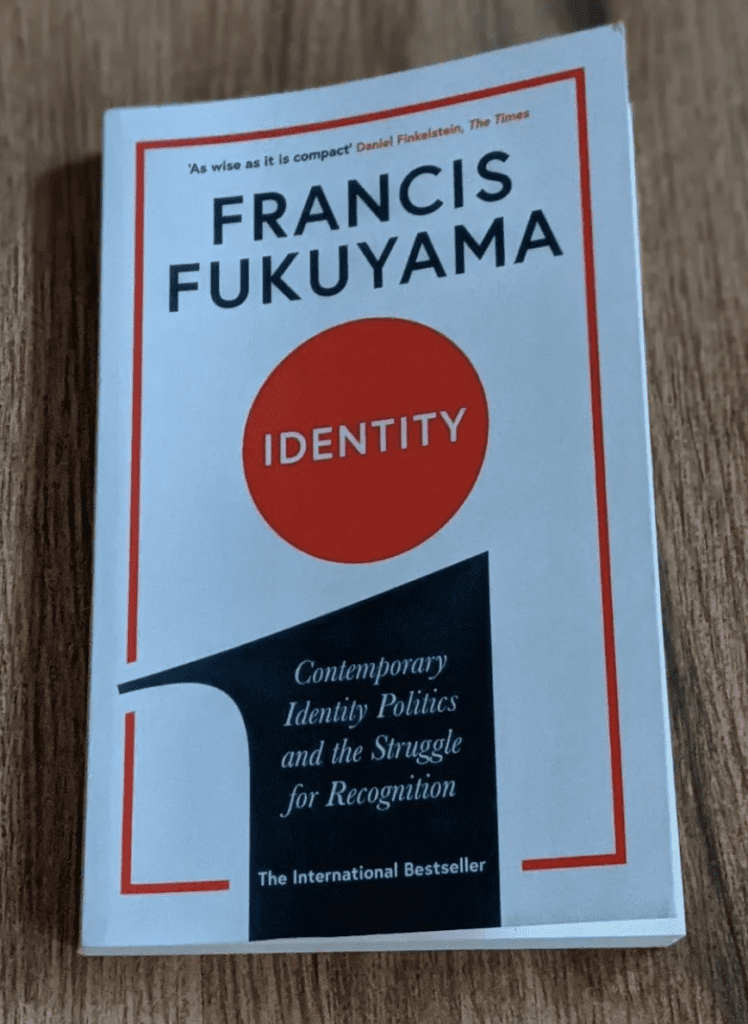
  • Identity: Contemporary Identity Politics and the Struggle for Recognition

    Francis Fukuyama

    Francis Fukuyama did a fantastic job of framing the history of geopolitics in the two-part Political Order series. At a very broad level, most people agree that liberal democracies are the best form of governance and are ‘moving towards Denmark’. However, there are critical exceptions, like Russia and China, and there has also been a revival of (hyper)nationalism. A related area is contemporary identity politics. This is what he attempts to unravel in the book.

    Early in the book, he points out that liberal democracies have not solved for thymos – ‘the part of the soul that craves recognition of dignity’. Whether it’s a large nation like Russia or China, or smaller segments in US, Britain etc, the common link is an identity that they feel has not been given adequate recognition. The segments could be based on religion, gender, ethnicity, sexual orientation, and so on. In all cases, the conflict is around an inner self whose worth and dignity is not recognised by an external world. With the modern world laying a lot of importance on authenticity, anger and hate are not far away.

    The first few chapters are around the evolution of identity – from Plato’s Republic to Luther’s Protestant reformation and capacity for moral choice to which Rousseau added expression of personal experiences and feelings that were suppressed by society at large. As we moved away from agrarian societies with a strict hierarchy to technology-driven societies with multiple social classes, pluralism, diversity, and choice emerged and identity started becoming increasingly complex. By early nineteenth century, there was a fork – universal recognition of individual rights, and collective recognition. Nationalism and religion have been the largest aggregators of the latter, and he offers an excellent perspective on the parallels between Nazism and Islam fundamentalism to show how they’re grounded on the same principles. 

    The latter led to a narrative of a historic culture being undermined by ‘others’ around. That’s the area that everyone from Modi to Shinzo Abe to Islamic fundamentalists have exploited. Meanwhile, the former led to a ‘therapeutic society’ catering to the emotional requirements of individuals and raising self esteem. The question to any group thus becomes ‘do you want to be treated the same or different’.

    The thrust in the rest of the book is about the need for dialogue and discourse and how identity politics could hamper that. There are examples of the US, EU and the solutions to their current problems around identity and politics. The good part is that the story thus far has been viewed through a multidisciplinary lens and is elegantly thought through. But the challenge that Fukuyama faces is that while there are very few arguments one can make on how the path to the current state has been framed, by definition the subject of identity is nuanced, and one could argue that it cannot be attributed to a single factor like thymos. Note, arguable only because it could be that things like economics, caste etc are dimensions of thymos. 

    The hope is that he writes a second part – a forward-looking one that captures how contemporary phenomena like social media, increasing wealth disparity, gender fluidity etc affects identity and its politics, and what it means to society and culture as we ‘progress’.

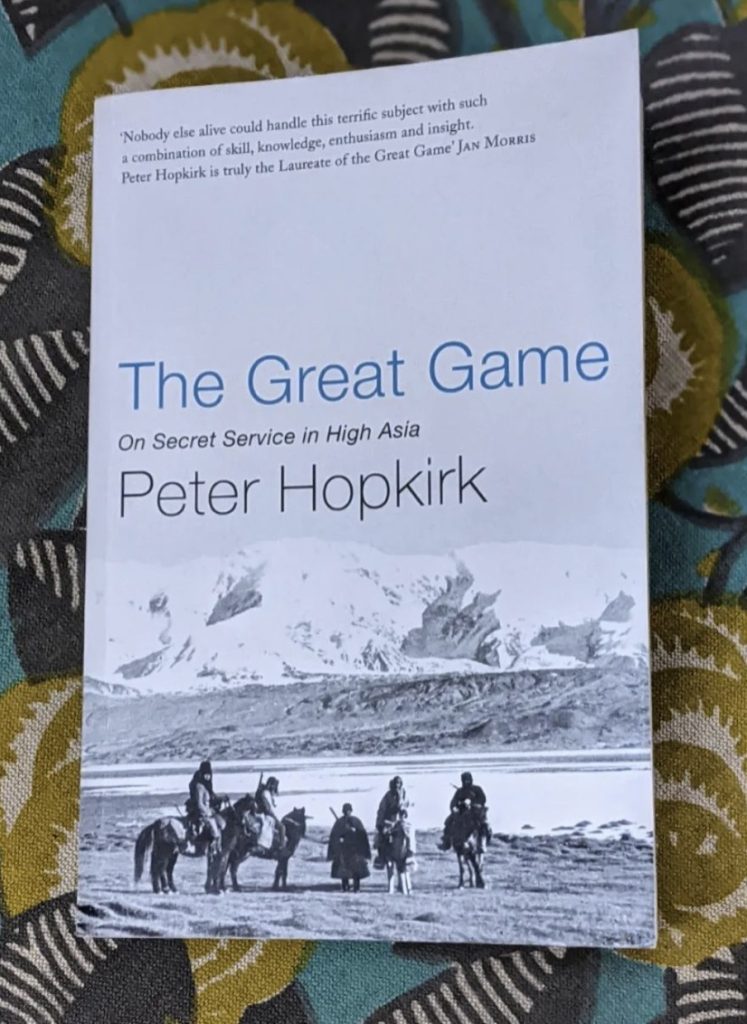
  • The Great Game : On Secret Service in High Asia

    Peter Hopkirk

    I first came across “The Great Game” in Sherlock Holmes. Not the series, the book! The phrase is attributed to Captain Arthur Conolly (but made famous in the book Kim), and fittingly his last moments in 1842 in Bokhara, a classic Great Game location, is where Peter Hopkirk starts his narrative. The Great Game was the name given to the diplomatic and political confrontation between two empires – British and Russian – across Central and South Asia that happened through the nineteenth century and the beginning of the twentieth.

    The British felt that the ultimate aim for all of Russia’s expansions in the Central Asian region was its crown jewel – India, and the Russians didn’t take kindly to any attempts made by the British to block these advances. While a lot of it seems like shadowboxing, it involved intrigues, treachery, and adventures featuring individuals on both sides, Sultans and Shahs and minor chieftains, and sepoys and Cossacks fighting for every inch and fort. 
    When it all began between Victorian Britain and Tsarist Russia, over 2000 miles separated them, and by the time it ended in early 1900s it had come down to 20 miles. The book features the military personnel and politicians on both sides, many of whom made dangerous trips in the guise of traders and holy men into areas where no white man had been before, and in some cases, gave up their lives to seek information that would strengthen their respective empires. Across the 1800s, the British explored the many paths that Russia could use to conquer India, even as Russia increased its sphere of control across Central Asia. Beginning with France, the Ottoman Empire, the Persian empire, and then Tashkent, Samrkhand, Bukhara, Khiva and Afghanistan, and towards the final stages Tibet, China and Japan, this was Monopoly being played at global levels and possibly the longest and most intense geopolitical conflict the world saw before the Great War. Ironically enough, in that war, the former foes were allies. 

    In the context of the US leaving Afghanistan, this book, written in 1990 offers a fantastic lesson in history – not of the Soviets in the late 1980s, but the humiliating and tragic withdrawal of the British in the 1840s when they tried to displace Dost Mohammed with their favourite Shah Shuja. Peter Hopkirk tells history the way it should be told – a very accessible narrative, full of excellent details, and practically recreating entire episodes for the reader. If you like history, this is a must-read. If not, it’s still a treasure trove of excellent, old fashioned intrigue.

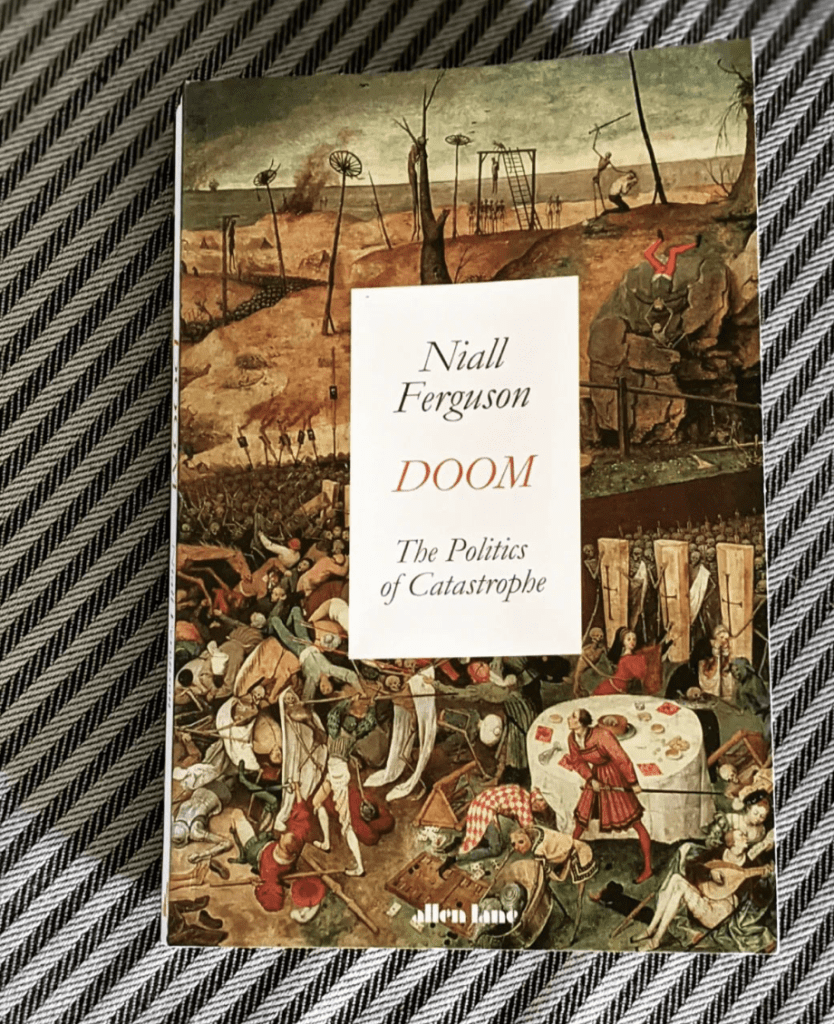
  • Doom: The Politics of Catastrophe

    Niall Ferguson

    This, if I’m not mistaken, is Niall Ferguson’s fifteenth book, and it shows in the buffet of information and perspectives that the book offers. The title Doom : The Politics of Catastrophe does a good job of not forcing the book into any category. More on that towards the end. It allows Ferguson a free hand in bringing his breadth and depth of knowledge to a bunch of relatively disparate subjects – history, epidemiology, cliodynamics, network theory, economics, geopolitics – all viewed through the lenses of catastrophe and decision-making. 

    Across different chapters of the book, we are fed a rich assortment of disasters – from the eruption of Vesuvius (geological) to the World Wars (geopolitical) to the Spanish Flu and AIDS (medical) to Chernobyl, Challenger, and the Titanic (oh well, hubris) to the recent handling of the pandemic by various nations. It does a good job of showing what we can learn from history (and don’t!) Disaster (mis)management has its own categorisation too – failure to learn, failure of imagination, tendency to fight the last war/crisis, threat underestimation, procrastination. 

    As much as it enlightens, I think it is also meant to provoke – not just the low-hanging fruit like Trump supporters, but even climate change activists (calling Thunberg a “child saint of the twenty-first-century millennialist movement”) and those who support a lockdown as a necessary course of action (which Ferguson seems skeptical about). He is also clearly on the side of institutional incompetence as opposed to individual idiocy. 

    The broad scope of the book, not just on the temporal and geographical axes, but also on disciplines, sometimes made me dizzy. It doesn’t help that in the first few sections Ferguson is reeling out facts and figures like a “this day in history” AI gone rogue, and in one chapter tries to connect Black Swans, Gray Rhinos and Dragon Kings! What loses out in all this is the narrative arc, and patterns a reader could use to make sense of the direction of the book. (Guns, Germs & Steel or the two-part Political Order come to mind as positive examples) 

    I’d also say that the attempt by the publisher to link this to the pandemic was probably belated (after the author had written most of the book), too obvious, and doesn’t do the book any favours as it tries to weld COVID-19 to a general history of catastrophe. That is not to say the book isn’t worth reading. On the contrary, it does a great job of not just historical chronicling, but also uncovers precedents (Asian flu 1957-58, which is missing from most coverage of COVID, but was the closest on many counts), linkages without narrative fallacies, causes (active and latent), and in the end even categorises dystopian sci-fi – the “history of the future”!

    Doom The Politics of Catastrophe
  • How the World Works

    Noam Chomsky

    I think the biggest proof of the US hegemony that Chomsky brings up regularly is how (relatively) unknown he is to the world at large. Because it’s not the kind of publicity the US would like. It’s true that the name has come up in many conversations online, and that is the reason I picked up this book, but for his quality of ideas, he really should be known and quoted a lot more.

    This book serves as a great introduction to Chomsky’s perspectives, not just because of the different topics that have been covered, but also because of how accessible it is – thanks to it being derived from the spoken word through Chomsky’s many media interactions. And yes, the index does help when you want to read about a specific topic and get a quote. There is some repetition, but that is to be expected, and as a contemporary reader, we may not have all the contexts, but that’s also a small price to pay. 

    Of the many topics covered, the US government acting as a bully inside and outside the country is one that’s central. Calling out its usage of government agencies, its military, its allies, as well as international organisations like the UN to enforce its will on nations is what makes Chomsky unpopular. Any nation or leader that attempts an alternate path, especially that is good for the people in the long term, is at the receiving end of many deterrents – local and international – acting in the interest of the US. Because an example is dangerous – it shows that something is possible, countries like Vietnam and many countries in Latin America like Brazil have had to pay the price. All of this became even more easier once the Cold War ended. Though it was convenient to show the USSR as the bogeyman, the US was also good at creating other villains. Within the country, the idea is to ensure that the social, economic and political agenda of an elite class is implemented and also that the general public doesn’t get to have a say in the matter even though it’s supposed to be a democracy. Big business has an important play in this and over a period of time, media which is supposed to be a conscience-keeper, becomes a cheerleader. 

    It’s amazing how well his insights age, as many of them can be used in current contexts. It is also fascinating to see history rhyme – Daimler-Benz and Fidelity as predecessors to Big Tech in holding cities ransom and threatening to vote with their feet if they didn’t get tax cuts.


    On one hand, it is a little heartening that the problems we face now aren’t new. The scale and manifestation might have changed, but the fundamental causes are the same. On the other hand, it does seem that there really is no hope on things getting better – the wealth gap decreasing, or the common citizen getting a level playing field. Chomsky’s view is that these are not laws of nature and that the individual can play a role in changing things, but he points out that it only works if everyone takes the subway. If some drive, it’s going to be better for those who drive! Classic prisoner’s dilemma. When educated classes line up for a parade, he says, people of conscience have three options – march in the parade, join the cheering throngs on the sidelines, or speak out against the parade (and of course, expect a price for doing that!) and that’s been the story for a thousand years and more. 

    I am not sure I have read anyone else who has so much information on things that happened in the world and is able to cite examples for any question asked, is able to convert that into knowledge that connects the assorted pieces, and then deliver such timeless insights. Irreplaceable, I think.

  • Azadi

    Arundhati Roy

    As always, I must admit a bias for Arundhati Roy. For being an author who has consistently been vocal about rampant capitalistic greed, class prejudices, and more recently, the conversion of India from a democracy to a fascist state. And in doing all this, she holds an uncompromising mirror to those of us whose privilege affords us the luxury of living in bubbles whose walls are impermeable. For now. 

    The book has 9 essays that contain the above, and also touch upon the role of fiction in imagining, processing, and communicating it. Lal Salaam Aleikum, says Anjum, in The Ministry of Utmost Happiness. The book has recurring themes – Kashmir, NRC, CAA, RSS – but I think repeating them is worthwhile, so that the gravity is understood. 

    Kashmir, whose special status, or limited autonomy, granted under Article 370 of the Indian Constitution, was revoked on 5th August by the Indian government. Followed by Narendra Modi appearing on television on 8th August to announce a lockdown of 7 million people so that they could enjoy Indian democracy and progress while living under military occupation. Google Trends surges showed a repeat of plunder patterns from history – “marry a Kashmiri girl” and “buy land in Kashmir”. Women and land. But that’s only the larger population. The nation has higher ambitions. For instance, access to rivers and other natural resources. And so does the ruling party – “One Nation. One Constitution”. Enforced not just with the might of the state machinery, but the 600000 members of the RSS. 

    NRC, the seeds of which were sown in 1837 when the British made Bengali Assam’s official language. Though revoked in the 1870s, it set the stage. In the late 1890’s the British encouraged Bengali Muslims to become workers in the tea plantations, causing an influx that was first met with affection by the natives, but soon turned to discord. Borders were redrawn regularly, and 1947 and 1971 caused a further inflow of populations, and after decades of violence and antagonism, we now have the NRC, whose updated list was published on 31 August 2019. With 1.9 million missing. It didn’t really make the rulers happy because almost half of them are non-Muslims. Predictably, Justice Gogoi ordered the transfer of the chief co-ordinator of NRC, giving no reasons. 

    And then there is the Citizenship Amendment Bill, passed on 11 Dec 2019 as the CAA. Students of Aligarh Muslim University and Jamia Millia Islamia University reacted first. Shaheen Bagh followed. The larger agenda of both NRC and CAA – controlling citizenship. After all, as Hannah Arendt said, “Citizenship is the right to have rights.” And what we are seeing is the systematic disenfranchisement of Muslims and making them second class citizens. 

    All of the essays lay out how the RSS and BJP keep things on boil at all times- NRC, Pakistani Jihadis, Kashmiri terrorists, Bangladeshi ‘infiltrators”, Ram temple, and always, Muslims. Ready to be poured gasoline on, and lit. And backed by a propaganda team – from Bollywood A-listers to sportspersons to media. All components of the fascism playbook, and the regime has the checklist – strong man, ideological army, Aryan superiority, dehumanising of the “internal enemy” and mob justice (113 deaths by mob violence since 2015 – The Quint), propaganda machine, the attacks on academia and assassinations when required, the coteries of businessmen and film stars.

    And the systematic takeover of democratic institutions, as the police get communalised, judiciary abdicate their duty, and the media just want to be lapdogs. Case in point -“Desh ke gaddaron ko, Goli maaro saalon ko”, said Kapil Mishra, who is back in the streets after a very brief interlude. Meanwhile, Justice Muralidhar who was furious with the Delhi Police for not taking action against Mishra, got midnight orders to move to his new assignment in the Punjab High Court. 

    The pandemic is an opportunity to set many things right. But it doesn’t seem to be going in that direction. For instance, the early days saw vast populations being forced back to their villages and small towns just so they could have some dignity. A reminder of the days of partition – class being the driver instead of religion. 

    There is a high likelihood that reading this book and reviewing it will soon be deemed anti-national. As a college lecturer pointed out to Arundhati Roy, among the items recovered from alleged couriers for the Maoists were books she had written. “They’re laying a trail – building a case against you.” Meanwhile, with plans for Nepal and Sri Lanka, the RSS seems to be seeking its version of the German Lebensraum (living space), which the Nazis used to formulate their Generalplan Ost policy – genocide, ethnic cleansing, and colonisation of Central and Eastern Europe . The world can pay heed now, or pay the price again for letting a fascist regime pursue its will. The voices in Kashmir and against NRC and CAA is the same – Azadi. And as Kanhaiya Kumar stated, not from India, but in India.