Category: History & Politics

  • From The Ruins of Empire

    Pankaj Mishra

    The mid-late 19th century and the first half of the 20th century was a period dominated by Europe and later, America, and much of humanity’s narrative in that period has, as always, been written by the victor. The victors also did much to enforce their way of life and thinking on to their subject audience, which, seeing its own set of institutions crumbling against this onslaught, began admiring and aping their masters, or at least silently suffering.

    What Pankaj Mishra does in this book, is give us a perspective shift – a view from the ‘first-generation’ thinkers of the time. Though their approaches and line of thinking were different, courtesy the varied milieu they lived in, their narratives had a couple of commonalities – an aversion for the West, and a recognition that they needed to build an indigenous renaissance to break the shackles and rise again. (more…)

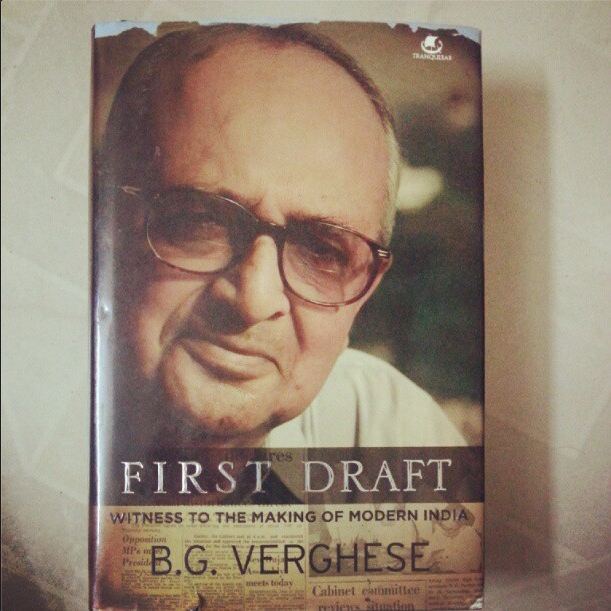
  • First Draft: Witness To The Making Of Modern India

    B.G. Verghese

    BG Verghese’ “First Draft” is part memoir, part history and covers many decades in its wide sweep. From the description of the Times on the day of his birth (21/06/1927) until his assessment of the challenges facing the nation in 2010, the book is his perspective on the events he has witnessed and many a time, been part of. Sometimes it is tinged with nostalgia – his description of the Doon School for instance, and at other times, it is an objective view of the various decisions and circumstances that have shaped India.

    From national milestones like the first elections (described so we get an idea of the herculean task it was in an era that didn’t have the communication infrastructure we see now) and the construction of the steel plants and dams and IITs,IIMs we see around now, to humanity’s collective achievements such as Neil Armstrong on the moon (even as a villager adamantly states that it is just impossible) we get a first hand view of things we now acknowledge as history and landmarks. Relationships with the US, USSR as well as neighbouring countries and the wars fought with the latter, including an analysis of the things we did right/wrong all appear, mostly in chronological order. Also adding texture to the narrative are anecdotes of Prime Ministers, most significantly Indira Gandhi. The formation of AIR and Doordarshan, nuclear tests, the political battles within the Congress, formation of other parties, JP’s work, the rise of Naxalism, Operation Bluestar, Sanjay Gandhi’s bizarre schemes, the Emergency, the death of Mrs.Gandhi, Rajiv Gandhi’s baby steps into politics and the paradigm shifts he kickstarted, communal riots, the formation of LTTE, the Bhopal tragedy, VP Singh and Mandal and Bofors, BJP and Ramjanmabhoomi, the chronic Kashmir issue all gives one a feel of time travel.

    There is massive ground covered – nuclear policy, social-economics, geo-political relationships, the functioning of media houses etc in addition to his views on public service broadcasting, policies for the North East, industrialisation, water and so on. As an editor and someone who has worked with the government, and as part of external agencies, fact finding committees and so on, the author is well placed to deliver an incisive view of history as it was being made and with the advantage of hindsight. (now) Barring a meagre few pats on the back and digressions, he does provide a decent and objective look. It is quite a humbling feeling to ‘watch’ as generations of politicians and institutions almost flash by and one finds some pattern in the fuzziness seen around – the reason for the way we are, as a country. It is also heartening to see that patriotism aside, the author feels that we are on an ascendant. Despite some patches that are specific in nature (towards the last 100 pages) and tend to be discourses, this is a great read for anyone interested in modern history.

    Clipboard02

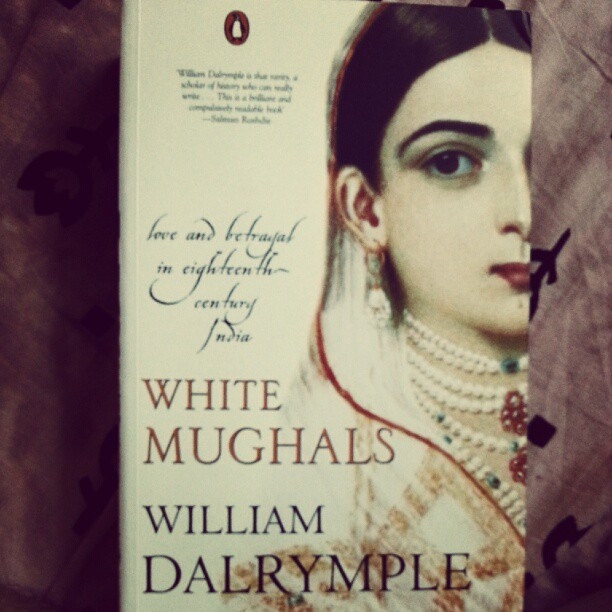
  • White Mughals: Love and Betrayal in Eighteenth-Century India

    William Dalrymple 

    In the eighteenth century, when the East India company was not yet the force it would one day be, there existed a few Englishmen (and other Europeans) who took up the ways of the fading Mughal culture. These were the White Mughals and among them was James Achilles Kirkpatrick, who arrived in India a soldier and soon rose to be the Resident of Hyderabad, mostly thanks to the influence of his older brother William.

    Friend of the Nizam, and an ardent lover of the Indian culture he came in contact with, he was willing to sacrifice everything to marry Khair un Nissa, a Hyderabadi noblewoman, who was already engaged to be married. Although the core of the book is their love story, and its aftermath, Dalrymple does take a while to get to it. He first gives us the prevalent scenario and glimpses of the other White Mughals like Hindoo Stuart, David Ochterlony etc to set the context. Even after James is fully in the picture, he focuses on the Nizam’s court, its players and its intrigues in which James is heavily involved, Hyderabad’s strained relationship with the Marathas and the charged political atmosphere which the Company was trying to profit from. But this also gives us an elaborate view of Hyderabad, its people, its art and culture and finally James’ relationship with Khair. In this broad canvas, we can also see the various Governor Generals and their varied stance on relationships with India and Indians. The images allow us to visualise the life and the times.

    <spoiler> After the death of James, the book follows the life of Khair as the story moves from Hyderabad to Calcutta to Masulipatnam (and tangentially Chennai) giving us tiny glimpses of the social milieu there, even as Khair pines for her children who have been taken away from her. Dalrymple provides a touching description of the very young children shedding their Muslim identity and donning a Christian one as they board the ship to England. In fact, the painting of the children with Sahib Begum’s (soon to be Kitty Kirkpatrick) teary face is extremely poignant.

    Khair’s only consolation is the presence of her mother, the correspondence with her grandmother and her (ultimately) tragic relationship with another Englishman. Except for the well being of Kitty Kirkpatrick, James’ and Khair’s daughter, the lives involved all have tragic endings, many of which cause lump-in-the-throat moments. Khair’s mother dies in penury and her son dies an invalid at a young age. Though Kitty corresponds with her grandmother, they never get to meet each other. As the author says, the death of Kitty in 1889 was the end of an era, of a world where cultures and people mixed freely without the biases and clashes that came later. A wonderful read for those interested in history.

    CIMG1673

  • Empires of the Indus: The Story of a River

    Alice Albinia 

    I am showing signs of travelogue addiction, and this is the kind of book that creates it! It’s not just the content of the book, which is marvelous and makes for a treasure trove of information, but the sheer tenacity and guts the author displays, that has made me a fan. Spanning four countries, this book is the story of the river Indus, from its source to its destination, though not in a linear way. What it succeeds in doing, like the best travelogues do, is to also allow us to travel through time, in this case, even to the time before man existed. From Hindu mythology to the Harappa civilisation to Partition and the Kargil conflict and China’s occupation of Tibet, the book is not just the story, but the history of a subcontinent (at least a part of it) and the civilisations that rose and fell.

    The preface gives us an idea of the expanse of the river through its various names, given across lands and by everyone from Greek soldiers to Sufi saints.

    There are nuggets everywhere right from the beginning – the comparison of the arrangements of the Quran and the Rig Veda, the integrity shown by a citizen in the early days of Pakistan’s formation, a modern day citizen blaming Jinnah for the country’s authoritarian culture, a nation’s search for identity, and the vision of its founder, who was only human. The first chapter ‘Ramzan in Karachi’ is a book in itself, and this can be said of all the chapters! ‘Conquering the classic river’ is a slice of the Company’s India exploits, ‘Ethiopia’s first fruit’ shows the amazing ‘presence’ of Africa in the subcontinent’s history and present, and the facets of their absorption into the mainstream. ‘River Saints’ is about Sufism and its modern day remnants who are not beyond politics, religious conflicts and feudalism.

    ‘Up the Khyber’ is about the exploits of Mahmud of Ghazni, the sexual preferences in the frontier province, and the beginning of the author’s more difficult challenges as she zigs and zags through Taliban and smuggler territory. ‘Buddha on the Silk Road’ is an awesome chapter on the meeting of 3 great religions – Hinduism, Islam and Buddhism and how they influence each other in the area, down to the destruction of the ancient Bamiyan statues more recently. In ‘Alexander at the outer ocean’, the author stubbornly walks, despite very serious hardships, the route that the Sikunder-e-azam took. ‘Indra’s Beverage’ takes us back to Rig Veda times, the Aryans and ancient Stonehenge like relics that survive to this day, along with the Kalash tribe, which follows a religion that goes back beyond Hinduism. Some areas, as the vivid prose describes them, seem to exist the same way they did in Rig Vedic times. The incredibly advanced Harappa civilisation is showcased in ‘Alluvial Cities’, though the reason for their fall is still contested. Kashmir’s archaeological treasures are the focus in ‘Huntress of the lithic’ and it’s interesting to see how the same ‘painting’ has been reinterpreted across time by various people to suit their needs. In the final chapter, the author captures the startling contrast of man’s attempts to conquer nature and at the other end of the scale, his ever decreasing ability to live in harmony. This chapter is also a testament to her commitment to the book, and the mentions of Kailash and the possibilities of Meru were extremely interesting to someone like me, who is interested in Hindu mythology. The book’s final words, which makes us wonder how long the river which spawned civilisations will be around, is a melancholic gaze into the future.

    At 300 odd pages, every page of this book is packed, and there is no respite. But it’s completely worth it!

  • An Ordinary Person’s Guide To Empire

    Arundhati Roy 

    Arundhati Roy continues right from where she left off (actually she never has) in The Algebra of Infinite Justice. This time, contexts and facts get repeated in essays, and that might put you off, but that should not take away from the messages.

    An Ordinary Person’s Guide to Empire, published in 2004, a couple of years after the other book, consists of 14 articles written between June 2002 and November 2004. The theme of the book is the working of the Empire, not the traditional imperial one built on a smattering of trade and an all powerful military, but the more modern, relatively more subtle one with many simultaneous strategies – ‘neoliberal capitalism’ aided by the IMF, World Bank etc, corporate globalization spearheaded by multinational corporations, and finally a healthy dose of good old state sponsored military might. As Roy writes, add oil and mix. Not to forget the media that makes the entire effort come out smelling of roses. “In this era of crisis reportage, if you don’t have a crisis to call your own, you’re not in the news. And if you’re not in the news, you don’t exist. It’s as though the virtual world constructed in the media has become more real than the real world.”

    A lot of the conversation is around Iraq, where the latest version of the above drama is being played out, but in many essays there are historical references of how the US has honed its ‘process’ through various wars it has fought. Creating, funding and then making a huge hue and cry over eliminating armies/heads of state who step out of line. Saddam being the latest. A series of acts that had spawned and now fuels a global threat – terrorism. Two opposing camps feeding off each other. “Al Qaida vs Al Fayda”.

    But the story is global, from the police in Kerala displaying the tribals’ bows and arrows as dangerous ammunition to encounter killings from Mumbai to Kashmir to Andhra Pradesh and indiscriminate and illegal uses of POTA to state sponsored terrorism in Gujarat and hunting down Maoists in Jharkand. The story is also of how democracy is just a process of ‘cyclical manipulation” We really have no choice.

    It gets scary when she writes how “Modern democracies have been around for long enough\ for neo-liberal capitalists to learn how to subvert them. They have mastered the technique of infiltrating the instruments of democracy-the “independent” judiciary, the “free” press, the parliament-and moulding them to their purpose. The project of corporate globalization has cracked the code. Free elections, a free press, and an independent judiciary mean little when the free market has reduced them to commodities available on sale to the highest bidder.”

    And somewhere in all this, is the thread of the slow attrition of the concept of justice, especially for the poor and the powerless. “… for most people in the world, peace is war – a daily battle against hunger, thirst, and the violation of their dignity.” The saddest one is about the man in Hasud, a town that was supposed to be ‘relocated’ entirely, courtesy a dam. The man was given a cheque of Rs.25000 as compensation for demolishing his hut. Thrice he went to the town in a bus to cash it. Then his money ran out, and he walked, miles and miles, on his wooden leg. “The bank sent him away and asked him to come after three days.”

    Roy has her critics, and she might have many faults, but it is when she brings out such incidents that I feel she is doing justice to the written word and her skill with it. For this reason, do take time to read it.