Category: Fiction

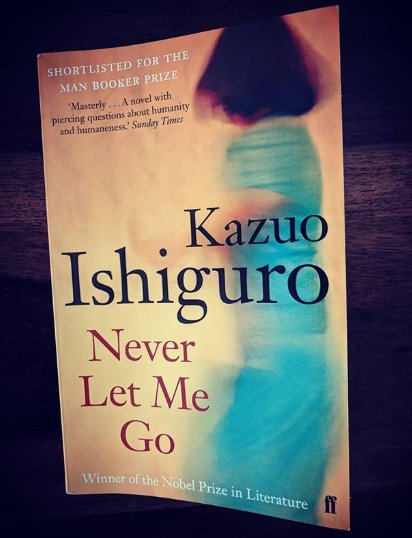
  • Never Let Me Go

    Kazuo Ishiguro

    This is only the second Kazuo Ishiguro book I am reading. But I found at least a few parallels from The Remains of the Day. For starters, both books left me incredibly sad. Some of it is for the plight of the characters, and some of it is do with the other commonality in both the books – the awareness of what could have been. Another thing I noticed is how the principal characters of both books develop a different perspective when they drive through the English countryside.

    Barring this, the books are quite different. (mild #spoilers ahead) This one is set in quite a dystopian future – humans are cloned for organ harvesting, raised in environments that don’t allow a lot of interaction with the outside world, not really made aware of their future, and are not even considered to be real humans capable of feelings and emotions. The focus of the book, though, is on three characters , their relationship with each other, and the world around them.

    It doesn’t really start off with a lot of intensity. The beginning, though it alternates between different phases in the narrator’s life, has a very Malory Towers feel to it (I thought) with different teachers (guardians), the institution and its myths and norms, and the relationship between them and the students, and between the students themselves with their friendships and rivalries. But even that early, one can catch the difference – a clear one being the exhibitions and the “gallery”, both of which are a forum for the students’ creative expression – and this does turn out to be an important theme in the book. The book then traces the life of these students as they step out into a different environment and progressively take up their prescribed roles in society.

    It left me thinking on quite a few things – these humans cannot have children of their own. Is their art supposed to be a means of immortality? But contrast that with how the author dismisses the value of art a couple of times. What are the ‘carers’ and ‘donors’ an allegory for? Is there some sort of parallel for our roles as children and parents, and how both of them, in a way, contribute to us not being a version of ourselves that we could be if they weren’t in our lives? And to end, the bittersweet irony of humans without emotions becoming carers and donors, and exhibiting a complex set of feelings that are on par, if not rival that of the humans they are ‘serving’.

    This is one of those books that drew me in, and without a lot of fuss and theatrics, engaged me in a deep way. Loved it.
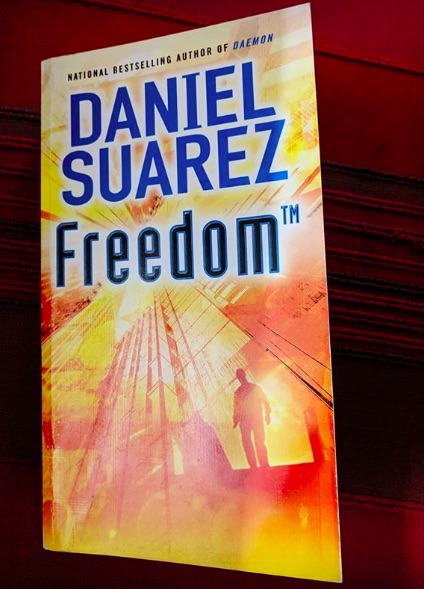
  • Freedom

    Daniel Suarez

    If you’ve read Daemon, I suspect it’d be very difficult to not read its sequel. If you haven’t, you know where to start!
    Freedom picks up right where Daemon left off with the kind of intense action that dominated the last portion of the latter. Even as the Daemon systematically tears apart the corporations and financial systems that rule the world, its enemies prepare to launch a counter attack. What makes it all interesting is that the different players in the game have divergent agendas.

    It is also interesting that the book brings to life at least a few concepts that I have read in non-fiction in the context of how unemployment, extreme capitalism and the wealth divide will cause fundamental shifts in civilised society. Neo-feudalism, trust based community networks, and the irrelevancy of state borders are a few examples. In doing that, it also shows the possibility of how new systems could end up just like old systems because the basic human tendencies remain constant.

    The narrative sets a scorching pace, and one is tempted to just zoom forward a few pages just to know how a plot point is going to end. Excellent read!

    P.S. I somehow felt that it was written with a movie or two in mind. Almost like a screenplay.

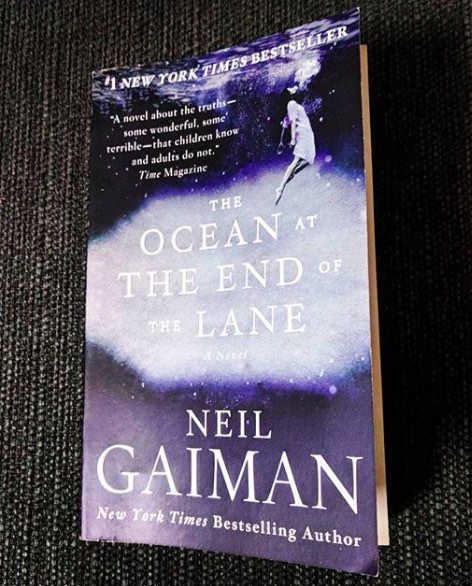
  • The ocean at the end of the lane

    Neil Gaiman

    ‘Tender’ is probably the word I’d use if I had to describe this book in a word. I have to admit that it wasn’t until the last few pages that I started reading it non-literally. And then it hit me, a bit like waves that seem benign from far and then strike you with tremendous force.

    You could read the book like a simple fantasy story or you could make guesses on the possible symbolism at work. In the first case, it is a gripping tale of a little boy caught in the midst of forces far outside the realms of a normal English life. A vulnerable yet determined child, his enigmatic guardians, and a monster of a nanny all make for a very interesting read.
    It gets even more interesting if it’s the latter – possibly a commentary on growing up, feminism, relationships and so on. It also raises a question of what is real and what isn’t. In a way, aren’t the ‘stories’ that we make up to absorb, confront, or just handle the things that happen to us as children as true as the things that really happened? How true are our memories when we remember the past?

    P.S. Loved it for this – “I lay on the bed and lost myself in the stories. I liked that. Books were safer than other people anyway.”

  • The Ministry of Utmost Happiness

    Arundhati Roy

    I didn’t read the reviews of this book, but I did sense disappointment on my various newsfeeds. Irrespective of that, this was a book that I had to read, because Arundhati Roy is one of my favourite writers. Not for The God of Small Things, which I don’t remember having a well formed opinion on, but for The Algebra of Infinite Justice, which she uses as a phrase in this book (pg 310). And I’m glad I did – the fire still burns!

    The clues to this book’s agenda, if it does have one, can be read even before one begins really reading it. It is on the jacket in the form of a seemingly rhetorical question that actually gets answered – “How to tell a shattered story? By slowly becoming everybody. No. By slowly becoming everything.”. It is also documented in the book’s dedication – To, The Unconsoled.
    The shattered story does indeed seem to have everyone and everything. It definitely has those elements which have been a part of all the non-fiction that the author has been writing – the people of Kashmir, Hindu nationalists, adivasis and Maoists. It also has the anti-corruption wave led by Anna Hazare (tubby Gandhian), the rise of Arvind Kejriwal (Mr.Aggarwal, who was an accountant), the omnipotence of Modi (“Gujarat ka Lalla”) and the saffron brigade, Maoist movements, and most definitely the mess that is Kashmir.  (more…)

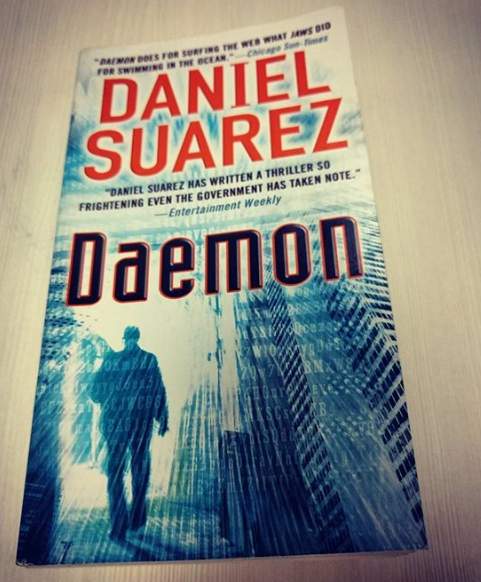
  • Daemon

    Daniel Suarez

    OMFG! That was one fantastic ride!

    An obituary of a genius gaming tycoon gets published, a program, or rather a complex logic tree system, is activated, and it begins its not-so-slow journey of taking over the world! The concept of a person infiltrating and controlling (and even micromanaging) people, events and corporations, after his death, doesn’t seem as far fetched once you get on this roller-coaster of a book.

    The immense tech knowledge that the author clearly possesses, meshes with a worldview that I definitely could relate to, and is nuanced with some very humane moments. It is as much a commentary of technology’s impact on society and individuals as it is an absolutely racy thriller that paces itself superbly. Pretty much an MMORPG set in the real world! What’s interesting is that at a certain point, it becomes very difficult to decide what the villain is – the Daemon or the government-military-industrial-corporation nexus that it seeks to destroy. The characters that fight for and against the Daemon are also an interesting bunch, with their own complex backstories, and sense of loyalty.
    I thought this would be classified as cyberpunk, but apparently there is a thing called post-cyberpunk. Whatever it is, I can’t wait to read the second part of this amazing story!

    P.S. Somewhere in between, the author also manages to explain the reason for evolution deciding on sex as a means of reproduction! Fantastic stuff there too!

    Daemon