Category: Fiction

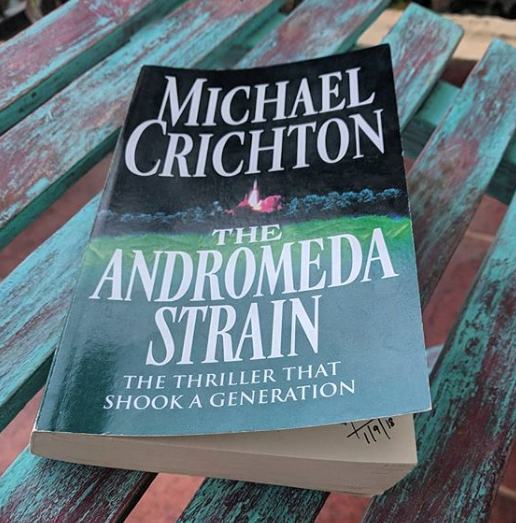
  • The Andromeda Strain

    Michael Crichton

    I am quite a bit late to the Crichton book party. For me, his name has always been associated with Jurassic Park (as a movie) and now I find that quite surprising! It took a combination of Westworld (the current series version) and a couple of “science fiction you must read” lists to get this book into my shelf.

    I really liked the premise. When one thinks of an extra terrestrial “invasion”, the usual suspects are a highly advanced species arriving in spaceships. But this book shows that first contact could actually be anything. In this case, it is less the physics of space travel, and more biology. As one character explains, any form of radiation would lose its potency over space, but a living cell can retain its characteristics if it is made with that end in mind.

    It all begins in Piedmont, Arizona, a small town where a probe has crash-landed. The probe is part of
    Project Scoop, whose objective is to collect organisms from the fringes of space for study. The fear of contamination by returning space probes has also led to the formation of Wildfire, a team that can handle a contingency at a specially created facility.

    The team is called upon to handle exactly that when something starts killing off humans in seconds. The characters who make up the team are not completely fleshed out beyond their professions, but have enough details to take them beyond names and roles. The underground facility that the team operates in is thought through in great detail and has a part to play in the climax.

    This is one of his earlier works and is quite an engaging thriller. The number of days I took to finish it is a testament to that. The pace really quickens towards the end and gives it an edge-of-the-seat feel even though the narration indicates clearly that humanity will survive. But anyway, that does not really take away from the gripping story.
  • The Paper Menagerie

    Ken Liu

    What is with these Chinese (/origin) writers? Ted Chiang’s “Stories of Your Life and Others” was the best collection of speculative fiction I had read. Then there was Liu Cixin’s “The Three Body Problem” trilogy that had a fantastic story arc even while retaining scientific accuracy. And now, Ken Liu, who had translated Liu Cixin’s work into English, and has also credited Ted Chiang as an inspiration for the last story in this book.

    All fiction, the author says in the preface, is about prizing the logic of metaphors over reality, which is irreducibly random and senseless. This is what I would call the DNA of the book, and teasing out the metaphors in some of the stories is what I considered the most exciting part of reading this book. Also mentioned in the preface is the author’s perspective that he does not pay attention to the distinction between fantasy and science fiction or genres in general, and a few stories serve as excellent examples. Good Hunting could be steampunk and fantasy, The Waves would be science fiction and fantasy, The Man who ended history could be historical fiction and science fiction. The genre is rendered irrelevant in the larger scheme of things. Everything is speculative fiction. (more…)

  • The Mammoth Book of Alternate Histories

    Edited by by Ian Watson, Ian Whates

    The idea of “what if?” has never failed to fascinate me, especially in the context of history. What if the Roman empire had survived, what if Christianity never became a religion, what if the Caliphate was victorious, what if the bombs weren’t dropped in Japan, and so on. Since this was a collection of stories, I knew that I’d like at least some of them, and that’s exactly what happened. These are my favourites from the collection.
    Sidewinders explores the popular concept of parallel universes, with a few people possessing the ability to travel between them. Dispatches from the Revolution is a very interesting take on an alternate America, ironically one that features a “madman” in the White House, but in the past. Another take on the subject is His Powder’d Wig, His Crown of Thrones, in which the British won the War of Independence and the idea of America ironically lives on in the underground culture inhabited by American Indians! Speaking of Indians, The English Mutiny is a reversal of India’s first rebellion against the empire in 1857. India is the ruling force against whom the English mutiny!
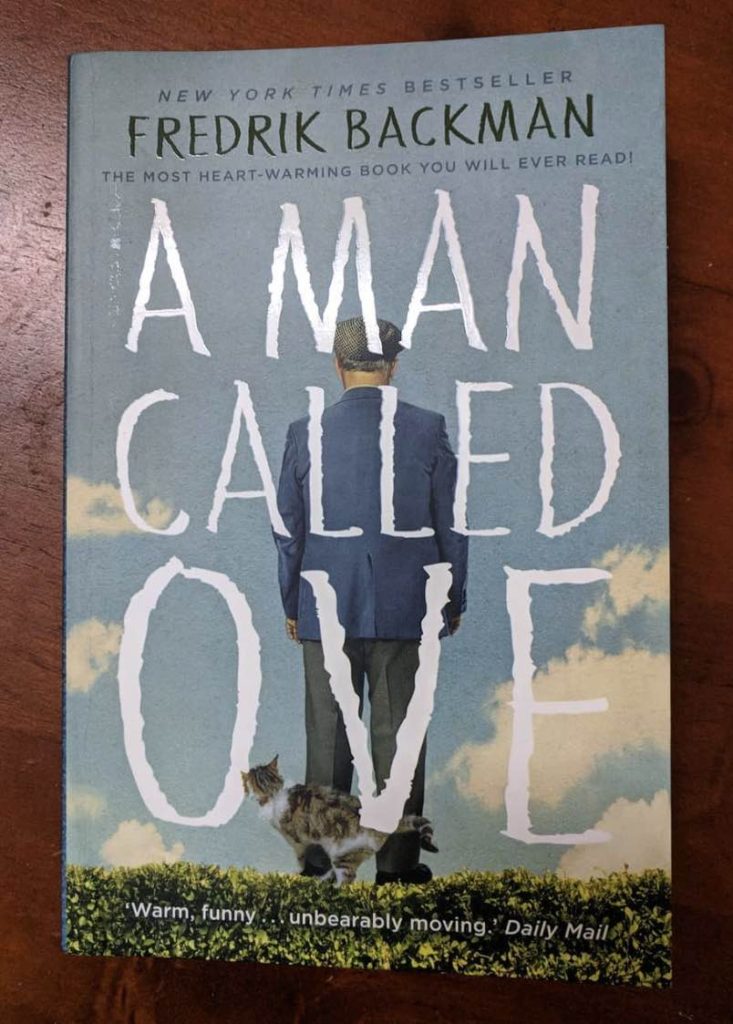
  • A Man Called Ove


    Fredrik Backman

    This was a book selected by D (my much better half) as part of our once-in-two-months book shopping. So naturally, I couldn’t just read it, I had to read into it. The message was simple, I had a lot of character similarities with Ove. It was less to do with his literally hands-on approach to fixing things and more to do with “right has to be right”, but the similarities in personality were obvious enough right from the beginning for me to LOL.

    This is probably the only book that has made me go from smile to laugh to moist eyes in a span of 30 pages. Smile because I understood Ove’s perspective and why he does the things he does. As it turns out, Ove isn’t bitter. “He just didn’t go around grinning the whole time!” Laugh because the insults and reactions are hilarious and creatively sharp. And cry because. Oh wait, that’d be a spoiler, so no.

    The slow reveal of Ove’s not-so-typical heart of gold, as people keep popping into his life, is really done well. And it’s not just Ove, the other characters, especially Parvaneh, have been written very well. In general, the main reason the book worked for me, outside of the excellent humour, was its solid understanding of its protagonist’s condition, and its commentary of the changing nature of society and its mores. There is something profound that is being delivered here – on life, youth and aging, death – but with a gentle touch. That’s probably what makes the book so heartwarming and such a pleasure to read.

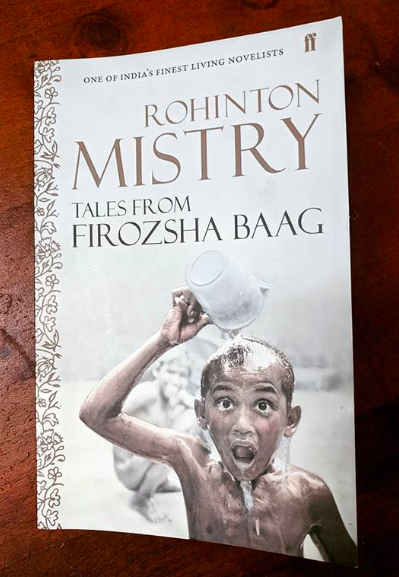
  • Tales From Firozsha Baag

    Rohinton Mistry

    A literally crappy beginning does make you wonder how this book is going to play out, but in a few pages, you understand this was only literally. However, what it also points out is the author’s ability to make the mundane very interesting. Eleven intertwined stories that create a vivid world whose unique characters the reader is able to identify and relate to, though they might be far different from the self or those around.

    A theme that I felt was running strong through all the stories was one of identity – at both collective and individual levels. There is obviously the Parsi way of life, and their interactions with the world at large. Without really resorting to stereotypes or tropes, the author is able to bring out the way of life and the struggle between its past and future through various characters, and their relationships and interactions. At an individual level, for example, Jaakaylee who was Jacqueline identifies herself as the former after 49 years of working among Parsis who called her that. Many stories bring out the tussle between generations as children grow up and understand the need for changes in their way of thinking and living if they are to survive in the world, even as parents cling on to traditions and cannot understand the need for change. The author uses Kersi’s character at both the personal and collective levels to show how life shifts with time.

    Two of my favourite stories are “Of white hairs and cricket” and “Lend me your light”. Both star Kersi and are points in his life that make him realise how the world he inhabits is constantly shifting, and he cannot always hold on to the things he thought were eternal. The last paragraph in the first story is something I could wholly relate to – when one feels precious things slipping through fingers and is powerless to stop it. I think anyone who has had to leave a place they considered home will be able to relate to the second story – the array of mixed feelings when one has to leave, when one has to visit even for a short time, and the idea of being a stranger in one’s own home.

    There is an excellent skill of observation that has been put to good use in all the stories, and a remarkable sensitivity that is evident in the writing. The writing technique somehow feels rich even when writing about the ordinary days of a life, and somehow, despite that, or maybe because of it, one feels that these are people one might actually know already.