Category: Fiction

  • The Mammoth Book of Alternate Histories

    Edited by by Ian Watson, Ian Whates

    The idea of “what if?” has never failed to fascinate me, especially in the context of history. What if the Roman empire had survived, what if Christianity never became a religion, what if the Caliphate was victorious, what if the bombs weren’t dropped in Japan, and so on. Since this was a collection of stories, I knew that I’d like at least some of them, and that’s exactly what happened. These are my favourites from the collection.
    Sidewinders explores the popular concept of parallel universes, with a few people possessing the ability to travel between them. Dispatches from the Revolution is a very interesting take on an alternate America, ironically one that features a “madman” in the White House, but in the past. Another take on the subject is His Powder’d Wig, His Crown of Thrones, in which the British won the War of Independence and the idea of America ironically lives on in the underground culture inhabited by American Indians! Speaking of Indians, The English Mutiny is a reversal of India’s first rebellion against the empire in 1857. India is the ruling force against whom the English mutiny!
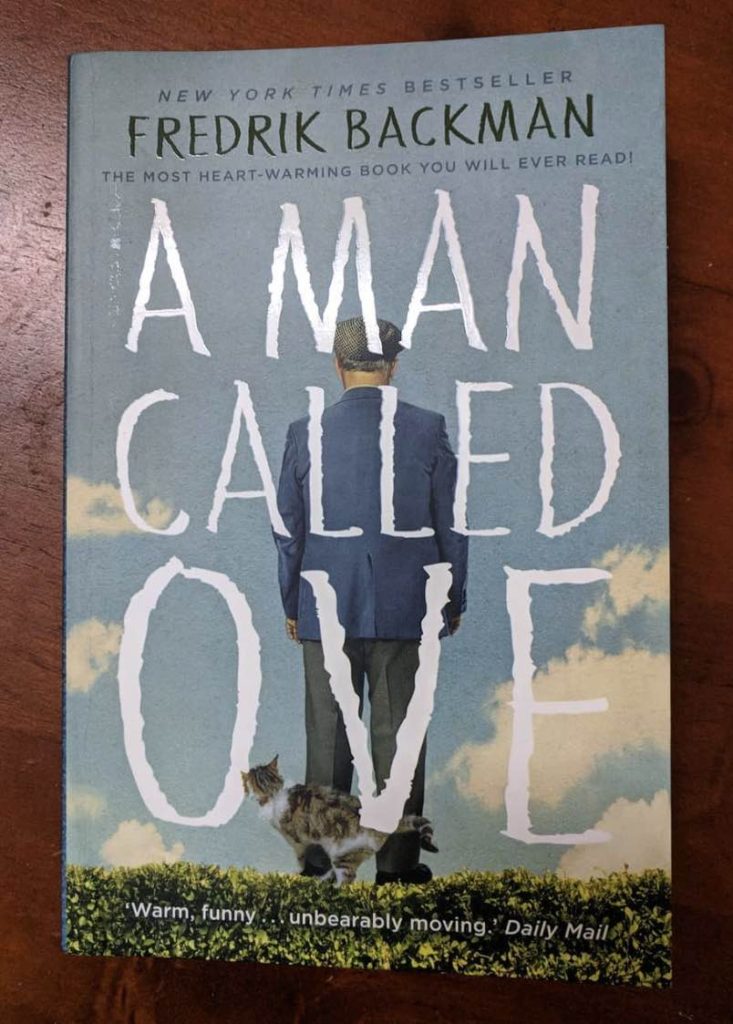
  • A Man Called Ove


    Fredrik Backman

    This was a book selected by D (my much better half) as part of our once-in-two-months book shopping. So naturally, I couldn’t just read it, I had to read into it. The message was simple, I had a lot of character similarities with Ove. It was less to do with his literally hands-on approach to fixing things and more to do with “right has to be right”, but the similarities in personality were obvious enough right from the beginning for me to LOL.

    This is probably the only book that has made me go from smile to laugh to moist eyes in a span of 30 pages. Smile because I understood Ove’s perspective and why he does the things he does. As it turns out, Ove isn’t bitter. “He just didn’t go around grinning the whole time!” Laugh because the insults and reactions are hilarious and creatively sharp. And cry because. Oh wait, that’d be a spoiler, so no.

    The slow reveal of Ove’s not-so-typical heart of gold, as people keep popping into his life, is really done well. And it’s not just Ove, the other characters, especially Parvaneh, have been written very well. In general, the main reason the book worked for me, outside of the excellent humour, was its solid understanding of its protagonist’s condition, and its commentary of the changing nature of society and its mores. There is something profound that is being delivered here – on life, youth and aging, death – but with a gentle touch. That’s probably what makes the book so heartwarming and such a pleasure to read.

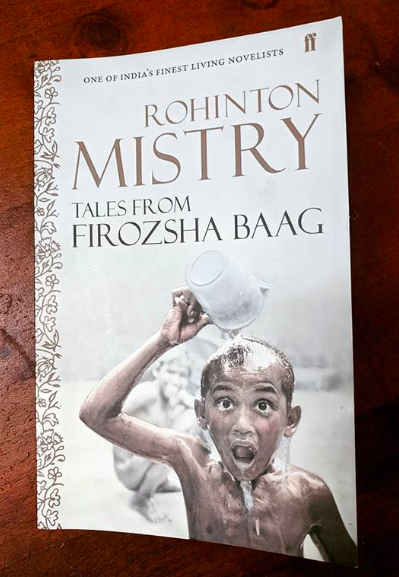
  • Tales From Firozsha Baag

    Rohinton Mistry

    A literally crappy beginning does make you wonder how this book is going to play out, but in a few pages, you understand this was only literally. However, what it also points out is the author’s ability to make the mundane very interesting. Eleven intertwined stories that create a vivid world whose unique characters the reader is able to identify and relate to, though they might be far different from the self or those around.

    A theme that I felt was running strong through all the stories was one of identity – at both collective and individual levels. There is obviously the Parsi way of life, and their interactions with the world at large. Without really resorting to stereotypes or tropes, the author is able to bring out the way of life and the struggle between its past and future through various characters, and their relationships and interactions. At an individual level, for example, Jaakaylee who was Jacqueline identifies herself as the former after 49 years of working among Parsis who called her that. Many stories bring out the tussle between generations as children grow up and understand the need for changes in their way of thinking and living if they are to survive in the world, even as parents cling on to traditions and cannot understand the need for change. The author uses Kersi’s character at both the personal and collective levels to show how life shifts with time.

    Two of my favourite stories are “Of white hairs and cricket” and “Lend me your light”. Both star Kersi and are points in his life that make him realise how the world he inhabits is constantly shifting, and he cannot always hold on to the things he thought were eternal. The last paragraph in the first story is something I could wholly relate to – when one feels precious things slipping through fingers and is powerless to stop it. I think anyone who has had to leave a place they considered home will be able to relate to the second story – the array of mixed feelings when one has to leave, when one has to visit even for a short time, and the idea of being a stranger in one’s own home.

    There is an excellent skill of observation that has been put to good use in all the stories, and a remarkable sensitivity that is evident in the writing. The writing technique somehow feels rich even when writing about the ordinary days of a life, and somehow, despite that, or maybe because of it, one feels that these are people one might actually know already.

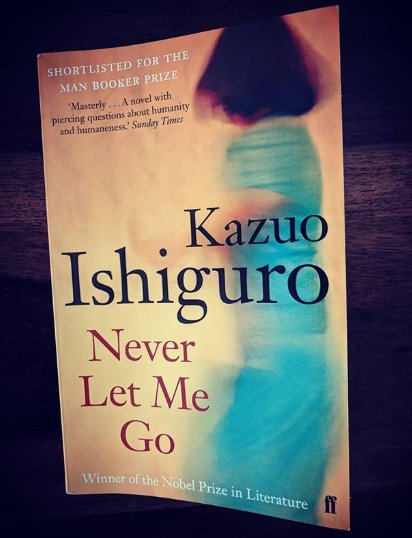
  • Never Let Me Go

    Kazuo Ishiguro

    This is only the second Kazuo Ishiguro book I am reading. But I found at least a few parallels from The Remains of the Day. For starters, both books left me incredibly sad. Some of it is for the plight of the characters, and some of it is do with the other commonality in both the books – the awareness of what could have been. Another thing I noticed is how the principal characters of both books develop a different perspective when they drive through the English countryside.

    Barring this, the books are quite different. (mild #spoilers ahead) This one is set in quite a dystopian future – humans are cloned for organ harvesting, raised in environments that don’t allow a lot of interaction with the outside world, not really made aware of their future, and are not even considered to be real humans capable of feelings and emotions. The focus of the book, though, is on three characters , their relationship with each other, and the world around them.

    It doesn’t really start off with a lot of intensity. The beginning, though it alternates between different phases in the narrator’s life, has a very Malory Towers feel to it (I thought) with different teachers (guardians), the institution and its myths and norms, and the relationship between them and the students, and between the students themselves with their friendships and rivalries. But even that early, one can catch the difference – a clear one being the exhibitions and the “gallery”, both of which are a forum for the students’ creative expression – and this does turn out to be an important theme in the book. The book then traces the life of these students as they step out into a different environment and progressively take up their prescribed roles in society.

    It left me thinking on quite a few things – these humans cannot have children of their own. Is their art supposed to be a means of immortality? But contrast that with how the author dismisses the value of art a couple of times. What are the ‘carers’ and ‘donors’ an allegory for? Is there some sort of parallel for our roles as children and parents, and how both of them, in a way, contribute to us not being a version of ourselves that we could be if they weren’t in our lives? And to end, the bittersweet irony of humans without emotions becoming carers and donors, and exhibiting a complex set of feelings that are on par, if not rival that of the humans they are ‘serving’.

    This is one of those books that drew me in, and without a lot of fuss and theatrics, engaged me in a deep way. Loved it.


  • Freedom

    Daniel Suarez

    If you’ve read Daemon, I suspect it’d be very difficult to not read its sequel. If you haven’t, you know where to start!
    Freedom picks up right where Daemon left off with the kind of intense action that dominated the last portion of the latter. Even as the Daemon systematically tears apart the corporations and financial systems that rule the world, its enemies prepare to launch a counter attack. What makes it all interesting is that the different players in the game have divergent agendas.

    It is also interesting that the book brings to life at least a few concepts that I have read in non-fiction in the context of how unemployment, extreme capitalism and the wealth divide will cause fundamental shifts in civilised society. Neo-feudalism, trust based community networks, and the irrelevancy of state borders are a few examples. In doing that, it also shows the possibility of how new systems could end up just like old systems because the basic human tendencies remain constant.

    The narrative sets a scorching pace, and one is tempted to just zoom forward a few pages just to know how a plot point is going to end. Excellent read!

    P.S. I somehow felt that it was written with a movie or two in mind. Almost like a screenplay.