Category: Favourites

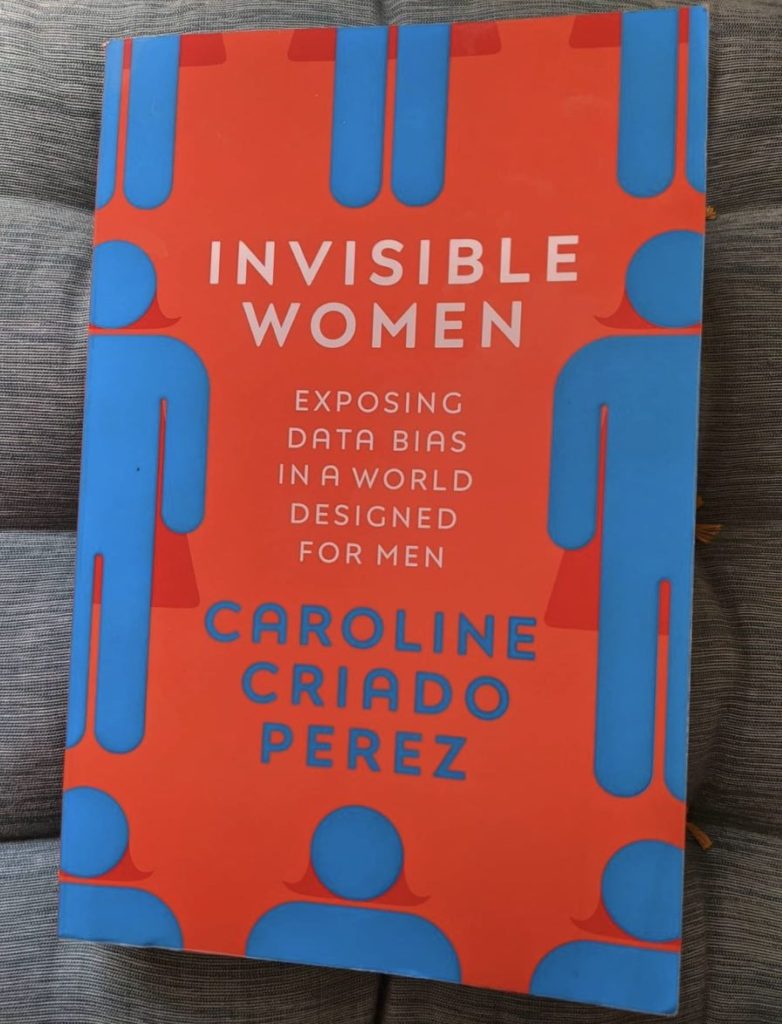
  • Invisible Women: Exposing Data Bias in a World Designed for Men

    Caroline Criado Perez

    Enlightening! While a part of the title reads “exposing data bias in a world designed for men”, I think it extends well beyond that. It provides perspectives that I had not even considered, even though in the last few years, I have tried to be more conscious of the challenges that women face at the workplace, in public spaces, their everyday lives, and how the world works differently for them in the many, many things that men take for granted. This, therefore, is a book that I think men and women should read, for different reasons.

    For women, it will probably serve as an insightful articulation of many things that they have thought about, talked about, or attempted to change, and give them information about how women around the world have taken them up as challenges and sometimes succeeded in setting things right. I will stop at that, and not be presumptuous in assumptions.
    For men. Where do I even start? I think we will see the world differently after reading this book. The challenge for us would be to be conscious of the inherent bias in our thinking, our behaviour, and the way we design objects and systems. As the blurb says, imagine a world where the phone you use is too large for your hand, where the safety of the vehicle you travel in has not really been designed with you in mind, and the medicine you have been prescribed is just wrong for you because you weren’t adequately represented in trials! In essence, “the lives of men have been taken to represent those of humans overall.”

    The author uses data and case studies from multiple domains to highlight how women haven’t been fairly represented, and in many cases to also show how correcting this could lead to a better result not just for women, but for humanity overall. Public transport, urinals (ever wondered why there’s always a queue for women while men seem to find things much easier), workplace practices, product design, medicine, disaster relief, the pain is everywhere. And they are at various levels of seriousness. Some made me say “oh, I didn’t think of it that way”, many made me grimace, and most are just appalling.
    It has given me many perspectives, and a resolve to work harder at contributing to fix this. One really doesn’t have to be a genius to understand the impact better representation can make, at an individual and species level. With all that being said, in the end, I also have to admit, quite sheepishly, and to underline the point, that while many of my favourite authors are female, I might have completely missed this book if my wife hadn’t made it part of our list! See? 🙂

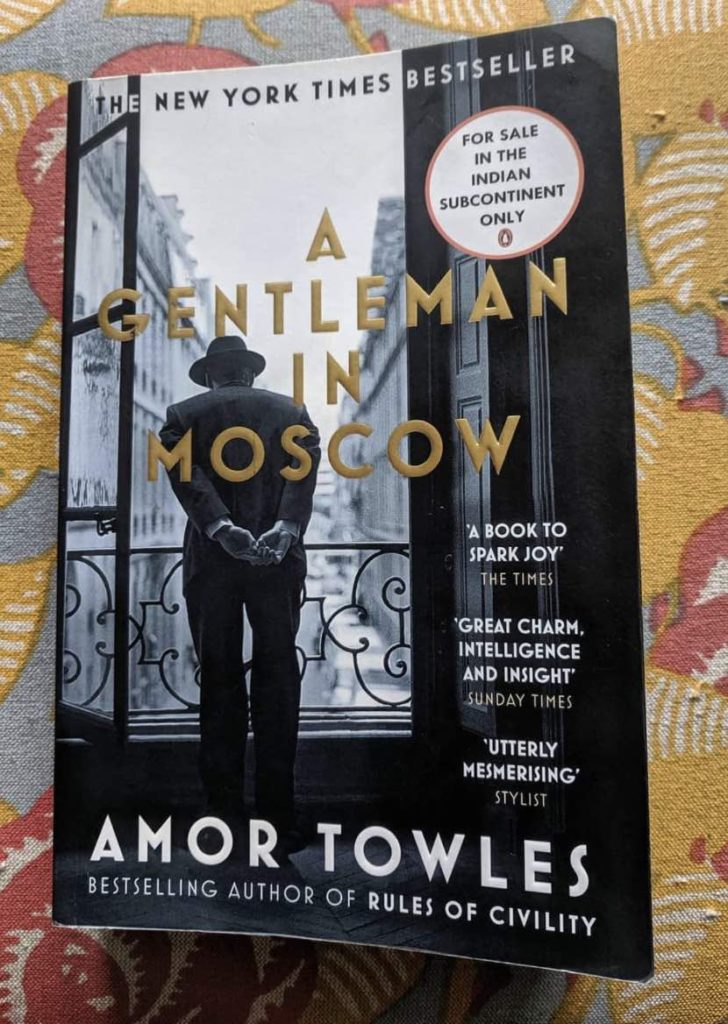
  • A Gentleman in Moscow

    Amor Towles

    I was hesitant to write anything about this book for fear that it would take away from its wonderful aftertaste. But not doing so would be an injustice too, so here goes.

    The adjective I would use to describe A Gentleman in Moscow is sublime. That applies to the story, the writing, and the protagonist – Count Alexander Ilyich Rostov. On 21st June 1922, a Bolshevik tribunal sentences him to house arrest indefinitely. The “house” is the Hotel Metropol, and he is forced to substitute his suite for an attic room. As the author insightfully notes, “the Russians were the first people to master the notion of sending a man into exile at home.”
    Russia, post-revolution, exile – it is difficult to imagine anything that’s not depressing in the 450+ pages that follow. But in the face of imminent disaster, Towles, just like his protagonist, steps up to the plate, shuns maxims, and hits the ball out of Gorky Park. (ok sorry, but bad wordplay is a sure sign of my affection) Hope has a new champion. For Count Rostov is probably a living embodiment of Marcus Aurelius’ Meditations, and from the time that he is forced to choose from his possessions what he can take along to his new residence, he embraces his future by well, counting his blessings. His poise does not miss a step as he moves from “it is not the business of a gentleman to have occupations.” to becoming a waiter, and he continues to exhibit his “essential faith that by the smallest of one’s actions one can restore some sense of order to the world.”

    But one cannot be blamed for thinking that even for such a wonderful character, the four walls of a hotel is bound to be a constraint. The Metropol, though, is a world unto itself. We discover spaces and mind spaces inside, the people who work there, and its visitors. And through the eyes of the Count and his friends, we see Russian history unfold from Lenin to Stalin to Khrushchev.

    Amor Towles’ mastery over situations and the words he uses to express them is not something I have seen much of around. It’s genuine craftsmanship. In the Count, he has created a character that brings out the essence of old world charm, and class. Instead of aristocratic snobbery, what one gets is a very human mix of upbeat bearing and wistful serenity – a character for whom one genuinely feels for. The Count has his basic lessons right – “The first was that if one did not master one’s circumstances, one was bound to be mastered by them; and the second was Montaigne’s maxim that the surest sign of wisdom is constant cheerfulness.” And it isn’t just the Count – the support characters also do a splendid job of covering a vast spectrum of predicaments, thoughts and behaviour.

    And thus it is, that when one reaches the end of the book, and lets out a sigh, one has the “feeling that this moment, this hour, this universe could not be improved upon”.

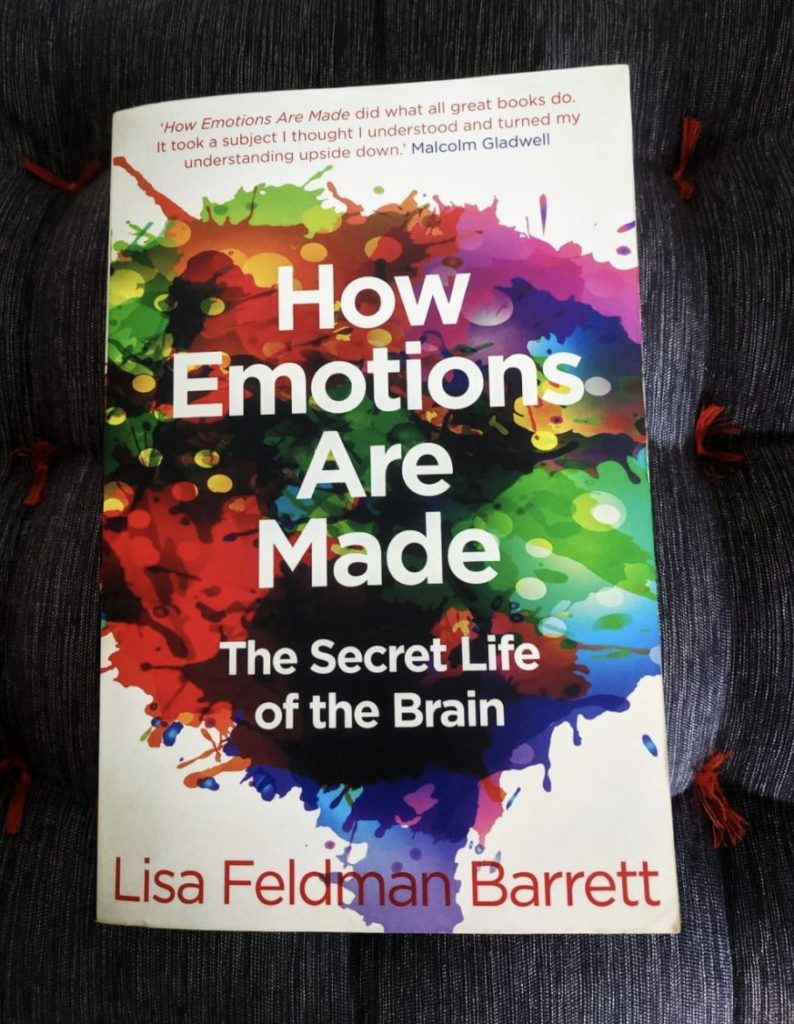
  • How Emotions Are Made

    Lisa Feldman Barrett

    Just when I thought I was getting some stability (in my thinking) on the free will vs determinism debate, here comes fresh food for thought. As per ‘How Emotions Are Made’, while the combination of genetic and environmental factors do determine our behaviour, free will has a definite play.

    The core theme of the book is a constructionist theory of how emotions are made, as opposed to a classic theory. The classical view assumes that each emotion has a unique ‘fingerprint’, as against the opposing view that variation is the norm. This has implications not just on how we physically manifest our emotions but on our understanding of how the nervous system operates as well. And finally, the classical view believes that emotions are inborn and universal. But the alternate view is that emotions are formed based on shared concepts, influenced by social reality and culture.

    The view of the brain as a tiered system (survival, emotion, cognition) is one of the first myths that the author breaks. Further, as opposed to being the result of a stimulus-response mechanism, emotions are a result of the brain simulating and predicting, based on a bunch of factors. What we call emotions – anger, fear, happiness etc- are concepts that get created and honed in the brain. Concepts, goals, words all help the brain frame any new stimulus it receives and then predict. By reframing concepts and looking at them more objectively, we can reshape what emotions are surfaced, and thus exercise free will.

    Towards the middle of the book, the author sets up the answer for “are emotions real” with the classic philosophical question of “If a tree falls in a forest and no one is around to hear it, does it make a sound?”. The answer is that both fall under the “perceiver-dependent” category. Emotions are thus, a social reality and become real because of collective intentionality and our ability to communicate using words.

    This understanding of emotions, and how much we control/are in control has implications on a lot of things ranging from our daily behaviour to the way the judiciary system works and how we deliver justice.

    ‘How Emotions Are Made’ is refreshing because of the alternate perspectives, all of which are backed by science. The author makes it a point to call out hypotheses where it’s not. The language is technical only when needed and explanations are lucid. In all, it is a fascinating book that has made me rethink a lot of what I thought I knew about myself and the world. Not an easy read, but absolutely worth the time. And that’s why it made it to my 2019 favourites.

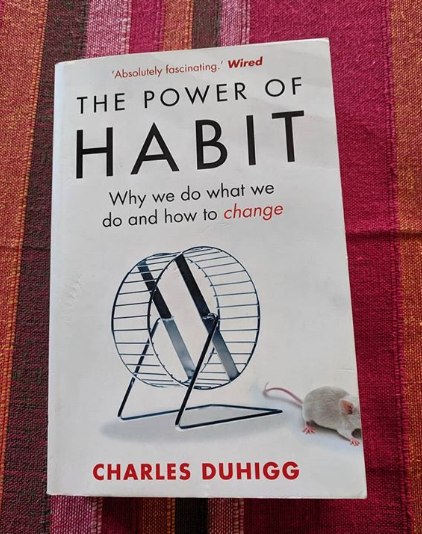
  • The Power of Habit

    Charles Duhigg

    There is something meta about me reading this book. I have my own book-reading habits – genres, number of books on the to-be-read shelf, and such. It is an example of the fundamental premise of this book – cue, routine, reward. Under normal circumstances, I reckon that this book might have landed up on my list 3-5 years down the line. But thanks to my wife D, it not only got into my shelf, but gave me a favourite book as well! Same cue, changed routine, same reward – the exact process to lose a bad habit and pick up/better a good one!

    Towards the end of the book, the author quotes William James – “All our life, so far as it has definite form, is but a mass of habits – practical, emotional, and intellectual – systematically organized for our weal or woe, and bearing us irresistibly toward our destiny, whatever the latter may be.” As a creature of habits, I wholeheartedly agree. Habits form character, and character forms destiny.

    The book can be helpful to anyone seeking to improve the self, whether it is in life or at work. From losing weight to raising children to building great teams, the importance of habits (individuals) and routines (groups), and the fundamentals of changing/bettering them do not change. The author demonstrates that in separate sections dedicated to individuals, companies and societies. Michael Phelps’ habits and routines, Howard Schultz’s (CEO, Starbucks) processes that have transformed not just how the organisation works, but employees’ lives, and Martin Luther King’s successful civil rights movement, all showcase a pattern that can be used to radically alter trajectories.
    I think the success of the book is also due to the excellent storytelling that converts what could have been a dry subject to one that is not just enlightening but entertaining too! I suspect there is some understanding of a reader’s cue-routine-reward mechanism here, because I was hooked soon as I started! 🙂

    There are a couple of wonderful analogies for habits at the end of the book – both using water. It captures the essence of the book beautifully, and encourages us to believe that we can choose our path, and swim wherever we want to.
    Pick it up. Now!

  • The Rise and Fall of the Third Reich

    William L. Shirer

    What a fascinating read! The second world war was one of the most defining events of the contemporary era, and The Rise and Fall of the Third Reich provides a fantastic view of what happened in Germany between 1930 and 1945, chronicling the ascendance of Hitler and the Nazi Party and its eventual demise.

    Hitler’s dream was to establish a Reich that would last a thousand years, though it finally managed just about a dozen. But in those few years, he managed to give the world the kind of shock it had probably never experienced before.

    The book actually begins much earlier, and traces Hitler’s early life, his disenchantment with the socio-political environment prevalent in Austria and Germany, and his entry into regional politics. Through smart thinking, astute use of the economic depression, a lot of outmaneuvering of politicians far bigger in stature than him, and quite some luck, he took himself to a position where the nation was practically begging him to seize control. It is amazing to see the number of instances long before he gained power when a small change would have led to a different history than the one we are familiar with.

    His baby steps into expanding Germany’s borders through cunning and then brute force, his affection for the largely ineffectual Mussolini, the poor judgment and horrendous miscalculations exhibited by the European powers, Stalin’s greed, all led to a state of affairs that made war inevitable. Germany dominated the early period, the Blitzkrieg tore through defenses, and it is astonishing to see how close they came to taking over all of Western Europe early in the war, in addition to Scandinavia and Eastern Europe. Through the mid to late 30s, what is also evident is Hitler’s own iron will, determination and political astuteness using which he outplayed his opponents over and over. But in Stalin, he met his match, and he underestimated the man and his country’s military strength. A costly mistake.

    At some point, Hitler’s megalomania took over, and his downfall began. His allies, the Japanese, didn’t help the cause much by drawing the US into the war. He repeated history by disastrously opening two fronts in battle. He also misread the importance of North Africa and the Suez. But it is chilling to note that with a little patience and by sticking to strategic alliances, he might not have lost the war at all. The Rise and Fall of the Third Reich also covers the role played by several inept leaders of the German armed forces in bringing and keeping Hitler in power, and their inability to stand up to the dictator, even as they realised that he was leading their country into disaster. Also described in detail are the several plots that were hatched to assassinate Hitler, including Operation Valkyrie.

    This is a commendable piece of work – not just for chronicling an important piece of history, but for the painstaking research that must have gone into it, and the control on a narrative with so many moving parts, all of which are important.

    At 1100+ pages and the smallest possible font, The Rise and Fall of the Third Reich is not an easy read. But if you have any interest in history, and the war that shaped the modern world, this is a book you should definitely invest in.

    The Rise and Fall of the Third Reich