
Annie Jacobsen
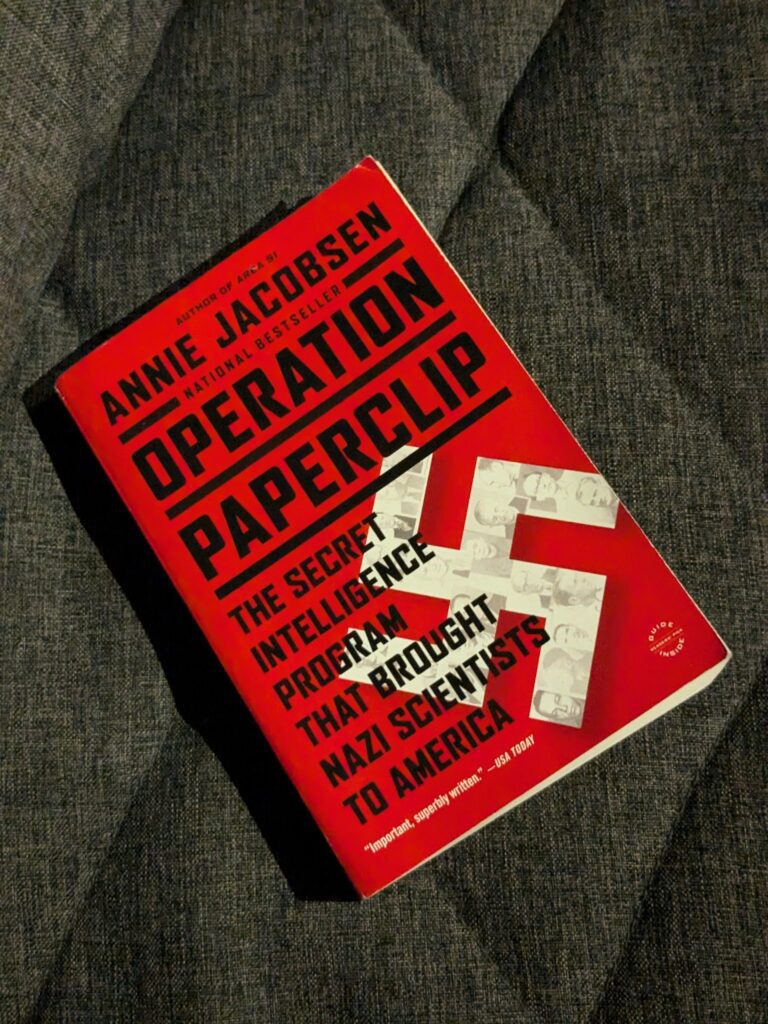
It was in a show called Hunters that I first heard about Operation Paperclip. Even before WW 2 ended, and though there were common organisations among Allies, the race was on between the would-be victors to get Nazi science and tech to their own countries. This expanded to the Nazis who were working on such projects. Originally called Operation Overcast, the then rechristened Operation Paperclip was the US version, which ran between 1945 and 1959, and as a part of which more than 1600 German scientists, engineers, and technicians were taken from Nazi Germany to the U.S. and more often than not, given government employment. The American Dream!
The ‘excuse’ at first was the objective to beat Japan, and end the war. That later morphed into the threat of the Cold War and beating the Communists. Annie Jacobsen does a fantastic job of piecing together the historical contexts before and during the operation, the various organisations and people involved on both sides, their mindset and justifications, the crusaders who fought against it – including well-known people like Einstein and Eleanor Roosevelt as well as the scientist community and journalists, and getting into little-known details that lend a lot of texture to the narrative. It is to be noted that this meant sifting through actual facts, propaganda released by the US government and the former Nazis to create the aura of how brilliant German scientists would make Americans’ lives better, misreporting by media (sometimes deliberate, sometimes not), all this while many of the files were deemed classified, and everything had happened decades ago.
The moral dilemma, even for someone objectively looking at it, is just fascinating. One one hand, there are several advances in space research and exploration, medicine, chemistry and so on that did get a boost thanks to the German scientists. But on the flip side, this meant more than condoning their inhuman actions during the war. In fact, many of these people were celebrated, and some even became celebrities.
Early in the book, Annie writes about the sign over the Buchenwald concentration camp gate – Jedem das Seine, which means ‘to each what he deserves”. It is difficult to see it as generically true once you read the book, and about people like Wernher von Braun, General Dornberger, and Otto Ambros who didn’t really pay for their sins, and collateral damage like Frank Olson, who officially worked with the CIA but who was also the victim of a covert dosage of LSD by his own colleagues, which resulted in his suicide in a few days because of mental imbalance! ‘Science at any price’.
Operation Paperclip is a supremely well-written book, important through the lens of history as well as morality, and I’d highly recommend a read.
Leave a Reply