Month: November 2011

  • It’s not just a car..

    He stood watching the children play with the car. The car reminded him of himself. Ravaged by fate, time and humans. He still remembered the day he had left it at the crossroad, trying to escape the cops. Five years ago. Time to start afresh. Maybe he would start with finding the car’s original owners.

    …………………………………………………………………………………………………………………………………………….

    For those unfamiliar with the genre, that was a 55 word story, something I haven’t done in a while. The story behind writing this is probably more interesting. I met Ideasmith for the first time recently, and the first thing she asked was why I no longer wrote them. I could only smile. The 55s were a phase. So this one is specially for her. 🙂

    Later the same day, I met a few other friends for dinner. The conversation somehow moved to how, on a cold morning a long time ago, I had abandoned my first vehicle (the ‘famous’ Kiney that fell in love with the mechanic and found excuses to visit him) in front of the workshop because I couldn’t take it along to our new accommodation. By that time, many of its parts had been spared for the newer vehicle. The conversation thus moved on to abandoned cars. You must’ve come across a few parked on the road – without tyres, insides lined with dust, torn seating, the model usually belonging to an earlier era, and now either ignored or the local kids’ play item . I have always been fascinated by them. For me, they are like snapshots in time. The end of some story. A cross road. A decision. To move on, the car not factoring in the rest of the story. The humans involved and the circumstances that made them abandon the car is always a potential story. Just like the 55 above.

    until next time, it’s a caaaar story 😉

  • Kumarakom

    The review was first published in Bangalore Mirror.

    Thanks to HSR Layout’s proximity to Koeramangala, some would say that it is one of the first areas that have been earmarked for expansion in the Mallu global domination plans. So it’s no surprise that Kumarakom, after opening outlets in Chennai and the international Malayali homeland Dubai, chose to set up shop here. Kumarakom is better known as a tourist destination in Kerala, located near Kottayam, and with the Vembanad Lake as its backdrop.

    Kumarakom in HSR has a the BDA complex as the backdrop, but makes it up with an ambience that immediately transports you to Kerala – a décor that includes a few mural paintings, a charupadi in some areas, a chuttuvilakku, and even right down to the boat-shaped salt’n’pepper holder on the table. The music, though, moved from Malayalam movie soundtracks to 90s pop and then lounge music in the space of two hours.

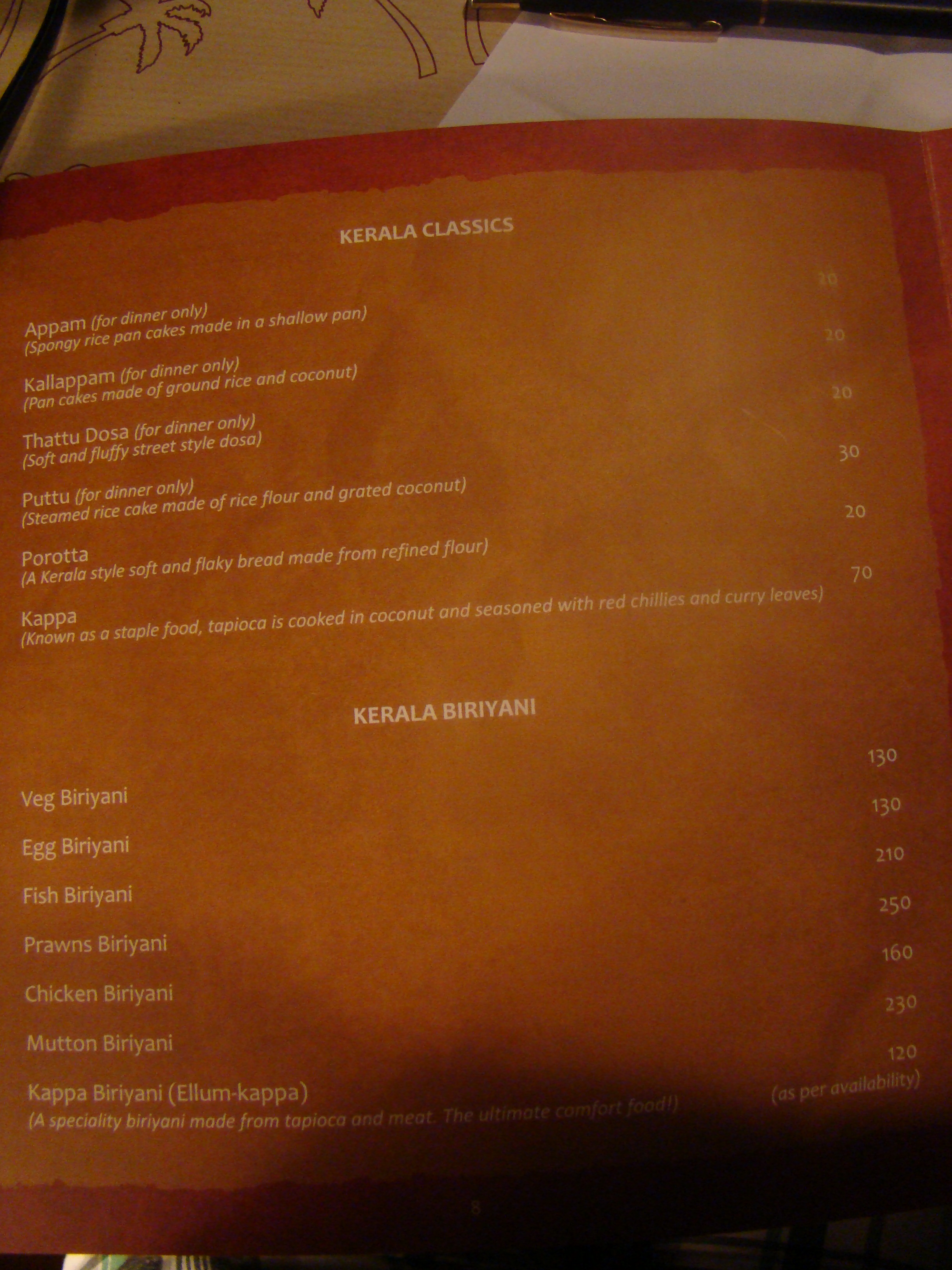
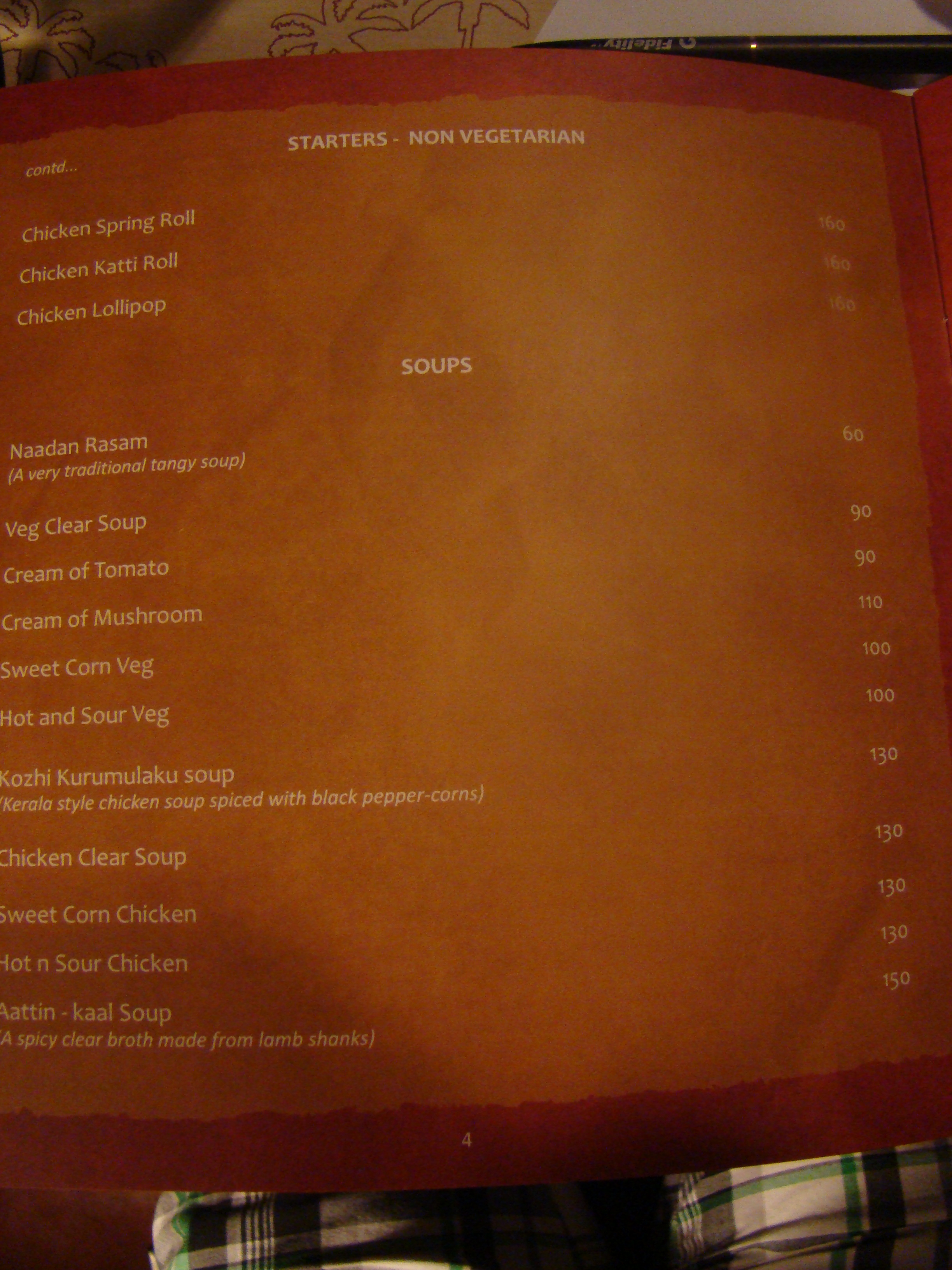
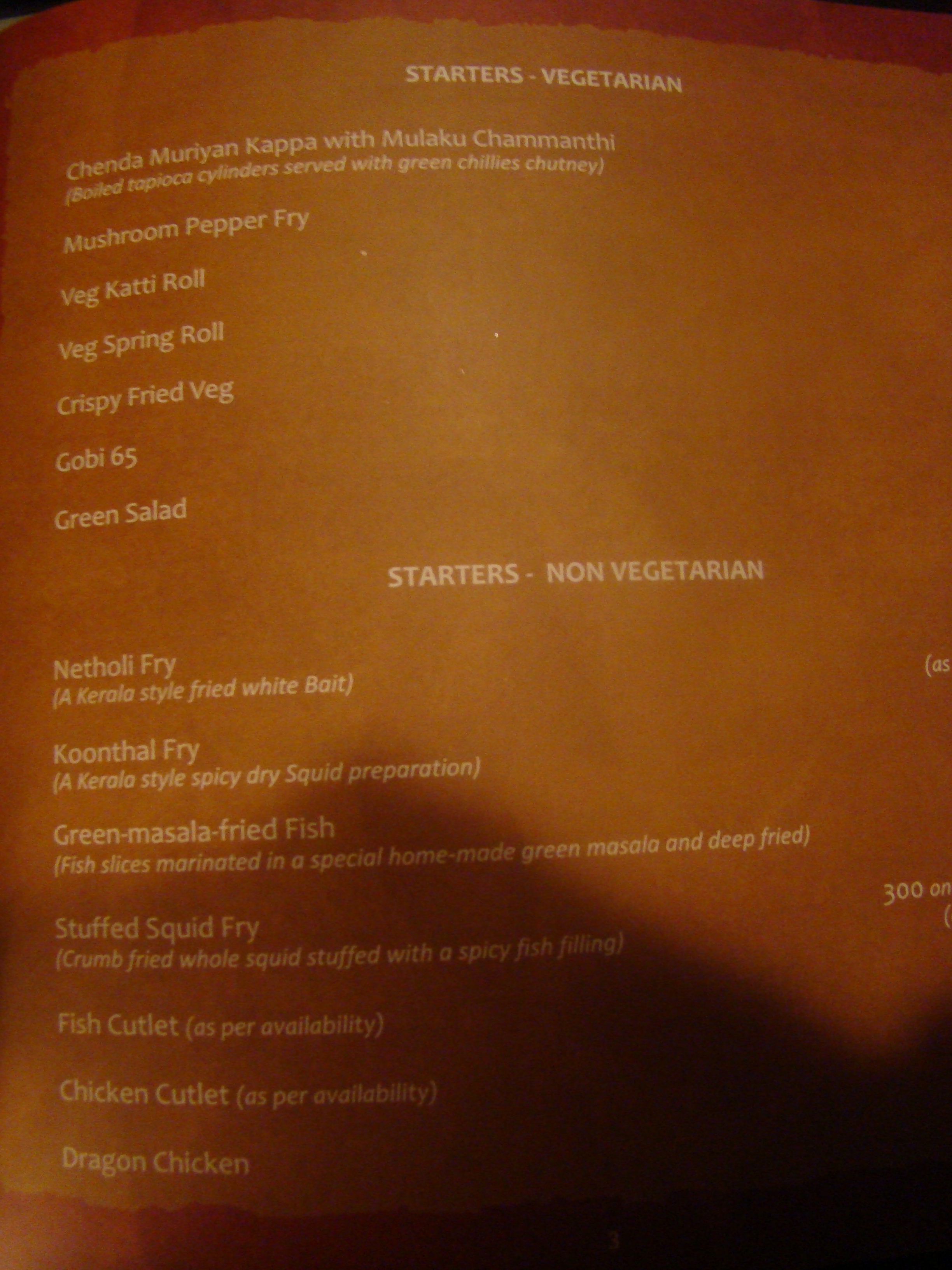
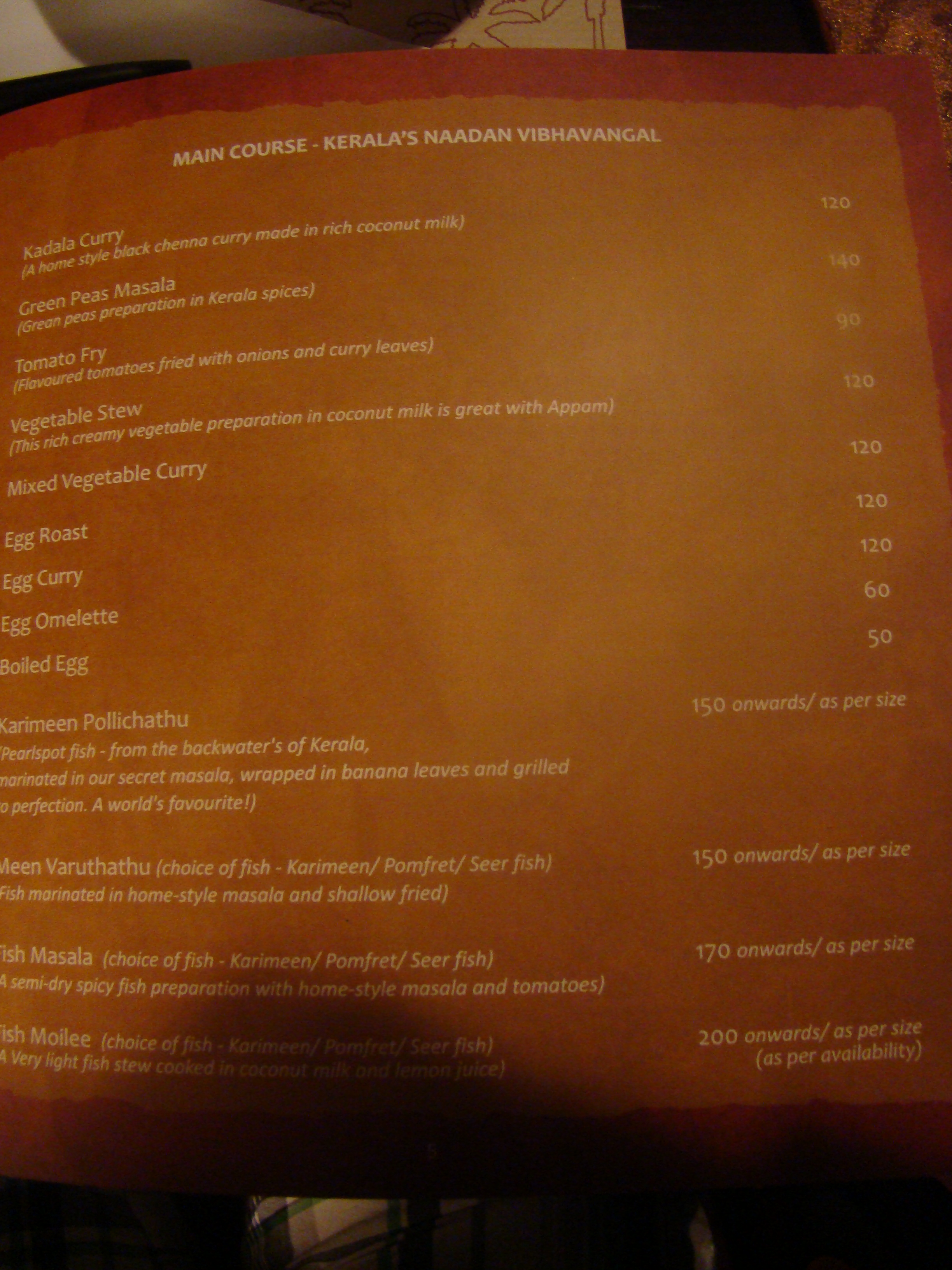
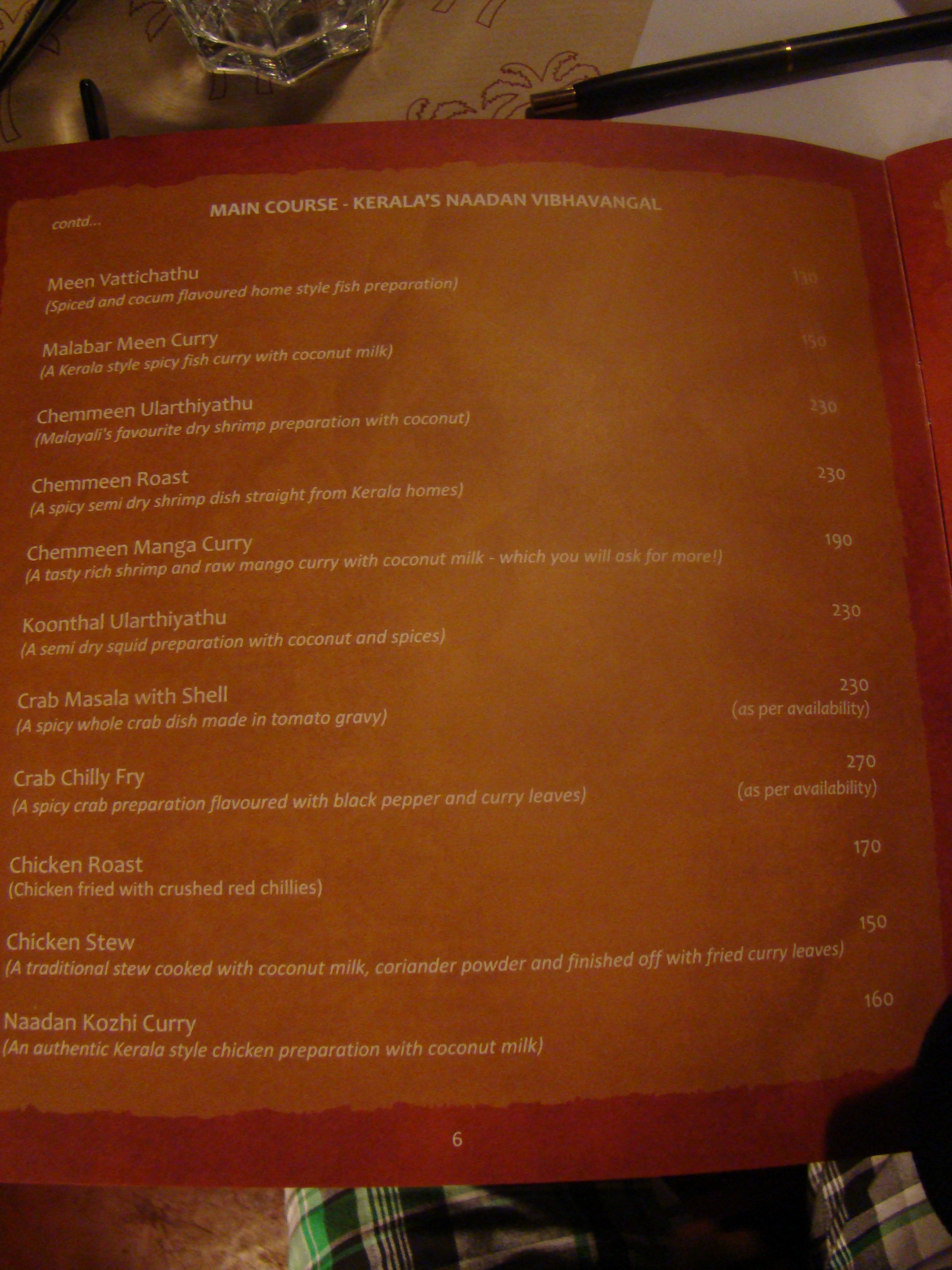
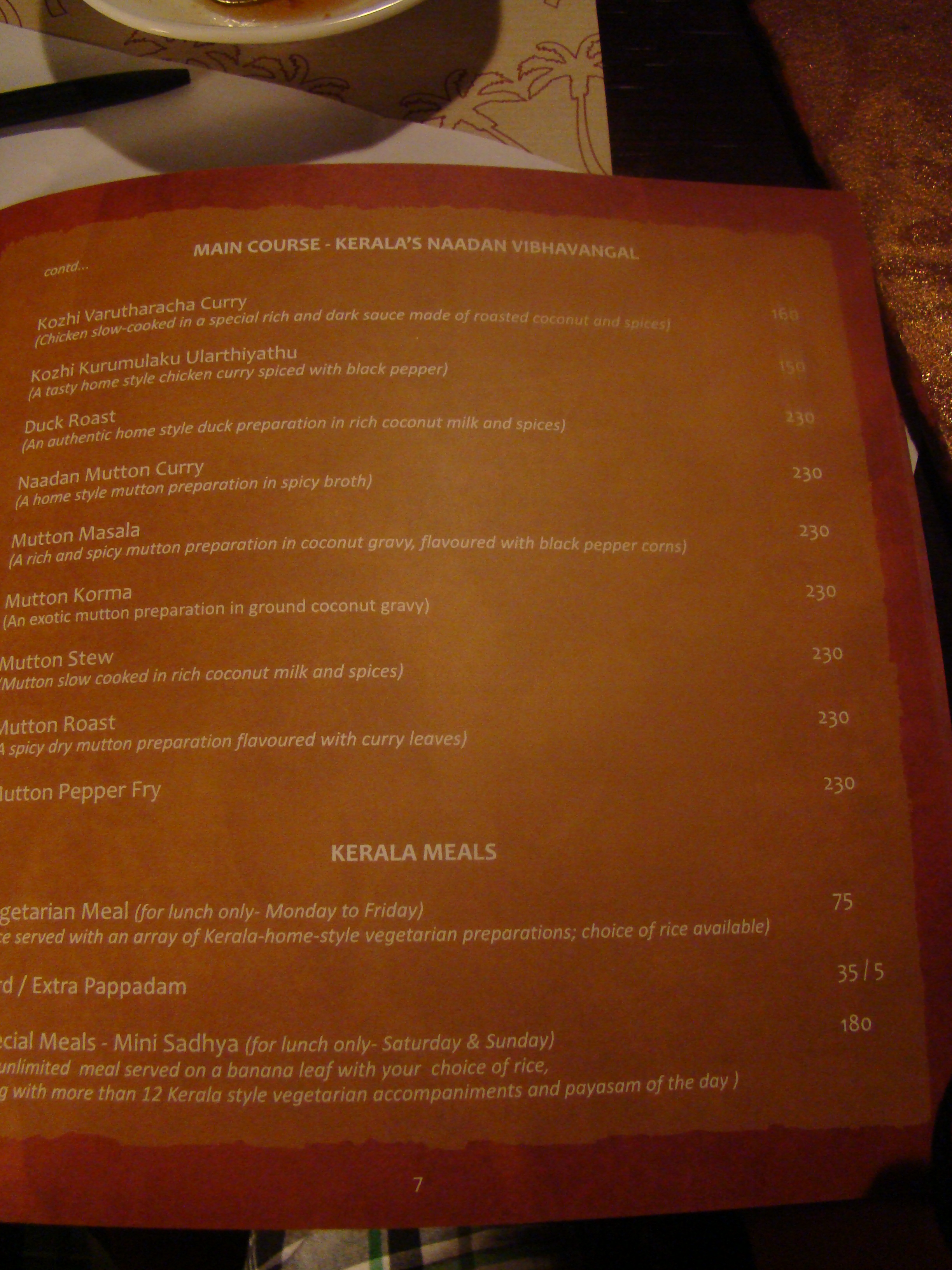
    The menu does provide a range of options from traditional Kerala cuisine, and if for some reason, those fail to impress you much, there are some Tandoori and Chinese options! Here’s the Kerala cuisine part


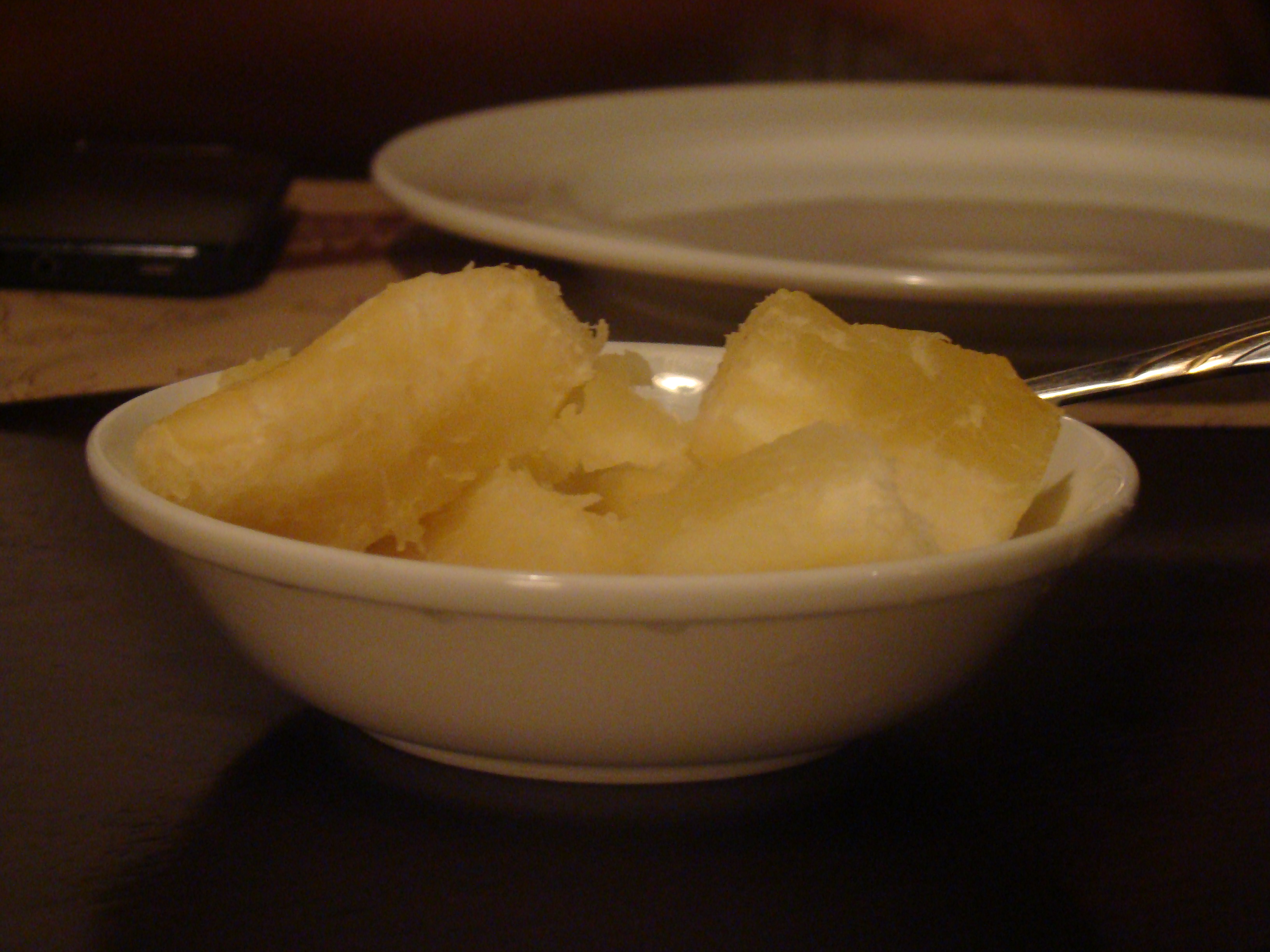
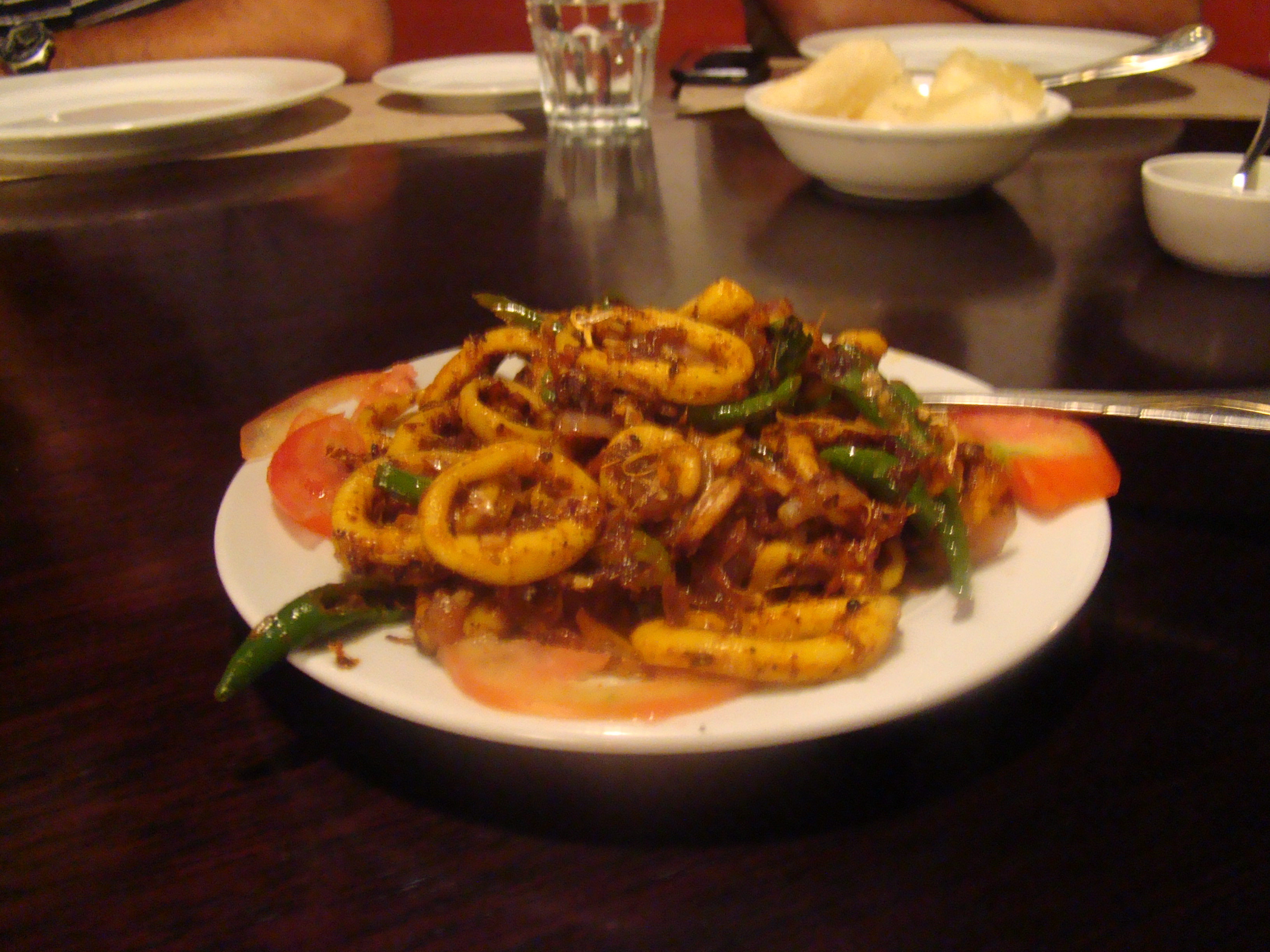
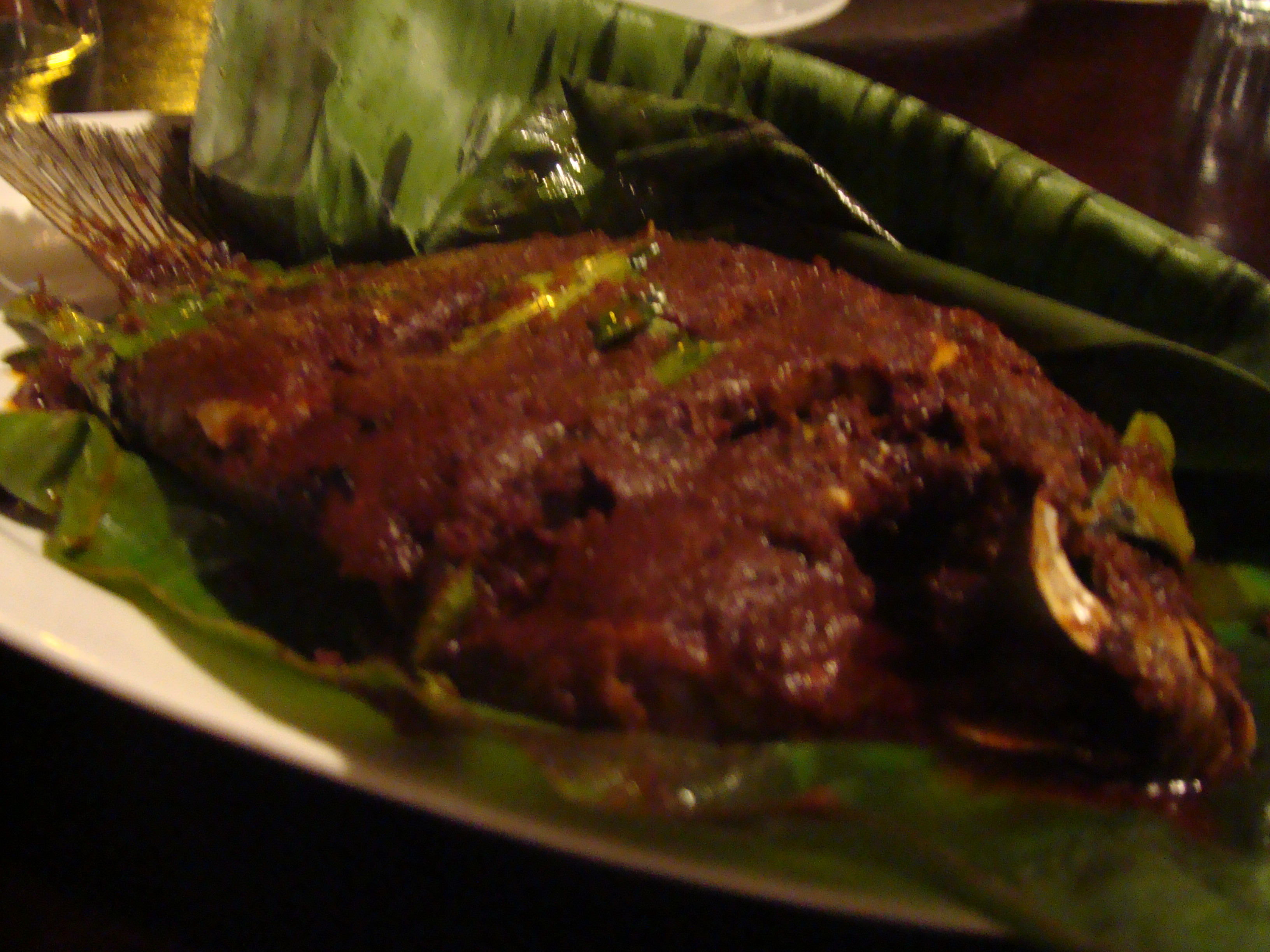
    In case soups work better for you, the mildly spicy Kozhi Kurumulaku soup (chicken and black pepper corn respectively) would be a good bet. We ignored the Veg Spring Rolls, Chicken Lollipops and Katti Rolls and decided to go for the ‘Chenda Muriyan Kappa with Mulaku Chammanthi’ (tapioca with chutney in case you are Malayalam challenged), Stuffed Squid Fry and Green-masala-fried fish. The last two items were not available, so we switched to the more standard Koonthal (squid) Fry and promoted a main course dish ‘Karimeen Pollichathu’ to opener status. I was initially quite dismayed on account of the minuscule Chammanthi (chutney) provided with the Kappa, but soon found that they had perfectly nailed the spicy green chilli-salt flavour, a small quantity of which can last several rounds of Kappa. The tapiocas too had been boiled to perfection. The Karimeen Pollichathu is priced according to size (so ask beforehand) and cost us Rs 400, but the Pearlspot fish grilled perfectly, with a banana leaf wrap, and a spicy sweet and tangy ‘secret masala’ was totally worth it. The squids in the Koonthal Fry were perfectly fried and the masala had permeated enough to make the dish wholesomely flavourful.

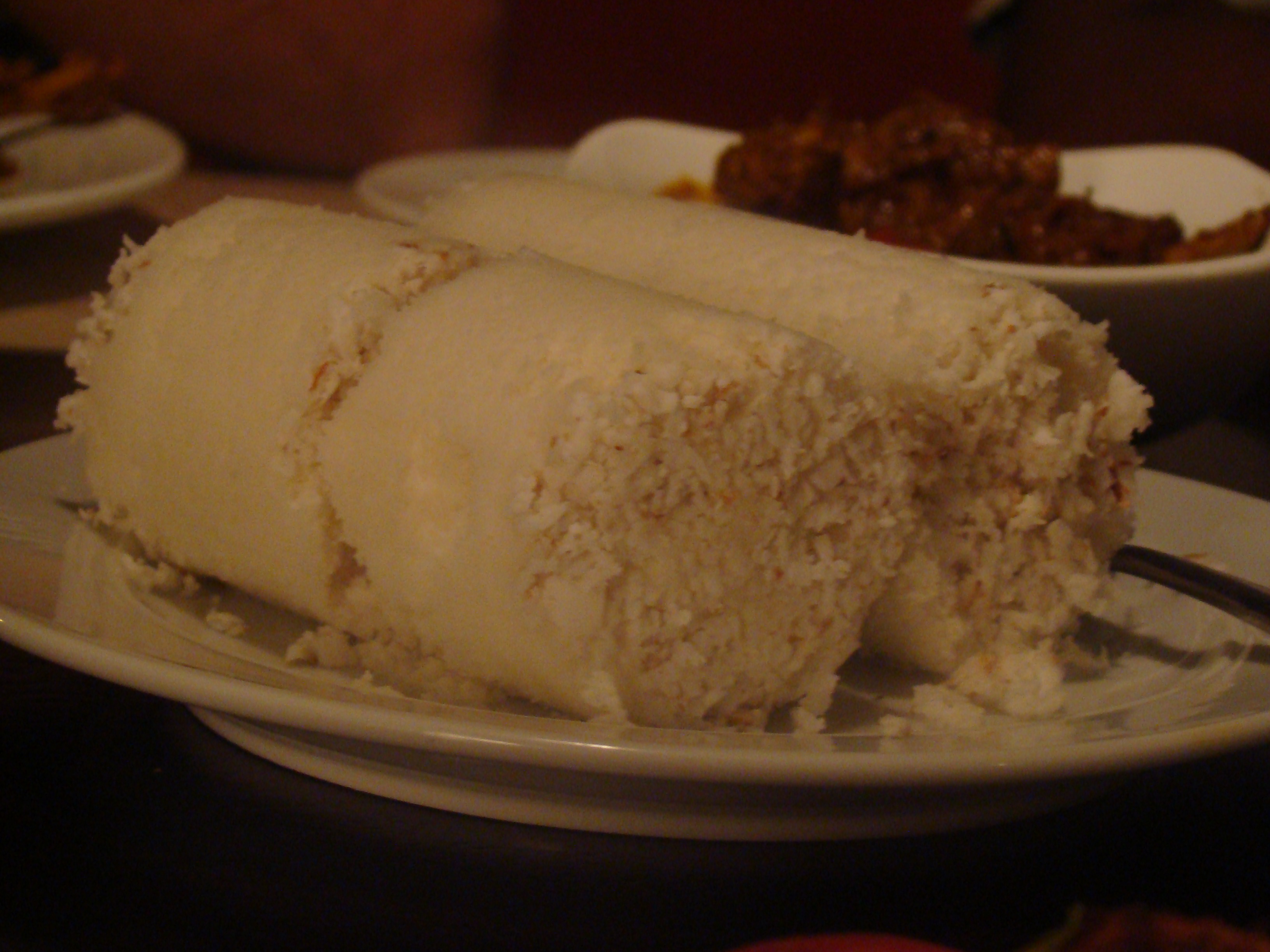
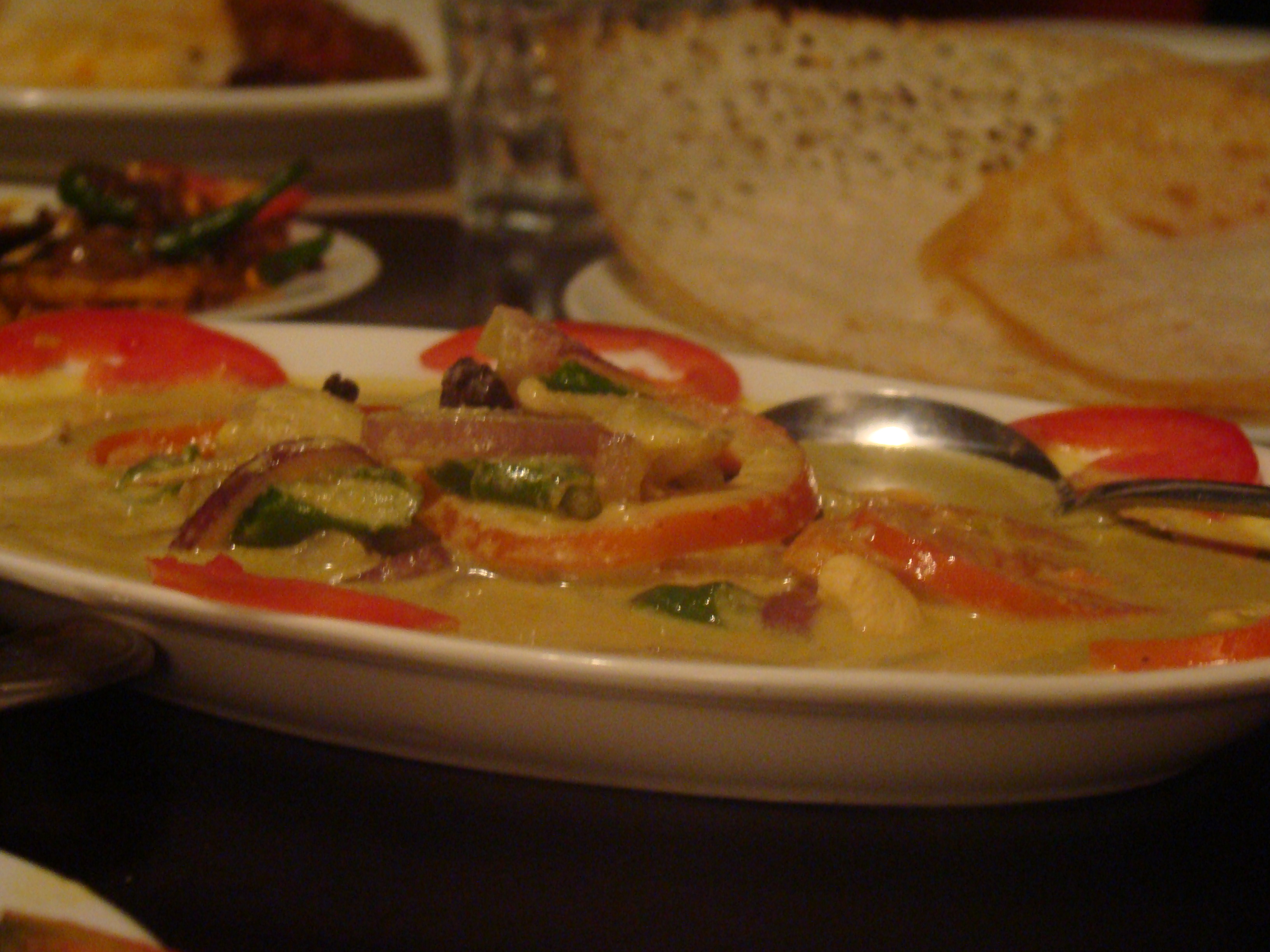
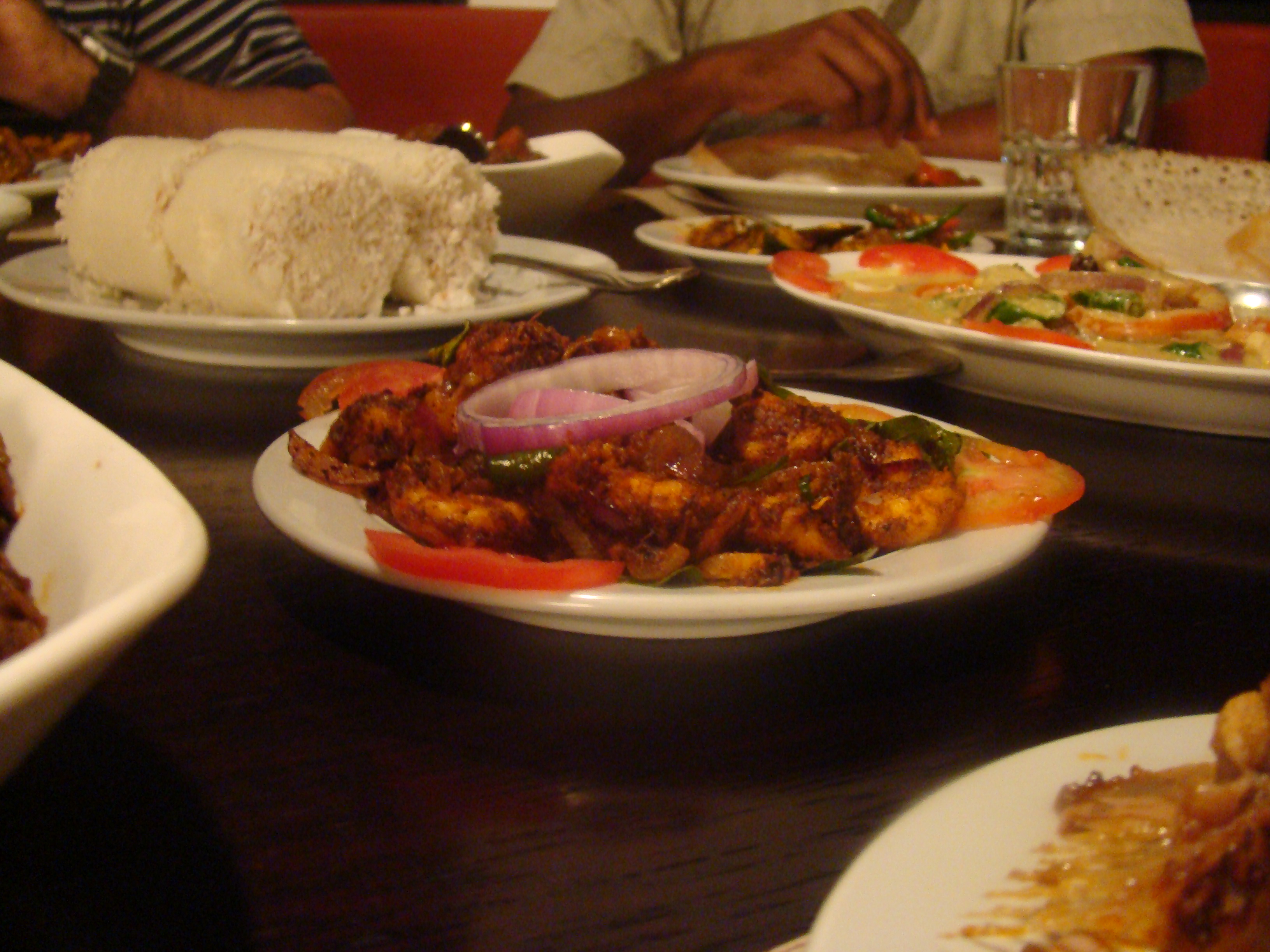
    The main course is easily skewed towards non-vegetarians, though the creamy, coconut milk-based Vegetable Stew would find favour with all. It is difficult to identify a favourite among the non-veg main course dishes, because the masalas involved were only separated by fine nuances. I would pick the Duck Roast, for its coconut milk-based mildly spicy, thick gravy, and meat that was tender. The Mutton Roast, a dry dish with a tasty curry leaves flavour, would be a close second. The Naadan Kozhi curry is also a coconut milk-based preparation and is a thinner version of the Duck Roast. The Meat Roast could’ve been better, as the masala was more fluid than usual, and missed the generous coconut sliver presence that makes the dish special. The Prawns Fry got the frying part right, but lacked the zing that the squid’s masala had provided. The Fish Moilee was a bit of a disappointment on account of its blandness. The soft appams with crispy edges proved to be a favourite, and the amazing pace at which they appeared at the table was only matched by the speed with which they disappeared soon after. The ‘alcoholic’ version – Kallappam (Kallu = toddy) managed to get the flavour, albeit mildly. The Porotta was also perfect with just the right amount of flakiness. The Puttu was a mild disappointment as it was a tad too powdery. The Thattu Dosa was unavailable for comment.

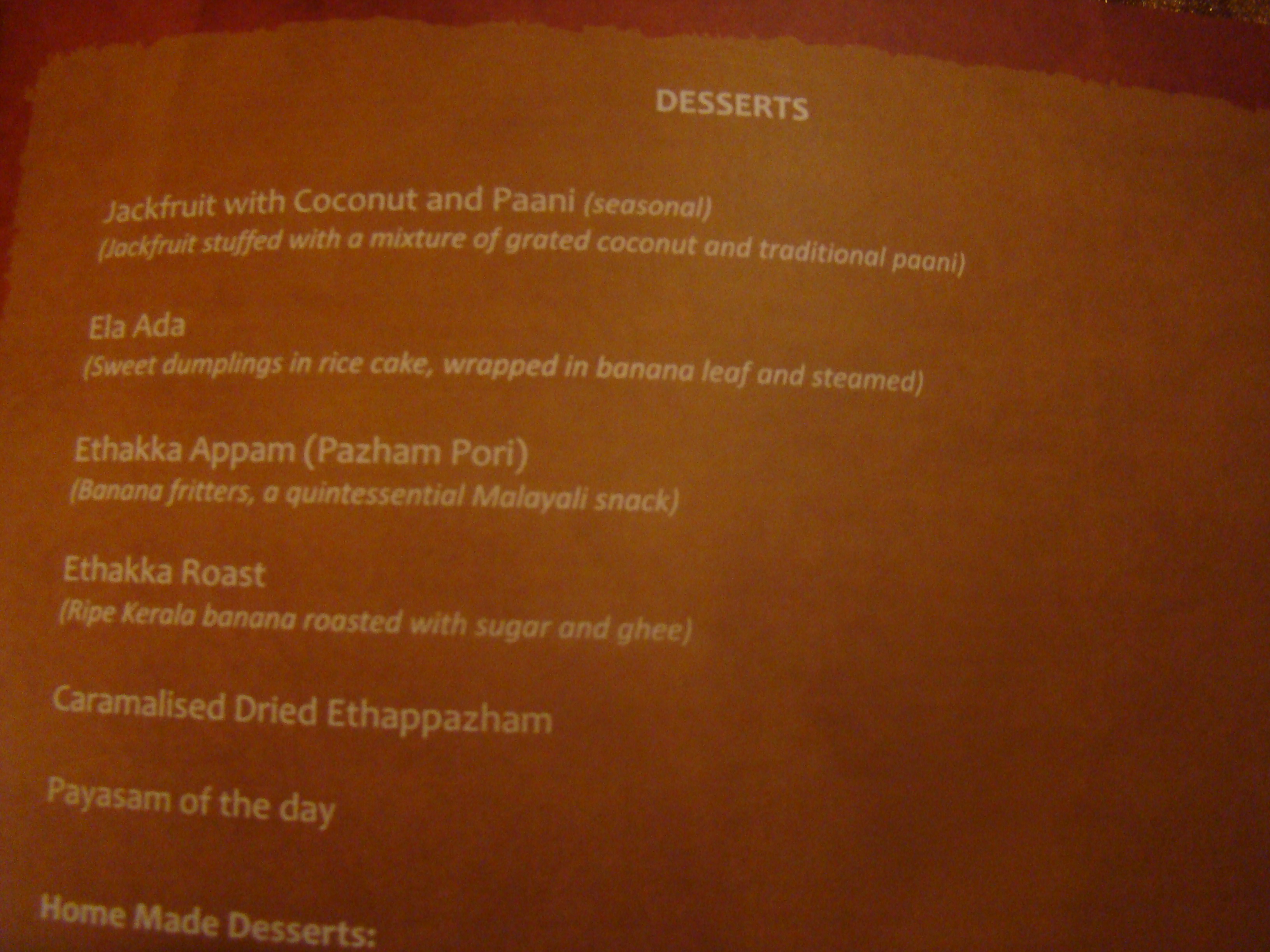
    On paper, the dessert options would make you salivate in anticipation – Ela Ada, Ethakka Appam, Ethakka Roast, Jackfruit with Coconut and Paani, and so on. But we were brought back to earth with the now familiar ‘Unavailable’. The Caramelised Dried Ethappazham turned out to be a bit too syrupy and had less-than-ripe bananas and the Ada Pradhaman was quite insipid too.

    Kumarakom does quite a good job of delivering authentic Kerala cuisine, and considering the portion sizes, the pricing is also just right – Rs.900-1000 for two. The non availability of certain dishes is thankfully compensated by the tastiness of those that made it to the table.

  • Brands, Identity and Consistency

    So, Google+ kindly consented to host brands and organisations on the platform (announcement) and immediately gave examples of pages already available. These include Pepsi, WWE, Burbery and so on. The typical ways most brands have approached their new Google+ page is to use the features of the network (mostly Hangouts) to reasonably good effect, in addition to using the platform for content distribution and in a few cases, even displaying their employees. This last one was an interesting use case and has potential, I thought, and better than Facebook’s fanpage Admin version.

    When I read the announcement, I immediately thought of brand identity. In the initial days of Google+ launch, the circles feature that allowed users to compartmentalise their different identities created a little flutter. It helped that, at that point, Facebook’s options for achieving the same ends were pretty well concealed. The visual identities of the brands on Google+ remain consistent with other online and offline platforms and so far, so do the tone and activities.

    I have a different identity for different sets of people I deal with. Work, Friends, Family, Acquaintances, Twitter connections etc. How I behave with them and what I share with them varies too. (though there are overlaps)  I thought about this from a brand’s perspective. My relationship with a brand is different from the one that another person has. (use cases, context etc) And if I do have to share this relationship, what I’d share and the way I would share it would also vary among my own different audience sets.  In a world where the consumers are moving towards a fluid identity, do brands have to consider one too?

    In the real world, brands sometimes tweak their identity according to geography. This was reasonable and worked fine in an era of mass media. With the internet, the whole world would easily see the changes across geography. And the end consumer could ask questions too. He/she even expects the brand to communicate like a human. If we consider different networks as different geographies, with peculiar consumption patterns (of information, for starters), does the consistency that brand currently focuses on become a constraint? Considering that different platforms have different advantages and are used for different objectives, how fluid can the brand and its communication be, on the web and off it?

    until next time, identity crises

  • Your next avatar

    There was a good debate at Slate on how far (if at all) we should go in augmenting what we have been biologically endowed with. I’d noted earlier the three tracks of speciation, and how we are already on two of the tracks. (prosthesis and cell/tissue engineering) The debate introduced me to the word ‘transhumanism’, and its proponents believe that nature has done all it can do in terms of human evolution, and we should now take the ownership of driving our evolution forward. The opposing view (that’s not religion based) is that by manipulating all this, we might lose track of ‘being human’. There is a middle path that advocates augmentation to the “species’ typical best”, so that everyone would be ‘maximum humans’.

    One of the conclusions of this debate is that it will happen to us slowly. This is one of the fears I’d expressed in that earlier post – that we won’t realise when it happens to us. One of my other fears on account of increasing lifespans is the economics of it all, again something I’d written earlier. In yet another post, I’d wondered if we would speciate on the basis of whether we want to keep up with the information deluge or not. Those who choose to, would most likely need augmentation of the mind.

    ‘Evolution on Steroids’ is the theme of this article in BBC News (via Vedant), in which Prof. Church would now like to write/edit DNA, now that we have started reading it, with devices that will monitor internal and external environments, warn us, and then change our body accordingly. It’s probably an inevitable reality, with the only real question being ‘when’ and not ‘if’.

    The Cyborg in us all‘ is another excellent read, this time from the NYT, in which I learned of scientists who are working on controlling computers via thoughts. In one of computer engineer Schalk’s experiments, on the effect of Floyd’s “Another Brick in the Wall – Part 1” on human brains, a particular brain created a model of what it expected to hear, after the music had been switched off in between. What the guys are really working towards though, are neurons and language – eg. thinking ‘cat’ and the image popping up on screen. Towards the end of the article, there is the NeuralPhone – which lets you pick a name from the phone contact list, telepathically.

    That brings me back to the Slate article which mentions this argument against trashumanism -increased lifespans would cause us to be more fearful, because we have more to lose. That would cause us to opt for “safe but shallow digital experiences, leading to long, ultimately empty lives”. This debate on enhanced and extended humanity reminded me of a post by Scott Adams, in which he writes about programmable avatars, which over time, would pick up our preferences and memories so well that they could live on as us even after we die, thereby extending our mortal lives into the infinite. And in ‘Hitchhiker’ style, he wonders if this has already happened. We are avatars of those who came before us – a premise not dissimilar to one I had reached via a different path. So much for humanity, and the debate about it. 🙂

    until next time, Google Human+

  • Winter Moon

    Dean Koontz

    I was quite surprised that the book was published in 1994. I expected a much earlier date, judging by the work. Its not really bad, but it doesn’t have that gripping quality of Koontz’ later works, of which I’m a big fan. That’s when I got to know that this was first published as ‘Invasion’ in 1975 under the pseudonym Aaron Wolfe.

    The book initially follows two stories in parallel – Jack McGarvey, a cop, and his family in Los Angeles, and Eduardo Fernandez, Jack’s deceased partner’s father, who lives in a ranch in Montana.

    Jack is recuperating from an incident involving a drug-crazed Hollywood director, who opens fire on innocent people, in a service station. Jack ends up having to kill him, and lands himself in the hospital for several months.

    Meanwhile, at the ranch, Eduardo notices bizarre phenomena among the animals around, and realises that there is a mysterious alien force involved.

    Though the book does feature the Koontz trademarks – dog, single kid, quotes from the (then) non existent ‘The Book of Counted Sorrows’, it semmed to be more a Stephen King approach than the later works of Dean Koontz.

    Not really a bad read, but there are definitely better Koontz creations out there.