Month: July 2011

  • Weekly Top 5

    This week's updates include Zynga's privacy policy gamification, acquisition of Five Mobile, investment in server infrastructure and IPO filing; Google's new version of Android Market and the downloadable maps, investment in Wingu and purchase of Punchd, and YouTube's Cosmic Panda experiment; Groupon's privacy statement changes, expansions of Google Offers and Living Social, Foursquare re-marketing offers

    and Local.com's foray into group buying; Twitter's new round of funding, Biz Stone joining Spark Capital, the new Twitter developer portal, and testing a new directory tab; Facebook's launch of “Facebook for every phone”, Hulu's re-launch, an app called Katango that renders a version of Google Circles in Facebook, and Facebook testing check-in deals for multi-location businesses.

    [scribd id=60221540 key=key-2f75yawoztkyr9c5mczs mode=list]

    zp8497586rq
  • Influence, Decision Making & Data

    It’s been just over a year since my last post on influence, but a couple of very interesting articles, and a few advances and observations makes this a good time to visit the subject. I am in touch with both the custodians of my influence these days – Klout and PeerIndex, and like to experiment with them. (the rise in Klout a few days back is the result of one such πŸ™‚ ) They are obviously in early stages, which is probably why I think they can be gamed, despite their stout denials, and also why Klout considers me ‘influential’ on the topic of lottery. (thankfully Pakistan has been removed now)

    What I did find a bit disconcerting was the usage of these scores in brand strategy/promotions. (relevant link at the end of the post) The basic thought here is to identify ‘influencers’ and engage them for various purposes – from product design to communication, advocacy etc. Not a bad thought in itself, but I wonder if it is way too early in the evolution stage to try this out, because there are way too many variables, including trust, involved and many of them have probably not even been acknowledged, let alone tracked and measured.

    The consumer decision making process is itself undergoing massive shifts thanks to an ever increasing slew of communication platforms and services, which allow consumers to speak to brands, and other consumers, and has mechanisms for rapid and wide spread. For example, I saw an interesting perspective,Β which replaced the traditional funnel with a ‘consumer decision journey’ and discussed the need for changes in the brand’s approach so that different functions can be better aligned.

    For a different perspective, take a look at this presentation (via Vijay Sankaran)

    It makes a good case of why algorithms and ready made dashboards may not be the best solution possible to even finding the ‘right’ ‘influencers’. The way I see it, the current social platforms are only portion of the data, and there are going to be many more layers and sources. (earlier post ‘Data beyond Social‘)

    But even though many, including myself, would agree to the observations in the presentation, the ways to scale it are still blurred because I’d say the human component still has a major role. But that might be something that will change in the longer term. In the short-medium term, considering the $ spent on many a media blitz, a better allocation of $ resources – into collecting and then converting the data deluge to actionable information – is what is warranted.

    until next time, influence shell

    The promised link: Involver is a platform that has partnered with Klout to allow brands to “interact with and reward fans on Facebook based on their Klout score” (via)

    Bonus Reads: Resolving the Trust Paradox, and Prem’s post on ‘social’ in the buying process.

    zp8497586rq
  • The Uncertainty Principles

    Not the quantum theory kind. Sometime back I read this interesting post on HBR on uncertainty, which made me think about my relationship with the concept. I must admit that I have more than a little affection for certainty. That is exhibited in most of everything I do – from my routine to travel itineraries to life planning. It also manifests in relationships – not just with people, but even services like Twitter. πŸ™‚ It is probably a bit about control, and a bit about not having to waste what I consider premium currency – time.

    In the post, Tony Schwartz states that

    It feels good to know things for sure. It makes us feel safer, at least in the short term. But certainty has its limitations. Very rarely, I’ve discovered, is certainty the outgrowth of careful consideration and deep understanding. Far more often, it’s a primitive instinct β€” a way we defend against uncertainty, which understandably feels unsettling and even dangerous.

    I really can’t disagree with that, though I think that sometimes it’s an individual’s conscious choice. The sad part is that the automaton inside us usually makes this choice for us. Further in the article, he also adds a neurological perspective on why we are pulled to certainty, and then “Above all, certainty kills curiosity, learning, and growth.” And that’s the part that I am ironically, unsure of. My take is that if I am certain about a set of things, I am able to focus on, and do better in another set of things.

    Devdutt Pattanaik’s ‘The Pregnant King’ was an excellent read, and though it was the story of Yuvanshva, the king gives birth to a son after drinking a magic potion meant for his wives, it is also about the nature of the world and the fluidity of dharma among other things. There are a few interesting statements in it, if I consider it from the uncertainty context.

    In an argument with Pisachas, Yuvanshva states that “every civilisation needs its delusion” and we don’t take kindly to things that “threaten the facade of order”. I think that would hold for individuals who prefer certainty too. In another conversation between Yuvanshva and the Angirasa, there is a meaning given to the existence of this world,

    When all is understood and accepted, the world will lose its purpose and cease to be. The world exists only to make us wise. Ignorance fuels pain and from pain comes our search for wisdom.

    But my favourite is in the form of two diametrically opposite approaches to the purpose of life that comes earlier in the book – Yaja and Upayaja, two Siddhas who never agreed on anything, yet ended up taking the same decisions.

    Yaja sat under a banyan tree and sought truth in stillness. Upayaja always sat before a waterfall and sought truth in movement. Yaja said, “By observing the flow of rasa, one can train the mind to accept destiny. This is the purpose of life. Upayaja argued, “By manipulating the flow of rasa, one can change the world and fructify all desires. That’s the true purpose of life.”

    Though Upayajya’s argument might seem in favour of certainty, I’d say that both are versions of the same story – embracing uncertainty. And thus, another lesson from the book springs to mind “The truth is not poison. It is our inability to handle it that makes it poisonous” The same goes for uncertainty too… I guess πŸ™‚

    until next time,

  • JiniLabs

    Building useful products and apps to enhance the experience on the ever increasing tribe of smartphones and tablets, tha

    t's what JiniLabs has set out to do. In conversation with co-founder Amit Rana….

    [scribd id=59761815 key=key-1c9phzeiihj1xelxjny1 mode=list]

    zp8497586rq
  • Sichuan

    The idea was to go to this new place called ‘Pot Puree‘, but they were just so ‘helpful’ with the directions that we sulked and decided not to visit even though we finally found the place. Since I don’t need to be particularly persuaded for Chinese food, we decided to drop in at Sichuan, after we found it quite appealing from the outside.

    Sichuan falls on your left when going from Sony World Junction, Koramangala towards 1st Block, just after Natural Ice Creams, (map) and after our favourite hole-in-the-wall Mallu joint – Little Home. If you’ve been around that area, you’ll know that parking is a pain and your only hope is one of the side lanes nearby.

    The take away counter is on the ground floor along with a few tables, but the main dining area is on the first floor. Not a large area, but the decor is handled well with the familiar dim red chinese lantern effect. There’s a nice cosy feel to the place, and if you get the right table, you can watch life pass by in Koramangala, as the serene Buddha in the corner seemed to be doing.

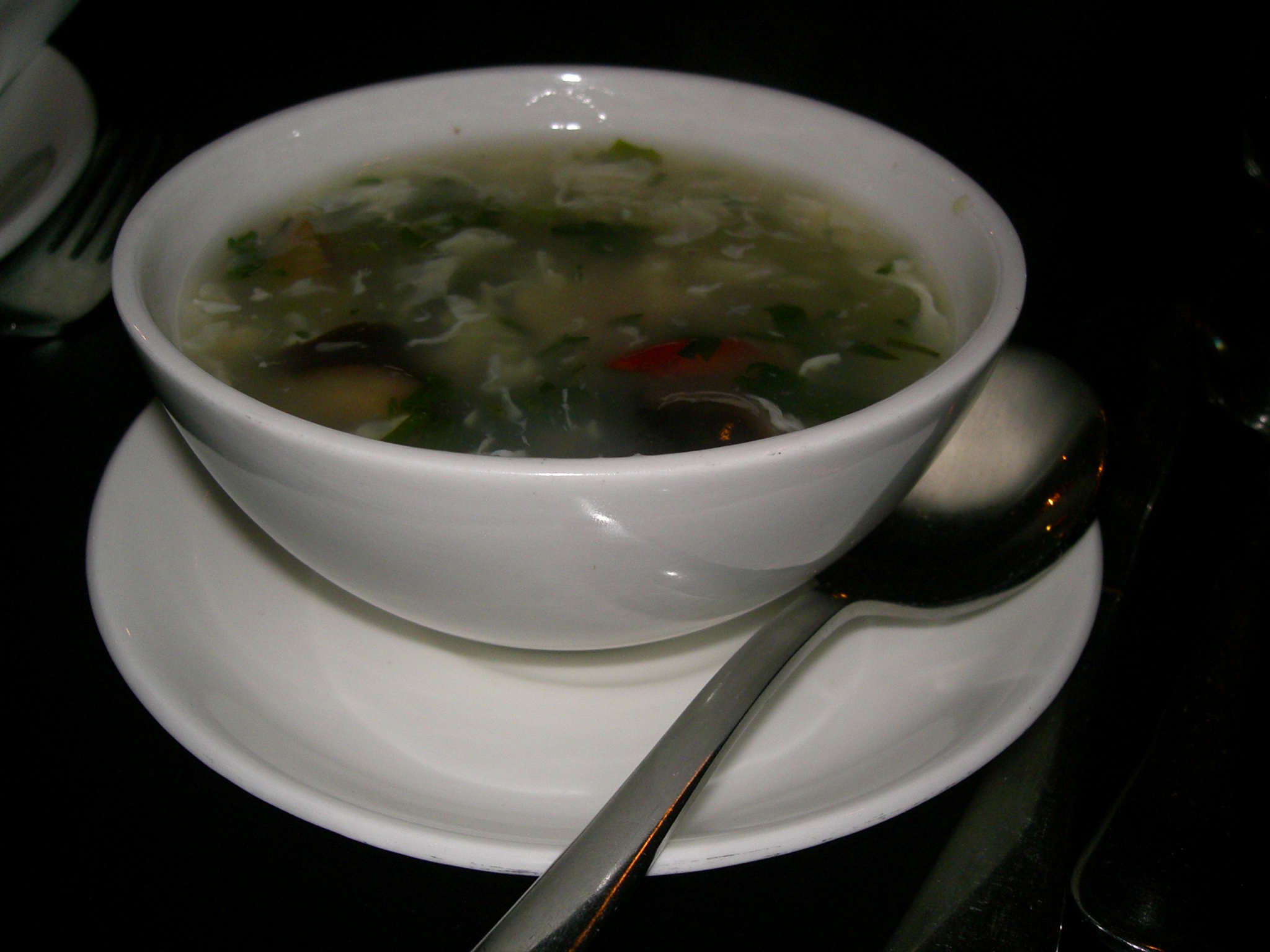
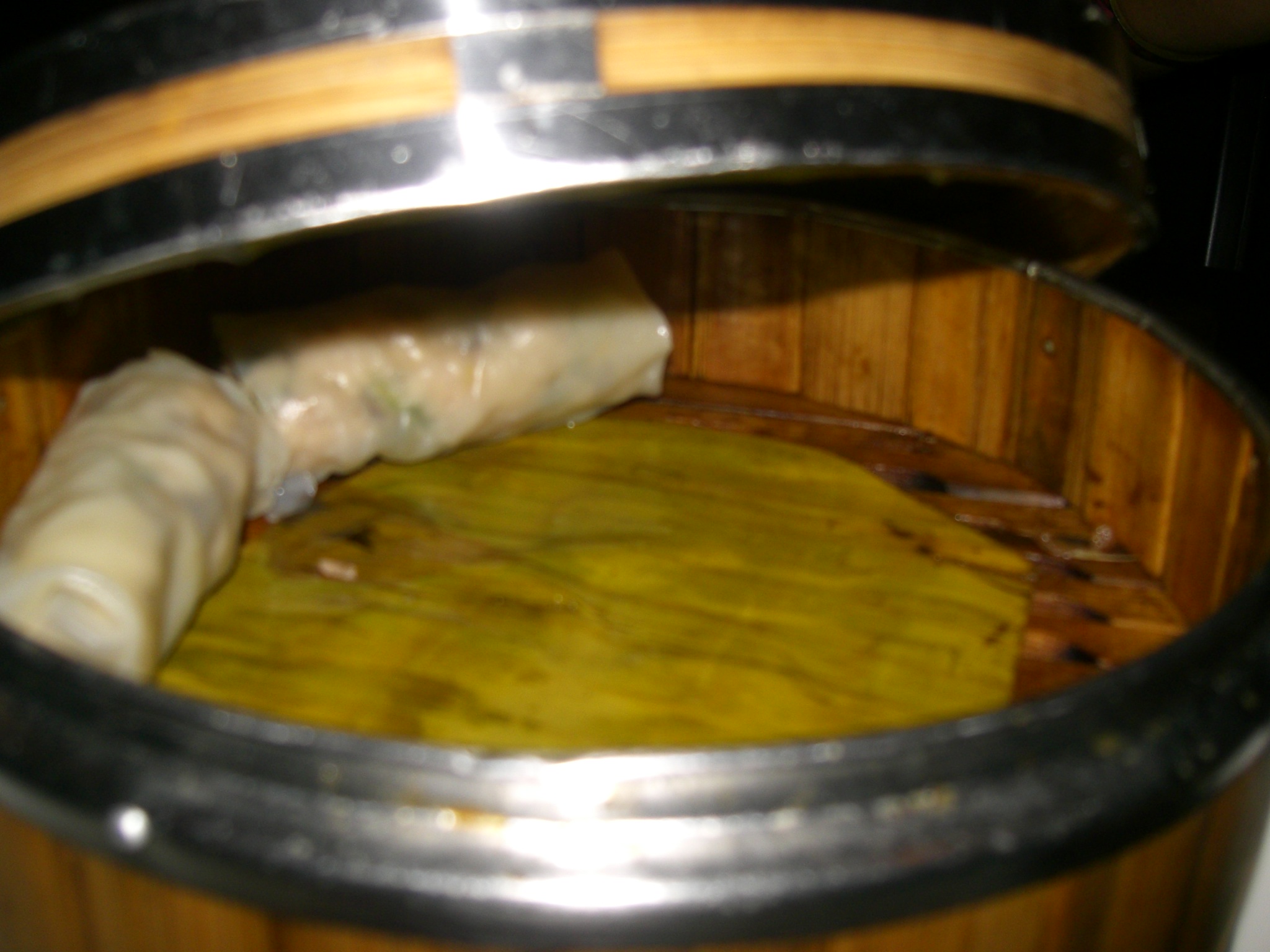
    Zomato has the menu, though this is the take away/delivery menu. The dining menu has a few mocktails and desserts too. Some of them are here. Our hunger made us uncharacteristically go for dim-sum and soup. The Hot Mushroom, Coriander and Chicken soup came first and was thick with a spicy undertone. Watch out for that red chilli specifically. Perfect start. The Cheung Fun took a while, but the rice paper rolls with chicken, mushroom and green onions also turned out great, though we missed the ginger flavour.

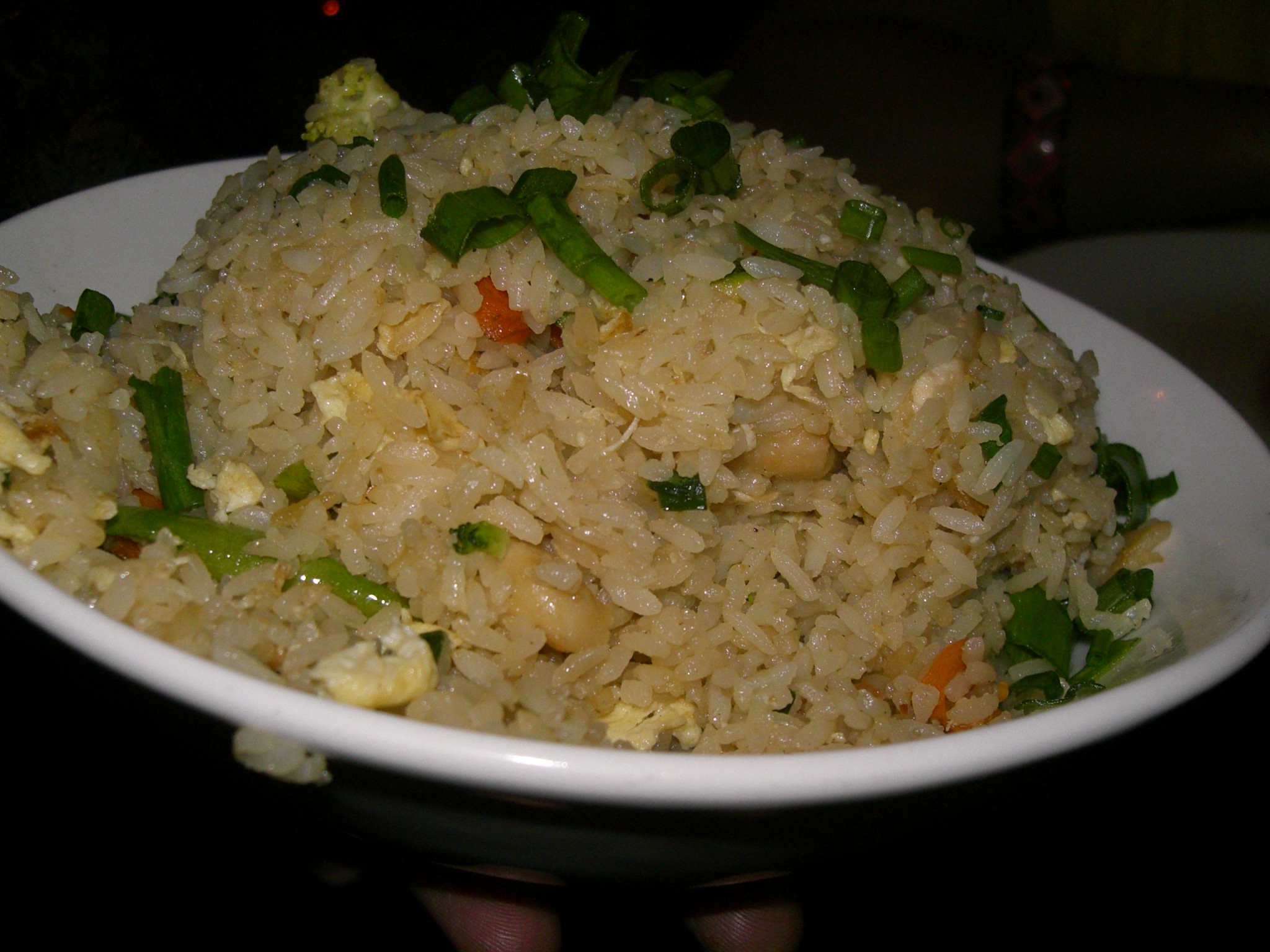
    For the main course, we ordered a Cantonese Fragrant Rice (chicken) and as per the advice, a Kunming Chilli Chicken, which was supposed to be medium spicy. The latter turns from medium to high as soon as the green chilli turns up in your mouth, but the rice complements it very well. We wanted to sample the Mango – Lemon Grass mousse, but it wasn’t available. Wonder if desserts would sell here, Natural is a strong force. πŸ™‚ All of the above cost us just over Rs.500.

    Delicacy and China Pearl remain favourites in different contexts, but the next time I have a Chinese food craving, I might just land up here again.

    Sichuan, #1016, 80 ft Road, 1st Block, Koramangala. Ph: 41317636