
Tag: Time

  • An age when age doesn’t matter

    While discussing a ’40 under 40′ list, I joked the other day to a colleague that my only chance of getting into one now was to reduce my weight by about 15 kg in a few years! It made me think of a strange yardstick I have employed in valuing others’ achievements – their age. To elaborate, if I came across a person who had attained a measure of success, I would be mollified if I figured that the person was at least as old as I was. If they were younger, mollified would be replaced by mortified. How dare they achieve something earlier in life?! Very strange, I know. I have quite a few theories on it – upbringing, a ‘paying your dues’ perspective, the way I have progressed in my career and what I’ve had to do, or perhaps just the result of being brought up in an age when folks worked hard all their life to attain things that we might consider a basic need now.

    I gained freedom from it (or so I think) quite recently. The irony was that this realisation dawned  just after a meeting with someone whom I would say has been quite successful in his profession. As I made my way back home in a cab, I passed quite a few bus stops. It was late evening, and people were waiting for a bus to take them home.  Young people, middle aged people, and even a few old people, their faces echoing their toils. Perhaps they had a long bus ride ahead of them, perhaps they would have to stand all the way, perhaps they would have to get down midway and catch another bus. This was their life everyday, the cards they were dealt. Some might be unhappy, some would have made their peace, and some might even be happy. Their lot in life, or a bus they missed at some point in their life. Even as I had many, many things to be thankful for. So, what business did I have grudging someone because they worked hard and/or were lucky enough to make a mark early in life? (more…)
  • Changing brandscapes

    Recently, I was part of an interesting round table discussion organised by afaqs and IBM around “Technology in Marketing“. While we did stick to the subject, in my mind, I was also wondering about the impact this (topic) was  having on the idea of brand. It has been only 4 years since I had last held a brand job, (I left TOI in 2010) but I can safely say that the landscape has changed massively. A few thoughts –

    Time: The cycles of brand building have been massively reduced. This is not a 2010 phenomenon, but to give you some perspective, in that year Flipkart was just venturing beyond books and hardly the well known brand it is now. Zomato was a ‘promising startup’ according to a list made by the Smart Techie magazine and had just expanded beyond a single city. The flip side is that some of the other startups in that list no longer exist. AlooTechie, which reported this, also does not exist. I had a Nokia E series phone then, and they are pretty much a non entity now. In short, that word – change, and it’s faster than ever! It is said that brands get built over time, but do business cycles allow that liberty now?

    Geography: A cliche used frequently is “Geography is history”, but a little incident reminded me that it may not altogether be true. One of the regular conversations these days is around taxi rentals and Uber is a favourite among many of my friends. I casually asked them whether they knew of the heavy rap Uber was getting in the US for remarks allegedly made by a senior VP. (alternate perspective) They didn’t, and it isn’t as though they don’t consume news online. They missed it amidst all the ‘noise’. While a brand may be global, how much does its international stature impact regional preferences, even in this hyper connected era?

    (more…)

  • It’s about time

    Time

    There’s a question I’ve been asking myself for a while now – is time a man made construct or not? Days, seasons, years and cosmic events would happen even if we never tracked them, but our lives are defined by the time frame we live in – from a personal as well as socio-economic and technological standpoint. I recently got a perspective I thought I should share. I also found this overlapping with the devices we have used to track time. Hence these thoughts.

    Form: For a while, the mobile phone was the watch, but wearables (my attempt at a primer) is the new entrant. I already see a little crossroad in wearables – the smartwatch/accessories like Glass, and the activity tracker, both connected to the mobile device. The former, in addition to being a chronograph, is aiming to be a personal assistant of sorts by aping many functions that a mobile phone does – GPS, messages and notifications, and contextually relevant information. (I liked this post on Google Now and Android Wear) The activity tracker, on the other hand, focuses more on fitness and health. What connects them is the battle for the wrist. Between Android and Apple, I’m hoping they combine both the above streams quickly. I’m also hoping that both will get better at moving from data to actionable insights.

    Function: To bring the focus back to time, the form factor increasingly makes me think of time as an app. In this era, our control on time is negligible –  I can decide how I spend my day, (application of time) but I cannot really control my life span –  therefore we are bound to think of increasing its efficiency. I’d expect the device  to notify me on the best way to use my time – roughly speaking the bottom two levels (and a portion of the third) of my favourite framework – Maslow’s hierarchy of needs. But as we gain on immortality, we might have so much data on ourselves and the collective consciousness (related post) that it will offer more value in the top two levels – relevance and value to others (esteem) and self actualisation. The simple guiding thought is that isn’t time one of the only things that stops us from self actualisation, the other being economics?

    Future: From a function perspective, I think the ambiguity on time (as a construct or not) exists because we can control it only partially. As we control it more and more our need to control it becomes lesser (increasing lifespans is one reason) it will automatically become a construct/’application’. (Very roughly, think of fire – before we learned to ‘create’ it, it might have been an enigma, but the moment we did, it was more an application.) Then, the decisions we make will probably be influenced less by time. Time will have to find a new way to be contextually relevant. Therefore, from a form factor perspective, I expect to see devices which provide us contextual applications of time wherever they are located eg. say bearables (implants, micro-devices attached to skin etc) that tell you it’s time for a heart checkup through an interface that’s probably an app on a portable device. It’s only a matter of time.

    Even further on, the philosophical question to ask is that if one had an infinite supply of time, would one still measure it?

    until next time, watch this space

  • The path to immortality

    I’d written earlier on how brands could use an individual’s data (the personal API) to fit themselves into his/her narrative and had used Nike as an example.  But this data could also be used by fitness and health companies to discover ‘fault lines’, gradually delay wear and tear, and one day, totally prevent a machine shutdown. This video – A Day in the life of Tim Ferriss (watch for a minute from 3:25) – gave me an idea of how we might be moving faster in that direction because of  data collection.

    Back in 2011, in ‘God in the details‘, I’d opined that over a period of time, when our data capture capabilities were evolved enough, and we had a lot of data on people on a lot of their behaviour, consumption etc, we would potentially be able to answer the most profound questions about our existence, purpose etc, and unlock further dimensions. I was extremely happy to read the same thought in this (long, but) amazing read called ‘Navigating Stuckness‘. “I could sit safely at my desk and write computer programs to gather vast amounts of Internet data, which I thought could finally answer timeless questions like “what is love?” and “what is faith?” with precision and clarity.

    On one hand, data could help us in our path to immortality, and on the other, it could provide us the answers to fundamental existential questions. I wonder what would happen first, because, as I wrote in PhilosoRapture, I also wonder if those questions would remain relevant once we became immortal.

    Meanwhile, the other track to immortality that is rapidly developing is that of the augmented human, where human parts (including the brain) will be replaced by mechanical replicas. We’re only a part of evolution, as this wonderful, humbling video would show, and it is probably only our ego that makes us believe (if we do) that we’re the endpoint. Maybe, there will be a species later, of whom we’d be probably be creators, for whom our questions will seem irrelevant and who will have their own sets of answers to seek.

    cs

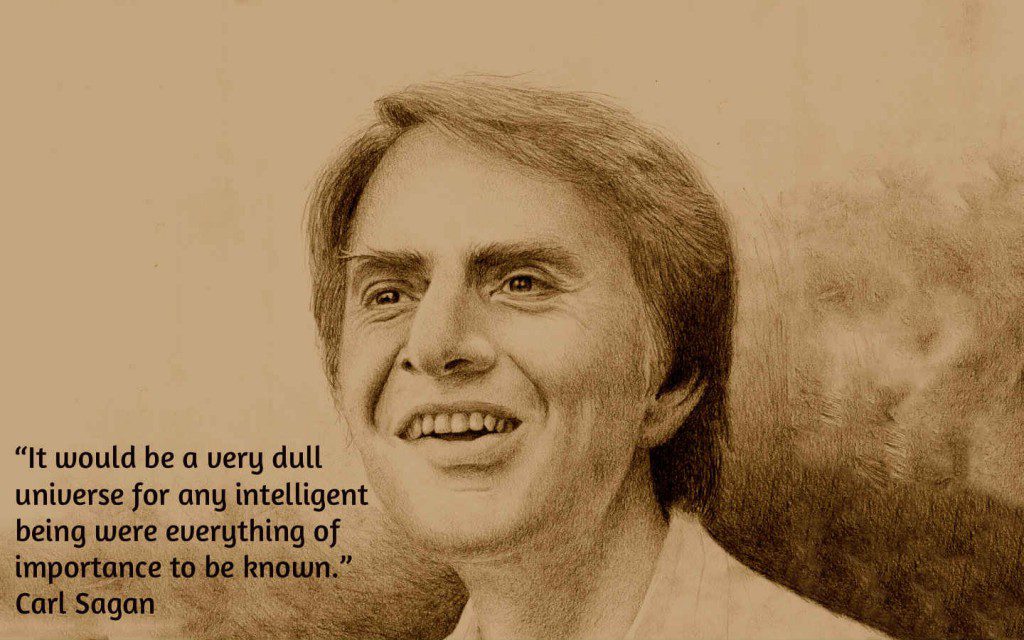
    (quote via, image via)

    So it would seem that whichever way we approach immortality, by the time we get there, chances are, it may not be that significant.

    The year we conquer morality, by the way, is 2040, as per Ray Kurzweil. I’ll be 62 then, or maybe not, or maybe it won’t matter, or maybe…  🙂

    until next time, live long and proper 🙂

  • A clocked up life

    Time has always been one of the most important constructs for me. In most of my actions, it is probably the first parameter kept in mind. The debate on whether it’s a human construct or a dimension that exists anyway is still not resolved in my head. But I still swing more towards a construct because in the words of one Julian Barbour, “Change merely creates an illusion of time, with each individual moment existing in its own right, complete and whole.” He calls these moments ‘nows’ and further postulates that “Time is simply the measure of the space between two separate and unrelated ‘nows.’” Unfortunately, this seems to take us further away from any possibility of navigating that distance beyond the linear flow we experience.

    I was reminded of this because of an article I read in TOI and from my own recent experiences. The article was about an Amazonian tribe called Amondawa that had no concept of time. They live in a world of events and had no words for ‘next week’, ‘last year’ etc. Also, no one had an age. Instead, when their position in life changed, they took on a new name!!

    For a fortnight in May-June, I was in Kerala, spending most of my time in a hospital waiting room. My entire routine had been changed. Nothing can be more disruptive for a creature of habit, but it did gave me a chance to observe time and my relationship with it. I noticed that time played an intrinsic part in my life because of associations – from mundane things like when I had to take a bath/ go online to things like when I would see D next. The associations make memories and our visions for the future, and those make up our navigation mechanism. If the associations did not exist, time’s importance could be reduced to a minimum, if not completely.

    On those starlit nights, it was easy to remember Dr.Manhattan’s  line from Watchmen, though in another context ” I am looking at the stars. They are so far away. And their light takes so long to reach us. All we see of stars are their old photographs.” But for us, it’s a now. So which really is the now -the stars’ now or my now or both? But then again, if not time, what would be my main narrative?

    until next time, anti-clock-wise 🙂