Tag: storytelling

  • The business of brand

    It used to be that a brand manager could run 3-4 campaigns a year, negotiate heavily in media buying for efficiency, and roughly correlate effectiveness to quarterly brand health data and sales performance. With VC funding-led rapid scaling, digitisation,  real-time data, and polarised social media, this version is being rendered obsolete. The changing business context also means that looking at a 30 sec ad purely through a consumer lens is only half the story. Two recent examples made me reflect on the dynamics between brand, social media, and business.  I do realise that my commenting on them is a bit like the Nobody – Me meme, and delayed at that, but that’s one of the perks of having a blog.

    Cred: We’ll begin with the Mad Men perspective, but after a short detour. Brand building for VC-funded startups has a template that actually works. Rational benefits with emotional storytelling. Flipkart and Myntra both went through a learning curve with “Granny and Mouse” and “Where fashion comes together” respectively, before they cracked it with “kids as adults” and “Real life mein aisa hota hai kya?“. It works because in addition to building the brand promise, it also has a tangible effect on business. And that’s why it’s often followed by many others across categories – Pepperfry, LivSpaceKhatabook, or even an extended approach like The Whole Truth. This is assuming that distribution, product, customer service etc are at least on par, and the execution is done well.  In that context, Cred’s recent ads, after readability issues in the first print ad, and the lengthy Jim Sarbh ad, were most definitely clutter-breaking. By not following that template.  (more…)

  • Brand Storytelling

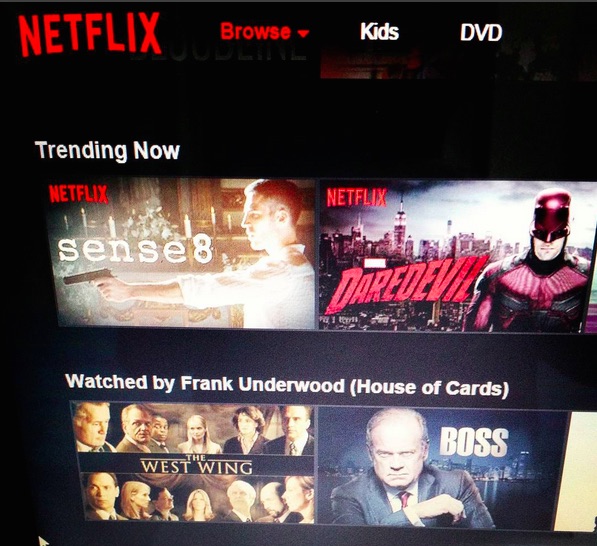
    Recently, on Netflix, I caught something that I had read about almost a year back – an easter egg of sorts. On my feed, I saw shows ‘watched by Frank Underwood’. For those who haven’t watched House of Cards, that’s the name of the show’s protagonist, played by Kevin Spacey. (fantastically, I’d add) The shows selected seem absolutely true to (his) character, which is manipulative, scheming, and truly Machiavellian!

    Netflix (more…)

  • Building brand stories

    There was a superb post at Misentropy last week on story-telling that opened up new perspectives for me on that art, and science, especially the last few lines on subliminal commands that could set or reset a new memory episode in our minds.

    The coincidence in the timing was excellent, because it is related to a subject that has occupied my thoughts for a while now – brand stories in recent times. Notwithstanding recent splurges, a Google or Apple or even an Angry Birds has not really built a brand on advertising. On any given day, there are hundreds if not thousands of websites and blogs which compete among themselves to ensure they get the latest dope on these companies first.

    For a while, I thought that this was largely due to the inherent domain association. Of the internet/mobile and therefore covered on the internet/mobile. But that’s not really true – Lady Gaga or Bieber or The Dark Knight Rises (check out Misentropy’s curated fan creations – Batmania) are not tech, they are popular culture, and yet they have all successfully built brand stories (also) using the internet to great effect. Are all music bands or movies operating at that level? Not. The only commonality I could notice was the ‘product is marketing’ (yes, even Bieber or Kim Kardashian actually belong here) credo, by design or not.  The product in this case need not (and is usually not) even be the core domain they’re operating in, it’s usually a core differentiator – in Gaga’s case, shock. I have no clue on Bieber, and Kim Kard’s sticks way out of the purview of this blog!

    But despite the above, and exceptions, I also wondered whether brands of an earlier era were at a disadvantage because they operated not only in domains that had become commodities, but also operated within frameworks that made their activities templates. Not just from a planning perspective, but from communication platforms as well.

    Thanks (also) to my weekly web wrap column, I noticed one interesting example of a brand that could weave its story into my life’s context – apparently by design. For 8 years, the Samsung TV and I have been staring at each other without getting into a relationship. But for the last few weeks, I’ve been scanning websites to check out the release of the Galaxy Nexus phone in India. The only other alternative I have in mind – the Galaxy S2. Samsung has piggybacked on Android to enter my life. However, just as this article states (about Samsung in the context of the Internet of Things), I’d say that Samsung has missed an opportunity in this regard. (though its Samsung Nation gamification based loyalty program looks interesting) The simple test being that I wouldn’t blink before changing my preferences if a different Android maker offered me a better product. But would I try a different OS family? Not a chance. Because, dessert name versions and all, Android is a story for me now.

    So, simplistically, I see two gateways to story telling – it’s either the story or the telling. In the first case, the product is so different that it leads the story, and in the second, the product might be a commodity, but the telling is such that it creates a story. Classic examples for the latter are ‘Will it Blend?’ and ‘The Old Spice Man’, episodic thought they might seem. Depending on its domain and competitive landscape, each brand would have to decide its focus and build the relevant skill set. The tools are more than ever before, as always, it’s how they are used. That story hasn’t changed.

    until next time, storied brands

  • A Brand’s new story

    Brands have always been storytellers, but new platforms bring with them opportunities and complexities that warrant a tweaking of the craft. Welcome to transmedia storytelling. And you can read the rest of my article on afaqs.  (Just this once, don’t mind) 🙂

  • So, what happened in the end?

    Happened to see ‘Via Darjeeling’ last weekend. It left me with a very poignant thought. About storytelling. Lets take a murder mystery/ thriller.
    When a writer develops a story, it exists only in his head, its origin, its twists and turns, and its conclusion. What happens when the author leaves the story open? Gives the audience all the twists and turns and refuses to give the ending? Worse, what if the story is such that it has many plausible endings?
    Now different members of the audience could propose several endings, based on their sensibilities, but they will never know what ‘actually’ happened. These days, we are so obsessed with knowing ALL the facts, that it would be an absolute blow. And its not like the real life happenings on which we are okay with some ambiguity. Perhaps it would be a good idea to get out of our conditioning that forces us to accept nothing less than conclusive endings in works of fiction, especially in cinema.

    until next time, unending